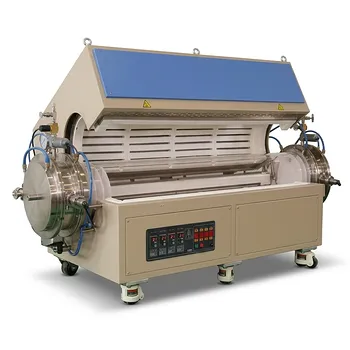
What is the role of a high-precision tube furnace in catalyst synthesis? Achieve Atomic-Level Order and Precision
Updated 3 months ago
The high-precision tube furnace serves as the critical controlled environment where metal precursors are transformed into highly ordered intermetallic compound (IMC) catalysts. By providing a stable thermal zone and precise gas concentrations, the furnace allows metal species to reduce and rearrange at the atomic scale, ensuring the creation of specific crystalline structures and the exact regulation of catalytic active sites.
Core Takeaway: A high-precision tube furnace enables the synthesis of intermetallic catalysts by perfectly balancing thermal kinetic energy with a strictly controlled reducing atmosphere to facilitate atomic-level ordering while preventing particle sintering.
Facilitating Atomic Rearrangement and Crystalline Order
Overcoming Nucleation Barriers
For intermetallic compounds to form, metal atoms must acquire sufficient diffusion kinetic energy to overcome nucleation barriers. The high-precision tube furnace provides the exact temperature profiles needed to allow these atoms to migrate across a support surface and find their thermodynamically stable positions.
Creating Highly Ordered Structures
Unlike simple alloys, intermetallic compounds require a highly ordered atomic arrangement. The furnace's ability to maintain a constant temperature throughout a long heating zone ensures that the rearrangement process occurs uniformly across the entire catalyst batch, resulting in consistent crystalline structures.
Regulation of Catalytic Active Sites
Precise control over the heating curve allows for the precise regulation of active sites. By governing how precursors interact with the support, the furnace ensures that the resulting metal-support interfaces are optimized for specific chemical reactions.
Atmospheric Control and Chemical Transformation
In-Situ Reduction of Metal Precursors
The tube furnace acts as a closed-loop reactor for the in-situ reduction of metal salts or oxides into zero-valent active metallic states. By introducing reducing gases like Hydrogen ($H_2$) or $H_2/Ar$ mixtures, the furnace creates a chemically reactive environment that strips oxygen from precursors at specific temperature thresholds.
Kinetic Migration and Stability
Under specific atmospheric conditions, such as nitrogen or hydrogen flows, single atoms are encouraged to undergo kinetic migration. This process is vital for achieving thermodynamic stability in the catalyst without allowing the atoms to aggregate into inactive clusters.
Synergistic Active Centers
In complex catalyst systems, the furnace facilitates the capture of metal species by defect sites on the support (such as nitrogen defects in carbon frameworks). This creates synergistic active centers, such as atomically dispersed Co-N4 sites, which are significantly more efficient than bulk metal.
Maintaining Catalyst Dispersion and Performance
Preventing Sintering and Agglomeration
One of the primary roles of high-precision control is the prevention of excessive sintering. By strictly regulating the duration and intensity of heat, the furnace ensures that metal nanoparticles do not merge into larger, less active masses, thereby preserving high surface area.
Preservation of Metal Dispersion
High-precision furnaces maintain superior metal dispersion by preventing the uncontrolled growth of particles. This is critical for maximizing the number of available active sites per gram of catalyst, which directly impacts the economic viability of the material.
Consistency in Activation
Before testing, catalysts often require a final reduction step to reach their active state. The furnace’s temperature compensation control ensures that the reduction—often performed between 400°C and 420°C—is consistent, ensuring the hydrogenation performance is predictable and repeatable.
Understanding the Trade-offs and Pitfalls
The Kinetic vs. Thermodynamic Conflict
While high temperatures are necessary to provide the kinetic energy for atomic rearrangement into intermetallic phases, these same temperatures increase the risk of thermodynamic instability. If the temperature is even slightly too high, the desired "single-phase" structure may collapse into a mixture of undesired phases or large agglomerates.
Atmosphere Purity and Contamination
In a tube furnace, the integrity of the seals and the purity of the gas flow are non-negotiable. Even trace amounts of oxygen in a reducing atmosphere can lead to the formation of stable oxides that "poison" the intermetallic surface, rendering the catalyst inactive.
Thermal Gradients in Scaled Production
As the size of the tube increases, maintaining a uniform temperature zone becomes significantly harder. Small thermal gradients that might be negligible in a laboratory setting can lead to significant variations in particle size and crystallinity when attempting to scale up catalyst production.
How to Apply This to Your Catalyst Synthesis
To achieve the best results in the synthesis of intermetallic compound catalysts, your approach should be dictated by your specific structural goals:
- If your primary focus is precise atomic ordering: Prioritize a furnace with advanced PID control and a long isothermal zone to ensure the entire sample experiences an identical thermal history.
- If your primary focus is preventing nanoparticle sintering: Use a furnace that supports high-velocity gas flows and rapid cooling capabilities to "quench" the catalyst once the desired reduction state is achieved.
- If your primary focus is the synthesis of high-entropy or complex alloys: Ensure your furnace can handle complex gas mixtures (like $H_2/N_2/Ar$) with high-precision mass flow controllers to maintain the exact reductive potential required.
The high-precision tube furnace is the indispensable tool that bridges the gap between raw metal precursors and the sophisticated, atomically-engineered structures required for modern catalysis.
Summary Table:
| Process Step | Furnace Function | Key Catalyst Benefit |
|---|---|---|
| Annealing | Stable thermal kinetic energy | Facilitates highly ordered crystalline structures |
| In-situ Reduction | Controlled reducing atmosphere ($H_2/Ar$) | Transforms precursors to zero-valent active states |
| Kinetic Migration | Precise temperature profiles | Optimizes metal-support interfaces & active sites |
| Sintering Control | Strict duration/intensity regulation | Prevents particle agglomeration & preserves surface area |
| Consistency | High-precision thermal zones | Ensures repeatable hydrogenation performance |
Elevate Your Materials Research with THERMUNITS
Precision is the difference between a high-performance catalyst and a failed experiment. THERMUNITS is a leading manufacturer of high-temperature laboratory equipment, providing the exact thermal control required for complex intermetallic compound (IMC) synthesis.
Our comprehensive range of thermal solutions—including Tube, Vacuum, and Atmosphere Furnaces, as well as CVD/PECVD systems—is engineered to meet the rigorous demands of material science and industrial R&D. Whether you are focusing on atomic-level ordering or preventing nanoparticle sintering, our equipment delivers the uniform temperature zones and atmospheric integrity your research deserves.
Contact our technical experts today to find your solution!
References
- Zhiquan Hou, Hongxing Dai. Exploring Intermetallic Compounds: Properties and Applications in Catalysis. DOI: 10.3390/catal14080538
Mentioned Products
- 1200C High Throughput Multi Channel Tube Furnace with 50mm Quartz Tubes for Annealing and Material Phase Diagram Research
- High Temperature Tube Furnace 1500C with Sliding Flanges and 50mm OD for Rapid Thermal Processing Fast Heating and Cooling
- High Temperature 1700C Benchtop Tube Furnace with 5 Inch Heating Zone High Purity Alumina Tube and Vacuum Sealing Flanges
- Compact High Temperature 1600C Tube Furnace with 50mm Alumina Tube and Vacuum Flanges for Material Sintering
- 1100C High Pressure Rocking Tube Furnace with 2 Inch Super Alloy Processing Tube for Material Synthesis
People Also Ask
- Why is high-purity alumina selected for sample trays? Key to High-Throughput Sintering Success
- How does a high-throughput tube furnace achieve precise sulfurization? Expert Control for CoS2–Co(OH)F Nanostructures
- How does the precise temperature control of a tube furnace influence the formation of V2AlC MAX phase? Expert Insights.
- What is the function of argon gas flow within a tube furnace during the selenization of MOFs? Essential Process Guide
- What is the effect of introducing camphor as a carbon source in a tube furnace CVD? Boost CNT Density and Growth

Tech Team · ThermUnits
Last updated on Jun 03, 2026
Related Products
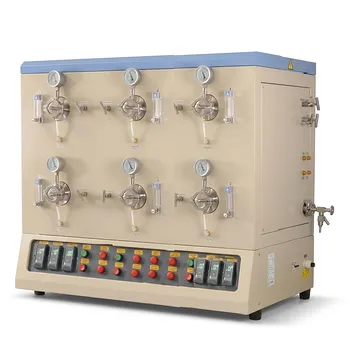
1200C High Throughput Multi Channel Tube Furnace with 50mm Quartz Tubes for Annealing and Material Phase Diagram Research

High Temperature Tube Furnace 1500C with Sliding Flanges and 50mm OD for Rapid Thermal Processing Fast Heating and Cooling

High Temperature 1700C Benchtop Tube Furnace with 5 Inch Heating Zone High Purity Alumina Tube and Vacuum Sealing Flanges

Compact High Temperature 1600C Tube Furnace with 50mm Alumina Tube and Vacuum Flanges for Material Sintering
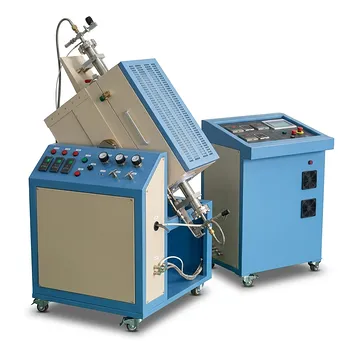
1100C High Pressure Rocking Tube Furnace with 2 Inch Super Alloy Processing Tube for Material Synthesis

High Temperature Automated 5 Inch Tube Furnace for Autonomous Material Research and Advanced Laboratory R&D
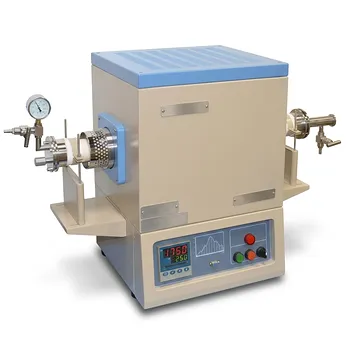
High Temperature Compact Vacuum Tube Furnace 1750C Max 60mm OD Alumina Tube

High Temperature 1700C Vertical Tube Furnace for Powder Spherification and Material Sintering
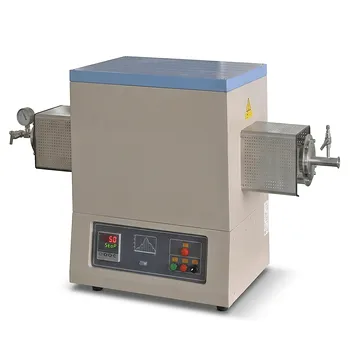
High Temperature 1700C Tube Furnace with 4 Inch OD Alumina Tube and Vacuum Sealing Flanges
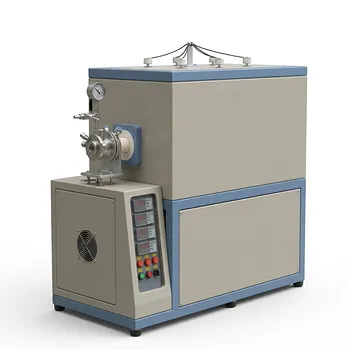
High Temperature 1700C Three Zone Tube Furnace with Alumina Tube 50mm 60mm 80mm OD for Material Research and Industrial Heat Treatment

1800C High Temperature Compact Vacuum Tube Furnace with 60mm OD Alumina Tube and Kanthal MoSi2 Heating Elements
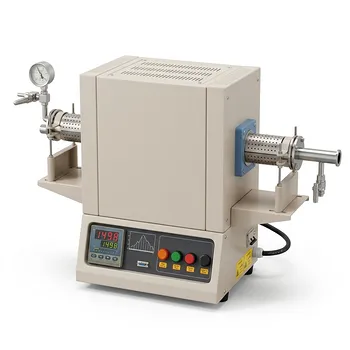
1500C High Temperature Compact Tube Furnace 2 Inch OD with Vacuum Flanges and Complete Accessories

1750°C High Temperature Benchtop Vacuum Atmosphere Tube Furnace with Kanthal Super 1800 Heating Elements and 60mm Alumina Processing Tube

High Temperature 1700C Six Zone Split Tube Furnace with Alumina Tube and Water Cooled Flanges
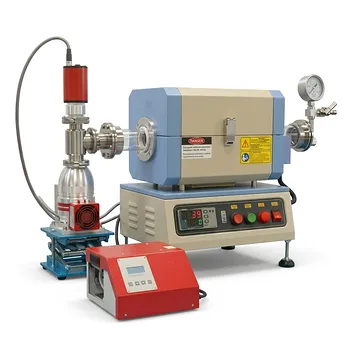
High Vacuum Compact Tube Furnace 1200C with Integrated Turbo Pump System and 8 Inch Heating Zone
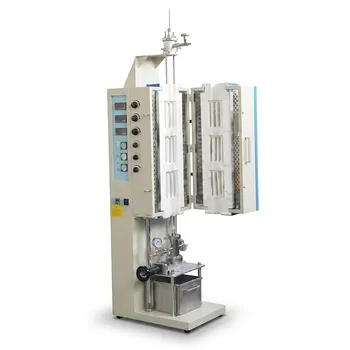
High Temperature Dual Zone Tube Furnace for Material Science Research and Professional Thermal Processing
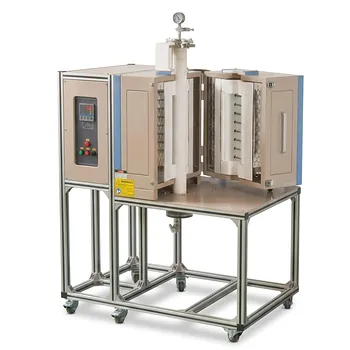
High Temperature 1700C Vertical Split Tube Furnace for Material Quenching and Single Crystal Growth
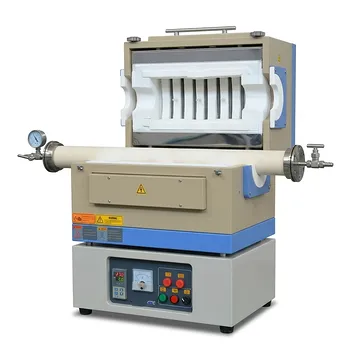
High Temperature 1600C Split Tube Furnace Vacuum Flanges Valves Optional 60mm 80mm Alumina Tube
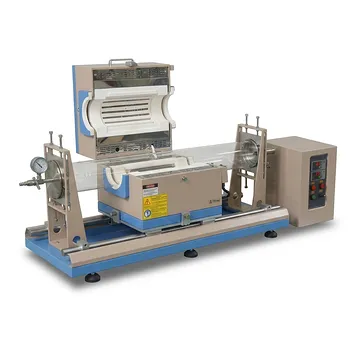
1200C High Temperature 5 Inch Sliding Tube Furnace for Rapid Thermal Processing RTP and Wafer Annealing