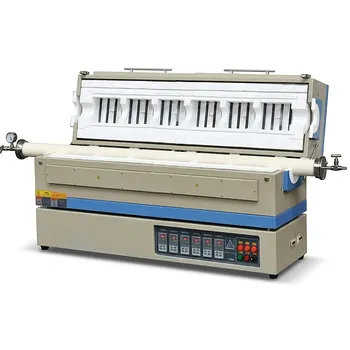
Why use an atmosphere tube furnace for carbon fiber carbonization? Key to structural strength and precision.
Updated 3 months ago
The use of a high-temperature atmosphere tube furnace is critical because it provides a strictly controlled, oxygen-free environment and precise thermal uniformity required to transform organic precursors into high-strength carbon structures. By operating at temperatures typically between 800°C and 1,000°C under inert gases like nitrogen or argon, the furnace facilitates the complete thermal decomposition of non-carbon elements while preventing the fiber from burning away through oxidation.
Core Takeaway: A high-temperature atmosphere tube furnace is the "enabling environment" for carbonization; its superior sealing and temperature control allow for the structural reorganization of carbon chains, resulting in fibers with high electrical conductivity, mechanical strength, and chemical stability.
The Role of Inert Atmosphere Protection
Preventing Oxidative Degradation
At temperatures exceeding 400°C, carbon fibers will react with oxygen and undergo oxidative loss, essentially turning the material into gas. The atmosphere tube furnace uses a hermetic seal to maintain a pure nitrogen or argon environment, ensuring the fibers remain structurally intact throughout the heating process.
Maintaining Chemical Stability and Yield
By excluding oxygen, the furnace allows for the safe removal of volatile components without damaging the carbonaceous skeleton. This high level of atmosphere control is what ensures a high yield of final product and the chemical stability of the resulting composite membranes or fibers.
Facilitating Sizing Removal
In some stages, the furnace is used at lower temperatures (around 450°C–550°C) to decompose polymer sizing on the fiber surface. This process exposes active functional groups and prepares the fiber for subsequent modifications or catalyst attachment without causing chemical damage to the underlying structure.
Thermal Transformation and Structural Reorganization
Eliminating Non-Carbon Elements
The high-temperature environment (reaching up to 1,000°C) promotes the pyrolysis of the polymer scaffold, such as electrospun fibers or phenolic resins. This process drives off hydrogen, nitrogen, and oxygen, leaving behind a concentrated and reorganized carbon matrix.
Creating the Conductive Carbon Matrix
The furnace's stable thermal field allows carbon atoms to rearrange into a high-aspect-ratio skeleton with metallic-grade electrical conductivity. This transition is foundational for applications requiring electromagnetic wave absorption or flexible energy storage electrodes.
Preserving Delicate Nanostructures
Precise temperature control ensures that while the polymer converts to carbon, complex additives—such as two-dimensional MXenes—retain their structure. This results in advanced materials that combine the high strength of carbon fibers with the specialized properties of nanomaterials.
The Importance of Technical Precision
Superior Temperature Field Uniformity
Consistency in the carbonization degree throughout a specimen depends entirely on how evenly the heat is distributed within the furnace. The design of a tube furnace ensures that every fiber experiences the same thermal history, preventing weak spots or inconsistent mechanical performance.
Accuracy in Gas Flow Control
Managing the flow of inert gas (e.g., at 50 mL/min) is essential for removing volatile byproducts generated during pyrolysis. If these gases are not properly swept away by the controlled atmosphere, they can settle on the fibers and interfere with the formation of the carbon structure.
Understanding the Trade-offs and Pitfalls
The Risk of Seal Failure
The most significant risk in using a tube furnace is a compromised seal, which allows oxygen to leak into the chamber. Even trace amounts of oxygen at 900°C can cause rapid degradation, leading to brittle fibers and a total loss of mechanical integrity.
Balancing Temperature and Material Integrity
While higher temperatures generally improve conductivity, exceeding the optimal range for a specific precursor can lead to structural defects. If the heating rate is too aggressive or the temperature is too high for the specific polymer, the resulting carbon fiber may become overly porous or lose its intended flexible properties.
How to Apply This to Your Project
Choosing the Right Parameters
- If your primary focus is electrical conductivity: Set the furnace to at least 900°C–1,000°C under a high-purity nitrogen atmosphere to maximize carbon chain reorganization.
- If your primary focus is surface modification: Use a lower temperature range (450°C–550°C) in an inert atmosphere to cleanly remove sizing agents while preserving active functional groups for catalyst attachment.
- If your primary focus is material yield and stability: Ensure the furnace has a high-precision sealing system and a consistent gas flow rate to prevent oxidative loss and ensure uniform pyrolysis.
The high-temperature atmosphere tube furnace is the indispensable tool that transforms raw polymer precursors into the high-performance carbon matrices required for modern aerospace, energy, and electronics applications.
Summary Table:
| Feature | Role in Carbonization | Impact on Fiber Quality |
|---|---|---|
| Inert Atmosphere | Prevents oxidative degradation | Ensures high yield and chemical stability |
| Thermal Uniformity | Consistent heat distribution | Prevents weak spots and uneven performance |
| Gas Flow Control | Removes volatile byproducts | Maintains pure carbon matrix structure |
| Precise Pyrolysis | Drives off non-carbon elements | Creates high-strength, conductive skeletons |
Optimize Your Material Research with THERMUNITS
Achieving superior carbonization and high-performance material structures requires the absolute thermal precision offered by THERMUNITS. As a leading manufacturer of high-temperature laboratory equipment for material science and industrial R&D, we empower researchers with reliable, high-specification heating solutions.
Our comprehensive range of thermal processing systems includes:
- Tube & Atmosphere Furnaces (Optimized for controlled environments)
- Muffle & Vacuum Furnaces
- CVD/PECVD Systems
- Rotary, Hot Press, and Dental Furnaces
- Vacuum Induction Melting (VIM) & Thermal Elements
Whether you are developing advanced aerospace composites or energy storage electrodes, our equipment ensures consistent results and technical excellence. Contact THERMUNITS Today to find the perfect thermal solution for your laboratory needs.
References
- Zhiqiang Guo, Pengfei Yin. Multiple Tin Compounds Modified Carbon Fibers to Construct Heterogeneous Interfaces for Corrosion Prevention and Electromagnetic Wave Absorption. DOI: 10.1007/s40820-024-01527-w
Mentioned Products
- 1750°C High Temperature Benchtop Vacuum Atmosphere Tube Furnace with Kanthal Super 1800 Heating Elements and 60mm Alumina Processing Tube
- High Temperature 1200C Split Tube Furnace for CVD Research and Vacuum Atmosphere Heat Treatment
- High Temperature Split Tube Furnace 1500C for Material Research Vacuum and Atmosphere Thermal Processing
- High Temperature Vertical Atmosphere Controlled Furnace with Automatic Bottom Loading and 1700°C Capacity for Advanced Material Research
- 1700C High Temperature Alumina Tube Furnace with 18 Inch Heated Zone and Vacuum Sealing Flanges
People Also Ask
- What core functions does a high-temperature vacuum tube furnace provide? Optimize np-CuSn Sintering & Joint Integrity
- What is the role of a high-temperature tube furnace in the calcination process of ZnO/In2O3 nanocomposites?
- What role does a high-temperature tube furnace play in the sulfidation heat treatment of CoS@C/MXene nanocomposites? Guide
- Why is a high-temperature tube furnace required for CuAlO2 heat treatment? Master Phase Transformation Today
- What role does a high-temperature tube furnace play in executing nitrogen absorption kinetic experiments? Expert Insights

Tech Team · ThermUnits
Last updated on Jun 02, 2026
Related Products
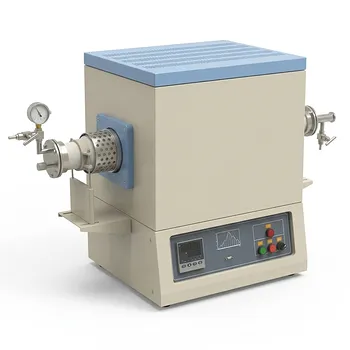
1750°C High Temperature Benchtop Vacuum Atmosphere Tube Furnace with Kanthal Super 1800 Heating Elements and 60mm Alumina Processing Tube
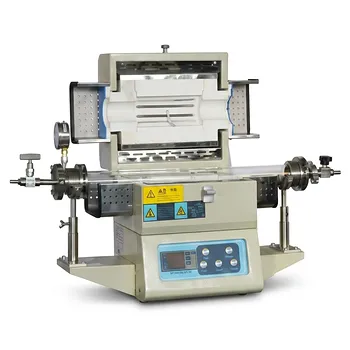
High Temperature 1200C Split Tube Furnace for CVD Research and Vacuum Atmosphere Heat Treatment
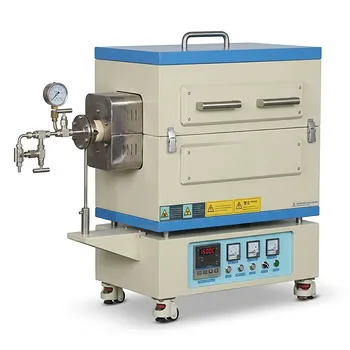
High Temperature Split Tube Furnace 1500C for Material Research Vacuum and Atmosphere Thermal Processing
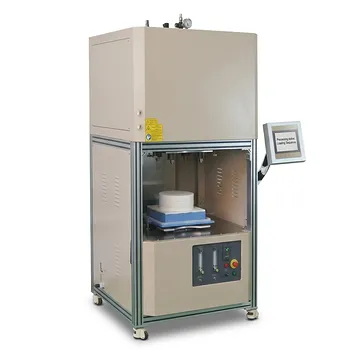
High Temperature Vertical Atmosphere Controlled Furnace with Automatic Bottom Loading and 1700°C Capacity for Advanced Material Research
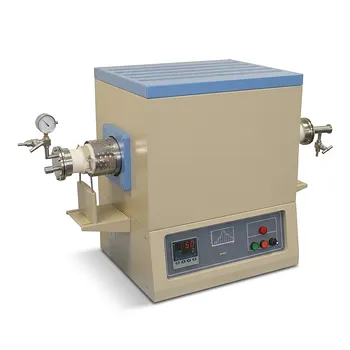
1700C High Temperature Alumina Tube Furnace with 18 Inch Heated Zone and Vacuum Sealing Flanges

High Temperature 1700C Tube Furnace with High Vacuum Turbomolecular Pump System and Multi Channel Mass Flow Controller Gas Mixer
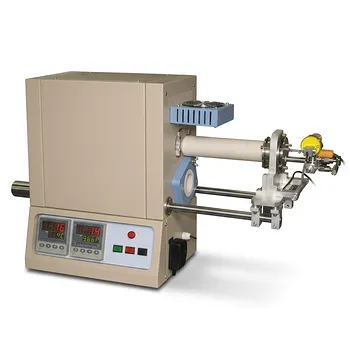
High Temperature Tube Furnace 1500C with Sliding Flanges and 50mm OD for Rapid Thermal Processing Fast Heating and Cooling
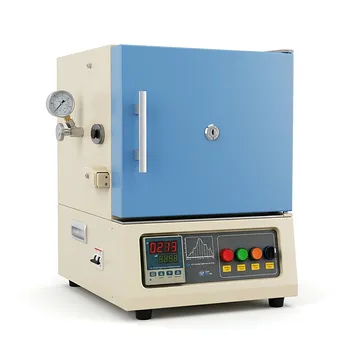
1200C Hybrid Muffle and Tube Furnace for Material Research with Dual Atmosphere Control Quartz Tubes
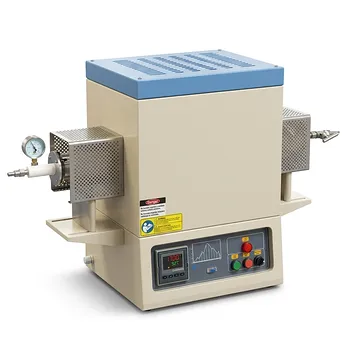
High Temperature Three Zone Tube Furnace 1700C with Alumina Tube and Water Cooled Flanges
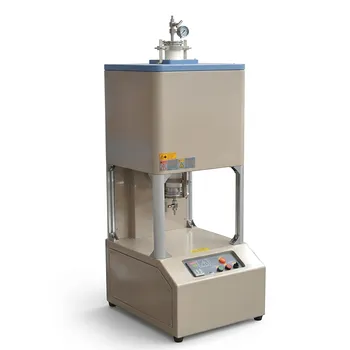
Vertical 1700C Vacuum and Atmosphere Tube Furnace with 80mm Alumina Tube
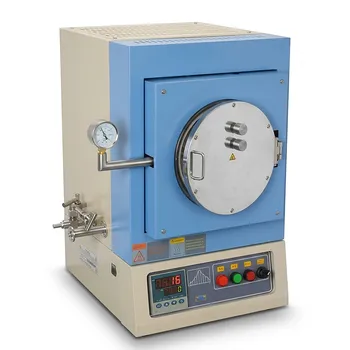
1100°C High Temperature Quartz Chamber Furnace 8 Inch OD with 7.6 Liter Capacity and Vacuum Atmosphere Capability
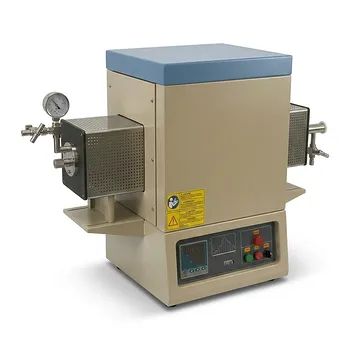
High Temperature 1700C Benchtop Tube Furnace with 5 Inch Heating Zone High Purity Alumina Tube and Vacuum Sealing Flanges

Compact High Temperature 1600C Tube Furnace with 50mm Alumina Tube and Vacuum Flanges for Material Sintering

1800C High Temperature Compact Vacuum Tube Furnace with 60mm OD Alumina Tube and Kanthal MoSi2 Heating Elements
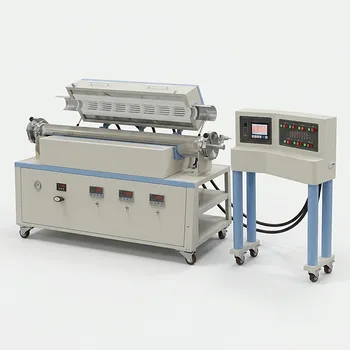
1100C Eight Zone High Pressure Super Alloy Tube Furnace with Integrated High Pressure Gas Control System

High Temperature 1700C Vertical Tube Furnace for Powder Spherification and Material Sintering
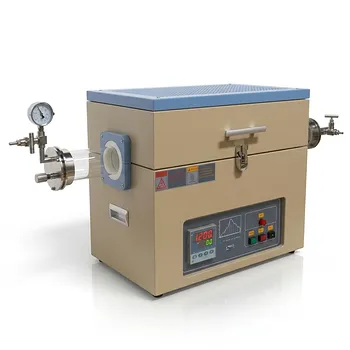
High Temperature 1200C Split Tube Furnace with Optional Quartz Tube Sizes and Vacuum Sealing Flanges for Material Science Research
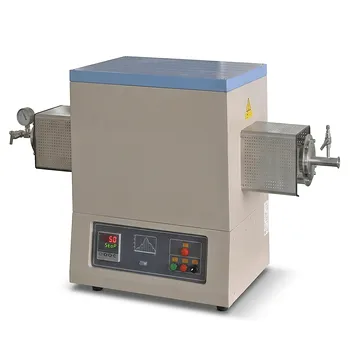
High Temperature 1700C Tube Furnace with 4 Inch OD Alumina Tube and Vacuum Sealing Flanges
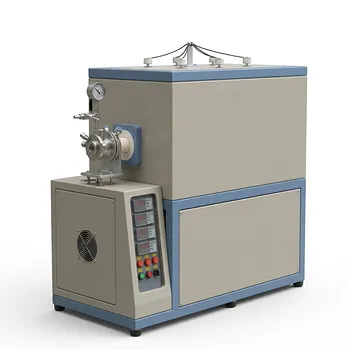
High Temperature 1700C Three Zone Tube Furnace with Alumina Tube 50mm 60mm 80mm OD for Material Research and Industrial Heat Treatment