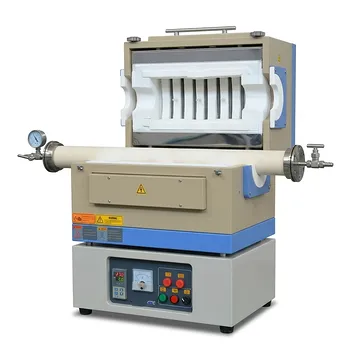
What is the role of a high-precision tube furnace in g-C3N4 synthesis? Master Thermal Polycondensation Control
Updated 3 months ago
A high-precision tube furnace acts as the critical reactor for thermal polycondensation, providing the exact thermal ramp and stable dwell temperature required to synthesize graphitic carbon nitride (g-C₃N₄). By maintaining a precise heating rate—typically 2 °C/min—and a constant temperature of 550 °C, the furnace facilitates the orderly deamination and polymerization of precursors like melamine or urea. This rigorous control ensures the complete transformation of monomers into a high-crystallinity, two-dimensional layered structure with stable energy band properties.
The core role of a high-precision tube furnace is to provide a stable, uniform thermal field and controlled atmosphere that dictates the crystallinity and structural integrity of g-C₃N₄. It ensures that chemical bonds reorganize under uniform thermal stress, preventing structural defects or incomplete conversion.
Precise Kinetic Control via Heating Rates
Managing Deamination and Polymerization
The furnace allows for a slow, controlled heating ramp (often 2 °C/min to 5 °C/min) which is vital for the gradual release of ammonia during the deamination phase. This measured pace prevents the structural collapse of the precursor and ensures that the emerging triazine or heptazine rings organize into a stable lattice.
Ensuring Thermal Uniformity
High-precision furnaces eliminate temperature gradients within the reaction zone, subjecting the precursor to uniform thermal stress. This uniformity is the primary factor behind achieving consistent product coloration and a homogenous energy band structure across the entire batch.
Atmospheric Integrity and Purity
Preventing Oxidative Loss
Unlike standard muffle furnaces, a tube furnace can be sealed to introduce inert gases like Argon. This protective atmosphere prevents the oxidative degradation of the g-C₃N₄ at high temperatures, which would otherwise result in significant material loss and lower purity.
Stable Maintenance Cycles
The furnace’s ability to maintain a rock-steady temperature (e.g., 550 °C for 4 to 6 hours) is essential for the "annealing" of the carbon nitride layers. This long-term stability allows for the maximization of crystallinity, directly impacting the material's performance in photocatalytic applications.
Understanding the Trade-offs and Pitfalls
Tube Furnace vs. Muffle Furnace
While muffle furnaces are often used for bulk synthesis, they lack the atmosphere control and high-level thermal uniformity of a tube furnace. Choosing a muffle furnace may result in higher oxygen content in the final g-C₃N₄, which can alter its semiconductor properties.
The Risk of Over-Calcination
Exceeding the optimal temperature or duration (e.g., going beyond 600 °C) can lead to the thermal decomposition of the graphitic structure. Precise temperature calibration is mandatory, as even a minor overshoot can cause the material to sublime, resulting in near-zero yields.
How to Apply This to Your Synthesis
Making the Right Choice for Your Goal
- If your primary focus is high photocatalytic activity: Use a tube furnace with Argon flow to ensure maximum crystallinity and a defect-free layered structure.
- If your primary focus is scaling up raw production: A high-precision muffle furnace may suffice, provided you compensate for potential oxidative loss with specific precursor shielding.
- If your primary focus is tuning the band gap: Utilize the furnace's programmable stages to implement precise annealing cycles (e.g., 520 °C for 2 hours) to stabilize the energy structure.
Ultimately, the tube furnace serves as the definitive tool for transforming simple organic precursors into a sophisticated, high-performance semiconductor through the mastery of thermal precision.
Summary Table:
| Feature | Role in g-C3N4 Synthesis | Benefit to Material |
|---|---|---|
| Precise Heating Rate | Controlled ramp (e.g., 2°C/min) | Ensures orderly deamination and polymerization |
| Thermal Uniformity | Eliminates temperature gradients | Consistent energy band structure and coloration |
| Atmosphere Control | Sealed environment for Inert Gas | Prevents oxidative degradation and material loss |
| Temp. Stability | Constant 550°C for 4-6 hours | Maximizes crystallinity and structural integrity |
Elevate Your Material Research with THERMUNITS
Precision is the backbone of successful semiconductor synthesis. THERMUNITS is a leading manufacturer of high-temperature laboratory equipment, providing the rigorous thermal control required for material science and industrial R&D.
Our comprehensive range of thermal processing solutions—including Tube, Muffle, Vacuum, Atmosphere, and Rotary furnaces, as well as CVD/PECVD systems—is designed to help you achieve high-crystallinity results and defect-free structures.
Ready to optimize your heat treatment process? Contact our experts today to find the perfect furnace for your lab!
References
- Fahad Hassan, Abdallah Shanableh. Solar-matched S-scheme ZnO/g-C3N4 for visible light-driven paracetamol degradation. DOI: 10.1038/s41598-024-60306-0
Mentioned Products
- 1200C High Throughput Multi Channel Tube Furnace with 50mm Quartz Tubes for Annealing and Material Phase Diagram Research
- High Temperature 1700C Benchtop Tube Furnace with 5 Inch Heating Zone High Purity Alumina Tube and Vacuum Sealing Flanges
- High Temperature Tube Furnace 1500C with Sliding Flanges and 50mm OD for Rapid Thermal Processing Fast Heating and Cooling
- Compact High Temperature 1600C Tube Furnace with 50mm Alumina Tube and Vacuum Flanges for Material Sintering
- 1100C High Pressure Rocking Tube Furnace with 2 Inch Super Alloy Processing Tube for Material Synthesis
People Also Ask
- Why is high-purity alumina selected for sample trays? Key to High-Throughput Sintering Success
- How does a high-throughput tube furnace achieve precise sulfurization? Expert Control for CoS2–Co(OH)F Nanostructures
- How does the precise temperature control of a tube furnace influence the formation of V2AlC MAX phase? Expert Insights.
- What is the function of argon gas flow within a tube furnace during the selenization of MOFs? Essential Process Guide
- Why is precision temperature programming in a tube furnace critical for the synthesis of molybdenum-based metal nitrides?

Tech Team · ThermUnits
Last updated on Jun 02, 2026
Related Products

1200C High Throughput Multi Channel Tube Furnace with 50mm Quartz Tubes for Annealing and Material Phase Diagram Research

High Temperature 1700C Benchtop Tube Furnace with 5 Inch Heating Zone High Purity Alumina Tube and Vacuum Sealing Flanges

High Temperature Tube Furnace 1500C with Sliding Flanges and 50mm OD for Rapid Thermal Processing Fast Heating and Cooling

Compact High Temperature 1600C Tube Furnace with 50mm Alumina Tube and Vacuum Flanges for Material Sintering
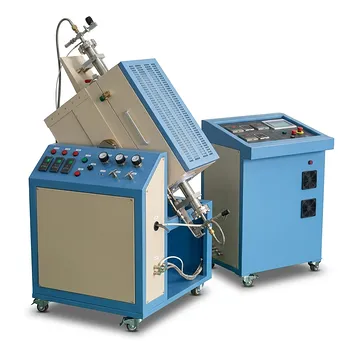
1100C High Pressure Rocking Tube Furnace with 2 Inch Super Alloy Processing Tube for Material Synthesis

High Temperature Automated 5 Inch Tube Furnace for Autonomous Material Research and Advanced Laboratory R&D
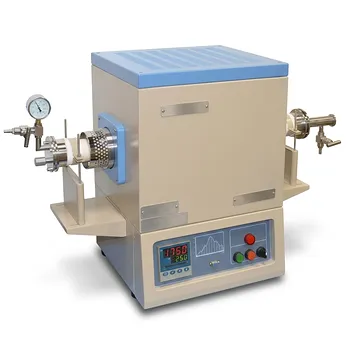
High Temperature Compact Vacuum Tube Furnace 1750C Max 60mm OD Alumina Tube

High Temperature 1700C Vertical Tube Furnace for Powder Spherification and Material Sintering

High Temperature 1700C Tube Furnace with High Vacuum Turbomolecular Pump System and Multi Channel Mass Flow Controller Gas Mixer
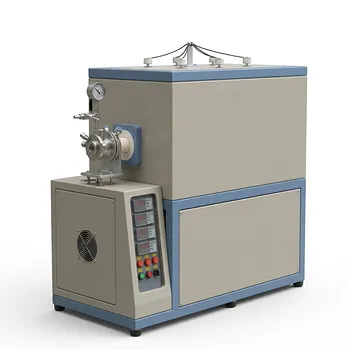
High Temperature 1700C Three Zone Tube Furnace with Alumina Tube 50mm 60mm 80mm OD for Material Research and Industrial Heat Treatment
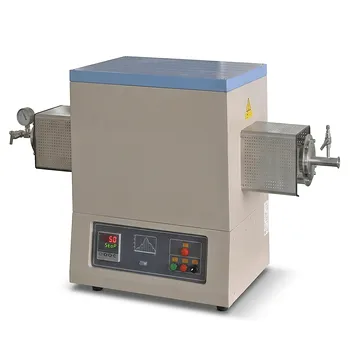
High Temperature 1700C Tube Furnace with 4 Inch OD Alumina Tube and Vacuum Sealing Flanges

1800C High Temperature Compact Vacuum Tube Furnace with 60mm OD Alumina Tube and Kanthal MoSi2 Heating Elements
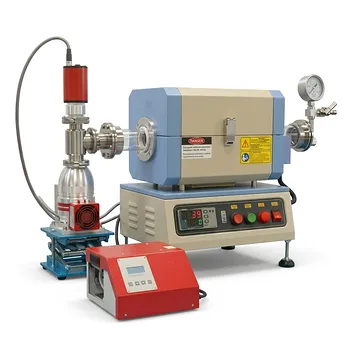
High Vacuum Compact Tube Furnace 1200C with Integrated Turbo Pump System and 8 Inch Heating Zone
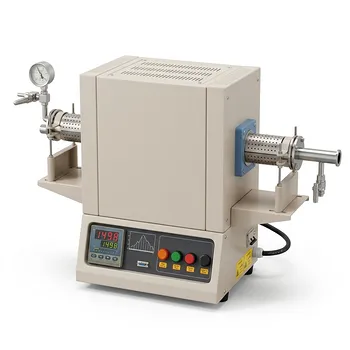
1500C High Temperature Compact Tube Furnace 2 Inch OD with Vacuum Flanges and Complete Accessories
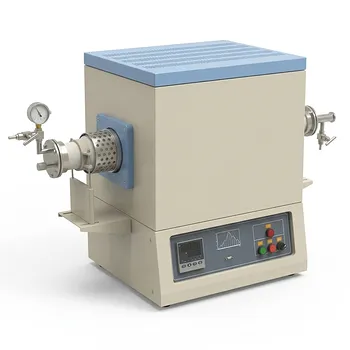
1750°C High Temperature Benchtop Vacuum Atmosphere Tube Furnace with Kanthal Super 1800 Heating Elements and 60mm Alumina Processing Tube

High Temperature 1700C Six Zone Split Tube Furnace with Alumina Tube and Water Cooled Flanges
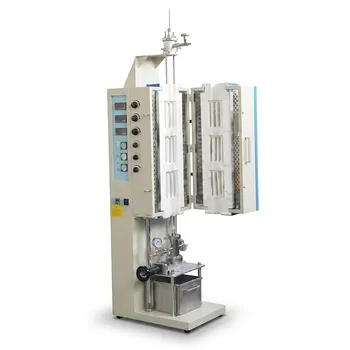
High Temperature Dual Zone Tube Furnace for Material Science Research and Professional Thermal Processing
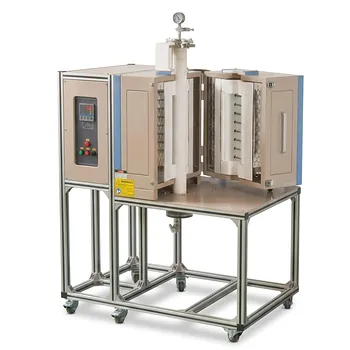
High Temperature 1700C Vertical Split Tube Furnace for Material Quenching and Single Crystal Growth
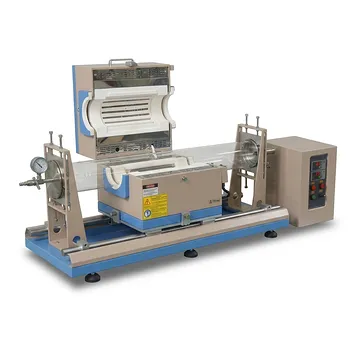
1200C High Temperature 5 Inch Sliding Tube Furnace for Rapid Thermal Processing RTP and Wafer Annealing