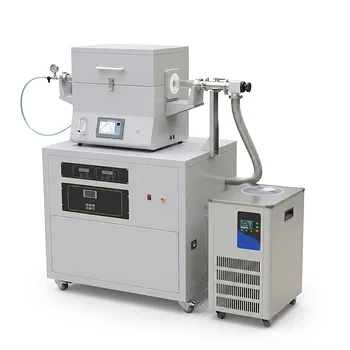
What role does a high-precision tube furnace CVD system play in Tellurium nanosheet synthesis? Expert Insights.
Updated 3 months ago
The high-precision tube furnace CVD system serves as the foundational thermal architecture for synthesizing high-quality Tellurium (Te) nanosheets. It acts as a controlled reaction vessel that precisely manages the sublimation of precursors—specifically heating Tellurium Dioxide ($TeO_2$) to 750°C—and the subsequent gas-phase transport and deposition onto substrates. By regulating temperature gradients and gas flow rates ($Ar/H_2$), the system ensures the structural integrity and uniformity required for high-performance heterojunction photodetectors.
A high-precision tube furnace provides the critical thermal stability and gas-flow control necessary to convert solid precursors into uniform, high-quality Tellurium nanosheets. This precision directly determines the crystalline quality and thickness of the material, which are the primary factors influencing the sensitivity and charge transport efficiency of the resulting photodetector.
Thermal Precision as a Growth Catalyst
Regulating the Sublimation of Precursors
The furnace provides the high-temperature environment necessary to gasify solid raw materials. In Te synthesis, it specifically heats Tellurium Dioxide ($TeO_2$) powder to approximately 750°C, turning it into a vapor phase.
Creating a Stable Reaction Zone
High-precision systems offer excellent temperature zone stability, which is the physical foundation for controlling the thin-film growth rate. This stability ensures that the chemical reactions occur consistently across the entire substrate, preventing structural defects.
Establishing Temperature Gradients
By managing independent heating zones, the furnace creates a stable temperature gradient within the quartz tube. This allows precursors to volatilize in a high-temperature zone and subsequently deposit onto a substrate located in a lower-temperature zone.
Gas Dynamics and Material Transport
Managing Reducing Environments
The system allows for the precise management of reduction gases, specifically Argon and Hydrogen ($Ar/H_2$). This controlled atmosphere is essential for the chemical reduction of $TeO_2$ into pure Tellurium nanosheets.
Controlled Vapor Transport
The furnace’s airflow control mechanisms manage the carrier gas that transports gaseous precursors to the substrate. Precise gas flow ensures that the material is deposited at the atomic or molecular scale, allowing for controllable layer thickness.
Sealing and Purity Control
Advanced tube furnaces feature high-quality sealing performance and vacuum control. This prevents oxygen contamination, which is critical for maintaining the high carrier mobility required for photodetector applications.
Impact on Photodetector Performance
Ensuring Crystalline Quality
The controlled thermal process in a CVD furnace is fundamental to ensuring high crystalline quality. For heterojunction photodetectors, a well-ordered lattice structure is required to minimize charge recombination and maximize sensitivity.
Uniformity Across Large Areas
High-precision systems enable the growth of large-scale Tellurium nanosheet samples. This scalability is essential for creating practical devices that require uniform performance across the entire sensor surface.
Morphology and Thickness Control
By adjusting the temperature and gas flow, researchers can precisely control the morphology and composition of the nanosheets. This allows for the optimization of the material's bandgap and optical absorption properties for specific light-sensing applications.
Understanding the Trade-offs
Temperature Gradient Sensitivity
If the temperature gradient between the source and the substrate is too steep, the deposition may be too rapid, leading to polycrystalline clusters rather than smooth nanosheets. Conversely, a gradient that is too shallow can result in extremely slow growth rates or insufficient material deposition.
Gas Flow Velocity Balances
High gas flow rates can improve the delivery of precursors but may cause turbulence within the quartz tube, leading to non-uniform thickness. Low flow rates might result in precursor depletion before the gas reaches the end of the substrate.
Thermal Inertia and Cooling Rates
While high-precision furnaces are excellent at maintaining heat, their thermal inertia can make rapid cooling difficult. Controlled cooling is often necessary to prevent thermal stress and cracking in the nanosheets as they solidify on the substrate.
How to Apply This to Your Project
When utilizing a CVD tube furnace for Tellurium nanosheet synthesis, your configuration should align with your specific performance requirements for the photodetector.
- If your primary focus is High Carrier Mobility: Prioritize vacuum integrity and the precision of the $H_2$ reduction gas flow to ensure maximum purity and crystalline order.
- If your primary focus is Large-Scale Device Uniformity: Focus on a multi-zone furnace configuration to ensure a perfectly flat temperature profile across the entire length of the substrate.
- If your primary focus is Thickness Control (Layer Tuning): Invest in high-precision Mass Flow Controllers (MFCs) to manage the carrier gas at very low, stable velocities.
The synthesis of high-performance Tellurium nanosheets is entirely dependent on the furnace's ability to maintain a rigorous and repeatable thermal and chemical environment.
Summary Table:
| Key Feature | Specific Role in Te Synthesis | Impact on Photodetector |
|---|---|---|
| Thermal Stability | Heats $TeO_2$ precisely to 750°C | Ensures high crystalline quality |
| Atmosphere Control | Manages $Ar/H_2$ reducing environment | Prevents oxidation; maintains purity |
| Temperature Gradient | Creates stable zones for deposition | Controls nanosheet thickness/morphology |
| Gas Dynamics | Regulates carrier gas flow rates | Guarantees large-area uniformity |
Elevate Your Material Research with THERMUNITS Precision
As a leading manufacturer of high-temperature laboratory equipment, THERMUNITS provides the advanced thermal solutions necessary for cutting-edge material science. Whether you are synthesizing 2D materials like Tellurium nanosheets or developing industrial R&D applications, our comprehensive range of equipment—including CVD/PECVD systems, Tube furnaces, Vacuum furnaces, and Atmosphere furnaces—ensures the repeatability and precision your work demands.
Our expertise extends to Muffle, Rotary, Hot Press, and Dental furnaces, as well as vacuum induction melting (VIM) and electric rotary kilns. Partner with us to achieve superior crystalline quality and uniform material deposition.
Contact THERMUNITS today to customize your thermal processing solution!
References
- Zhiyuan Dai, Jing Zhou. Room‐Temperature Blackbody‐Sensitive Photodetector with Visible‐To‐Long‐Wavelength‐Infrared Photoresponse and Ultrafast Speed Based on a Te/PtSe<sub>2</sub> Heterostructure. DOI: 10.1002/aelm.202400268
Mentioned Products
- Multi Heating Zones CVD Tube Furnace System for Precision Chemical Vapor Deposition and Advanced Material Synthesis
- High Temperature 1800C Atmosphere Tube Furnace for CVD Research and Vacuum Sintering Precision Heat Treatment
- 1500C 3-Zone Rotary Tube Furnace 60mm with Automatic Powder Feeding and Receiving System for Continuous Material Synthesis
- 1200°C High Temperature 4 Inch Tube Furnace with Sliding Flange for CVD Systems
- High Temperature Dual Zone Rotating Tube Furnace 1500C Silicon Carbide Heating for Advanced Material Synthesis
People Also Ask
- How does a sliding rail design benefit the CVD process within a furnace ventilation hood? Enhance Control & Quenching
- How does the deposition process occur within a Chemical Vapor Deposition (CVD) reactor? Explore the 5-Stage Growth Cycle
- What are the primary differences between hot-wall and cold-wall CVD reactors? Choose the Best System for High Purity
- What is the primary function of a CVD system in the synthesis of Bi2O2Se thin films? Master High-Quality Crystal Growth
- What is the core function of a CVD system in FG-FET fabrication? High-Quality Graphene Synthesis for Research

Tech Team · ThermUnits
Last updated on Jun 02, 2026
Related Products
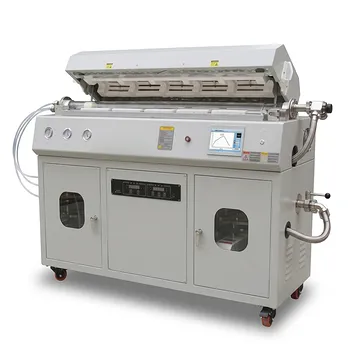
Multi Heating Zones CVD Tube Furnace System for Precision Chemical Vapor Deposition and Advanced Material Synthesis
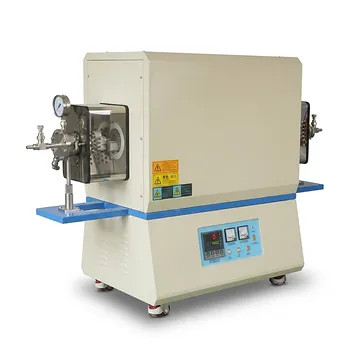
High Temperature 1800C Atmosphere Tube Furnace for CVD Research and Vacuum Sintering Precision Heat Treatment
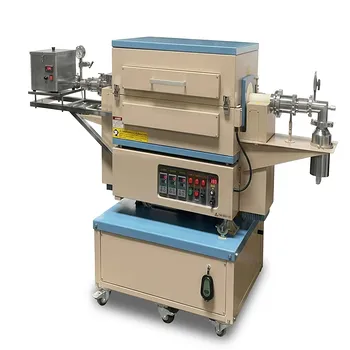
1500C 3-Zone Rotary Tube Furnace 60mm with Automatic Powder Feeding and Receiving System for Continuous Material Synthesis
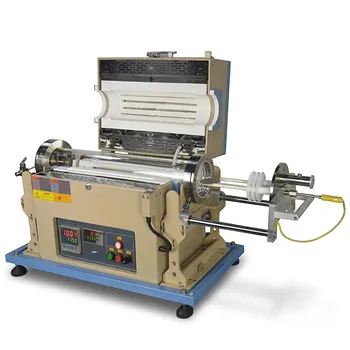
1200°C High Temperature 4 Inch Tube Furnace with Sliding Flange for CVD Systems
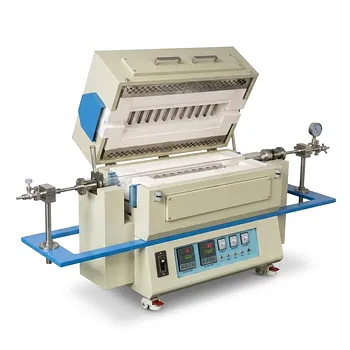
High Temperature Dual Zone Rotating Tube Furnace 1500C Silicon Carbide Heating for Advanced Material Synthesis
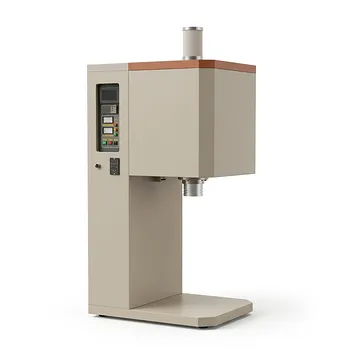
Vertical Openable Tube Furnace 0-1700c High Temperature Laboratory System for CVD and Vacuum Heat Treatment
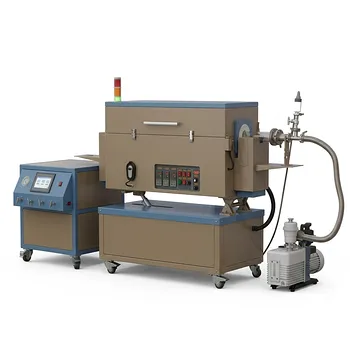
5 Inch Three Zone Rotary Tube Furnace with Integrated Gas Delivery System and 1200C Capability for Advanced Material CVD Processing
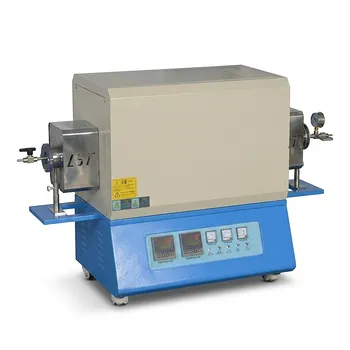
High Temperature Dual Zone Vacuum Tube Furnace for Material Research and CVD Processing
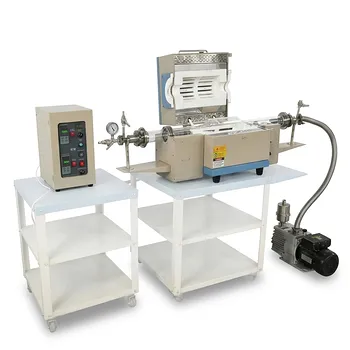
Two Zone Rotary Tube Furnace for Powder CVD Coating and Core Shell Material Synthesis 1100C
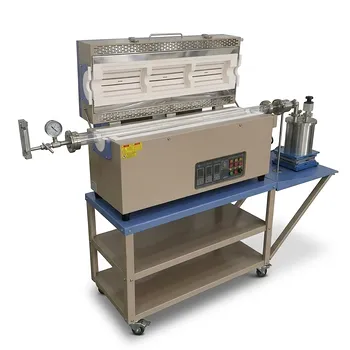
5 Inch Two Zone Rotary Tube Furnace 1100C for Powder CVD and Material Synthesis

High Temperature 1700C Tube Furnace with High Vacuum Turbomolecular Pump System and Multi Channel Mass Flow Controller Gas Mixer
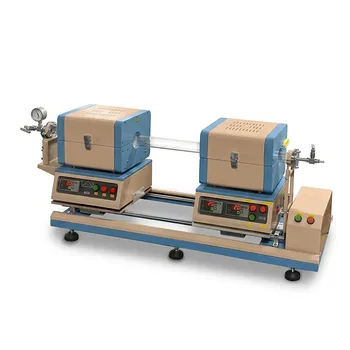
High Temperature 1200C Automatic Sliding Dual Zone Tube Furnace for 2D Transition Metal Dichalcogenides Growth and Material Sublimation Research
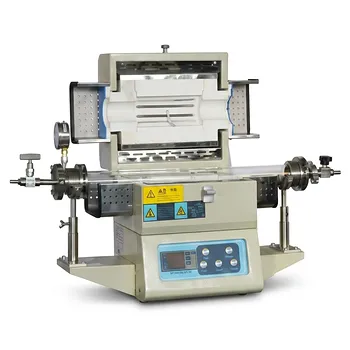
High Temperature 1200C Split Tube Furnace for CVD Research and Vacuum Atmosphere Heat Treatment
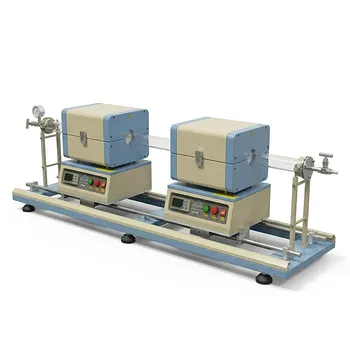
1200C Max Dual Sliding Tube Furnace with 50 mm Tube Flanges for CVD
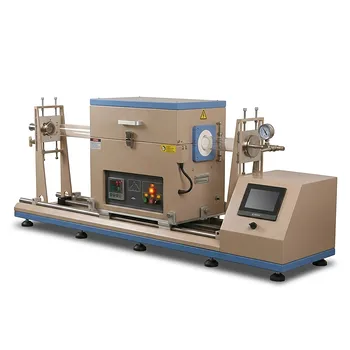
1200C Sliding Tube Furnace for Rapid Thermal Processing and CVD Graphene Growth with 100mm OD Capacity
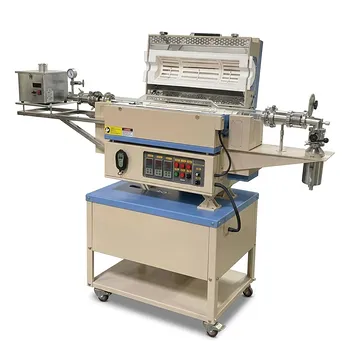
5 Inch Rotary Tube Furnace with Automatic Feeding and Receiving System 1200C Three Zone CVD Powder Processing
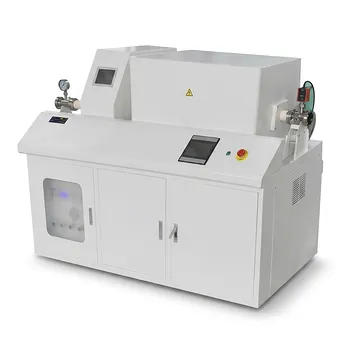
Chemical Vapor Deposition CVD System Slide PECVD Tube Furnace with Liquid Gasifier PECVD Machine

High Temperature 1700C Benchtop Tube Furnace with 5 Inch Heating Zone High Purity Alumina Tube and Vacuum Sealing Flanges
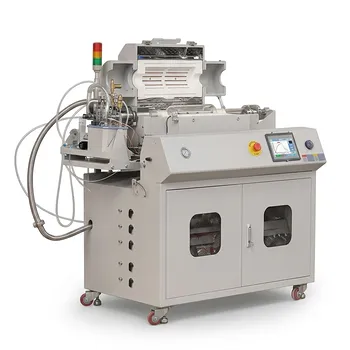
Versatile Chemical Vapor Deposition Tube Furnace System for Advanced Material Research and Industrial Coating Processes