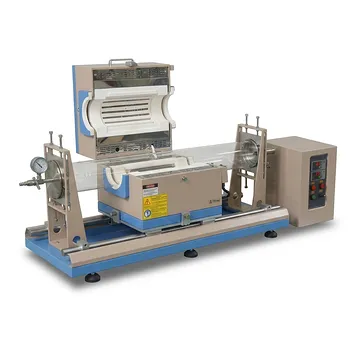
What role does a high-precision tube furnace play in TMD nanoribbon seed layer prep? Essential VLS Growth Insights
Updated 3 months ago
In the fabrication of Transition Metal Dichalcogenide (TMD) nanoribbons, the high-precision tube furnace acts as the primary reactor for synthesizing the foundational alloy seeds. It provides a strictly controlled thermal environment, typically reaching 730 °C, to evaporate mixed precursor powders like MoO2, Ni, and NaBr. This precise heating ensures that vapor-phase components condense uniformly on the substrate, forming alloy seeds with specific stoichiometry, such as Na-Mo-Ni-O, which serve as the physical template for nanoribbon growth.
The high-precision tube furnace is the critical engine for the Vapor-Liquid-Solid (VLS) growth mechanism, facilitating the transformation of solid precursors into stable liquid alloy droplets. Its ability to regulate temperature profiles and gas flow rates determines the chemical potential gradient necessary for producing high-quality, single-crystal nanoribbons with uniform morphology.
Establishing the Thermal Foundation for Seed Synthesis
Precision Evaporation of Precursor Powders
The furnace must maintain a stable high-temperature zone, often around 730 °C, to drive the evaporation of complex precursor mixtures. By utilizing programmable heating curves, the system ensures that materials with different sublimation points, such as molybdenum oxides and salt promoters, enter the vapor phase at the correct rates.
Controlling Vapor-Phase Condensation
Once evaporated, the tube furnace manages the cooling and transport of these vapors toward the substrate. This allows the precursors to condense into alloy seeds with a precise chemical composition, such as Na-Mo-Ni-O, which are essential for initiating the growth of single-crystal structures.
Uniformity Across the Substrate
A high-precision furnace minimizes thermal fluctuations across the reaction zone, ensuring that the seed layer is consistent in size and distribution. This thermal uniformity is the primary factor in achieving large-area, high-crystallinity TMD films and nanoribbons rather than fragmented or polycrystalline deposits.
Regulating Growth Kinetics via Atmosphere and Flow
Managing Carrier Gas Dynamics
Beyond temperature, the furnace regulates the flow of carrier gases (such as high-purity argon) to maintain a stable pressure environment. This flow is vital for transporting vaporized precursors to the growth site and maintaining the chemical potential gradient required for continuous crystal precipitation.
Sustaining the Liquid Phase for VLS Growth
The furnace must keep the environment above the liquefaction temperature of the pre-deposited alloy seeds. This transforms the solid seeds into liquid alloy droplets, which then absorb sulfur or selenium atoms from the vapor phase to reach a state of supersaturation.
Driving the Sulfurization Reaction
In many TMD synthesis paths, the furnace provides the thermal energy needed for reductive sulfurization. By accurately maintaining constant temperatures (sometimes as high as 850 °C), the furnace facilitates the chemical reaction between metal sources and chalcogen vapors to form the final nanoribbon structure.
Understanding the Trade-offs and Challenges
The Impact of Thermal Gradients
Even minor deviations in the furnace’s temperature profile can lead to non-uniform seed stoichiometry. If one end of the substrate is slightly cooler, the resulting seeds may lack the necessary nickel or sodium concentrations, leading to irregular nanoribbon widths or stunted growth.
Gas Flow Turbulence
High-precision control of gas velocity is required to avoid turbulence within the tube. Excessive flow rates can strip precursors from the substrate before they can condense, while insufficient flow can lead to precursor depletion and poor crystal quality over long distances.
Equipment Sensitivity
Maintaining a "high-precision" environment requires frequent calibration and high-quality vacuum seals. Any atmospheric contamination, such as oxygen leaks, can oxidize the precursors and completely inhibit the formation of the required alloy seeds.
Making the Right Choice for Your Synthesis Goal
The success of TMD nanoribbon growth depends entirely on how the tube furnace is configured to meet your specific research or production requirements.
- If your primary focus is high crystallinity: Prioritize a furnace with a long constant temperature zone to ensure stable chemical potential gradients during the VLS precipitation phase.
- If your primary focus is stoichiometric precision: Utilize a system with multi-stage programmable heating to precisely control the evaporation sequence of mixed powders like MoO2 and NaBr.
- If your primary focus is large-scale uniformity: Ensure the furnace is equipped with high-accuracy mass flow controllers to maintain a laminar gas flow across the entire length of the substrate.
The high-precision tube furnace is not merely a heater, but a sophisticated regulator of the physical and chemical conditions that define the birth and growth of nanostructures.
Summary Table:
| Furnace Function | Key Mechanism | Impact on TMD Growth |
|---|---|---|
| Precursor Evaporation | Stable 730°C heating | Ensures precise stoichiometry of Mo-Ni-Na-O seeds |
| Condensation Control | Managed cooling zones | Facilitates uniform seed distribution on substrates |
| Phase Regulation | VLS mechanism support | Maintains liquid alloy droplets for crystal precipitation |
| Atmosphere Flow | Laminar carrier gas flow | Preserves chemical potential and prevents turbulence |
Elevate Your Nano-Material Synthesis with THERMUNITS
Achieving high-crystallinity TMD nanoribbons requires absolute control over thermal gradients and gas dynamics. As a leading manufacturer of high-temperature laboratory equipment, THERMUNITS provides state-of-the-art Tube Furnaces, CVD/PECVD systems, and Atmosphere Furnaces specifically engineered for material science and industrial R&D. Our high-precision systems ensure the stoichiometric accuracy and thermal stability needed for advanced seed layer preparation and VLS growth.
Ready to optimize your research results?
Contact our technical experts today to find the perfect thermal processing solution for your laboratory.
References
- Xufan Li, Avetik R. Harutyunyan. Width-dependent continuous growth of atomically thin quantum nanoribbons from nanoalloy seeds in chalcogen vapor. DOI: 10.1038/s41467-024-54413-9
Mentioned Products
- 1200C High Throughput Multi Channel Tube Furnace with 50mm Quartz Tubes for Annealing and Material Phase Diagram Research
- High Temperature Tube Furnace 1500C with Sliding Flanges and 50mm OD for Rapid Thermal Processing Fast Heating and Cooling
- High Temperature 1700C Benchtop Tube Furnace with 5 Inch Heating Zone High Purity Alumina Tube and Vacuum Sealing Flanges
- Compact High Temperature 1600C Tube Furnace with 50mm Alumina Tube and Vacuum Flanges for Material Sintering
- 1100C High Pressure Rocking Tube Furnace with 2 Inch Super Alloy Processing Tube for Material Synthesis
People Also Ask
- Why is high-purity alumina selected for sample trays? Key to High-Throughput Sintering Success
- How does a high-throughput tube furnace achieve precise sulfurization? Expert Control for CoS2–Co(OH)F Nanostructures
- How does the precise temperature control of a tube furnace influence the formation of V2AlC MAX phase? Expert Insights.
- What is the function of argon gas flow within a tube furnace during the selenization of MOFs? Essential Process Guide
- What is the effect of introducing camphor as a carbon source in a tube furnace CVD? Boost CNT Density and Growth

Tech Team · ThermUnits
Last updated on Jun 03, 2026
Related Products
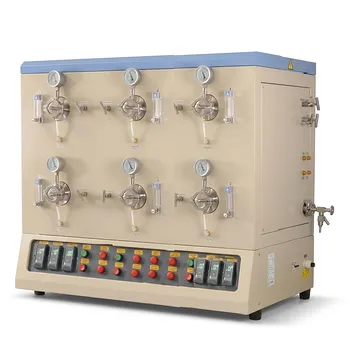
1200C High Throughput Multi Channel Tube Furnace with 50mm Quartz Tubes for Annealing and Material Phase Diagram Research
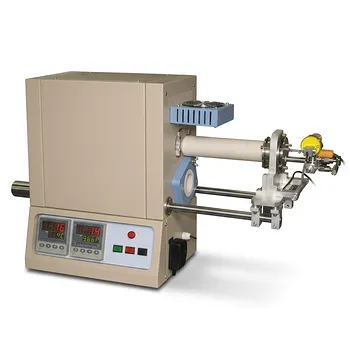
High Temperature Tube Furnace 1500C with Sliding Flanges and 50mm OD for Rapid Thermal Processing Fast Heating and Cooling

High Temperature 1700C Benchtop Tube Furnace with 5 Inch Heating Zone High Purity Alumina Tube and Vacuum Sealing Flanges

Compact High Temperature 1600C Tube Furnace with 50mm Alumina Tube and Vacuum Flanges for Material Sintering
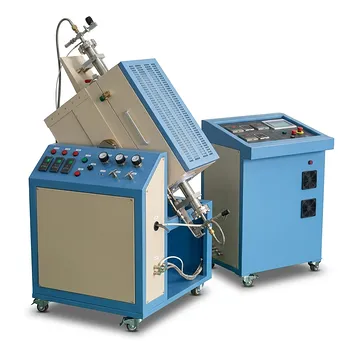
1100C High Pressure Rocking Tube Furnace with 2 Inch Super Alloy Processing Tube for Material Synthesis
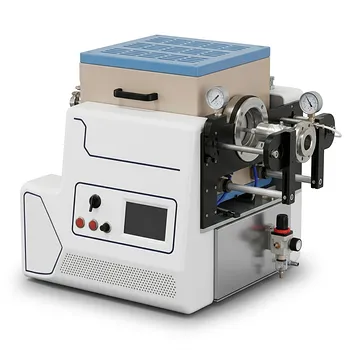
High Temperature Automated 5 Inch Tube Furnace for Autonomous Material Research and Advanced Laboratory R&D
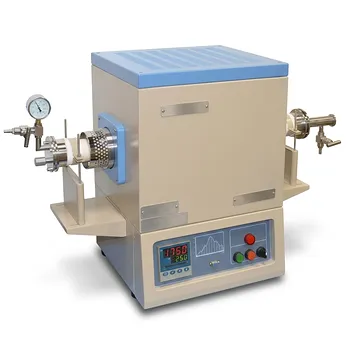
High Temperature Compact Vacuum Tube Furnace 1750C Max 60mm OD Alumina Tube

High Temperature 1700C Tube Furnace with High Vacuum Turbomolecular Pump System and Multi Channel Mass Flow Controller Gas Mixer

High Temperature 1700C Vertical Tube Furnace for Powder Spherification and Material Sintering
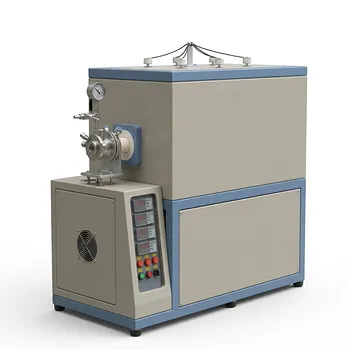
High Temperature 1700C Three Zone Tube Furnace with Alumina Tube 50mm 60mm 80mm OD for Material Research and Industrial Heat Treatment
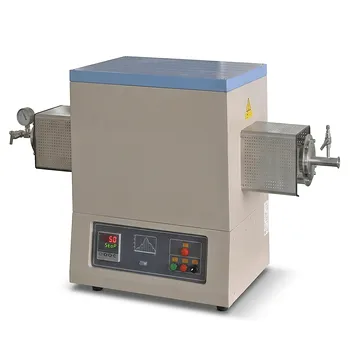
High Temperature 1700C Tube Furnace with 4 Inch OD Alumina Tube and Vacuum Sealing Flanges
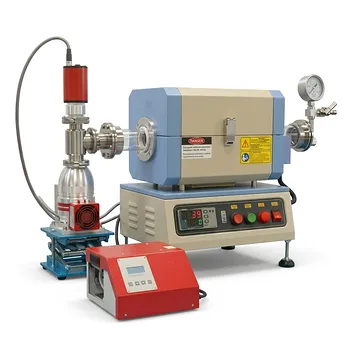
High Vacuum Compact Tube Furnace 1200C with Integrated Turbo Pump System and 8 Inch Heating Zone

1800C High Temperature Compact Vacuum Tube Furnace with 60mm OD Alumina Tube and Kanthal MoSi2 Heating Elements
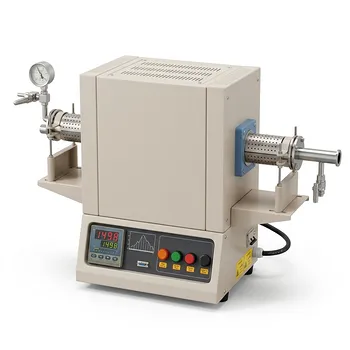
1500C High Temperature Compact Tube Furnace 2 Inch OD with Vacuum Flanges and Complete Accessories
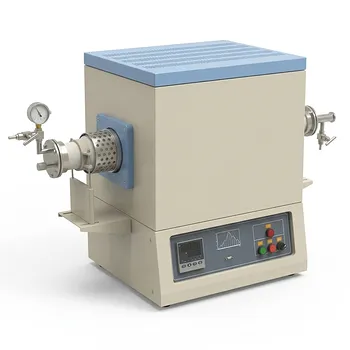
1750°C High Temperature Benchtop Vacuum Atmosphere Tube Furnace with Kanthal Super 1800 Heating Elements and 60mm Alumina Processing Tube
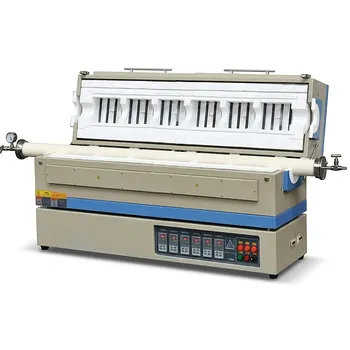
High Temperature 1700C Six Zone Split Tube Furnace with Alumina Tube and Water Cooled Flanges
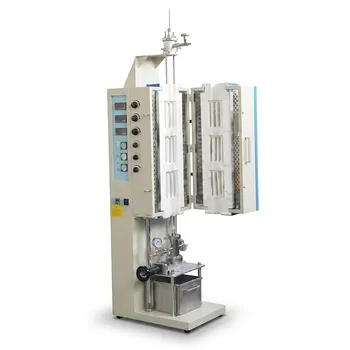
High Temperature Dual Zone Tube Furnace for Material Science Research and Professional Thermal Processing
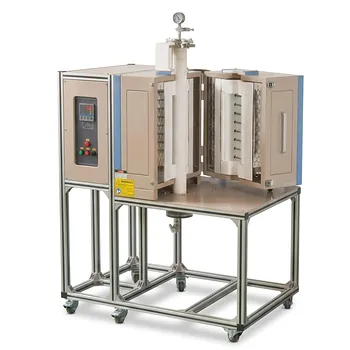
High Temperature 1700C Vertical Split Tube Furnace for Material Quenching and Single Crystal Growth
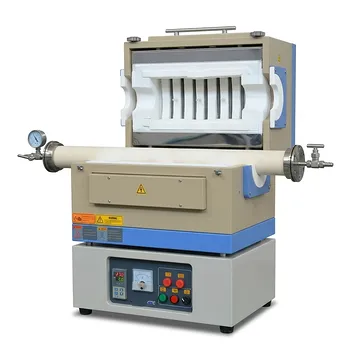
High Temperature 1600C Split Tube Furnace Vacuum Flanges Valves Optional 60mm 80mm Alumina Tube