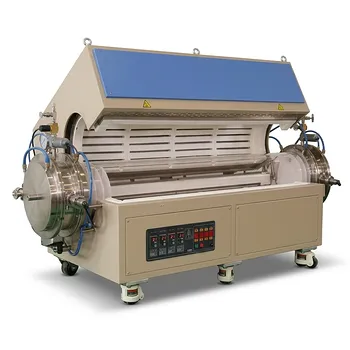
What role does a high-precision tube furnace play in Sn@C/SiOC synthesis? Achieve Perfect Yolk-Shell Nanohybrids
Updated 3 months ago
The synthesis of Sn@C/SiOC nanohybrid materials relies on a high-precision tube furnace to act as a controlled reactor for a two-stage thermal transformation. In the first stage, the furnace maintains a stable 500 °C environment to facilitate precursor cross-linking into a pre-ceramic coating. The second stage elevates the temperature to 900 °C to trigger the carbothermal reduction of SnO2 and the conversion of precursors into a SiOC ceramic framework, ultimately defining the material’s unique yolk-shell architecture.
Core Takeaway: A high-precision tube furnace provides the segmented temperature control necessary to transition precursors from a soft pre-ceramic coating into a rigid SiOC/carbon hybrid. This precise thermal staging is the fundamental requirement for constructing the yolk-shell structure that gives the material its performance characteristics.
Phase One: Establishing the Pre-Ceramic Framework
Maintaining 500 °C for Cross-Linking
During the initial stage of synthesis, the tube furnace provides a stable thermal environment at exactly 500 °C. This specific temperature is high enough to trigger the cross-linking of precursors within the silicone oil but low enough to prevent premature decomposition.
Formulating the Pre-Ceramic Coating
The furnace's ability to maintain a constant temperature allows the precursors to bond uniformly. This results in the formation of a stable pre-ceramic coating, which serves as the structural foundation for the subsequent high-temperature transformations.
Phase Two: High-Temperature Chemical Transformation
Carbothermal Reduction at 900 °C
In the second stage, the tube furnace ramps up to 900 °C to drive the carbothermal reduction of SnO2. At this heat level, oxygen is stripped away, leaving behind the desired tin (Sn) components within the hybrid matrix.
Ceramization and Carbonization
Simultaneously, the 900 °C environment enables ceramization, the process where the pre-ceramic coating converts into a Silicon Oxycarbide (SiOC) glass. The furnace also facilitates the carbonization of polydopamine, adding a conductive carbon layer to the nanohybrid.
The Necessity of Precise Thermal Control
Constructing the Yolk-Shell Structure
The primary role of the tube furnace is to manage the segmented temperature curve that dictates the material's morphology. This precision is what allows the "yolk" (Sn) to be successfully encapsulated within the "shell" (SiOC/C), a structure that accommodates volume changes during electrochemical use.
Atmospheric and Spatial Uniformity
Beyond mere heating, the tube furnace creates a strictly controlled environment that prevents unwanted oxidation. By providing a uniform heat distribution across the deposition zone, the furnace ensures that the nanohybrid materials have consistent crystal structures and chemical phases.
Understanding the Trade-offs
Temperature Sensitivity
If the furnace deviates from the set 500 °C or 900 °C points, the chemical reactions may fail or produce incomplete structures. Inaccurate thermal staging can lead to the collapse of the yolk-shell architecture or the presence of unreacted SnO2.
Atmospheric Contamination
While the tube furnace is excellent at providing a sealed environment, any leaks in the system can introduce oxygen. Even trace amounts of oxygen during the 900 °C phase can interfere with the carbothermal reduction, resulting in an impure final product.
How to Apply This to Your Synthesis Goals
Building a high-performance Sn@C/SiOC nanohybrid requires matching your furnace settings to your specific structural objectives.
- If your primary focus is Yolk-Shell Integrity: Prioritize the precision of the 500 °C stage to ensure the pre-ceramic coating is fully cross-linked before increasing the heat.
- If your primary focus is Electrochemical Conductivity: Focus on the 900 °C stage to ensure complete carbonization of the polydopamine and full ceramization of the SiOC shell.
- If your primary focus is Material Purity: Utilize a high-purity inert gas flow within the furnace to strictly prevent oxidation during the reduction of SnO2.
By mastering the segmented thermal control of a high-precision tube furnace, you can reliably engineer complex nanohybrids with exact phase and structural compositions.
Summary Table:
| Synthesis Phase | Temperature | Key Process | Resulting Structure |
|---|---|---|---|
| Phase One | 500 °C | Precursor Cross-Linking | Stable Pre-Ceramic Coating |
| Phase Two | 900 °C | Carbothermal Reduction & Ceramization | Sn@C/SiOC Yolk-Shell Architecture |
| Critical Goal | Controlled Ramp | Segmented Thermal Staging | Consistent Crystal & Chemical Phases |
Optimize Your Nanomaterial Synthesis with THERMUNITS
Precise thermal staging is the difference between research success and structural failure. THERMUNITS is a leading manufacturer of high-temperature laboratory equipment, providing the exact temperature control and atmospheric purity required for complex material science.
Our comprehensive range of thermal processing solutions includes:
- High-Precision Tube & Atmosphere Furnaces for segmented thermal staging.
- CVD/PECVD Systems for advanced thin-film deposition.
- Vacuum, Muffle, Rotary, and Hot Press Furnaces for diverse R&D needs.
- Vacuum Induction Melting (VIM) & Electric Rotary Kilns for industrial-scale material processing.
Whether you are constructing yolk-shell architectures or developing new battery materials, our equipment delivers the reliability your R&D demands. Contact us today to find the perfect furnace for your laboratory!
References
- Hyojun Lim, Sang‐Ok Kim. Boosting the Sodiation Kinetics of Sn Anode Using a Yolk–Shell Nanohybrid Structure for High‐Rate and Ultrastable Sodium‐Ion Batteries. DOI: 10.1002/advs.202408450
Mentioned Products
- 1200C High Throughput Multi Channel Tube Furnace with 50mm Quartz Tubes for Annealing and Material Phase Diagram Research
- High Temperature Tube Furnace 1500C with Sliding Flanges and 50mm OD for Rapid Thermal Processing Fast Heating and Cooling
- High Temperature 1700C Benchtop Tube Furnace with 5 Inch Heating Zone High Purity Alumina Tube and Vacuum Sealing Flanges
- Compact High Temperature 1600C Tube Furnace with 50mm Alumina Tube and Vacuum Flanges for Material Sintering
- 1100C High Pressure Rocking Tube Furnace with 2 Inch Super Alloy Processing Tube for Material Synthesis
People Also Ask
- Why is high-purity alumina selected for sample trays? Key to High-Throughput Sintering Success
- How does a high-throughput tube furnace achieve precise sulfurization? Expert Control for CoS2–Co(OH)F Nanostructures
- How does the precise temperature control of a tube furnace influence the formation of V2AlC MAX phase? Expert Insights.
- What is the function of argon gas flow within a tube furnace during the selenization of MOFs? Essential Process Guide
- What is the effect of introducing camphor as a carbon source in a tube furnace CVD? Boost CNT Density and Growth

Tech Team · ThermUnits
Last updated on Jun 02, 2026
Related Products

1200C High Throughput Multi Channel Tube Furnace with 50mm Quartz Tubes for Annealing and Material Phase Diagram Research
High Temperature Tube Furnace 1500C with Sliding Flanges and 50mm OD for Rapid Thermal Processing Fast Heating and Cooling

High Temperature 1700C Benchtop Tube Furnace with 5 Inch Heating Zone High Purity Alumina Tube and Vacuum Sealing Flanges

Compact High Temperature 1600C Tube Furnace with 50mm Alumina Tube and Vacuum Flanges for Material Sintering
1100C High Pressure Rocking Tube Furnace with 2 Inch Super Alloy Processing Tube for Material Synthesis

High Temperature Automated 5 Inch Tube Furnace for Autonomous Material Research and Advanced Laboratory R&D
High Temperature Compact Vacuum Tube Furnace 1750C Max 60mm OD Alumina Tube

High Temperature 1700C Vertical Tube Furnace for Powder Spherification and Material Sintering
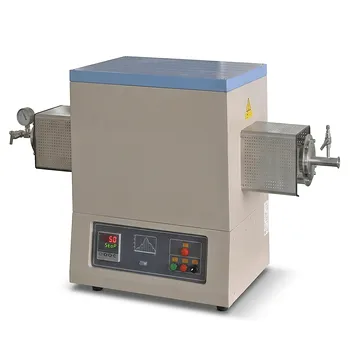
High Temperature 1700C Tube Furnace with 4 Inch OD Alumina Tube and Vacuum Sealing Flanges
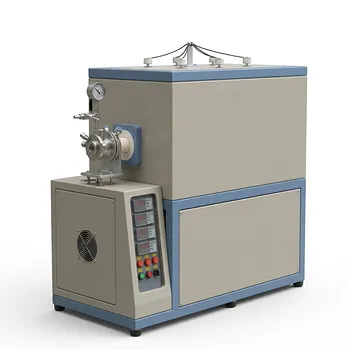
High Temperature 1700C Three Zone Tube Furnace with Alumina Tube 50mm 60mm 80mm OD for Material Research and Industrial Heat Treatment

1800C High Temperature Compact Vacuum Tube Furnace with 60mm OD Alumina Tube and Kanthal MoSi2 Heating Elements
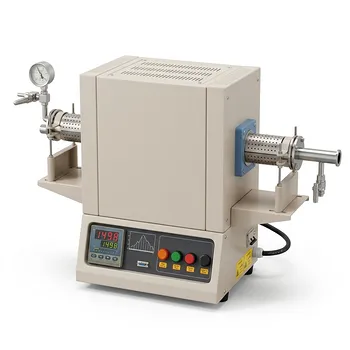
1500C High Temperature Compact Tube Furnace 2 Inch OD with Vacuum Flanges and Complete Accessories
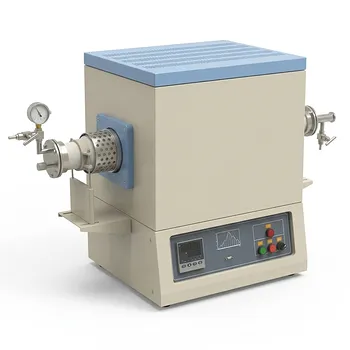
1750°C High Temperature Benchtop Vacuum Atmosphere Tube Furnace with Kanthal Super 1800 Heating Elements and 60mm Alumina Processing Tube

High Temperature 1700C Six Zone Split Tube Furnace with Alumina Tube and Water Cooled Flanges

High Vacuum Compact Tube Furnace 1200C with Integrated Turbo Pump System and 8 Inch Heating Zone
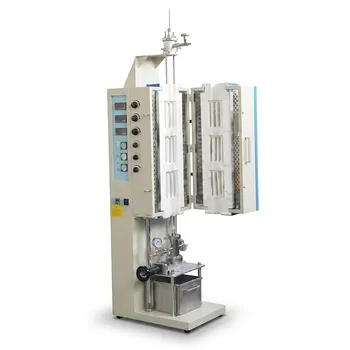
High Temperature Dual Zone Tube Furnace for Material Science Research and Professional Thermal Processing
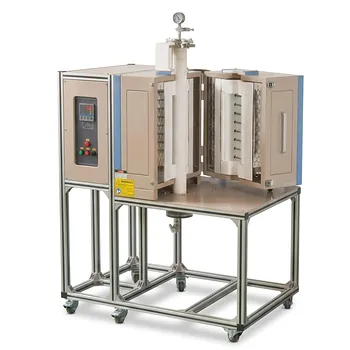
High Temperature 1700C Vertical Split Tube Furnace for Material Quenching and Single Crystal Growth
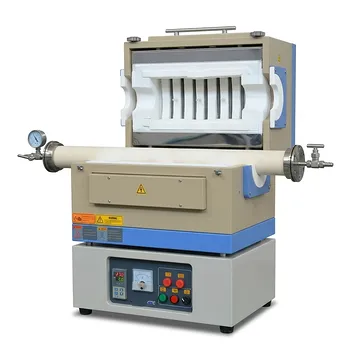
High Temperature 1600C Split Tube Furnace Vacuum Flanges Valves Optional 60mm 80mm Alumina Tube
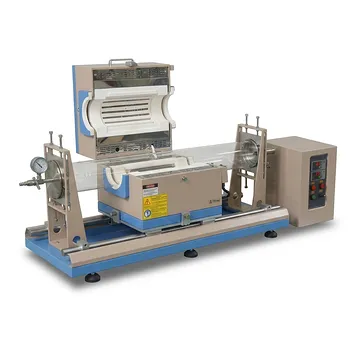
1200C High Temperature 5 Inch Sliding Tube Furnace for Rapid Thermal Processing RTP and Wafer Annealing