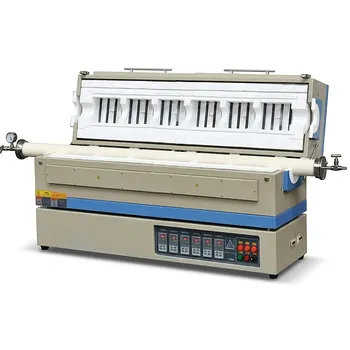
What role does a high-temperature atmosphere tube furnace play in Co-doped ZIF-8 conversion? Optimize Co/N/C Catalysts.
Updated 3 months ago
The high-temperature atmosphere tube furnace acts as the critical reactor for the precise pyrolytic transformation of metal-organic frameworks into catalytic substrates. It provides a strictly controlled, oxygen-free environment and the intense thermal energy required to decompose the organic ligands of ZIF-8. This process simultaneously carbonizes the framework into a nitrogen-doped structure and ensures that cobalt atoms are dispersed at the atomic level, creating high-performance, platinum-group-metal-free (PGM-free) catalytic sites.
Core Takeaway: The tube furnace is the indispensable tool for converting Co-doped ZIF-8 into a Co/N/C substrate by enabling high-temperature carbonization under inert protection, which facilitates nitrogen doping, zinc evaporation, and the stabilization of cobalt single-atom sites.
The Essential Function of Atmosphere Control
Prevention of Oxidative Combustion
A primary role of the atmosphere tube furnace is to maintain a strict inert environment using gases like high-purity nitrogen or argon. This oxygen-free state is vital because it prevents the organic ZIF-8 precursor from undergoing combustion, ensuring instead that it undergoes thermal decomposition into a stable carbon carrier.
Integration of Functional Nitrogen
The furnace maintains a continuous flow of inert gas that protects the chemical integrity of the nitrogen atoms within the imidazolate ligands. This allows nitrogen to be successfully integrated into the emerging carbon framework as quaternary nitrogen (N-Q) or other functional groups, which are essential for anchoring metal atoms.
Thermal Decomposition and Structural Evolution
Carbonization of the ZIF-8 Framework
By providing a constant high temperature—typically around 1000 °C—the furnace drives the pyrolysis of organic ligands. This transforms the crystalline ZIF-8 structure into a robust, nitrogen-doped carbon framework characterized by a high specific surface area and complex porous channels.
Zinc Evaporation and Vacancy Creation
ZIF-8 naturally contains zinc, which has a relatively low boiling point compared to the carbonization temperature. The high-temperature environment of the tube furnace promotes the evaporative removal of Zn atoms, which creates abundant lattice vacancies and "room" for the cobalt atoms to settle.
Achieving Atomic Dispersion of Cobalt
Stabilization of Single-Atom Sites
As the zinc evaporates and the carbon framework forms, the furnace facilitates the coordination between cobalt ions and nitrogen ligands. This controlled heating strengthens coordination bonds, preventing the cobalt from aggregating into inactive clusters and instead achieving atomic-level dispersion.
Promotion of Graphitic Reorganization
The furnace environment, often influenced by the local cobalt catalysts, helps reorganize amorphous carbon into more conductive graphitic structures. This transition typically results in a few layers of graphitic carbon, which significantly enhances the overall electrochemical activity and stability of the Co/N/C substrate.
Understanding the Trade-offs
Temperature Sensitivity
If the furnace temperature is too low (e.g., below 800 °C), the ZIF-8 may not fully carbonize, and zinc removal may be incomplete, leading to blocked active sites. Conversely, excessively high temperatures can cause the collapse of the microporous structure or the sintering of cobalt atoms into large particles, reducing catalytic efficiency.
Purity and Flow Rate Risks
The success of the synthesis depends heavily on the purity of the inert gas and the stability of the flow rate within the tube. Even trace amounts of oxygen can lead to the loss of carbon yield, while inconsistent heating rates can prevent the formation of the desired hierarchical pore structures.
How to Apply This to Your Project
Recommendations for Synthesis
- If your primary focus is maximizing surface area: Ensure the furnace is set to a precise heating rate (e.g., 3 °C/min) to allow for the gradual development of microporous and macroporous channels.
- If your primary focus is cobalt single-atom stability: Maintain a peak temperature near 1000 °C to ensure complete zinc evaporation and strong nitrogen-cobalt coordination.
- If your primary focus is graphitic conductivity: Use the furnace to sustain high temperatures for a specific duration to promote the reorganization of amorphous carbon into graphitic layers.
By precisely mastering the thermal and atmospheric parameters of the tube furnace, you can successfully engineer a Co/N/C substrate with the exact structural and catalytic properties required for advanced energy applications.
Summary Table:
| Process Mechanism | Furnace Function | Impact on Co/N/C Substrate |
|---|---|---|
| Inert Pyrolysis | Maintains O2-free N2/Ar atmosphere | Prevents combustion; ensures stable carbonization |
| Nitrogen Doping | Preserves nitrogen in organic ligands | Creates N-Q groups to anchor cobalt atoms |
| Zinc Evaporation | Sustains high heat (~1000°C) | Removes Zn to create atomic-level lattice vacancies |
| Atomic Dispersion | Controls heating rate & coordination | Prevents Co aggregation; stabilizes single-atom sites |
| Graphitization | Facilitates structural reorganization | Increases electrical conductivity and stability |
Elevate Your Material Research with THERMUNITS Precision
As a leading manufacturer of high-temperature laboratory equipment, THERMUNITS provides the advanced thermal processing solutions essential for material science and industrial R&D. Our high-performance Atmosphere and Tube Furnaces are specifically engineered to provide the rigorous temperature control and atmospheric purity required for the successful synthesis of Co/N/C substrates and other PGM-free catalysts.
Whether your project involves CVD/PECVD systems, Vacuum Induction Melting (VIM), or specialized Rotary and Hot Press furnaces, THERMUNITS delivers the reliability and precision your research demands.
Ready to optimize your pyrolytic processes? Contact THERMUNITS today to find the perfect thermal solution for your lab!
References
- Yangdong Zhou, Siyu Ye. Unraveling a volcanic relationship of Co/N/C@Pt<sub><i>x</i></sub>Co catalysts toward oxygen electro-reduction. DOI: 10.1039/d3nr06647a
Mentioned Products
- 1750°C High Temperature Benchtop Vacuum Atmosphere Tube Furnace with Kanthal Super 1800 Heating Elements and 60mm Alumina Processing Tube
- High Temperature 1200C Split Tube Furnace for CVD Research and Vacuum Atmosphere Heat Treatment
- High Temperature Split Tube Furnace 1500C for Material Research Vacuum and Atmosphere Thermal Processing
- High Temperature Vertical Atmosphere Controlled Furnace with Automatic Bottom Loading and 1700°C Capacity for Advanced Material Research
- 1700C High Temperature Alumina Tube Furnace with 18 Inch Heated Zone and Vacuum Sealing Flanges
People Also Ask
- What core functions does a high-temperature vacuum tube furnace provide? Optimize np-CuSn Sintering & Joint Integrity
- What is the role of a high-temperature tube furnace in the calcination process of ZnO/In2O3 nanocomposites?
- What role does a high-temperature tube furnace play in the sulfidation heat treatment of CoS@C/MXene nanocomposites? Guide
- Why is a high-temperature tube furnace required for CuAlO2 heat treatment? Master Phase Transformation Today
- What role does a high-temperature tube furnace play in executing nitrogen absorption kinetic experiments? Expert Insights

Tech Team · ThermUnits
Last updated on Jun 03, 2026
Related Products
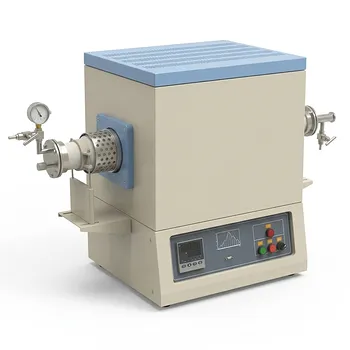
1750°C High Temperature Benchtop Vacuum Atmosphere Tube Furnace with Kanthal Super 1800 Heating Elements and 60mm Alumina Processing Tube
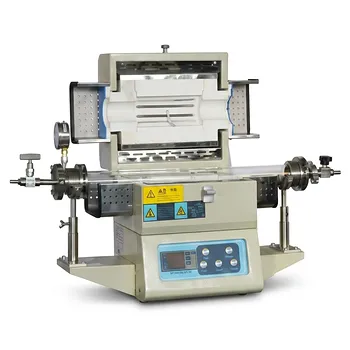
High Temperature 1200C Split Tube Furnace for CVD Research and Vacuum Atmosphere Heat Treatment
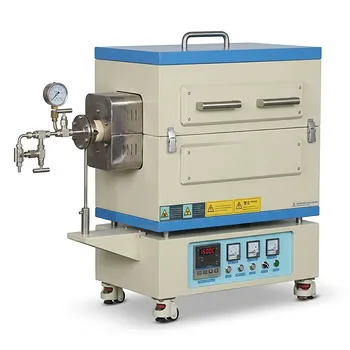
High Temperature Split Tube Furnace 1500C for Material Research Vacuum and Atmosphere Thermal Processing
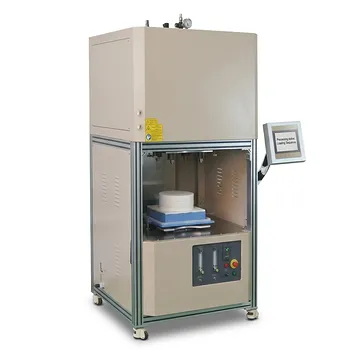
High Temperature Vertical Atmosphere Controlled Furnace with Automatic Bottom Loading and 1700°C Capacity for Advanced Material Research
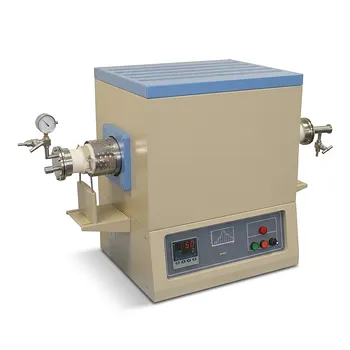
1700C High Temperature Alumina Tube Furnace with 18 Inch Heated Zone and Vacuum Sealing Flanges
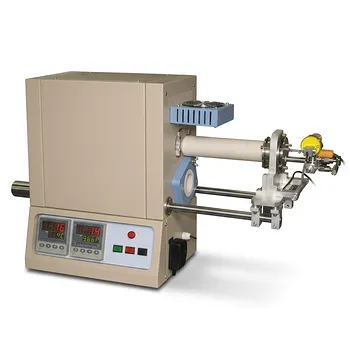
High Temperature Tube Furnace 1500C with Sliding Flanges and 50mm OD for Rapid Thermal Processing Fast Heating and Cooling

High Temperature 1700C Tube Furnace with High Vacuum Turbomolecular Pump System and Multi Channel Mass Flow Controller Gas Mixer
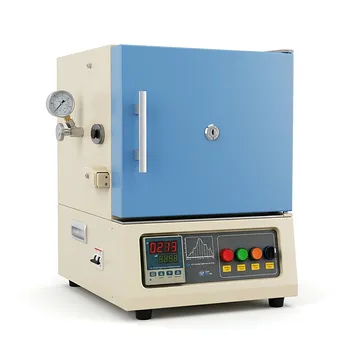
1200C Hybrid Muffle and Tube Furnace for Material Research with Dual Atmosphere Control Quartz Tubes
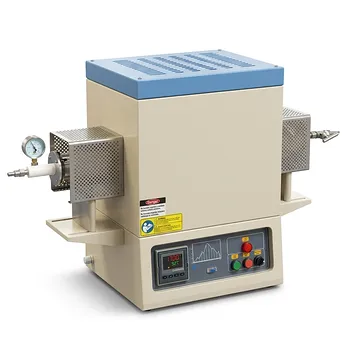
High Temperature Three Zone Tube Furnace 1700C with Alumina Tube and Water Cooled Flanges

Vertical 1700C Vacuum and Atmosphere Tube Furnace with 80mm Alumina Tube
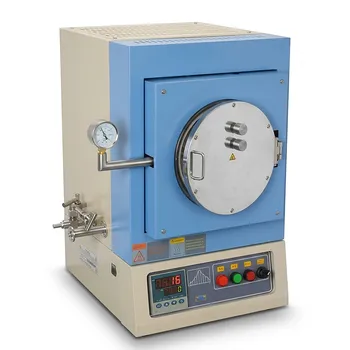
1100°C High Temperature Quartz Chamber Furnace 8 Inch OD with 7.6 Liter Capacity and Vacuum Atmosphere Capability

Compact High Temperature 1600C Tube Furnace with 50mm Alumina Tube and Vacuum Flanges for Material Sintering
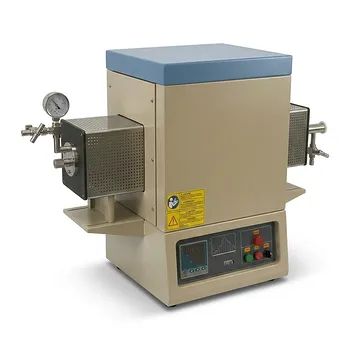
High Temperature 1700C Benchtop Tube Furnace with 5 Inch Heating Zone High Purity Alumina Tube and Vacuum Sealing Flanges

1800C High Temperature Compact Vacuum Tube Furnace with 60mm OD Alumina Tube and Kanthal MoSi2 Heating Elements
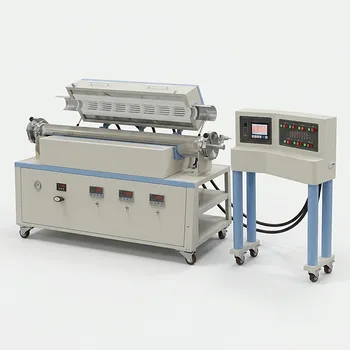
1100C Eight Zone High Pressure Super Alloy Tube Furnace with Integrated High Pressure Gas Control System

High Temperature 1700C Vertical Tube Furnace for Powder Spherification and Material Sintering
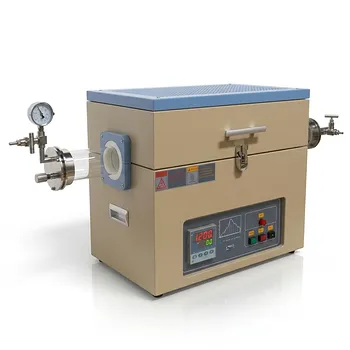
High Temperature 1200C Split Tube Furnace with Optional Quartz Tube Sizes and Vacuum Sealing Flanges for Material Science Research
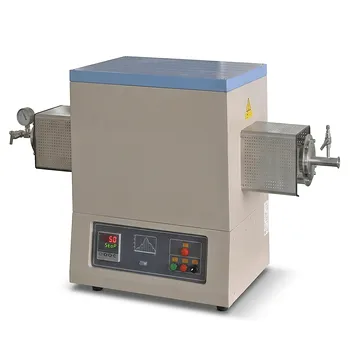
High Temperature 1700C Tube Furnace with 4 Inch OD Alumina Tube and Vacuum Sealing Flanges
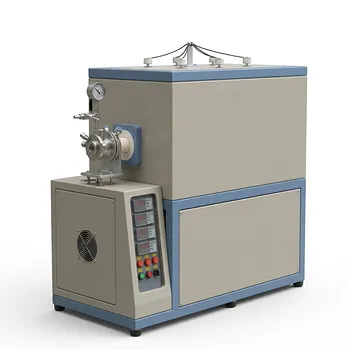
High Temperature 1700C Three Zone Tube Furnace with Alumina Tube 50mm 60mm 80mm OD for Material Research and Industrial Heat Treatment