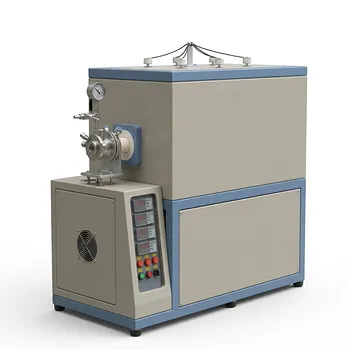
What role does a high-temperature atmosphere tube furnace play in the synthesis of CoNi/graphene cathodes? Key Insights
Updated 5 months ago
The high-temperature atmosphere tube furnace serves as the central reactor for the simultaneous reduction, carbonization, and alloying required to synthesize CoNi/graphene integrated cathodes. By providing a strictly controlled thermal environment of 800 °C under a protective nitrogen atmosphere, the furnace enables the transformation of raw precursors into a cohesive, conductive electrode structure. This process eliminates the need for external binders or separate current collectors by creating a direct interface between the active metal sites and the graphene framework.
The tube furnace functions as a specialized chemical reactor that orchestrates three simultaneous transitions: the reduction of graphene oxide, the pyrolysis of nitrogen sources for doping, and the formation of CoNi alloy active sites. This integrated approach ensures the material’s structural integrity and electrochemical efficiency.
Facilitating Complex Material Transformation
Rapid Reduction of Graphene Oxide
The furnace provides the high-energy environment necessary to strip oxygen-containing functional groups from graphene oxide. This thermal reduction restores the hexagonal carbon lattice, transforming an insulating precursor into a highly conductive graphene network.
Nitrogen Doping through Organic Pyrolysis
As the furnace maintains a steady heating rate, organic nitrogen sources within the precursor undergo pyrolysis. This ensures that nitrogen atoms are successfully integrated into the carbon framework, creating N-doped sites that improve the material's catalytic activity and electronic properties.
Controlled Synthesis of CoNi Alloy Sites
The thermal energy within the tube facilitates the conversion of metal salts into CoNi alloy active sites. Because the furnace allows for precise temperature regulation, these metal components are uniformly distributed throughout the graphene matrix rather than agglomerating into large, inactive particles.
The Importance of Atmosphere and Temperature Control
Prevention of Oxidation and Combustion
The use of a nitrogen atmosphere is critical to prevent the carbon-based precursors from undergoing combustion or loss due to oxygen contact. This inert environment ensures that the biomass and graphene components remain stable and reach the required 800 °C for complete transformation.
Precision in Heating Rates and Uniformity
The tube furnace offers temperature uniformity and a constant heating rate, which are essential for controlling the nucleation of metal particles. This precision determines the final morphology and crystallinity of the integrated cathode, directly impacting its performance in energy storage or conversion applications.
Enabling Binder-Free Architectures
By facilitating the in-situ growth of active sites directly onto the structural graphene, the furnace produces an integrated electrode. This eliminates the interface resistance typically found in electrodes that require separate current collectors or binders.
Understanding the Trade-offs and Pitfalls
Sensitivity to Airflow Dynamics
Improperly calibrated airflow dynamics within the furnace tube can lead to uneven temperature zones. This often results in inconsistent phase purity, where some sections of the material may be under-reacted while others are over-processed.
Volatilization and Yield Loss
While high temperatures are necessary for alloying, excessive heat or prolonged dwell times can cause the vaporization of intercalated substances. This can lead to structural damage or a significant decrease in the final yield of the active material if not monitored closely.
Precursor-Atmosphere Compatibility
Choosing the wrong protective gas—such as using a reactive gas when an inert one is required—can alter the chemical path. For example, failing to maintain a pure nitrogen environment may inhibit the specific formation of quaternary nitrogen functional groups desired in the carbon framework.
How to Apply This to Your Project
Recommendations for Synthesis Success
A successful synthesis depends on aligning the furnace parameters with your specific material performance goals.
- If your primary focus is maximimizing conductivity: Ensure the furnace maintains a stable 800 °C or higher to achieve complete reduction of the graphene oxide framework.
- If your primary focus is active site uniformity: Utilize a slow, constant heating rate (such as 5 °C/min) to prevent the CoNi metal components from clustering during the carbonization phase.
- If your primary focus is structural integrity: Prioritize the nitrogen atmosphere seal to prevent any oxygen ingress that could degrade the thin graphene layers or the carbonized nitrogen source.
Precise control over the thermal and atmospheric environment is the single most important factor in transforming raw precursors into high-performance, integrated CoNi/graphene cathodes.
Summary Table:
| Process Step | Furnace Function | Impact on Cathode Performance |
|---|---|---|
| Thermal Reduction | Removes oxygen from GO | Restores conductivity in graphene lattice |
| Organic Pyrolysis | Controlled heating of nitrogen sources | Facilitates N-doping for better catalytic activity |
| In-situ Alloying | Precise temperature regulation | Ensures uniform distribution of CoNi active sites |
| Atmosphere Control | Provides inert nitrogen environment | Prevents oxidation and preserves structural integrity |
| Integrated Growth | Direct interface creation | Eliminates need for binders and current collectors |
Advance Your Material Research with THERMUNITS
As a industry-leading manufacturer of peak-performance thermal processing solutions, THERMUNITS provides the precision equipment required for complex material synthesis. Whether you are developing CoNi/graphene cathodes or other advanced energy materials, our range of Atmosphere, Tube, Vacuum, and Muffle furnaces ensures the strict temperature uniformity and gas control your R&D demands.
Our extensive product line includes:
- High-Temp Furnaces: Tube, Muffle, Vacuum, and Atmosphere models.
- Advanced Systems: CVD/PECVD, Rotary Kilns, and Vacuum Induction Melting (VIM).
- Specialized Tools: Dental Furnaces, Hot Press Furnaces, and high-quality Thermal Elements.
Ready to scale your laboratory’s capabilities? Contact our expert engineering team today to find the perfect furnace for your material science applications!
References
- Jian Hu, Ningkang Sun. Facile Composition of CoNi and Graphene as a Free-Standing Cathode for a High-Performance Solid-State Zinc–Air Battery. DOI: 10.3390/en17092045
Mentioned Products
- 1750°C High Temperature Benchtop Vacuum Atmosphere Tube Furnace with Kanthal Super 1800 Heating Elements and 60mm Alumina Processing Tube
- High Temperature 1200C Split Tube Furnace for CVD Research and Vacuum Atmosphere Heat Treatment
- High Temperature Split Tube Furnace 1500C for Material Research Vacuum and Atmosphere Thermal Processing
- High Temperature Vertical Atmosphere Controlled Furnace with Automatic Bottom Loading and 1700°C Capacity for Advanced Material Research
- 1700C High Temperature Alumina Tube Furnace with 18 Inch Heated Zone and Vacuum Sealing Flanges
People Also Ask
- What core functions does a high-temperature vacuum tube furnace provide? Optimize np-CuSn Sintering & Joint Integrity
- What is the role of a high-temperature tube furnace in the calcination process of ZnO/In2O3 nanocomposites?
- What role does a high-temperature tube furnace play in the sulfidation heat treatment of CoS@C/MXene nanocomposites? Guide
- Why is a high-temperature tube furnace required for CuAlO2 heat treatment? Master Phase Transformation Today
- What role does a high-temperature tube furnace play in executing nitrogen absorption kinetic experiments? Expert Insights

Tech Team · ThermUnits
Last updated on Apr 14, 2026
Related Products

1750°C High Temperature Benchtop Vacuum Atmosphere Tube Furnace with Kanthal Super 1800 Heating Elements and 60mm Alumina Processing Tube
High Temperature 1200C Split Tube Furnace for CVD Research and Vacuum Atmosphere Heat Treatment
High Temperature Split Tube Furnace 1500C for Material Research Vacuum and Atmosphere Thermal Processing
High Temperature Vertical Atmosphere Controlled Furnace with Automatic Bottom Loading and 1700°C Capacity for Advanced Material Research
1700C High Temperature Alumina Tube Furnace with 18 Inch Heated Zone and Vacuum Sealing Flanges

High Temperature 1700C Tube Furnace with High Vacuum Turbomolecular Pump System and Multi Channel Mass Flow Controller Gas Mixer
High Temperature Tube Furnace 1500C with Sliding Flanges and 50mm OD for Rapid Thermal Processing Fast Heating and Cooling
1200C Hybrid Muffle and Tube Furnace for Material Research with Dual Atmosphere Control Quartz Tubes
High Temperature Three Zone Tube Furnace 1700C with Alumina Tube and Water Cooled Flanges

Vertical 1700C Vacuum and Atmosphere Tube Furnace with 80mm Alumina Tube

1100°C High Temperature Quartz Chamber Furnace 8 Inch OD with 7.6 Liter Capacity and Vacuum Atmosphere Capability

High Temperature 1700C Benchtop Tube Furnace with 5 Inch Heating Zone High Purity Alumina Tube and Vacuum Sealing Flanges

Compact High Temperature 1600C Tube Furnace with 50mm Alumina Tube and Vacuum Flanges for Material Sintering

1800C High Temperature Compact Vacuum Tube Furnace with 60mm OD Alumina Tube and Kanthal MoSi2 Heating Elements
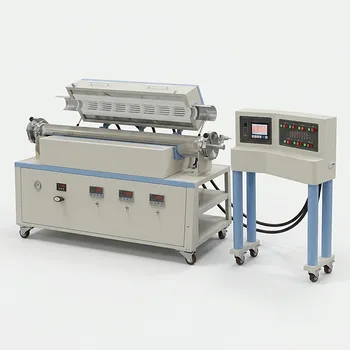
1100C Eight Zone High Pressure Super Alloy Tube Furnace with Integrated High Pressure Gas Control System

High Temperature 1700C Vertical Tube Furnace for Powder Spherification and Material Sintering
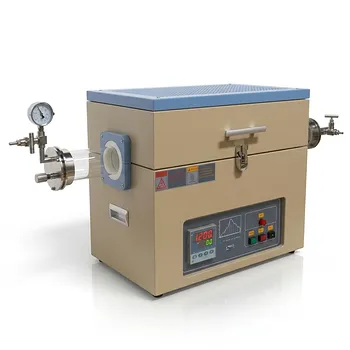
High Temperature 1200C Split Tube Furnace with Optional Quartz Tube Sizes and Vacuum Sealing Flanges for Material Science Research
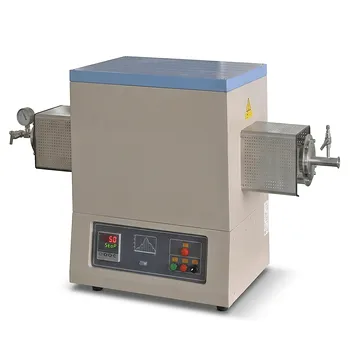
High Temperature 1700C Tube Furnace with 4 Inch OD Alumina Tube and Vacuum Sealing Flanges
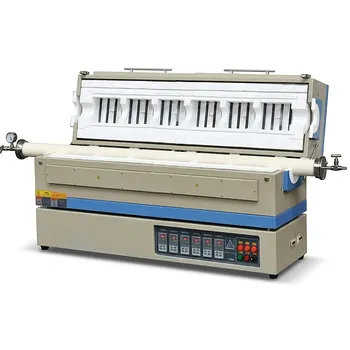
High Temperature 1700C Six Zone Split Tube Furnace with Alumina Tube and Water Cooled Flanges