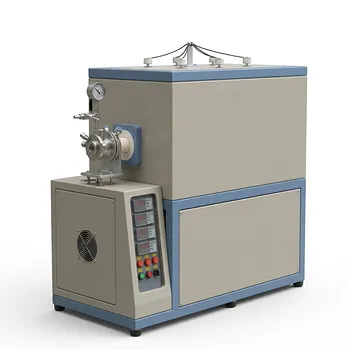
What role does a high-temperature atmosphere tube furnace play in the synthesis of porous doped carbon nanosheets?
Updated 3 months ago
The high-temperature atmosphere tube furnace serves as the foundational reactor for transforming raw organic precursors into functional, porous doped carbon nanosheets. It provides the strictly controlled thermal and chemical environment required to execute carbonization, chemical activation, and heteroatom doping simultaneously. By maintaining an oxygen-free zone, the furnace prevents the combustion of the carbon framework while driving the molecular rearrangements necessary for high surface area and conductivity.
Core Takeaway: A high-temperature tube furnace is essential for synthesizing porous doped carbon nanosheets because it precisely manages the transition from polymer precursors to graphitic structures while facilitating chemical etching and the integration of doping atoms (like nitrogen or sulfur) in a protected, inert environment.
Maintaining Structural Integrity through Atmosphere Control
The Necessity of an Inert Environment
To synthesize carbon nanosheets, the furnace must provide a strictly controlled inert atmosphere, typically using high-purity Nitrogen (N2) or Argon (Ar). This environment is critical because it prevents the carbon precursors from being lost to oxidation, which would occur instantly at the high temperatures (up to 1000 °C) required for synthesis.
Superior Sealing for Oxygen-Free Processing
The specialized sealing performance of a tube furnace ensures that the reaction zone remains oxygen-free. This allows for the high-temperature carbonization of pre-treated fibers and polymers without the risk of structural degradation or accidental combustion of the carbon skeleton.
Driving Porosity and Surface Area Development
Thermal Decomposition of Polymer Templates
The furnace provides the sustained heat necessary for the complete thermal decomposition of polymer templates. As these templates break down, they leave behind voids that contribute to the initial pore structure of the nanosheets.
Promoting Chemical Activation and Etching
High temperatures within the tube facilitate chemical reactions between activation agents, such as ZnCl2 or KSCN, and the carbon substrate. These agents perform in-situ etching, a process driven by the furnace’s thermal energy that carves out highly developed ultramicropore structures and increases specific surface area.
Managing Metal Volatilization
In materials derived from precursors like ZIF-8 (Metal-Organic Frameworks), the furnace facilitates the volatilization of zinc. As the zinc evaporates at high temperatures, it creates additional porosity within the carbon matrix, resulting in a lightweight and high-strength framework.
Facilitating Precise Heteroatom Doping
Coordination of Doping Elements
The furnace provides the thermal driving force required for the rearrangement and coordination of heteroatoms, such as nitrogen, iron, or sulfur, into the carbon lattice. This process is essential for creating high-efficiency single-atom catalytic active centers.
Graphitization and Atomic Rearrangement
At temperatures ranging from 600 °C to 1000 °C, the furnace promotes the rearrangement of carbon atoms into more ordered, graphitic structures. This transition is vital for achieving high electrical conductivity and chemical stability in the resulting nanosheets.
Precision Control and Thermal Uniformity
PID-Controlled Multi-Stage Heating
Integrated PID control systems allow for complex, multi-stage heating programs that prevent thermal overshoot. By stabilizing at lower temperatures before reaching the final carbonization peak, the furnace ensures that precursors undergo uniform pyrolysis.
Uniform Heat Distribution
The design of the tube furnace ensures heating uniformity across the entire sample. This consistency is required for precursors like sodium citrate to self-assemble into stable, three-dimensional carbon nanosheet structures rather than irregular, non-functional clumps.
Understanding Technical Trade-offs and Pitfalls
Temperature Gradients and Scale
While tube furnaces offer excellent control, they can suffer from radial temperature gradients if the tube diameter is too large. This can lead to non-uniform doping levels where the material near the tube wall is more "cooked" than the material in the center.
Gas Flow Dynamics
The rate of inert gas flow is a critical variable that is often overlooked. If the flow is too low, byproduct gases (like CO or CO2) can linger and cause unwanted side reactions; if it is too high, it may cool the sample surface unevenly or carry away volatile precursors before they can react.
Seal Integrity at Peak Temperatures
At temperatures near 1000 °C, the integrity of vacuum seals and O-rings becomes a vulnerability. Any minor leak introduces oxygen, which can lead to the "pitting" of nanosheets or the total loss of the carbon sample through oxidation.
How to Apply This to Your Synthesis Goal
Recommendations for Material Design
- If your primary focus is High Surface Area: Focus on utilizing the furnace for chemical activation at temperatures between 700°C and 900°C with etching agents like ZnCl2 to maximize pore development.
- If your primary focus is Electrical Conductivity: Prioritize the high-temperature graphitization range (900°C - 1000°C) to ensure the complete rearrangement of carbon atoms into a conductive lattice.
- If your primary focus is Heteroatom Doping: Utilize a multi-stage heating program to stabilize the precursor before the doping atoms are incorporated, preventing the loss of volatile dopants too early in the process.
The high-temperature tube furnace is the indispensable tool that enables the precise molecular engineering required to turn simple precursors into high-performance carbon nanomaterials.
Summary Table:
| Key Role | Synthesis Impact | Critical Process Parameter |
|---|---|---|
| Atmosphere Control | Prevents oxidation; maintains carbon skeleton | Inert gas flow (N2/Ar) & seal integrity |
| Porosity Development | Drives thermal decomposition & chemical etching | Activation temperature (700°C - 900°C) |
| Heteroatom Doping | Facilitates atomic rearrangement (N, S, Fe) | Multi-stage PID heating profiles |
| Structural Order | Promotes graphitization for conductivity | Peak temperatures (up to 1000°C) |
Elevate Your Material Research with THERMUNITS
As a leading manufacturer of high-temperature laboratory equipment, THERMUNITS provides the precision and reliability essential for advanced material science and industrial R&D. Our high-temperature atmosphere tube furnaces are engineered to deliver the strict atmosphere control and thermal uniformity required for complex syntheses like porous doped carbon nanosheets.
Whether you are focusing on high-surface-area catalysts or high-conductivity energy storage materials, our comprehensive range of solutions—including Muffle, Vacuum, Atmosphere, Tube, Rotary, and Hot Press furnaces, CVD/PECVD systems, and Vacuum Induction Melting (VIM) furnaces—is designed to meet your most demanding specifications.
Ready to optimize your thermal processing? Contact our expert team today to discuss how THERMUNITS can provide the specialized heat treatment equipment your laboratory needs for breakthrough results.
References
- Lingyan Jing, Chuanxin He. Unveiling Favorable Microenvironment on Porous Doped Carbon Nanosheets for Superior H<sub>2</sub>O<sub>2</sub> Electrosynthesis in Neutral Media. DOI: 10.1002/aenm.202304418
Mentioned Products
- 1750°C High Temperature Benchtop Vacuum Atmosphere Tube Furnace with Kanthal Super 1800 Heating Elements and 60mm Alumina Processing Tube
- High Temperature 1200C Split Tube Furnace for CVD Research and Vacuum Atmosphere Heat Treatment
- High Temperature Split Tube Furnace 1500C for Material Research Vacuum and Atmosphere Thermal Processing
- High Temperature Vertical Atmosphere Controlled Furnace with Automatic Bottom Loading and 1700°C Capacity for Advanced Material Research
- 1700C High Temperature Alumina Tube Furnace with 18 Inch Heated Zone and Vacuum Sealing Flanges
People Also Ask
- What core functions does a high-temperature vacuum tube furnace provide? Optimize np-CuSn Sintering & Joint Integrity
- What is the role of a high-temperature tube furnace in the calcination process of ZnO/In2O3 nanocomposites?
- What role does a high-temperature tube furnace play in the sulfidation heat treatment of CoS@C/MXene nanocomposites? Guide
- Why is a high-temperature tube furnace required for CuAlO2 heat treatment? Master Phase Transformation Today
- What role does a high-temperature tube furnace play in executing nitrogen absorption kinetic experiments? Expert Insights

Tech Team · ThermUnits
Last updated on Jun 02, 2026
Related Products

1750°C High Temperature Benchtop Vacuum Atmosphere Tube Furnace with Kanthal Super 1800 Heating Elements and 60mm Alumina Processing Tube
High Temperature 1200C Split Tube Furnace for CVD Research and Vacuum Atmosphere Heat Treatment
High Temperature Split Tube Furnace 1500C for Material Research Vacuum and Atmosphere Thermal Processing
High Temperature Vertical Atmosphere Controlled Furnace with Automatic Bottom Loading and 1700°C Capacity for Advanced Material Research
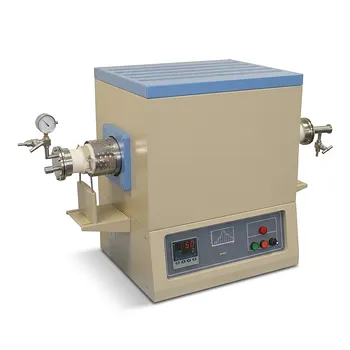
1700C High Temperature Alumina Tube Furnace with 18 Inch Heated Zone and Vacuum Sealing Flanges

High Temperature Tube Furnace 1500C with Sliding Flanges and 50mm OD for Rapid Thermal Processing Fast Heating and Cooling

High Temperature 1700C Tube Furnace with High Vacuum Turbomolecular Pump System and Multi Channel Mass Flow Controller Gas Mixer
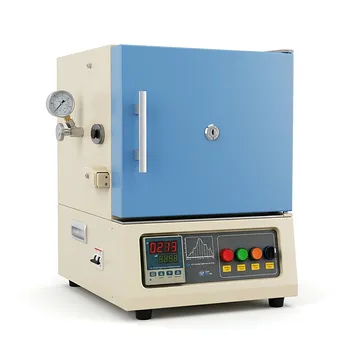
1200C Hybrid Muffle and Tube Furnace for Material Research with Dual Atmosphere Control Quartz Tubes
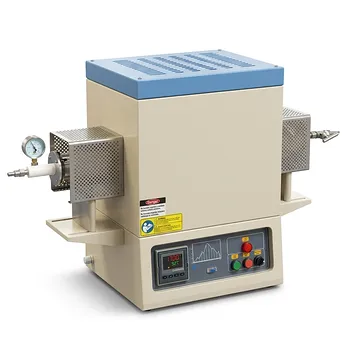
High Temperature Three Zone Tube Furnace 1700C with Alumina Tube and Water Cooled Flanges

Vertical 1700C Vacuum and Atmosphere Tube Furnace with 80mm Alumina Tube
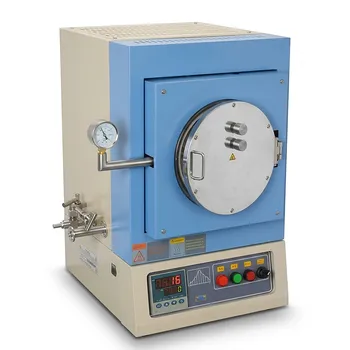
1100°C High Temperature Quartz Chamber Furnace 8 Inch OD with 7.6 Liter Capacity and Vacuum Atmosphere Capability

Compact High Temperature 1600C Tube Furnace with 50mm Alumina Tube and Vacuum Flanges for Material Sintering

High Temperature 1700C Benchtop Tube Furnace with 5 Inch Heating Zone High Purity Alumina Tube and Vacuum Sealing Flanges

1800C High Temperature Compact Vacuum Tube Furnace with 60mm OD Alumina Tube and Kanthal MoSi2 Heating Elements
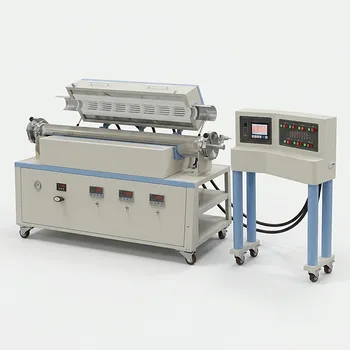
1100C Eight Zone High Pressure Super Alloy Tube Furnace with Integrated High Pressure Gas Control System

High Temperature 1700C Vertical Tube Furnace for Powder Spherification and Material Sintering
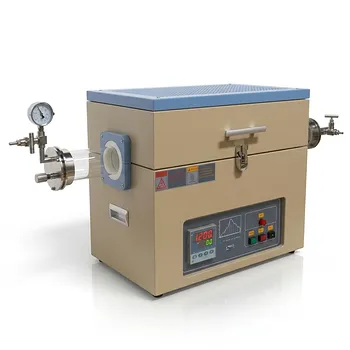
High Temperature 1200C Split Tube Furnace with Optional Quartz Tube Sizes and Vacuum Sealing Flanges for Material Science Research

High Temperature 1700C Tube Furnace with 4 Inch OD Alumina Tube and Vacuum Sealing Flanges

High Temperature 1700C Six Zone Split Tube Furnace with Alumina Tube and Water Cooled Flanges