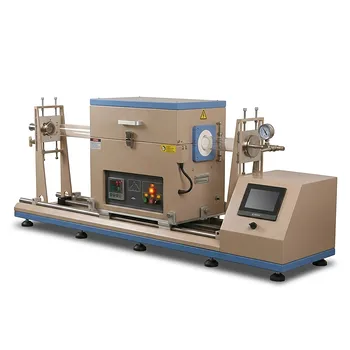
What role does a high-temperature tube furnace play in CuCrO2 thin film production? Master Delafossite Crystallization.
Updated 3 months ago
The high-temperature tube furnace is the essential catalyst for phase transformation in $\text{CuCrO}_2$ production. It provides the controlled thermal energy required to convert a non-functional, amorphous deposited layer into a highly crystalline delafossite structure. Without this precise post-treatment stage, the thin film would lack the electrical conductivity and optical transparency necessary for technical applications.
Core Takeaway: The high-temperature tube furnace facilitates critical thermal annealing, driving the atomic rearrangement that transforms amorphous $\text{CuCrO}_2$ into a high-performance crystalline delafossite phase. This transition is the decisive factor in achieving superior hole mobility and material transparency.
Driving Phase Transformation and Crystallinity
The Transition from Amorphous to Delafossite
During the initial deposition of $\text{CuCrO}_2$ thin films, the material often lacks a defined internal structure, resulting in an amorphous state. The tube furnace provides a high-temperature environment (typically around $800\text{ °C}$) that triggers a solid-state reaction. This reaction forces the atoms to organize into a single-phase delafossite structure, which is the required state for $p$-type transparency.
Atomic Rearrangement via Precise Thermal Fields
The furnace creates a stable thermal field that allows atoms to migrate to their most stable lattice positions. This atomic rearrangement is not merely a surface change; it occurs throughout the bulk of the film. By providing a consistent temperature over a specific duration, the furnace eliminates internal stresses and defects inherent in the deposition process.
Enhancing Material Performance and Stability
Optimizing Hole Mobility and Transparency
The primary goal of $\text{CuCrO}_2$ production is to create a film that is both conductive and clear. The crystallization process induced by the furnace significantly reduces grain boundary scattering. This results in a dramatic increase in hole mobility and improves the optical transparency of the film, allowing it to function as an effective transparent conducting oxide (TCO).
Atmosphere Control and Surface Integrity
A tube furnace allows for a controlled nitrogen atmosphere, which is critical for protecting the chemical composition of the film. This inert environment prevents unwanted oxidation or contamination that could occur in an open-air furnace. Furthermore, the precise control of the heating environment helps in smoothing the film surface and ensuring a uniform thickness across the substrate.
Understanding the Trade-offs
Thermal Budget and Substrate Limitations
While high temperatures (such as $800\text{ °C}$) are necessary for crystallization, they impose a high thermal budget. This limits the choice of substrates to those that can withstand extreme heat without melting or warping, such as sapphire or specialized glass.
Risks of Over-Annealing
Precision in timing is just as critical as temperature. Excessive dwell time in the furnace can lead to grain overgrowth or unwanted secondary phases, which may actually degrade the electrical properties of the thin film.
Atmosphere Sensitivity
If the nitrogen purity is compromised or the vacuum seal of the furnace is weak, oxygen traces can alter the stoichiometry of the film. This can lead to the formation of $\text{CuO}$ or other oxides, which drastically reduce the transparency and performance of the $\text{CuCrO}_2$ layer.
How to Apply This to Your Project
When utilizing a high-temperature tube furnace for thin film post-treatment, your strategy should align with your specific material requirements:
- If your primary focus is Maximum Conductivity: Prioritize the precision of the temperature setpoint (e.g., exactly $800\text{ °C}$) to ensure full transition to the delafossite phase and maximize hole mobility.
- If your primary focus is Optical Clarity: Focus on the purity of the nitrogen atmosphere and the cooling rate to prevent the formation of light-scattering surface defects or secondary oxide phases.
- If your primary focus is Substrate Integrity: Optimize the ramp-up and ramp-down speeds of the furnace to minimize thermal shock and prevent cracking at the film-substrate interface.
The high-temperature tube furnace is not merely a heater, but a precision instrument that defines the final crystalline and functional identity of the $\text{CuCrO}_2$ thin film.
Summary Table:
| Process Feature | Furnace Role | Impact on CuCrO2 Thin Film |
|---|---|---|
| Phase Transition | Controlled heating to ~800°C | Converts amorphous layers to crystalline delafossite structure. |
| Atmosphere Control | Nitrogen/Inert gas environment | Prevents oxidation and ensures stoichiometry and surface purity. |
| Thermal Stability | Uniform thermal field | Facilitates atomic rearrangement and reduces internal lattice defects. |
| Performance Tuning | Precise dwell time management | Optimizes the balance between hole mobility and optical transparency. |
Elevate Your Thin Film Research with THERMUNITS
Precision thermal processing is the key to unlocking high-performance materials like $\text{CuCrO}_2$. THERMUNITS is a leading manufacturer of high-temperature laboratory equipment specifically designed for material science and industrial R&D.
We provide a comprehensive range of thermal solutions to ensure your post-treatment stages are flawless:
- Advanced Tube & Vacuum Furnaces: Perfect for precise atmosphere-controlled annealing.
- CVD/PECVD Systems: For high-quality thin film deposition and growth.
- Specialized Equipment: Including Muffle, Atmosphere, Rotary, Hot Press, and Vacuum Induction Melting (VIM) furnaces.
Whether you are focusing on hole mobility, optical clarity, or substrate integrity, our experts are ready to provide the high-performance tools you need.
Contact THERMUNITS Today to discuss your specific heat treatment requirements and discover how our solutions can accelerate your R&D breakthroughs!
References
- Akash Hari Bharath, Kalpathy B. Sundaram. Characterization of reactively sputter deposited CuCrO<sub>2</sub> thin films using Cu and Cr targets. DOI: 10.1039/d4ma00799a
Mentioned Products
- High Temperature 1800C Atmosphere Tube Furnace for CVD Research and Vacuum Sintering Precision Heat Treatment
- High Temperature 800C Rapid Thermal Processing Furnace with Rotating Sample Holder for Close Spaced Sublimation and Thin Film Solar Cell Research
- Double Temperature Zone Double Cover Tube Furnace for High Temperature CVD and Vacuum Annealing
- 1200C High Temperature 5 Inch Sliding Tube Furnace for Rapid Thermal Processing RTP and Wafer Annealing
- 950C Rapid Thermal Processing Furnace for 12 Inch Wafer CSS Coating with Rotating Substrate Holder
People Also Ask
- Why is an atmosphere tube furnace considered core equipment for CVD? Essential for Precision Thin-Film & 2D Materials
- Why is a Tube Furnace typically utilized for CVD? Achieve Precision in Graphene and 2D Material Synthesis
- What core function does the high-temperature tube furnace perform in MWCNT synthesis? Essential for CVD Precision
- Why is a high-temperature tube furnace with precise gas flow control required for CVD? Optimize Carbon Nanotube Synthesis
- What role does a high-precision tube furnace play in the CVD process of WS2? Optimize Growth and Film Quality

Tech Team · ThermUnits
Last updated on Jun 03, 2026
Related Products
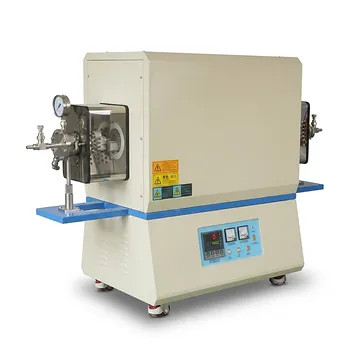
High Temperature 1800C Atmosphere Tube Furnace for CVD Research and Vacuum Sintering Precision Heat Treatment
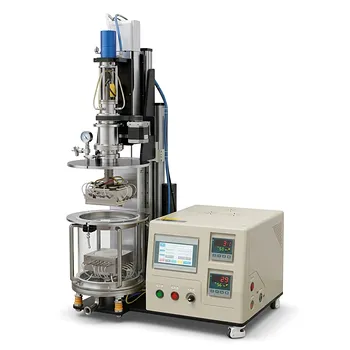
High Temperature 800C Rapid Thermal Processing Furnace with Rotating Sample Holder for Close Spaced Sublimation and Thin Film Solar Cell Research
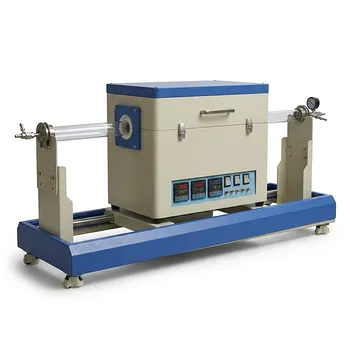
Double Temperature Zone Double Cover Tube Furnace for High Temperature CVD and Vacuum Annealing
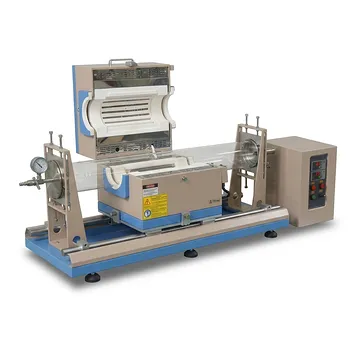
1200C High Temperature 5 Inch Sliding Tube Furnace for Rapid Thermal Processing RTP and Wafer Annealing
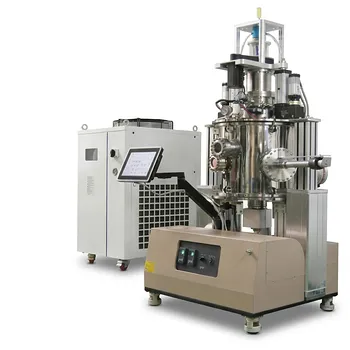
950C Rapid Thermal Processing Furnace for 12 Inch Wafer CSS Coating with Rotating Substrate Holder
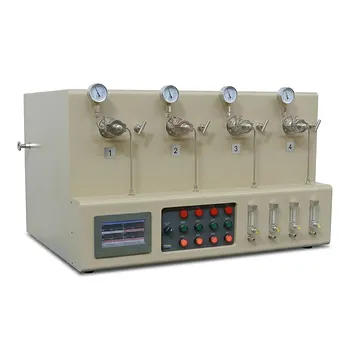
High Temperature 1700C 4 Channel Tube Furnace 1 Inch Alumina Tube for Hi-Throughput Annealing
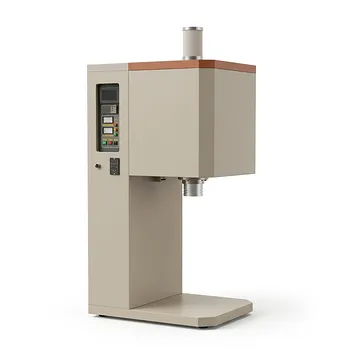
Vertical Openable Tube Furnace 0-1700c High Temperature Laboratory System for CVD and Vacuum Heat Treatment
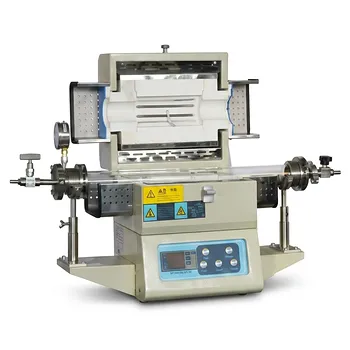
High Temperature 1200C Split Tube Furnace for CVD Research and Vacuum Atmosphere Heat Treatment
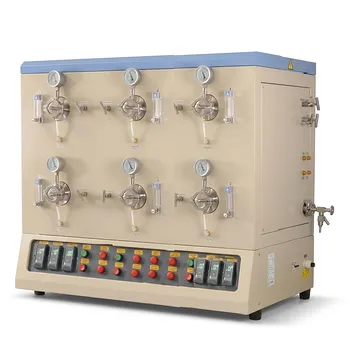
1200C High Throughput Multi Channel Tube Furnace with 50mm Quartz Tubes for Annealing and Material Phase Diagram Research
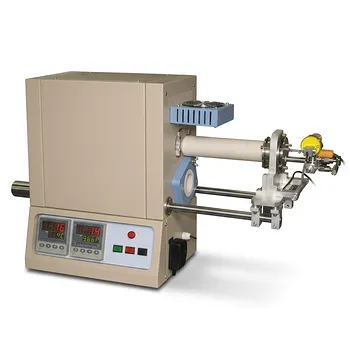
High Temperature Tube Furnace 1500C with Sliding Flanges and 50mm OD for Rapid Thermal Processing Fast Heating and Cooling
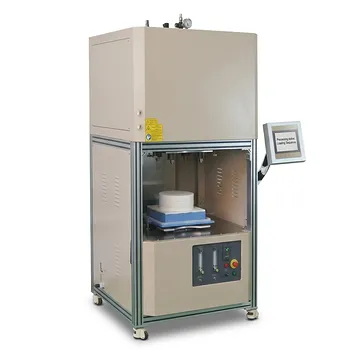
High Temperature Vertical Atmosphere Controlled Furnace with Automatic Bottom Loading and 1700°C Capacity for Advanced Material Research

Compact High Temperature 1600C Tube Furnace with 50mm Alumina Tube and Vacuum Flanges for Material Sintering

High Temperature 1700C Tube Furnace with High Vacuum Turbomolecular Pump System and Multi Channel Mass Flow Controller Gas Mixer
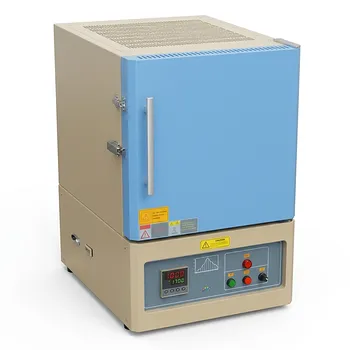
Large Bench Top 1700C High Temperature Muffle Furnace with 19L Chamber for Advanced Material Sintering and Annealing

1750°C High Temperature Benchtop Vacuum Atmosphere Tube Furnace with Kanthal Super 1800 Heating Elements and 60mm Alumina Processing Tube

High Temperature 1700C Benchtop Tube Furnace with 5 Inch Heating Zone High Purity Alumina Tube and Vacuum Sealing Flanges
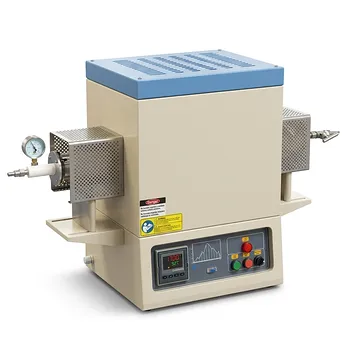
High Temperature Three Zone Tube Furnace 1700C with Alumina Tube and Water Cooled Flanges
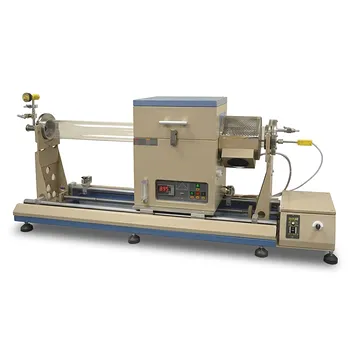
900 ºC Max Sliding RTP Tube Furnace with Rapid IR Heating and 4 Inch OD Quartz Tube
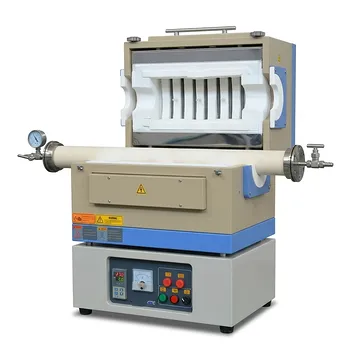
High Temperature 1600C Split Tube Furnace Vacuum Flanges Valves Optional 60mm 80mm Alumina Tube