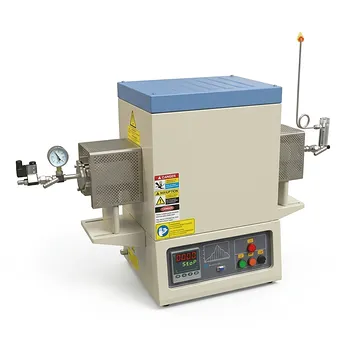
What role does a high-turbulence atmosphere tube furnace play in the initial solution treatment of nickel-based superalloys?
Updated 3 months ago
The high-turbulence atmosphere tube furnace serves as the foundational environment for achieving microstructural uniformity in nickel-based superalloys. During initial solution treatment, the furnace maintains a stable high-temperature environment—typically around 1200°C—to dissolve pre-existing precipitate phases into the alloy matrix while using high-purity inert gases to prevent surface degradation.
Core Takeaway: This equipment is critical for transforming a non-uniform as-cast or damaged microstructure into a homogeneous solid solution. By providing precise temperature control and an inert atmosphere, it ensures the material’s chemical consistency and prepares it for subsequent aging treatments or mechanical processing.
Phase Dissolution and Matrix Homogenization
Dissolving Strengthening Phases
At temperatures reaching 1200°C or higher, the furnace facilitates the dissolution of the gamma prime ($\gamma'$) phase and other precipitates into the gamma matrix. This process is essential because these phases often coarsen or "raft" during prior use or casting, which can compromise the alloy's mechanical integrity.
Eliminating Casting Segregation
The furnace provides the thermal energy required for elemental diffusion, allowing alloying elements to migrate and achieve uniformity. This eliminates micro-segregation and low-melting-point eutectic phases that naturally occur during the solidification of the ingot.
Preparing for Plastic Deformation
By creating a chemically uniform matrix, the solution treatment ensures the material is suitable for further processing, such as hot rolling or other plastic deformation techniques. Without this homogenization, the alloy would be prone to cracking or uneven structural properties during manufacturing.
Atmospheric Protection and Surface Integrity
Preventing Oxidation and Decarburization
At extreme temperatures, nickel-based superalloys are highly reactive to oxygen and carbon. The tube furnace introduces high-purity argon or other inert gases to create a protective barrier, preventing the formation of surface scales and the loss of critical carbon content (decarburization).
Enhancing Heat Exchange with Gas Flow
The "high-turbulence" aspect of the furnace refers to the controlled flow of protective gases, such as helium or argon, which can improve thermal conductivity. This turbulence facilitates rapid and uniform heat exchange, ensuring the entire sample reaches the target temperature simultaneously to maintain solution kinetics.
Ensuring Experimental Consistency
For researchers, the primary role of this furnace is to provide a "clean slate." By protecting the chemical composition of the alloy's surface and core, it ensures that subsequent aging experiments or structural evaluations are based on a consistent, known starting point.
Understanding the Trade-offs
Temperature Management Risks
Operating near the solvus line—the temperature where phases dissolve—requires extreme precision. If the temperature is too low (sub-solvus), the strengthening phases will not fully dissolve; if it is too high (super-solvus), the alloy may experience uncontrolled grain growth, which can reduce fatigue resistance.
The Limits of Inert Protection
While argon and helium provide excellent protection, they cannot "fix" a material that has already undergone severe internal oxidation or deep chemical depletion. Furthermore, high-turbulence systems must be carefully calibrated, as excessive gas flow can sometimes lead to thermal gradients across the sample if the gas is not pre-heated.
How to Apply This to Your Project
Selecting the Right Treatment Parameters
- If your primary focus is recovering creep-damaged materials: Use a high-temperature solution stage (up to 1315°C) followed by two-stage aging to re-precipitate an ordered cubic $\gamma'$ structure.
- If your primary focus is preparing for hot rolling: Prioritize a stable, long-duration soak at a slightly lower temperature (1100°C - 1200°C) to eliminate micro-segregation and eutectic phases.
- If your primary focus is refining grain size: Implement a sub-solvus treatment that retains a small portion of undissolved phases to act as "pins" that prevent grain boundaries from migrating.
- If your primary focus is preventing surface oxidation: Ensure the furnace is purged with high-purity helium or argon and maintain a positive pressure environment throughout the heating and cooling cycles.
The high-turbulence atmosphere tube furnace is the indispensable first step in the lifecycle of superalloy processing, acting as the mechanism that resets and refines the material's internal architecture.
Summary Table:
| Key Function | Impact on Superalloy Microstructure | Technical Benefit |
|---|---|---|
| Phase Dissolution | Dissolves gamma prime ($\gamma'$) and precipitates | Restores mechanical integrity & ductility |
| Matrix Homogenization | Eliminates micro-segregation and eutectic phases | Prevents cracking during plastic deformation |
| Atmospheric Protection | Prevents surface oxidation and decarburization | Maintains chemical purity and surface integrity |
| High-Turbulence Flow | Facilitates rapid and uniform heat exchange | Ensures consistent solution kinetics & results |
Elevate Your Material Research with THERMUNITS
Achieving the perfect microstructural "clean slate" for nickel-based superalloys requires uncompromising thermal precision and atmospheric control. THERMUNITS is a leading manufacturer of high-temperature laboratory equipment, specialized in empowering material science and industrial R&D.
Whether you are performing initial solution treatments, CVD/PECVD synthesis, or complex vacuum induction melting, our comprehensive range of thermal solutions—including Atmosphere Tube Furnaces, Vacuum Muffle Furnaces, and Rotary Kilns—are engineered for peak performance and experimental consistency.
Ready to optimize your heat treatment process? Contact our technical team today to discuss how our advanced furnace technology can support your next breakthrough.
References
- R. Buerstmayr, Sophie Primig. Improved Thermodynamic Descriptions of Carbides in Ni-Based Superalloys. DOI: 10.1007/s11837-024-06484-8
Mentioned Products
- 1750°C High Temperature Benchtop Vacuum Atmosphere Tube Furnace with Kanthal Super 1800 Heating Elements and 60mm Alumina Processing Tube
- 1200C Hybrid Muffle and Tube Furnace for Material Research with Dual Atmosphere Control Quartz Tubes
- 1500°C Split Tube Furnace with Alumina Tube and Vacuum Sealing Flanges for Material Research
- Vertical 1700C Vacuum and Atmosphere Tube Furnace with 80mm Alumina Tube
- High Temperature 1200C Split Tube Furnace for CVD Research and Vacuum Atmosphere Heat Treatment
People Also Ask
- What core functions does a high-temperature vacuum tube furnace provide? Optimize np-CuSn Sintering & Joint Integrity
- What is the role of a high-temperature tube furnace in the calcination process of ZnO/In2O3 nanocomposites?
- What role does a high-temperature tube furnace play in the sulfidation heat treatment of CoS@C/MXene nanocomposites? Guide
- Why is a high-temperature tube furnace required for CuAlO2 heat treatment? Master Phase Transformation Today
- What role does a high-temperature tube furnace play in executing nitrogen absorption kinetic experiments? Expert Insights

Tech Team · ThermUnits
Last updated on Jun 03, 2026
Related Products
1750°C High Temperature Benchtop Vacuum Atmosphere Tube Furnace with Kanthal Super 1800 Heating Elements and 60mm Alumina Processing Tube
1200C Hybrid Muffle and Tube Furnace for Material Research with Dual Atmosphere Control Quartz Tubes
1500°C Split Tube Furnace with Alumina Tube and Vacuum Sealing Flanges for Material Research
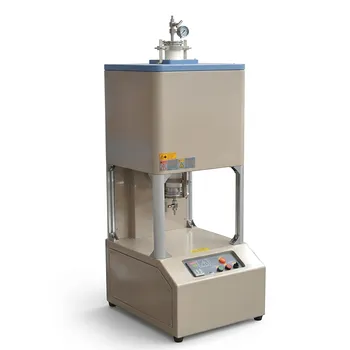
Vertical 1700C Vacuum and Atmosphere Tube Furnace with 80mm Alumina Tube
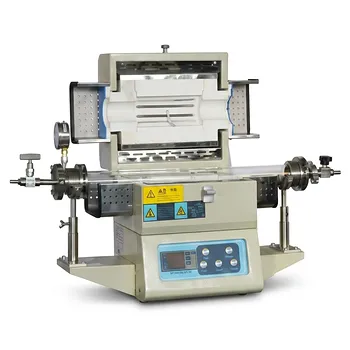
High Temperature 1200C Split Tube Furnace for CVD Research and Vacuum Atmosphere Heat Treatment
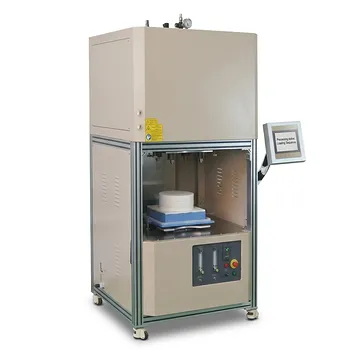
High Temperature Vertical Atmosphere Controlled Furnace with Automatic Bottom Loading and 1700°C Capacity for Advanced Material Research
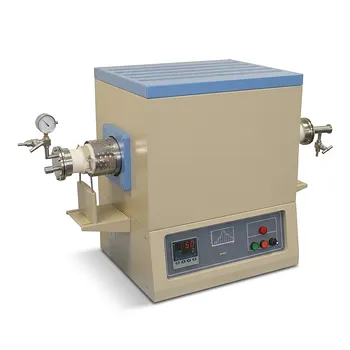
1700C High Temperature Alumina Tube Furnace with 18 Inch Heated Zone and Vacuum Sealing Flanges
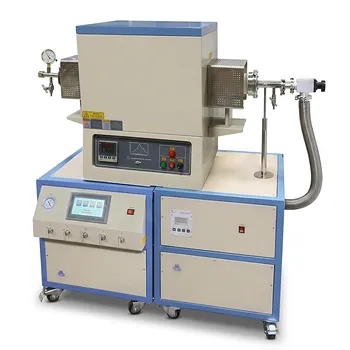
High Temperature 1700C Tube Furnace with High Vacuum Turbomolecular Pump System and Multi Channel Mass Flow Controller Gas Mixer
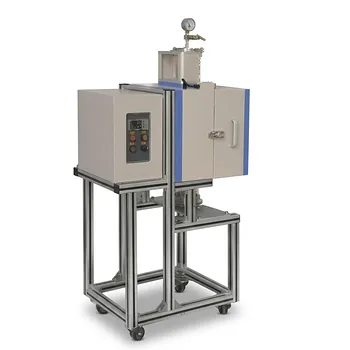
1200°C 5 Inch Vertical Quartz Tube Furnace with Stainless Steel Vacuum Flanges
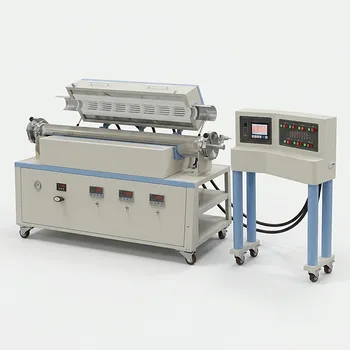
1100C Eight Zone High Pressure Super Alloy Tube Furnace with Integrated High Pressure Gas Control System
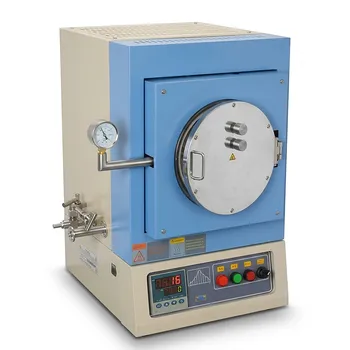
1100°C High Temperature Quartz Chamber Furnace 8 Inch OD with 7.6 Liter Capacity and Vacuum Atmosphere Capability
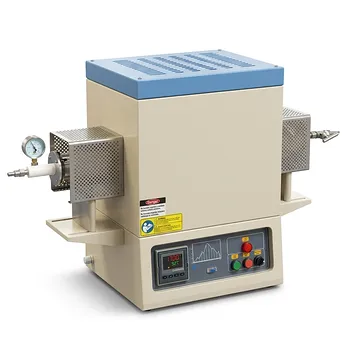
High Temperature Three Zone Tube Furnace 1700C with Alumina Tube and Water Cooled Flanges
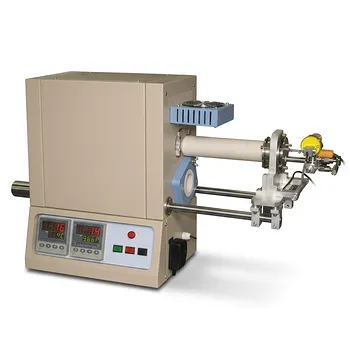
High Temperature Tube Furnace 1500C with Sliding Flanges and 50mm OD for Rapid Thermal Processing Fast Heating and Cooling
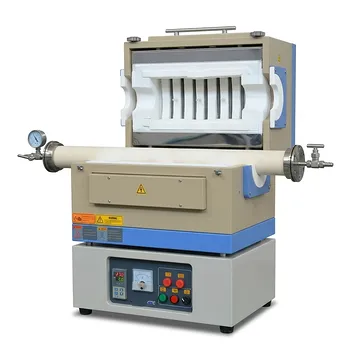
High Temperature 1600C Split Tube Furnace Vacuum Flanges Valves Optional 60mm 80mm Alumina Tube
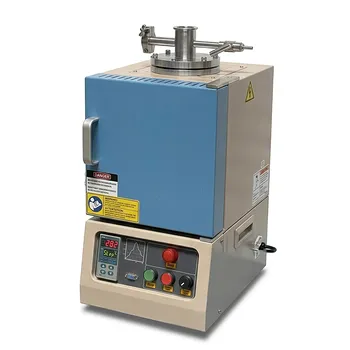
High Temperature Hybrid Muffle and Tube Furnace with Vacuum Capability and PID Control
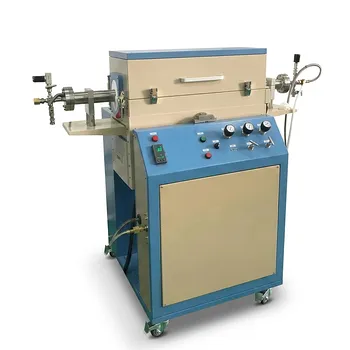
High Temperature Rocking Tube Furnace 1700°C Alumina Processing Tube with Precision Oscillation for Material Synthesis

High Temperature Automated 5 Inch Tube Furnace for Autonomous Material Research and Advanced Laboratory R&D
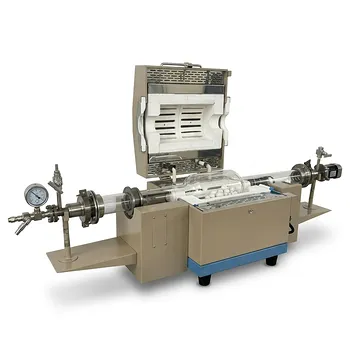
High Temperature Rotary Tube Furnace with Integrated Ball Milling and Gas Flow Function for Powder Nitriding
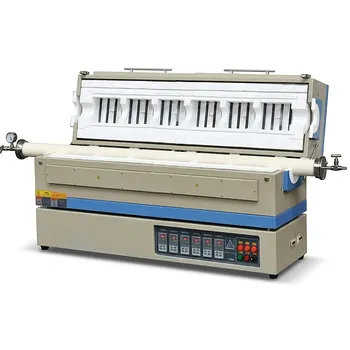
High Temperature 1700C Six Zone Split Tube Furnace with Alumina Tube and Water Cooled Flanges