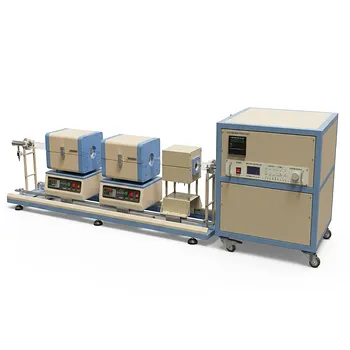
What role does an AACVD system play in the preparation of FeNi catalysts? Precision Synthesis & Morphology Control
Updated 6 months ago
The AACVD system serves as a precision delivery and synthesis platform for FeNi catalyst fabrication. By atomizing liquid precursor solutions into micro-droplets and transporting them to a high-temperature reaction zone, the system enables the growth of specific nanostructures directly onto a substrate. This process allows for meticulous control over the catalyst's morphology, transition state, and electrochemically active surface area.
The core role of an AACVD system is to transform non-volatile liquid precursors into structured solid-state catalysts through controlled atomization and thermal decomposition. This method provides a versatile, cost-effective alternative to traditional vapor-phase techniques by allowing for precise morphological and chemical tuning.
The Mechanism of AACVD in FeNi Synthesis
Ultrasonic Atomization and Droplet Transport
The process begins with an ultrasonic generator that converts the FeNi precursor solution into a fine aerosol mist. These micron-sized liquid droplets are then carried by a gas stream, such as a nitrogen-hydrogen mix, into the reaction chamber. This mechanism allows the system to handle multi-component liquid precursors that would be difficult to vaporize using heat alone.
Overcoming Volatility Requirements
Unlike traditional Chemical Vapor Deposition (CVD), AACVD does not require precursors to be highly volatile. Because the precursors are transported as an aerosol rather than a gas, researchers can use a wider range of thermally unstable or non-volatile metallic salts. This flexibility is essential for creating complex FeNi alloys where maintaining specific metal ratios is critical.
Segmented Thermal Management
Advanced AACVD setups often utilize dual-zone heating to manage the transition from liquid to solid. The first zone ensures the stable evaporation of the solvent and preheating of the aerosol. The second zone, typically maintained between 600°C and 650°C, provides the energy required for chemical decomposition and the crystallization of the FeNi nanostructures.
Morphological Engineering and Stoichiometry
Regulating Catalyst Geometry
The deposition time within the AACVD system directly dictates the physical structure of the FeNi catalyst. Short deposition times may yield high-density nanowire networks, while extended times can lead to the formation of aggregated spherical particles. These geometric changes are vital because they determine the total surface area available for electrochemical reactions.
Ensuring Chemical Uniformity
Because the precursors are mixed in a solution before atomization, the AACVD process ensures a highly uniform distribution of iron and nickel throughout the film. This level of control allows for precise stoichiometry, ensuring that the resulting catalyst has the exact elemental ratio needed for optimal performance. This uniformity is often superior to methods that rely on separate evaporation sources.
Environmental Control and Oxidation Inhibition
The use of a reductive carrier gas, such as a 5% H2 balanced N2 mixture, is crucial when working with transition metals like Fe and Ni. This atmosphere prevents the unwanted oxidation of the metal particles during the high-temperature synthesis phase. By maintaining a reductive environment, the system ensures the catalyst remains in its active metallic or alloy state.
Understanding the Trade-offs
Precursor Solubility and Solvent Choice
While AACVD bypasses volatility issues, it introduces a dependency on precursor solubility. If the iron and nickel salts do not dissolve completely or if the solvent evaporates too quickly in the transport lines, it can lead to clogging or non-uniform deposition. Choosing the right solvent is a balancing act between solubility and the desired evaporation rate in the heating zone.
Droplet Size Variance
The performance of the catalyst is heavily influenced by the consistency of the aerosol mist. Variations in droplet size can lead to "splashing" effects or uneven film thickness across the substrate. While ultrasonic atomization produces finer mists than pneumatic methods, maintaining a constant droplet size remains a technical challenge for large-scale applications.
Equipment and Operational Costs
One significant advantage of AACVD is the reduced reliance on expensive high-vacuum systems, which lowers the barrier to entry for production. However, the requirement for precise gas flow control and specialized ultrasonic components means that the initial setup still requires a high degree of technical expertise to calibrate correctly.
Making the Right Choice for Your Goal
How to Apply This to Your Project
Depending on your specific research or production objectives, the AACVD system can be tuned to prioritize different catalyst characteristics:
- If your primary focus is maximizing catalytic activity: Prioritize shorter deposition times to favor the growth of high-density nanowire networks with high surface-to-volume ratios.
- If your primary focus is chemical purity and metallic state: Utilize a reductive carrier gas (H2/N2) and optimize the dual-zone temperatures to prevent oxide formation.
- If your primary focus is cost-effective scaling: Leverage the system's ability to operate without high-vacuum environments and use low-cost, non-volatile precursors.
By mastering the balance between atomization, atmosphere, and thermal zones, the AACVD system becomes a definitive tool for engineering high-performance FeNi catalysts.
Summary Table:
| Feature | Benefit for FeNi Catalysts |
|---|---|
| Ultrasonic Atomization | Efficient transport of non-volatile precursors |
| Dual-Zone Heating | Precise control over crystallization and evaporation |
| Reductive Atmosphere | Prevents unwanted metal oxidation during synthesis |
| Morphological Control | Tunes geometry from nanowires to spherical particles |
| High Stoichiometry | Ensures uniform elemental distribution across substrates |
Elevate Your Catalyst Research with THERMUNITS
As a leading manufacturer of high-temperature laboratory equipment, THERMUNITS provides the precision tools required for advanced material science and industrial R&D. Our specialized CVD/PECVD systems and advanced thermal solutions are designed to give you meticulous control over nanostructure growth, ensuring superior chemical uniformity for FeNi catalyst production.
Beyond CVD, we offer a comprehensive range of thermal processing equipment, including:
- Muffle, Vacuum, Atmosphere, and Tube Furnaces
- Rotary, Hot Press, and Dental Furnaces
- Electric Rotary Kilns & Vacuum Induction Melting (VIM) Furnaces
- High-Quality Thermal Elements
Whether you are engineering next-generation catalysts or developing high-performance industrial materials, our equipment ensures the accuracy, reproducibility, and durability your lab demands.
Contact THERMUNITS today to optimize your laboratory heat treatment processes!
References
- Muthumariappan Akilarasan, J. Morris Princey. <i>In Situ</i> Electrochemical Conversion of Biomass-Derived 5-Hydroxymethylfurfural into 2,5-Furandicarboxylic Acid by Time-Controlled Aerosol-Assisted Chemical Vapor Deposited FeNi Catalyst. DOI: 10.1021/acsomega.4c04274
Mentioned Products
- Versatile Chemical Vapor Deposition Tube Furnace System for Advanced Material Research and Industrial Coating Processes
- Radio Frequency Plasma Enhanced Chemical Vapor Deposition RF PECVD System for Laboratory and Industrial Thin Film Growth
- Chemical Vapor Deposition CVD System Slide PECVD Tube Furnace with Liquid Gasifier PECVD Machine
- Two Zone Rotary CVD Furnace with Automatic Feeding and Receiving System for Powder Processing
- Split Chamber CVD Tube Furnace with Vacuum Station Chemical Vapor Deposition System Machine
People Also Ask
- How does a sliding rail design benefit the CVD process within a furnace ventilation hood? Enhance Control & Quenching
- What role do by-product desorption and evacuation play in CVD film quality? Key Factors for High-Purity Films
- How does the deposition process occur within a Chemical Vapor Deposition (CVD) reactor? Explore the 5-Stage Growth Cycle
- Why is CVD preferred over PVD for high-aspect-ratio features? Superior Conformality for Semiconductor Fabrication
- What is the primary function of a CVD system in the synthesis of Bi2O2Se thin films? Master High-Quality Crystal Growth

Tech Team · ThermUnits
Last updated on Apr 14, 2026
Related Products
Versatile Chemical Vapor Deposition Tube Furnace System for Advanced Material Research and Industrial Coating Processes
Radio Frequency Plasma Enhanced Chemical Vapor Deposition RF PECVD System for Laboratory and Industrial Thin Film Growth
Chemical Vapor Deposition CVD System Slide PECVD Tube Furnace with Liquid Gasifier PECVD Machine
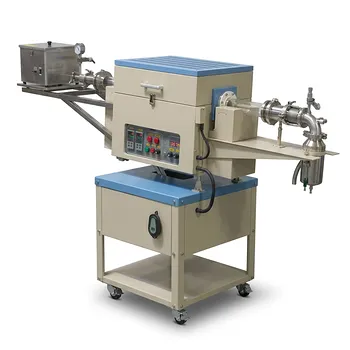
Two Zone Rotary CVD Furnace with Automatic Feeding and Receiving System for Powder Processing
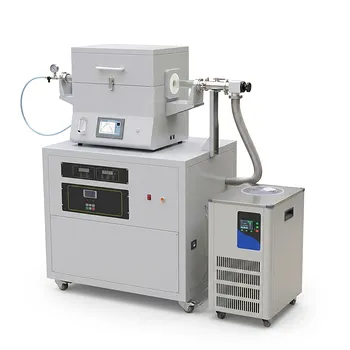
Split Chamber CVD Tube Furnace with Vacuum Station Chemical Vapor Deposition System Machine
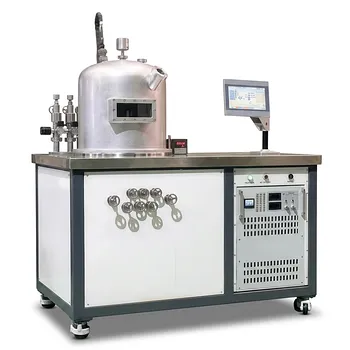
HFCVD Machine System for Nano Diamond Coating on Drawing Dies and Industrial Tools
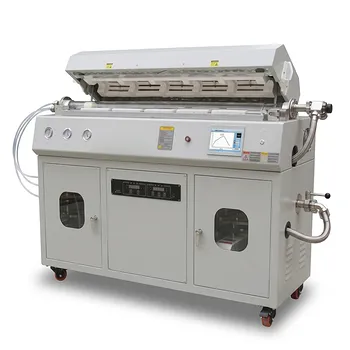
Multi Heating Zones CVD Tube Furnace System for Precision Chemical Vapor Deposition and Advanced Material Synthesis
915MHz MPCVD Diamond Machine Microwave Plasma Chemical Vapor Deposition System Reactor
Inclined Rotary Plasma Enhanced Chemical Vapor Deposition PECVD System for Thin Film Deposition and Nanomaterial Synthesis
Cylindrical Resonator MPCVD Machine System for Microwave Plasma Chemical Vapor Deposition and Lab Diamond Growth
High Temperature 1700C Dual Zone Tube Furnace for Material Science and Industrial Chemical Vapor Deposition Research
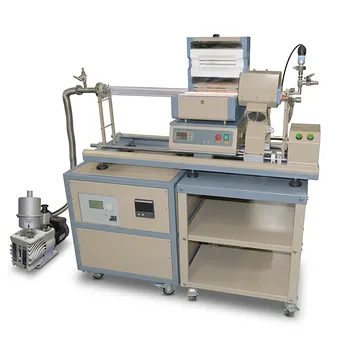
1200C Max Compact Auto-Sliding PECVD Furnace with 2 Inch Tube and Vacuum Pump
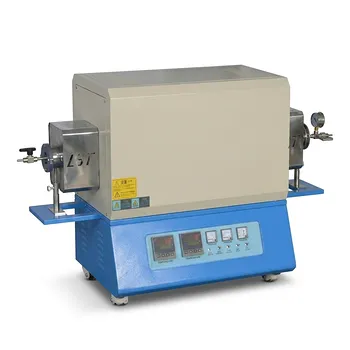
High Temperature Dual Zone Vacuum Tube Furnace for Material Research and CVD Processing
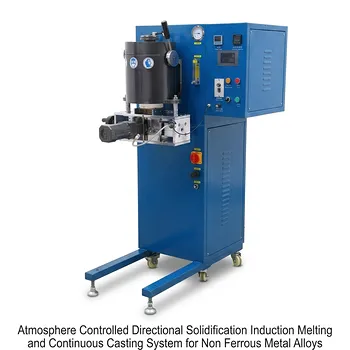
Atmosphere Controlled Directional Solidification Induction Melting and Continuous Casting System for Non Ferrous Metal Alloys
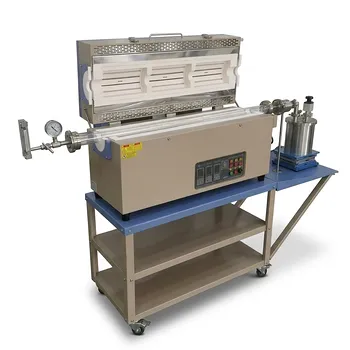
5 Inch Two Zone Rotary Tube Furnace 1100C for Powder CVD and Material Synthesis
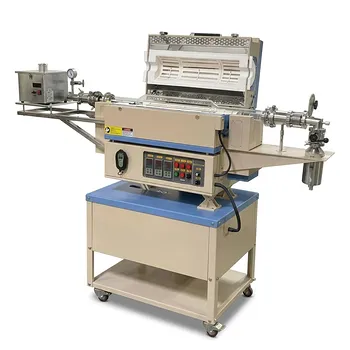
5 Inch Rotary Tube Furnace with Automatic Feeding and Receiving System 1200C Three Zone CVD Powder Processing
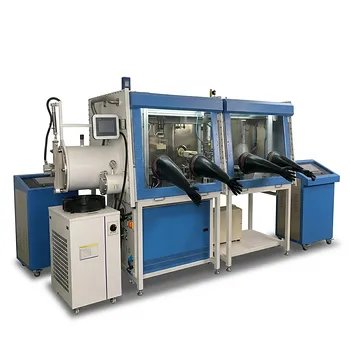
Automatic 10 Crucible Induction Melting and Casting System with Stirring Function and Glovebox Integration 2000C
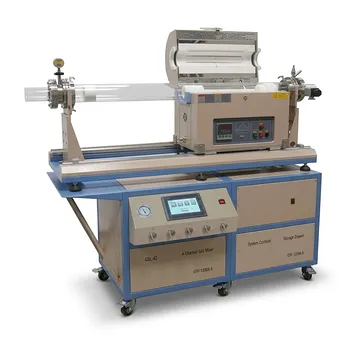
Dual Tube 100mm 80mm CVD Sliding Furnace with 4 Channel Gas Mixing and Vacuum System
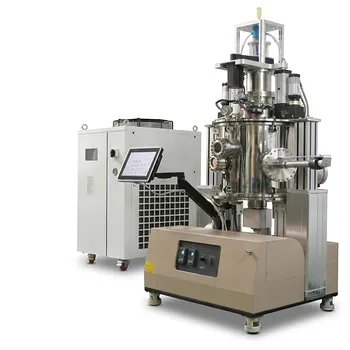
950C Rapid Thermal Processing Furnace for 12 Inch Wafer CSS Coating with Rotating Substrate Holder