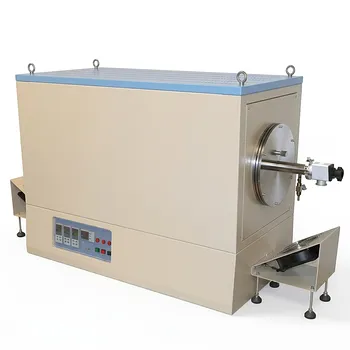
What role does Quartz Wool play in the self-flux growth process of WTe2? Essential Purity & Separation Insights
Updated 3 months ago
Quartz wool functions as a precision mechanical filter during the final stages of Tungsten Ditelluride (WTe2) synthesis. Its primary role is to physically isolate the high-quality crystals from the molten tellurium flux, ensuring the chemical purity and structural integrity of the final product. By acting as a high-temperature sieve, it allows for a "clean" harvest that minimizes the need for aggressive post-growth processing.
Quartz wool enables the clean separation of WTe2 crystals from excess liquid flux by acting as a sieve during the high-temperature inversion process. This step is vital for producing pristine surfaces and reducing the complexity of removing residual tellurium from the resulting bulk single crystals.
The Mechanics of Flux Separation
High-Temperature Filtration
Quartz wool is chosen for its ability to remain chemically inert and structurally sound at temperatures exceeding 800°C. During the growth process, it serves as a porous barrier that allows liquid Tellurium (Te) to pass through while retaining the solidified WTe2 crystals.
The Inversion Technique
Once the growth cycle reaches the target temperature, the vacuum-sealed quartz tube is inverted. Gravity pulls the excess liquid flux through the quartz wool, effectively "decanting" the crystals in a single motion.
Surface Quality Management
By separating the flux while it is still in a liquid state, the wool prevents the WTe2 crystals from being encased in a solid block of tellurium. This ensures the resulting crystal surfaces are clean and free from heavy metallic inclusions.
Maintaining Synthesis Integrity
Protection Against Oxidation
The quartz wool operates within a vacuum-sealed environment, which is critical for WTe2. This vacuum eliminates oxygen and other impurities that would otherwise cause the tungsten and tellurium powders to oxidize at elevated temperatures.
Pressure Stability
Because the entire process occurs within high-purity quartz tubes, the internal environment remains stable and balanced. The wool does not interfere with the pressure dynamics required to synthesize low-defect bulk single crystals.
Reducing Post-Processing Complexity
Without the filtration provided by the quartz wool, researchers would have to use chemical etching or mechanical scraping to remove solidified flux. The wool's role as a separator significantly reduces these labor-intensive and potentially damaging subsequent steps.
Understanding the Trade-offs and Pitfalls
The Risk of Temperature Timing
The most critical trade-off in using quartz wool is the timing of the inversion. If the tube is inverted too early, the crystals may not have fully formed; if too late, the flux solidifies within the wool, rendering the separation impossible.
Material Density Balance
The density of the quartz wool plug must be precisely calibrated. If the wool is packed too tightly, it can impede the flow of the liquid flux; if it is too loose, small WTe2 crystals may pass through the filter and be lost in the waste flux.
Contamination Concerns
While quartz is generally inert, using low-purity wool can introduce trace impurities into the growth environment. Only high-purity quartz wool should be used to maintain the electronic properties of the WTe2 single crystals.
How to Apply This to Your Synthesis Goals
To achieve the best results in WTe2 growth, the use of quartz wool should be tailored to your specific research requirements.
- If your primary focus is high-purity electronic transport measurements: Ensure the quartz wool is of the highest purity grade to prevent trace element doping during the separation stage.
- If your primary focus is maximizing crystal yield: Optimize the packing density of the wool to ensure that even the smallest crystals are captured while still allowing the tellurium flux to drain completely.
- If your primary focus is structural characterization (XRD/STM): Focus on the precision of the inversion temperature to ensure the crystal facets remain pristine and free of residual tellurium droplets.
The strategic use of quartz wool is the definitive factor in transforming a successful chemical reaction into a harvestable, high-quality bulk single crystal.
Summary Table:
| Feature | Role & Influence in WTe2 Synthesis |
|---|---|
| Function | Precision mechanical filter and sieve |
| Material Property | Chemically inert at high temperatures (>800°C) |
| Key Benefit | Separates crystals from liquid flux via inversion |
| Surface Quality | Prevents metallic inclusions and residual solid flux |
| Process Impact | Minimizes need for etching or mechanical scraping |
| Critical Control | Packing density influences filtration efficiency |
Elevate Your Crystal Growth Engineering with THERMUNITS
Optimizing the synthesis of WTe2 bulk single crystals requires precise thermal control and high-performance equipment. As a leading manufacturer of high-temperature laboratory equipment, THERMUNITS provides the advanced solutions needed for successful material science and industrial R&D.
From high-purity Tube and Vacuum Furnaces perfect for self-flux growth to advanced CVD/PECVD systems and induction melting furnaces, we empower researchers to achieve superior material purity and structural integrity.
Ready to enhance your lab's efficiency? Our experts are here to help you select the right thermal processing tools tailored to your specific requirements.
Contact THERMUNITS Today to discover how our furnaces can transform your heat treatment workflows!
References
- P. M. Rafailov, Vera Marinova. Polarized Raman Study of First-Order Phonons in Self-Flux Grown Single-Crystalline WTe2. DOI: 10.3390/nano14151256
Mentioned Products
- 1100°C High Temperature Quartz Chamber Furnace 8 Inch OD with 7.6 Liter Capacity and Vacuum Atmosphere Capability
- Dual Zone Tube Furnace 1100C with 11 Inch Quartz Tube and Vacuum Flanges for 8 Inch Wafer Processing
- 1200C High Temperature Atmosphere Controlled Vertical Quenching Tube Furnace with 4 Inch Quartz Tube
- 1200°C 5 Inch Vertical Quartz Tube Furnace with Stainless Steel Vacuum Flanges
- Compact Vertical Split Quartz Tube Furnace with Stainless Steel Vacuum Flanges for Rapid Thermal Quenching and Controlled Atmosphere Material Processing
People Also Ask
- Why is a quartz tube furnace necessary for phosphorus-doped MoS2/GO preparation? Ensure Purity & Precise Synthesis
- Benefits of high-vacuum quartz tube furnaces with N2 for Co3O4 nanosheets: Purity and Structural Integrity.
- What conditions does a quartz tube furnace provide for AlxCoCrFeNi steam corrosion tests? Achieve Precise R&D Control.
- Why is high-temperature annealing in a quartz tube furnace done after HfO2 deposition? Unlock peak film performance.
- Why is a high-purity quartz tube used for SP-Fe3O4-C? Ensure Chemical Purity & Catalytic Stability

Tech Team · ThermUnits
Last updated on Jun 02, 2026
Related Products
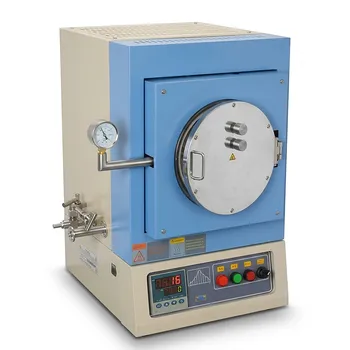
1100°C High Temperature Quartz Chamber Furnace 8 Inch OD with 7.6 Liter Capacity and Vacuum Atmosphere Capability
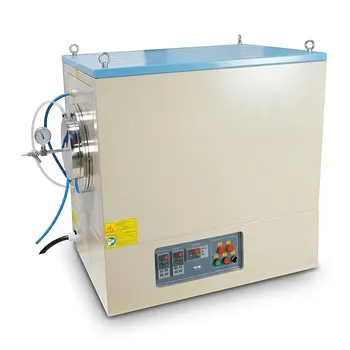
Dual Zone Tube Furnace 1100C with 11 Inch Quartz Tube and Vacuum Flanges for 8 Inch Wafer Processing
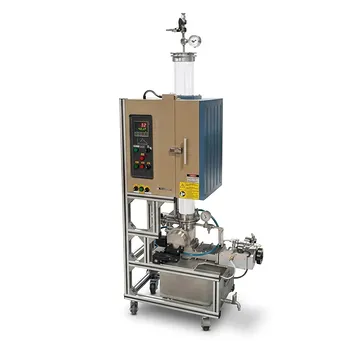
1200C High Temperature Atmosphere Controlled Vertical Quenching Tube Furnace with 4 Inch Quartz Tube

1200°C 5 Inch Vertical Quartz Tube Furnace with Stainless Steel Vacuum Flanges

Compact Vertical Split Quartz Tube Furnace with Stainless Steel Vacuum Flanges for Rapid Thermal Quenching and Controlled Atmosphere Material Processing
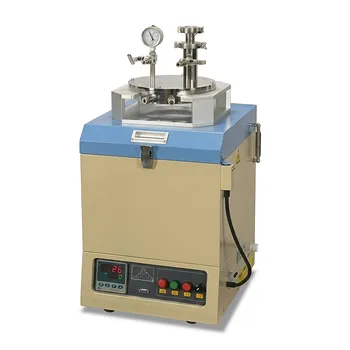
Vertical Vacuum Furnace 1100C High Temperature 8 Inch Quartz Chamber Water Cold Flange System

Three Zone Tube Furnace with 11 Inch or 15 Inch Quartz Tube and Hinged Flanges for Vacuum Atmosphere Heat Treatment
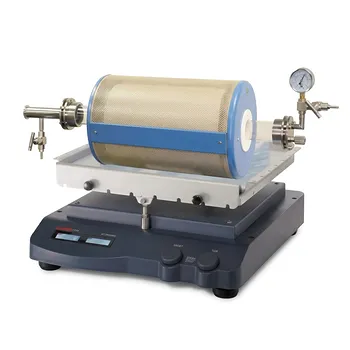
High Temperature Rocking Tube Furnace with Quartz Tube and Vacuum Flange for Materials Synthesis
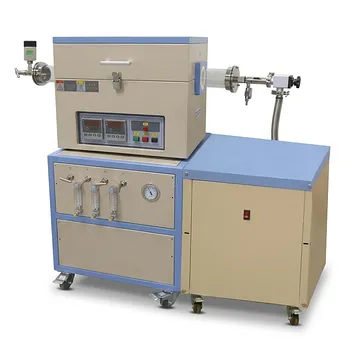
Dual Zone Quartz Tube Furnace with 80mm Diameter 1200C Max Temperature 3 Channel Gas Mixer and Vacuum Pump System
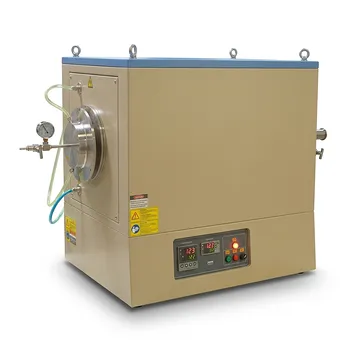
1100°C Large Diameter Quartz Tube Furnace with 24 Inch Heating Zone and Water Cooled Flanges
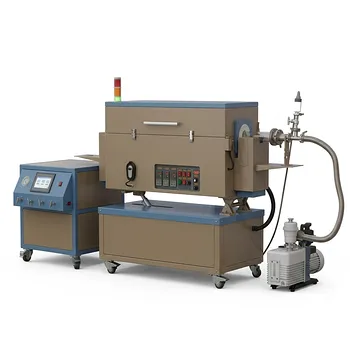
5 Inch Three Zone Rotary Tube Furnace with Integrated Gas Delivery System and 1200C Capability for Advanced Material CVD Processing
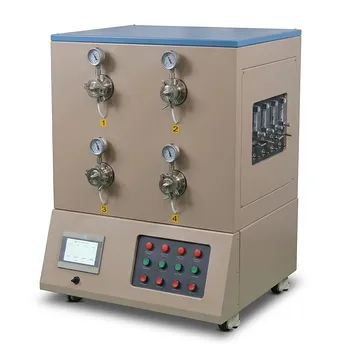
High Throughput 1200C Four Channel Tube Furnace with 3 Inch Quartz Tubes for Multi Zone Annealing and Material Research
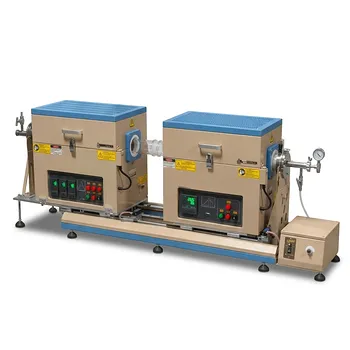
1200C Dual Temperature Zone Slidable Tube Furnace for 2D Material Growth and TCVD Synthesis
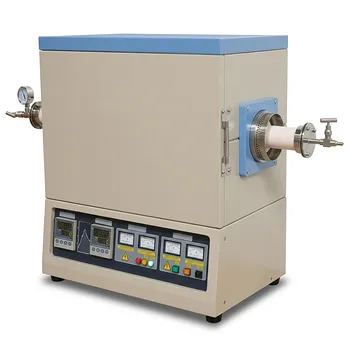
High Temperature 1700C Dual Zone Tube Furnace for Material Science and Industrial Chemical Vapor Deposition Research
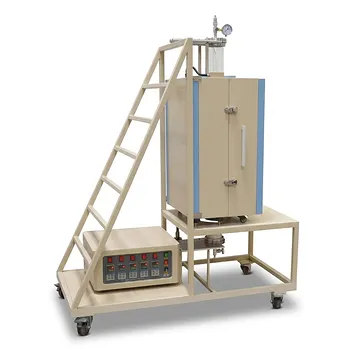
Five Zone Split Vertical Tube Furnace 1200C Max with 4 Inch Quartz Tube and Stainless Steel Vacuum Flanges
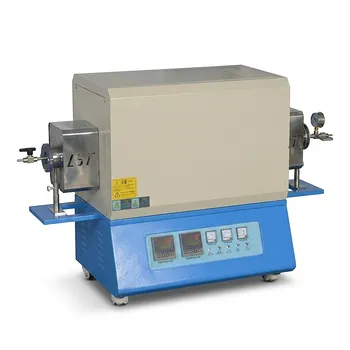
High Temperature Dual Zone Vacuum Tube Furnace for Material Research and CVD Processing
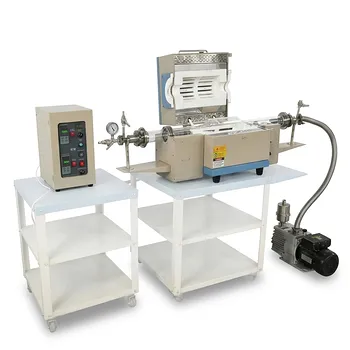
Two Zone Rotary Tube Furnace for Powder CVD Coating and Core Shell Material Synthesis 1100C
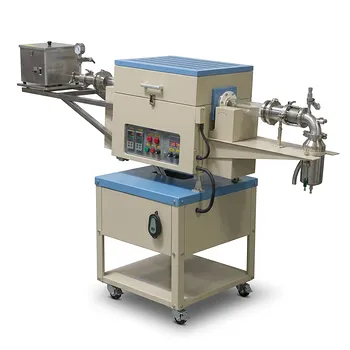
Two Zone Rotary CVD Furnace with Automatic Feeding and Receiving System for Powder Processing
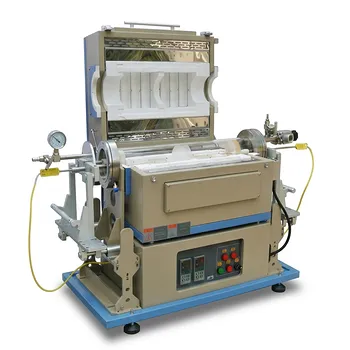
Two Zone IR Heating Rapid Thermal Processing RTP Tube Furnace with 4 Inch ID Quartz Tube and Sliding Sample Holders