What roles does the 5% H2/N2 mixed gas play in AACVD? Optimizing Material Purity and Film Uniformity
Updated 3 months ago
The 5% H2/N2 mixed gas is the dual-purpose engine of the AACVD process. It functions simultaneously as a physical transport medium for precursor droplets and a chemical reducing agent to prevent unwanted oxidation. This specific mixture is critical for ensuring that metallic films, such as Copper-Palladium (CuPd) alloys, maintain their high-purity metallic state during high-temperature synthesis.
This gas mixture balances the inert stability of nitrogen with the reactive power of hydrogen to facilitate precise material growth. It ensures that precursors are delivered efficiently while chemically protecting the integrity of the resulting thin films or nanostructures.
The Physical Role: Precision Transport and Delivery
Transporting Precursor Droplets
In an AACVD system, the nitrogen component of the gas acts as a carrier gas that physically pushes atomized micro-droplets from the atomization chamber to the high-temperature reaction zone. This ensures a steady and controlled supply of precursor materials to the substrate.
Regulating Concentration and Residence Time
Nitrogen also serves as a dilution gas, allowing operators to regulate the concentration of the mist entering the furnace. By adjusting the flow rate, researchers can control the residence time—how long the reactants stay over the catalytic surface—which directly influences film thickness and uniformity.
Controlling Morphology and Step Coverage
The flow dynamics of the carrier gas influence the collision frequency of droplets within the tubular furnace. This precise control allows for the transition between different catalyst morphologies, such as moving from high-density nanowire networks to aggregated spherical particles.
The Chemical Role: Maintaining a Reductive Atmosphere
Inhibiting Metal Oxidation
The 5% hydrogen component provides a reductive atmosphere that is essential during high-temperature decomposition. It effectively prevents metals like copper and palladium from reacting with trace oxygen, ensuring the final product remains in an active metallic alloy state.
Assisting Precursor Decomposition
Hydrogen acts as a reactive agent that assists in the decomposition and sulfurization of precursor molecules. This chemical assistance helps fine-tune the growth kinetics, enabling the formation of continuous nano-alloy transition layers at heterojunction interfaces.
Substrate Surface Preparation
During the pre-growth annealing stage, the hydrogen in the mix helps reduce existing oxides on the metal substrate surface. This process facilitates surface planarization, which is a critical prerequisite for high-quality epitaxial growth of materials like Hexagonal Boron Nitride (h-BN).
Understanding the Trade-offs and Constraints
Balancing Flow Rates and Uniformity
While increasing the gas flow can speed up the process, it may decrease the residence time too much, leading to poor step coverage or incomplete reactions. Conversely, flow rates that are too low can result in precursor aggregation before they reach the substrate.
Hydrogen Concentration Limits
A 5% hydrogen concentration is often chosen as a "safety limit" because it remains below the lower explosive limit (LEL) for hydrogen in air. While higher concentrations might provide stronger reduction, they introduce significant safety risks and require specialized explosion-proof equipment.
Risk of Over-Reduction
In some complex oxide syntheses, a reductive atmosphere can be detrimental by stripping oxygen from the desired crystal lattice. It is vital to match the gas chemistry to the specific thermodynamic requirements of the material being deposited.
How to Optimize Gas Usage for Your Goals
Applying This to Your AACVD Project
To achieve the best results with an H2/N2 mixed gas system, your flow strategy should align with your specific material objectives.
- If your primary focus is Metallic Purity: Maintain a steady hydrogen flow during both the annealing and cooling phases to prevent the re-oxidation of the metal surface.
- If your primary focus is Film Uniformity: Prioritize the fine-tuning of the nitrogen flow rate to optimize the residence time of droplets within the reaction zone.
- If your primary focus is Morphology Control: Adjust the carrier gas velocity to manipulate the collision frequency of atomized droplets, which dictates the transition between nanowires and particles.
By masterfully balancing the physical transport and chemical reduction properties of the H2/N2 mix, you can achieve unprecedented control over the structural and chemical properties of your CVD-grown materials.
Summary Table:
| Role Category | Specific Function | Impact on Material Synthesis |
|---|---|---|
| Physical Role | Carrier & Dilution Gas | Transports precursor droplets and regulates residence time for uniform film growth. |
| Physical Role | Morphology Control | Influences droplet collision frequency to transition between nanowires and particles. |
| Chemical Role | Reductive Atmosphere | Inhibits metal oxidation (e.g., Cu, Pd) and maintains high-purity metallic states. |
| Chemical Role | Surface Preparation | Removes existing oxides from substrates to facilitate high-quality epitaxial growth. |
Elevate Your Material Research with THERMUNITS Precision Furnaces
Achieving the perfect balance of gas dynamics and thermal control is critical for high-performance AACVD, CVD, and PECVD processes. THERMUNITS is a leading manufacturer of high-temperature laboratory equipment, providing the advanced thermal processing solutions required for cutting-edge material science and industrial R&D.
Whether you need precision Tube Furnaces for gas-phase reactions, Vacuum or Atmosphere Furnaces for sensitive materials, or specialized Rotary and Hot Press systems, our equipment is engineered for accuracy and durability. We also offer Dental Furnaces, VIM systems, and high-quality Thermal Elements to support your entire heat treatment workflow.
Ready to optimize your thin-film growth and material synthesis? Contact THERMUNITS today to discuss your specific application and discover how our laboratory furnaces can enhance your research outcomes.
References
- Muhammad Ali Ehsan, Wasif Farooq. Facile fabrication of binary copper–palladium alloy thin film catalysts for exceptional hydrogen evolution performance. DOI: 10.1039/d4ma00410h
Mentioned Products
- Versatile Chemical Vapor Deposition Tube Furnace System for Advanced Material Research and Industrial Coating Processes
- Radio Frequency Plasma Enhanced Chemical Vapor Deposition RF PECVD System for Laboratory and Industrial Thin Film Growth
- Chemical Vapor Deposition CVD System Slide PECVD Tube Furnace with Liquid Gasifier PECVD Machine
- Two Zone Rotary CVD Furnace with Automatic Feeding and Receiving System for Powder Processing
- Split Chamber CVD Tube Furnace with Vacuum Station Chemical Vapor Deposition System Machine
People Also Ask
- How does a sliding rail design benefit the CVD process within a furnace ventilation hood? Enhance Control & Quenching
- What role do by-product desorption and evacuation play in CVD film quality? Key Factors for High-Purity Films
- How does the deposition process occur within a Chemical Vapor Deposition (CVD) reactor? Explore the 5-Stage Growth Cycle
- Why is CVD preferred over PVD for high-aspect-ratio features? Superior Conformality for Semiconductor Fabrication
- How do temperature regimes influence the growth rate of films in a CVD system? Master CVD Kinetics for Superior Thin Films

Tech Team · ThermUnits
Last updated on Jun 03, 2026
Related Products
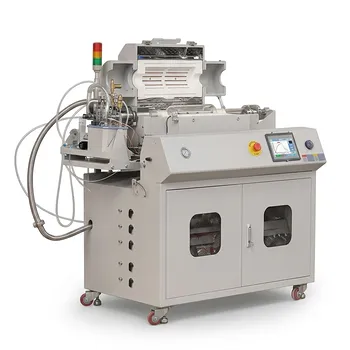
Versatile Chemical Vapor Deposition Tube Furnace System for Advanced Material Research and Industrial Coating Processes
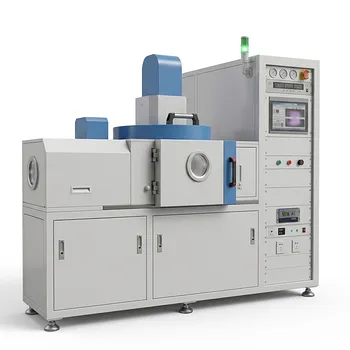
Radio Frequency Plasma Enhanced Chemical Vapor Deposition RF PECVD System for Laboratory and Industrial Thin Film Growth
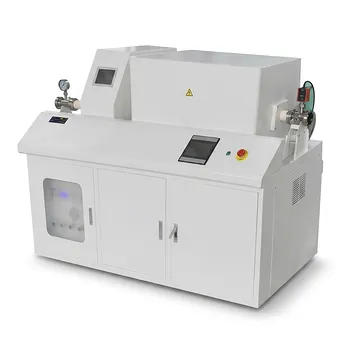
Chemical Vapor Deposition CVD System Slide PECVD Tube Furnace with Liquid Gasifier PECVD Machine
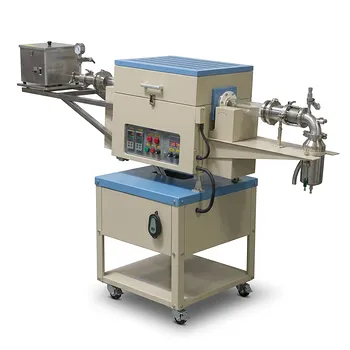
Two Zone Rotary CVD Furnace with Automatic Feeding and Receiving System for Powder Processing
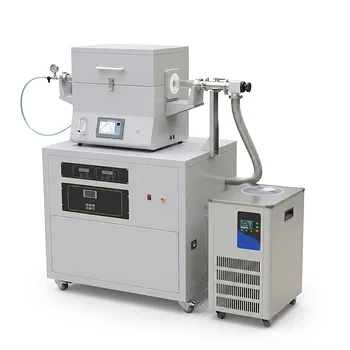
Split Chamber CVD Tube Furnace with Vacuum Station Chemical Vapor Deposition System Machine
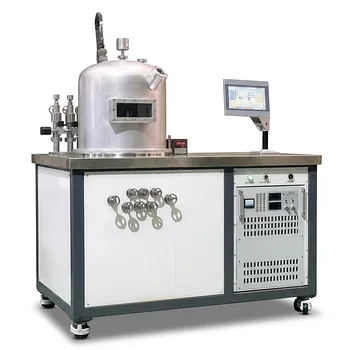
HFCVD Machine System for Nano Diamond Coating on Drawing Dies and Industrial Tools
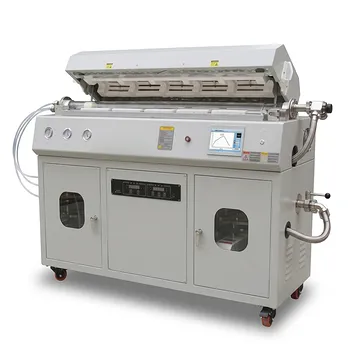
Multi Heating Zones CVD Tube Furnace System for Precision Chemical Vapor Deposition and Advanced Material Synthesis
915MHz MPCVD Diamond Machine Microwave Plasma Chemical Vapor Deposition System Reactor
Inclined Rotary Plasma Enhanced Chemical Vapor Deposition PECVD System for Thin Film Deposition and Nanomaterial Synthesis
Cylindrical Resonator MPCVD Machine System for Microwave Plasma Chemical Vapor Deposition and Lab Diamond Growth
High Temperature 1700C Dual Zone Tube Furnace for Material Science and Industrial Chemical Vapor Deposition Research
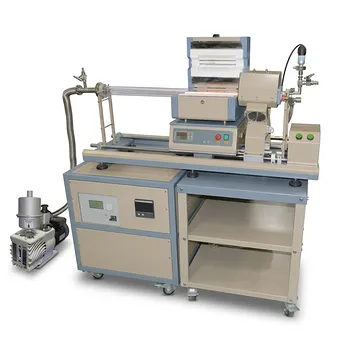
1200C Max Compact Auto-Sliding PECVD Furnace with 2 Inch Tube and Vacuum Pump
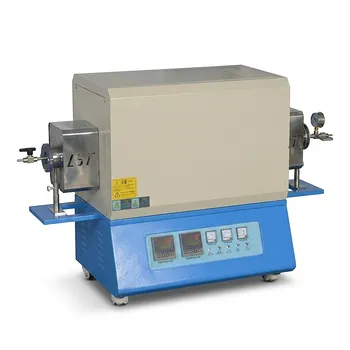
High Temperature Dual Zone Vacuum Tube Furnace for Material Research and CVD Processing
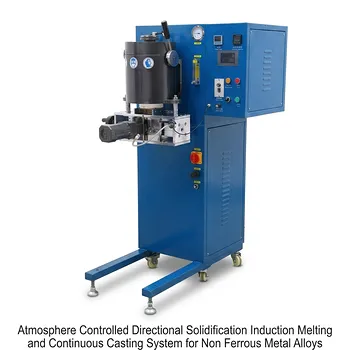
Atmosphere Controlled Directional Solidification Induction Melting and Continuous Casting System for Non Ferrous Metal Alloys
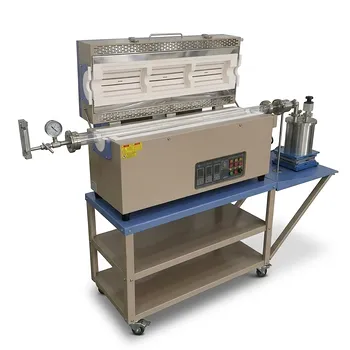
5 Inch Two Zone Rotary Tube Furnace 1100C for Powder CVD and Material Synthesis
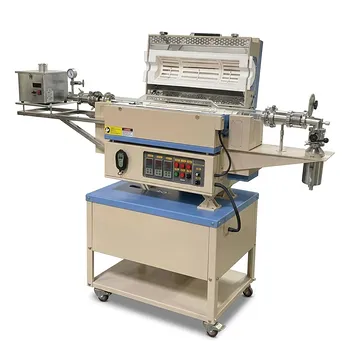
5 Inch Rotary Tube Furnace with Automatic Feeding and Receiving System 1200C Three Zone CVD Powder Processing
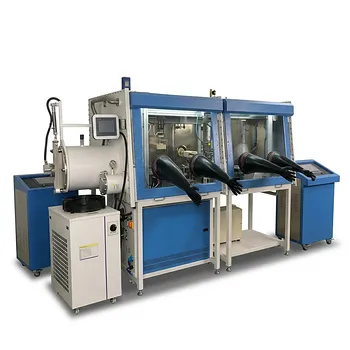
Automatic 10 Crucible Induction Melting and Casting System with Stirring Function and Glovebox Integration 2000C
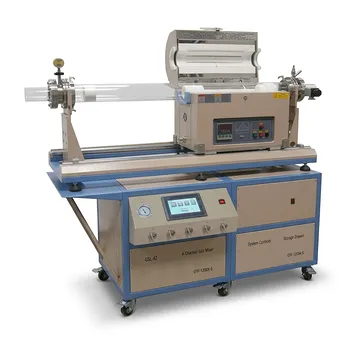
Dual Tube 100mm 80mm CVD Sliding Furnace with 4 Channel Gas Mixing and Vacuum System
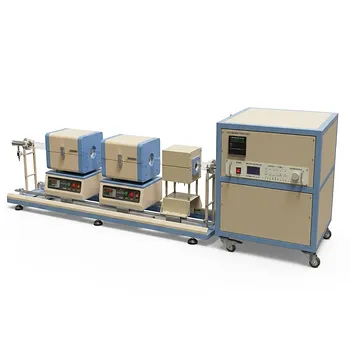
1200C Dual Sliding Tube Furnace with Dual Tubes and Flanges for PECVD Processes