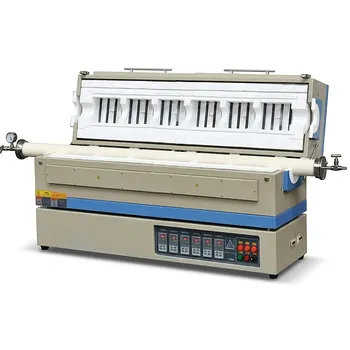
Which process conditions does a tube furnace provide for (FeMn-DA)–N–C synthesis? Expert Pyrolysis Guide
Updated 3 months ago
The high-temperature atmosphere tube furnace provides three critical process conditions for (FeMn-DA)–N–C synthesis: a precise thermal ramp of 275 K/min, a peak carbonization temperature of 1193 K, and a stable, inert protective environment via flowing argon gas. These conditions facilitate the collapse of the ZIF-8 precursor, the redistribution of iron and manganese atoms, and the formation of stable dual-atom active centers within a nitrogen-doped carbon framework.
The furnace acts as a controlled reactor that manages the transition from an organometallic framework to a conductive catalyst. By maintaining atmospheric purity and thermal precision, it ensures that metal atoms anchor into nitrogen sites rather than aggregating into inactive clusters.
Precise Thermal Control and Programmed Ramping
Rapid Temperature Ramping
The furnace must support high-speed programmed heating, specifically at a rate of 275 K/min. This rapid increase is essential for managing the kinetic pathway of the precursor's decomposition and preventing undesirable intermediate phases.
High-Temperature Isothermal Stability
The system maintains a stable peak environment at 1193 K. This specific thermal energy level is required to trigger the carbonization of ZIF-8 and provide sufficient mobility for metal atoms to redistribute across the lattice.
Uniform Heat Distribution
Uniform heating across the tube ensures that the organic ligands transform into a conductive carbon network consistently. This uniformity prevents localized over-heating, which could lead to the collapse of the desired porous structure.
Oxygen-Free Atmospheric Integrity
Inert Protective Environment
The furnace provides a continuous flow of argon gas to create an oxygen-deficient atmosphere. This is critical to prevent the oxidation of the carbon substrate and the metallic precursors at high temperatures.
Atmospheric Sealing and Purity
Rigorous sealing performance ensures that no ambient air enters the reaction zone. Maintaining this purity is vital for the in-situ nitrogen doping process, as oxygen interference can degrade the quality of the Fe-Nx or Mn-Nx coordination sites.
Gas Flow Regulation
A constant flow of inert gas not only protects the material but also carries away gaseous byproducts generated during molecular-level restructuring. This prevents the re-deposition of impurities onto the forming catalyst surface.
Facilitating Atomic Redistribution and Anchoring
Dual-Atom Site Formation
The specific thermal conditions allow for the redistribution of iron and manganese atoms. This process is what enables the transition from isolated ions to structured dual-atom active centers anchored within the carbon framework.
Suppression of Metal Aggregation
By controlling the heating curve and atmosphere, the furnace helps suppress the random aggregation of metal atoms. This ensures the metals stay highly dispersed as single or dual atoms rather than forming large, less-active nanoparticles.
Structural Transformation of Precursors
The furnace environment induces the collapse of the organic skeleton of ZIFs. This transformation results in the creation of a nitrogen-doped carbon framework that provides the necessary electrical conductivity for electrocatalytic applications.
Understanding the Trade-offs and Pitfalls
Temperature vs. Surface Area
While higher temperatures (approaching 1200 K) improve electrical conductivity and metal anchoring, they can also cause excessive pore collapse. This reduces the specific surface area, potentially limiting the accessibility of the active sites.
Ramping Rate Sensitivity
A ramp rate that is too slow may allow metal atoms to migrate and form large clusters or crystals. Conversely, a rate that is too fast (like the 275 K/min mentioned) requires sophisticated furnace control to avoid thermal overshoot, which can ruin the catalyst's microstructure.
Argon Flow Dynamics
Insufficient argon flow may fail to remove corrosive ligands, leading to unwanted side reactions. However, excessively high flow rates can cause temperature fluctuations within the tube, undermining the precision of the programmed heating curve.
Applying These Conditions to Your Synthesis Goal
The success of (FeMn-DA)–N–C synthesis depends on balancing the thermal energy required for carbonization with the atmospheric control needed to protect atomic dispersion.
- If your primary focus is maximizing active site density: Ensure the furnace sealing is absolute and maintain the 1193 K temperature to fully anchor Fe and Mn into the nitrogen-doped layers.
- If your primary focus is high electrical conductivity: Prioritize the 1193 K peak temperature and precise programmed ramping to ensure the organic ligands are fully converted into a graphitic carbon network.
- If your primary focus is preventing metal nanoparticle formation: Strictly adhere to the argon gas flow protocols and the specified heating rate to suppress atom migration and aggregation.
The high-temperature tube furnace is the fundamental tool that transforms complex chemical precursors into high-performance, dual-atom electrocatalysts through rigorous atmospheric and thermal management.
Summary Table:
| Process Condition | Parameter/Requirement | Role in Catalyst Synthesis |
|---|---|---|
| Thermal Ramp Rate | 275 K/min | Prevents intermediate phases and aggregation. |
| Peak Temperature | 1193 K | Triggers ZIF-8 carbonization and metal anchoring. |
| Inert Atmosphere | Flowing Argon (Ar) | Prevents oxidation and ensures nitrogen doping. |
| Heat Distribution | Uniform Heating | Creates a consistent, conductive carbon network. |
| Sealing Quality | Absolute Airtight | Protects Fe-Nx/Mn-Nx coordination sites. |
Optimize Your Catalyst Research with THERMUNITS
Achieving the precise thermal ramping and atmospheric purity required for (FeMn-DA)–N–C synthesis demands high-performance equipment. THERMUNITS is a leading manufacturer specializing in high-temperature laboratory equipment for material science and industrial R&D.
We provide a comprehensive range of thermal processing solutions tailored for advanced research, including:
- Atmosphere & Tube Furnaces: Perfect for precise pyrolysis and atomic redistribution.
- CVD/PECVD Systems: For advanced chemical vapor deposition needs.
- Specialized Solutions: Muffle, Vacuum, Rotary, and Hot Press furnaces, alongside VIM and Dental furnaces.
Ensure the success of your dual-atom active centers with equipment built for precision. Contact THERMUNITS today to discuss your specific laboratory heat treatment requirements!
References
- Lei Zhang, Jinzhan Su. Concurrently Boosting Activity and Stability of Oxygen Reduction Reaction Catalysts via Judiciously Crafting Fe–Mn Dual Atoms for Fuel Cells. DOI: 10.1007/s40820-024-01580-5
Mentioned Products
- 1750°C High Temperature Benchtop Vacuum Atmosphere Tube Furnace with Kanthal Super 1800 Heating Elements and 60mm Alumina Processing Tube
- High Temperature 1200C Split Tube Furnace for CVD Research and Vacuum Atmosphere Heat Treatment
- High Temperature Split Tube Furnace 1500C for Material Research Vacuum and Atmosphere Thermal Processing
- High Temperature Vertical Atmosphere Controlled Furnace with Automatic Bottom Loading and 1700°C Capacity for Advanced Material Research
- 1700C High Temperature Alumina Tube Furnace with 18 Inch Heated Zone and Vacuum Sealing Flanges
People Also Ask
- What core functions does a high-temperature vacuum tube furnace provide? Optimize np-CuSn Sintering & Joint Integrity
- What is the role of a high-temperature tube furnace in the calcination process of ZnO/In2O3 nanocomposites?
- What role does a high-temperature tube furnace play in the sulfidation heat treatment of CoS@C/MXene nanocomposites? Guide
- Why is a high-temperature tube furnace required for CuAlO2 heat treatment? Master Phase Transformation Today
- What role does a high-temperature tube furnace play in executing nitrogen absorption kinetic experiments? Expert Insights

Tech Team · ThermUnits
Last updated on Jun 03, 2026
Related Products
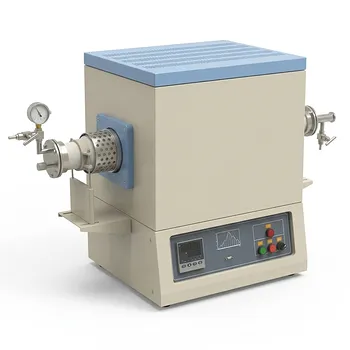
1750°C High Temperature Benchtop Vacuum Atmosphere Tube Furnace with Kanthal Super 1800 Heating Elements and 60mm Alumina Processing Tube
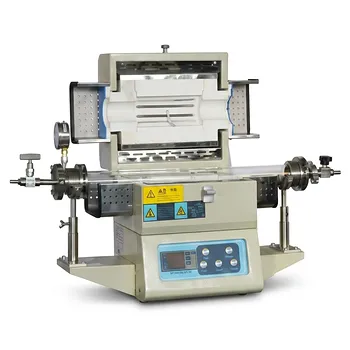
High Temperature 1200C Split Tube Furnace for CVD Research and Vacuum Atmosphere Heat Treatment
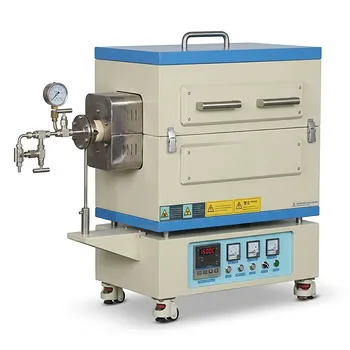
High Temperature Split Tube Furnace 1500C for Material Research Vacuum and Atmosphere Thermal Processing
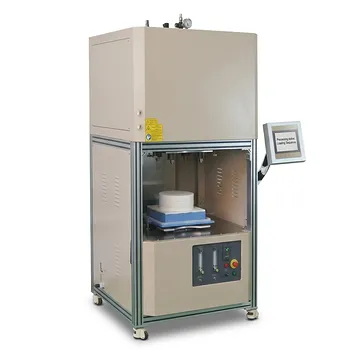
High Temperature Vertical Atmosphere Controlled Furnace with Automatic Bottom Loading and 1700°C Capacity for Advanced Material Research
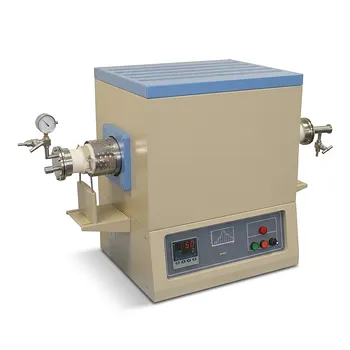
1700C High Temperature Alumina Tube Furnace with 18 Inch Heated Zone and Vacuum Sealing Flanges
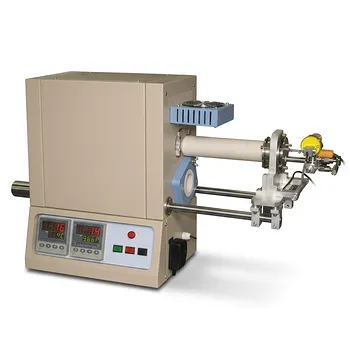
High Temperature Tube Furnace 1500C with Sliding Flanges and 50mm OD for Rapid Thermal Processing Fast Heating and Cooling
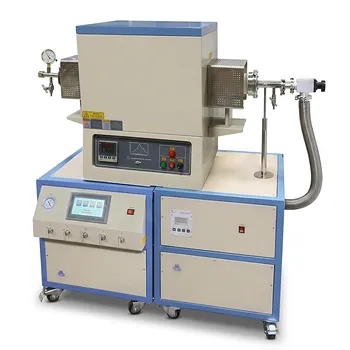
High Temperature 1700C Tube Furnace with High Vacuum Turbomolecular Pump System and Multi Channel Mass Flow Controller Gas Mixer
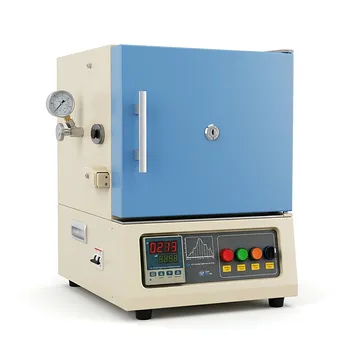
1200C Hybrid Muffle and Tube Furnace for Material Research with Dual Atmosphere Control Quartz Tubes
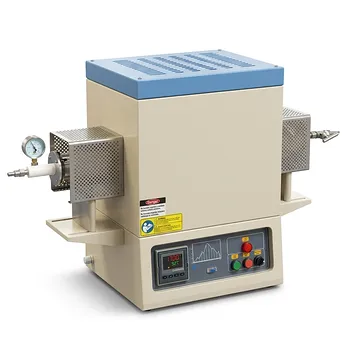
High Temperature Three Zone Tube Furnace 1700C with Alumina Tube and Water Cooled Flanges
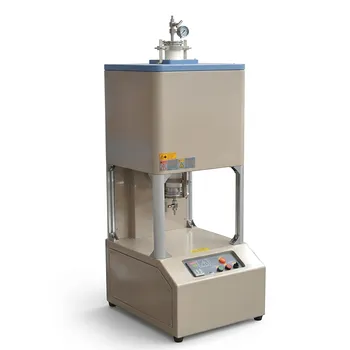
Vertical 1700C Vacuum and Atmosphere Tube Furnace with 80mm Alumina Tube
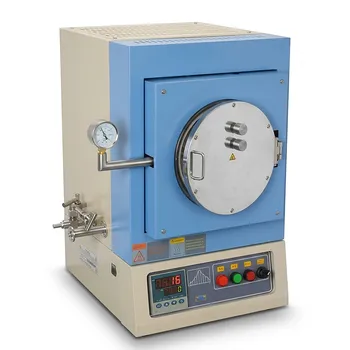
1100°C High Temperature Quartz Chamber Furnace 8 Inch OD with 7.6 Liter Capacity and Vacuum Atmosphere Capability
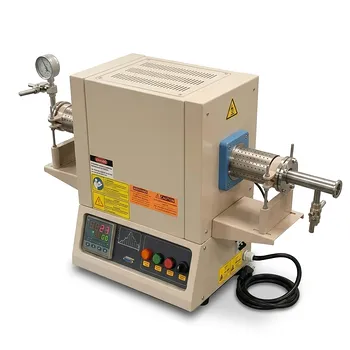
Compact High Temperature 1600C Tube Furnace with 50mm Alumina Tube and Vacuum Flanges for Material Sintering

High Temperature 1700C Benchtop Tube Furnace with 5 Inch Heating Zone High Purity Alumina Tube and Vacuum Sealing Flanges

1800C High Temperature Compact Vacuum Tube Furnace with 60mm OD Alumina Tube and Kanthal MoSi2 Heating Elements
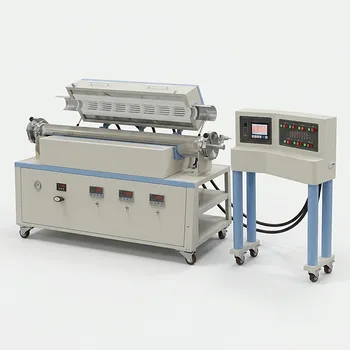
1100C Eight Zone High Pressure Super Alloy Tube Furnace with Integrated High Pressure Gas Control System

High Temperature 1700C Vertical Tube Furnace for Powder Spherification and Material Sintering
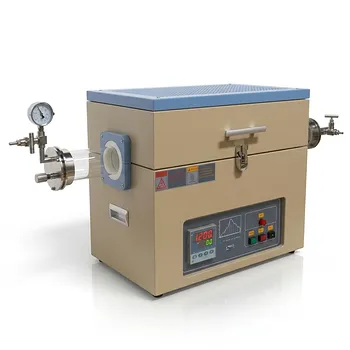
High Temperature 1200C Split Tube Furnace with Optional Quartz Tube Sizes and Vacuum Sealing Flanges for Material Science Research
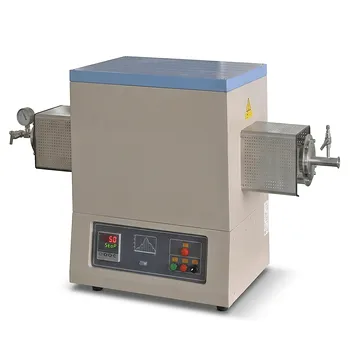
High Temperature 1700C Tube Furnace with 4 Inch OD Alumina Tube and Vacuum Sealing Flanges
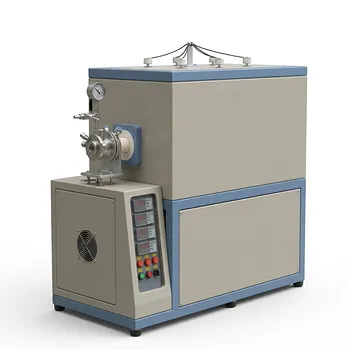
High Temperature 1700C Three Zone Tube Furnace with Alumina Tube 50mm 60mm 80mm OD for Material Research and Industrial Heat Treatment