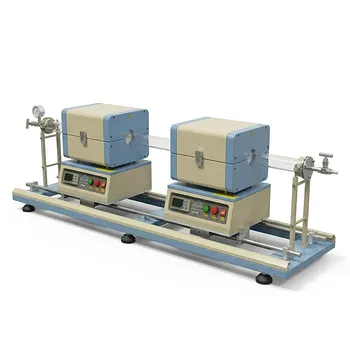
Why are hot-wall tube furnaces widely utilized for the synthesis of large-area, high-quality graphene? Key Benefits
Updated 3 months ago
The synthesis of large-area, high-quality graphene requires a delicate balance of thermal stability and chemical precision. Hot-wall tube furnaces are the industry standard because they provide the extremely uniform temperature distribution and precise gas flow control necessary to regulate graphene nucleation and growth kinetics. By maintaining a stable reaction atmosphere at temperatures typically around 1000°C to 1050°C, these furnaces enable the consistent catalytic decomposition of carbon precursors onto metal substrates.
Core Takeaway: Hot-wall tube furnaces provide a highly controlled "thermal reactor" environment that ensures uniform carbon decomposition and ordered crystallization, which are the fundamental requirements for producing continuous, high-quality graphene films at scale.
The Role of Thermal Uniformity in Crystal Growth
Achieving Kinetic Control via Steady Heat
A hot-wall furnace heats the entire reaction zone, ensuring that the metal catalyst—usually copper foil—reaches a uniform temperature. This is critical because graphene growth is a temperature-dependent surface reaction where even minor fluctuations can lead to uneven thickness or defects.
Promoting Large Crystal Domain Sizes
Uniform heating allows for the controlled nucleation of graphene islands across the entire surface of the substrate. By preventing "cold spots," the furnace facilitates the growth of large-area continuous films with minimal boundaries between crystal domains, which directly enhances the material's electrical properties.
Facilitating Catalytic Decomposition
High temperatures (often exceeding 1000°C) provide the necessary thermodynamic energy to break the bonds of precursor gases like methane (CH₄). The tube furnace ensures this pyrolysis occurs efficiently on the catalyst surface, allowing carbon atoms to rearrange into the desired hexagonal lattice.
Precise Atmosphere and Gas Dynamics
Regulating Precursor Flow Rates
The integration of mass flow controllers with tube furnaces allows for the exact delivery of gases such as hydrogen (H₂), argon (Ar), and methane. This precision is vital for controlling the number of graphene layers, as the ratio of these gases determines whether the resulting film is single-layer or bilayer.
Maintaining an Oxygen-Free Environment
High-quality graphene synthesis requires a strictly controlled atmosphere to prevent unwanted oxidation of the metal substrate. Tube furnaces excel at maintaining vacuum levels or inert gas environments (using Argon), which are essential for repairing the graphene lattice and ensuring structural integrity.
Supporting Heteroatom Doping
Beyond simple growth, these furnaces provide the stable conditions needed for chemical bonding during doping processes. By introducing elements like nitrogen, phosphorus, or antimony at specific temperatures (e.g., 825°C or 900°C), researchers can modify graphene's electronic properties with high reproducibility.
Understanding the Trade-offs and Limitations
Thermal Inertia and Processing Speed
One significant trade-off of hot-wall systems is their high thermal mass. While this provides the stability required for quality, it also results in slow heating and cooling rates, which can limit throughput in a high-volume production environment.
Surface Contamination Risks
Because the furnace walls are heated along with the sample, there is a risk of impurities desorbing from the tube surface and contaminating the graphene. This requires strict maintenance and high-purity quartz or alumina tubes to ensure the synthesized films remain pristine.
Complexity of Scale-up
While excellent for laboratory and pilot-scale production, maintaining absolute temperature uniformity becomes increasingly difficult as the tube diameter increases. Industrial scaling requires sophisticated multi-zone heating elements to prevent thermal gradients across larger substrates.
How to Apply This to Your Project
Recommendations Based on Your Objectives
The choice of furnace parameters should be dictated by the specific requirements of your graphene application.
- If your primary focus is single-layer continuity: Prioritize a furnace with multi-zone heating to ensure maximum temperature uniformity across the entire length of the copper foil.
- If your primary focus is electronic property tuning: Focus on high-precision gas mixing systems that allow for the exact introduction of dopants like nitrogen or phosphorus at stable high temperatures.
- If your primary focus is defect reduction: Utilize the furnace’s ability to perform high-temperature annealing in an H2/Ar atmosphere to repair the lattice and remove residual oxygen before growth.
The hot-wall tube furnace remains the most reliable tool for mastering the complex interplay of thermodynamics and chemistry required for high-grade 2D material synthesis.
Summary Table:
| Feature | Impact on Graphene Synthesis |
|---|---|
| Thermal Uniformity | Ensures even thickness and large crystal domain sizes |
| Precise Gas Dynamics | Controls layer count and enables consistent doping |
| Stable High Heat | Facilitates efficient catalytic decomposition of CH4 |
| Atmosphere Control | Prevents substrate oxidation for structural integrity |
Optimize Your Material Research with THERMUNITS
As a leading manufacturer of high-temperature laboratory equipment for material science and industrial R&D, THERMUNITS understands the precision required for synthesizing advanced 2D materials. Our Tube furnaces and CVD/PECVD systems are specifically designed to provide the thermal stability and gas control necessary for high-quality graphene production.
Whether you need Muffle, Vacuum, Atmosphere, Rotary, or Hot Press furnaces, or specialized equipment like vacuum induction melting (VIM) and electric rotary kilns, our comprehensive range of thermal solutions ensures your laboratory achieves peak performance.
Ready to enhance your lab's capabilities? Contact us today to discuss your heat treatment needs!
References
- Xiaoming Tu, Xuesong Li. Silicon oxide particles size evolution during CVD graphene growth on Cu substrates. DOI: 10.61935/acetr.2.1.2024.p454
Mentioned Products
- High Temperature Cold Wall Vacuum Furnace for Advanced Material Sintering and Annealing 1600C Heating Area 200x200x300mm
- High Temperature Tube Furnace 1500C with Sliding Flanges and 50mm OD for Rapid Thermal Processing Fast Heating and Cooling
- High Temperature 1700C Benchtop Tube Furnace with 5 Inch Heating Zone High Purity Alumina Tube and Vacuum Sealing Flanges
- 1800C High Temperature Compact Vacuum Tube Furnace with 60mm OD Alumina Tube and Kanthal MoSi2 Heating Elements
- Compact High Temperature 1600C Tube Furnace with 50mm Alumina Tube and Vacuum Flanges for Material Sintering
People Also Ask
- What is the purpose of coating ceramic sheets with platinum paste? Achieve Stable High-Temp Ohmic Contacts
- What is the function of high-vacuum furnaces in (Mo2/3V1/3)n+1AlCn MAX phase synthesis? Ensure Purity & Diffusion.
- Why is high-vacuum annealing treatment essential in the preparation of multilayer composite separation membranes such as Pd/Ti?
- What Role Does a Vacuum Sintering Furnace Play in Ni-Mn-Ga Alloy Fabrication? Optimizing Porous Structures
- How does a vacuum or atmosphere sintering furnace contribute to the congener-welding process of carbon nitride membranes?

Tech Team · ThermUnits
Last updated on Jun 03, 2026
Related Products
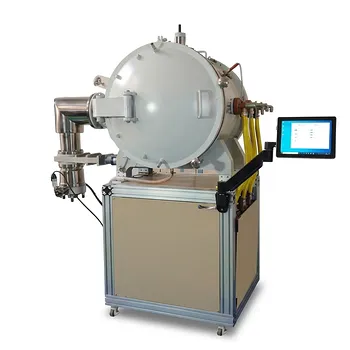
High Temperature Cold Wall Vacuum Furnace for Advanced Material Sintering and Annealing 1600C Heating Area 200x200x300mm

High Temperature Tube Furnace 1500C with Sliding Flanges and 50mm OD for Rapid Thermal Processing Fast Heating and Cooling

High Temperature 1700C Benchtop Tube Furnace with 5 Inch Heating Zone High Purity Alumina Tube and Vacuum Sealing Flanges

1800C High Temperature Compact Vacuum Tube Furnace with 60mm OD Alumina Tube and Kanthal MoSi2 Heating Elements

Compact High Temperature 1600C Tube Furnace with 50mm Alumina Tube and Vacuum Flanges for Material Sintering

High Temperature 1700C Six Zone Split Tube Furnace with Alumina Tube and Water Cooled Flanges
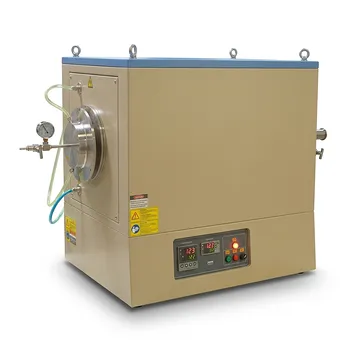
1100°C Large Diameter Quartz Tube Furnace with 24 Inch Heating Zone and Water Cooled Flanges
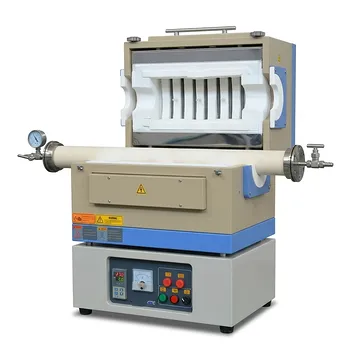
High Temperature 1600C Split Tube Furnace Vacuum Flanges Valves Optional 60mm 80mm Alumina Tube

High Temperature 1700C Tube Furnace with High Vacuum Turbomolecular Pump System and Multi Channel Mass Flow Controller Gas Mixer
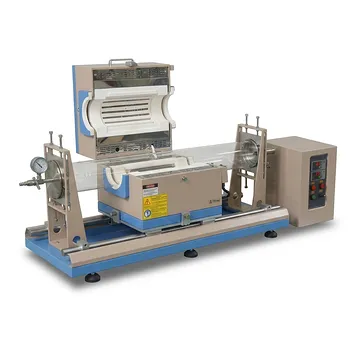
1200C High Temperature 5 Inch Sliding Tube Furnace for Rapid Thermal Processing RTP and Wafer Annealing

Vertical 1700C Vacuum and Atmosphere Tube Furnace with 80mm Alumina Tube

1700C Hydrogen Gas Tube Furnace with 60mm Alumina Process Tube and Integrated Hydrogen Safety Detector

1200°C 5 Inch Vertical Quartz Tube Furnace with Stainless Steel Vacuum Flanges
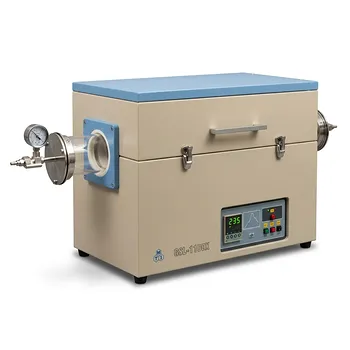
Single Zone Tube Furnace 5 Inch Quartz Tube 36 Inch Heating Zone Vacuum Flanges
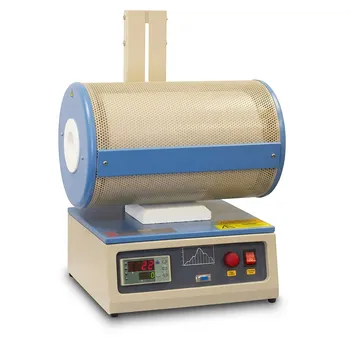
Multi Position Tube Furnace 1100C for Laboratory Material Research and Advanced Industrial Thermal Processing

1100C Tube Furnace with Vacuum Flange and Programmable Temperature Controller for Material Science and Industrial Heat Treatment
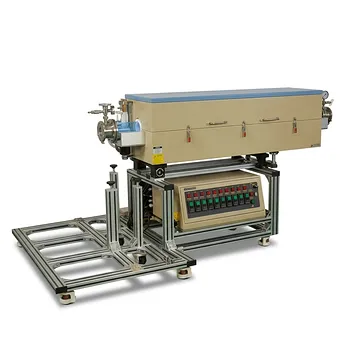
Ten Zone Multi Orientation Laboratory Tube Furnace for 1200C High Temperature Gradient Thermal Processing
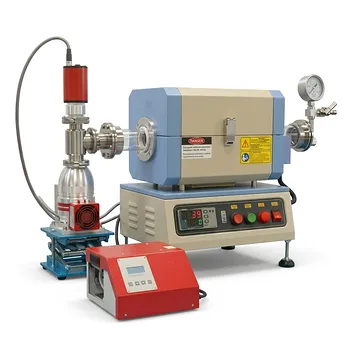
High Vacuum Compact Tube Furnace 1200C with Integrated Turbo Pump System and 8 Inch Heating Zone
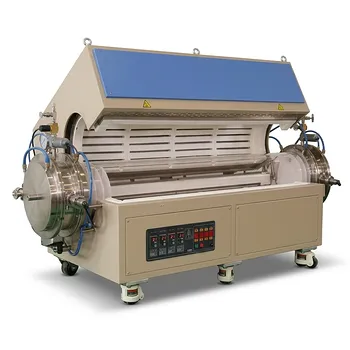
1200C Max Four Zone Split Tube Furnace with Optional Large Diameter Quartz Tubes