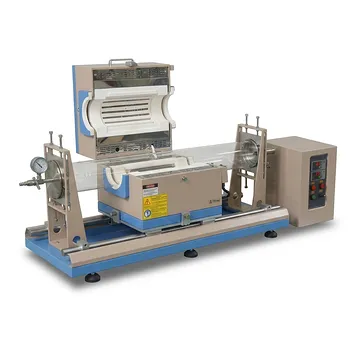
Why is a high-precision tube furnace required for the synthesis of single-atom Fe–N–C catalysts? Master Atomic Dispersion
Updated 3 months ago
Achieving atomic-level dispersion in Fe–N–C catalysts requires a high-precision tube furnace to orchestrate a delicate balance between thermal decomposition and chemical reduction. This specialized equipment provides the stable 800–1000 °C environment and rigorous atmospheric sealing necessary to transform precursors into nitrogen-doped carbon frameworks while simultaneously anchoring iron atoms into active $Fe-N_x$ sites. Without this precise control, iron atoms would inevitably aggregate into inactive metallic particles, destroying the catalyst's single-atom efficiency.
Core Takeaway: A high-precision tube furnace is the "chemical reactor" that enables the synthesis of single-atom catalysts by providing exact thermal trajectories and oxygen-free reducing environments. This setup prevents metal sintering and framework oxidation, ensuring that iron remains uniformly dispersed as isolated atoms within the carbon matrix.
Precise Thermal Management for Atomic Coordination
Controlling the Evolution of $Fe-N_x$ Sites
The formation of efficient $Fe-N_x$ catalytic centers is highly dependent on the heating rate during pyrolysis. A high-precision furnace allows for controlled ramping that dictates how the iron precursor interacts with the nitrogen-doped carbon framework. This ensures that the solid-phase reaction proceeds at a pace that favors atomic anchoring over thermal migration.
Sustaining High-Temperature Stability
Thermal processing often requires temperatures as high as 900 °C to 1000 °C to achieve the necessary degree of carbonization and electrical conductivity. High-precision furnaces maintain these temperatures with minimal fluctuation, which is critical for creating a uniform density of active sites across the entire batch of material.
Inducing Specific Carbon Morphologies
The furnace environment facilitates the structural evolution of precursors, such as converting $g-C_3N_4$ into nitrogen-doped carbon nanotubes. Precise temperature control ensures that these morphological changes occur without collapsing the internal pore structure, which is vital for gas diffusion during catalysis.
Atmospheric Integrity and Chemical Reduction
Suppressing Oxidation and Aggregation
The use of a reducing atmosphere (such as a $H_2/Ar$ mixture) is a prerequisite for protecting the iron species. By maintaining a strictly oxygen-free environment, the furnace prevents the oxidation of iron into large, inactive oxide particles. This keeps the iron in a "single-atom" state, maximizing the surface area available for catalytic reactions.
Protecting the Carbon Matrix
High-purity inert or reducing gases displacement oxygen, which would otherwise burn away the carbon substrate at high temperatures. This atmospheric sealing preserves the delicate pore structure of microbial-derived or MOF-based carbon supports, maintaining the high surface area needed for high-loading single-atom catalysts.
Facilitating Nitrogen Doping
The tube furnace provides a stable flow of gas that carries away pyrolysis byproducts while facilitating the reaction between the nitrogen source and the carbon matrix. This ensures that the resulting material has high nitrogen-doped content, which is essential for coordinating and stabilizing the iron atoms in the $Fe-N_x$ configuration.
Understanding the Trade-offs and Challenges
Technical Complexity and Gas Purity
Operating at 900 °C under a hydrogen-rich atmosphere requires rigorous safety protocols and high-purity gas supplies. Even trace amounts of oxygen contamination can lead to the formation of iron clusters (nanoparticles) rather than single atoms, rendering the catalyst significantly less effective.
Temperature Gradients Within the Tube
While high-precision furnaces are designed for stability, thermal gradients can still occur between the center and the edges of the furnace tube. If the sample is too large or poorly positioned, different parts of the catalyst may experience different phases of carbonization, leading to inconsistent catalytic performance across the batch.
How to Apply This to Your Synthesis Goals
Strategic Implementation
- If your primary focus is maximum active site density: Use a high-precision furnace to maintain a slow heating ramp (e.g., 2-5 °C/min) to 900 °C under a continuous flow of $Ar/H_2$ to ensure every iron atom has time to anchor to the nitrogen sites.
- If your primary focus is high electrical conductivity: Prioritize furnaces capable of reaching and sustaining 1000 °C, as higher temperatures generally improve the graphitization and conductivity of the carbon framework.
- If your primary focus is preserving complex pore structures: Ensure your furnace has high-quality atmospheric seals to maintain a perfectly oxygen-free environment during the entire heating and cooling cycle.
By mastering the thermal and atmospheric variables of a high-precision tube furnace, you can successfully transition from bulk materials to the precise architecture of single-atom catalysis.
Summary Table:
| Feature | Function in Synthesis | Catalyst Benefit |
|---|---|---|
| Precise Temp Control | Stable pyrolysis (800-1000°C) | Prevents Fe atom migration and sintering |
| Atmospheric Sealing | Maintains $H_2/Ar$ environment | Suppresses oxidation of iron and carbon framework |
| Adjustable Ramping | Slow heating (2-5 °C/min) | Facilitates formation of stable $Fe-N_x$ coordination |
| Thermal Uniformity | Minimizes internal gradients | Ensures consistent active site density across batches |
Elevate Your Catalyst Synthesis with THERMUNITS
Achieving atomic-level precision in Fe–N–C catalysts requires more than just heat—it requires the rigorous atmospheric integrity and thermal stability found in THERMUNITS equipment. As a leading manufacturer of high-temperature laboratory solutions for material science, we empower R&D teams to prevent metal aggregation and optimize active site density.
Our comprehensive range includes:
- High-Precision Tube & Rotary Furnaces for uniform powder processing.
- Advanced CVD/PECVD Systems for controlled nitrogen doping.
- Vacuum, Atmosphere, and Hot Press Furnaces for diverse thermal treatments.
Ready to scale your single-atom research? Contact our engineering team today to discuss how our thermal processing solutions can enhance your lab's efficiency and material performance.
References
- Yameng Xie, Qin Kuang. Axially Coordinated Gold Nanoclusters Tailoring Fe–N–C Nanozymes for Enhanced Oxidase‐Like Specificity and Activity. DOI: 10.1002/advs.202306911
Mentioned Products
- 1200C High Throughput Multi Channel Tube Furnace with 50mm Quartz Tubes for Annealing and Material Phase Diagram Research
- High Temperature Tube Furnace 1500C with Sliding Flanges and 50mm OD for Rapid Thermal Processing Fast Heating and Cooling
- High Temperature 1700C Benchtop Tube Furnace with 5 Inch Heating Zone High Purity Alumina Tube and Vacuum Sealing Flanges
- Compact High Temperature 1600C Tube Furnace with 50mm Alumina Tube and Vacuum Flanges for Material Sintering
- 1100C High Pressure Rocking Tube Furnace with 2 Inch Super Alloy Processing Tube for Material Synthesis
People Also Ask
- Why is high-purity alumina selected for sample trays? Key to High-Throughput Sintering Success
- How does a high-throughput tube furnace achieve precise sulfurization? Expert Control for CoS2–Co(OH)F Nanostructures
- How does the precise temperature control of a tube furnace influence the formation of V2AlC MAX phase? Expert Insights.
- What is the function of argon gas flow within a tube furnace during the selenization of MOFs? Essential Process Guide
- What is the effect of introducing camphor as a carbon source in a tube furnace CVD? Boost CNT Density and Growth

Tech Team · ThermUnits
Last updated on Jun 03, 2026
Related Products
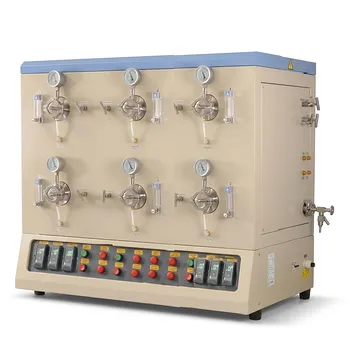
1200C High Throughput Multi Channel Tube Furnace with 50mm Quartz Tubes for Annealing and Material Phase Diagram Research
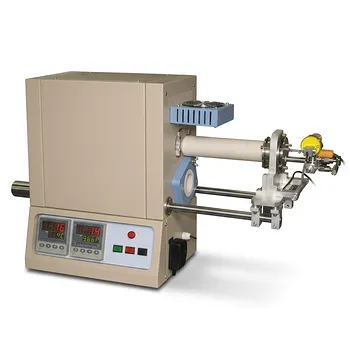
High Temperature Tube Furnace 1500C with Sliding Flanges and 50mm OD for Rapid Thermal Processing Fast Heating and Cooling

High Temperature 1700C Benchtop Tube Furnace with 5 Inch Heating Zone High Purity Alumina Tube and Vacuum Sealing Flanges

Compact High Temperature 1600C Tube Furnace with 50mm Alumina Tube and Vacuum Flanges for Material Sintering
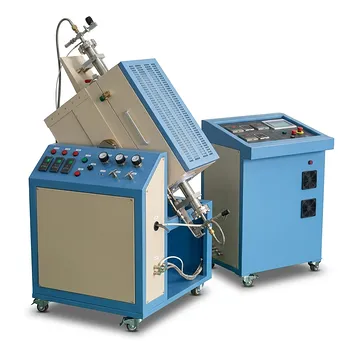
1100C High Pressure Rocking Tube Furnace with 2 Inch Super Alloy Processing Tube for Material Synthesis

High Temperature Automated 5 Inch Tube Furnace for Autonomous Material Research and Advanced Laboratory R&D
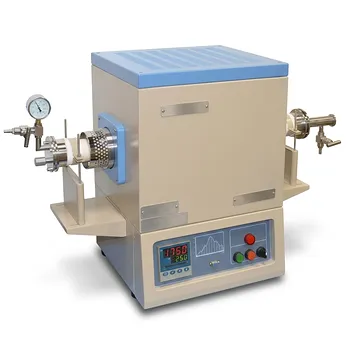
High Temperature Compact Vacuum Tube Furnace 1750C Max 60mm OD Alumina Tube

High Temperature 1700C Tube Furnace with High Vacuum Turbomolecular Pump System and Multi Channel Mass Flow Controller Gas Mixer

High Temperature 1700C Vertical Tube Furnace for Powder Spherification and Material Sintering
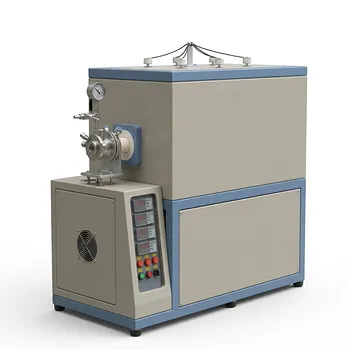
High Temperature 1700C Three Zone Tube Furnace with Alumina Tube 50mm 60mm 80mm OD for Material Research and Industrial Heat Treatment
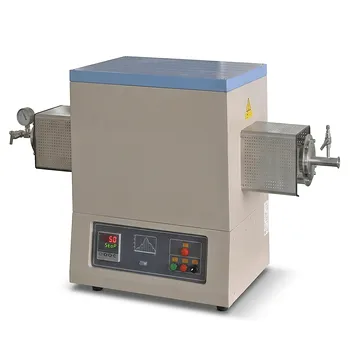
High Temperature 1700C Tube Furnace with 4 Inch OD Alumina Tube and Vacuum Sealing Flanges
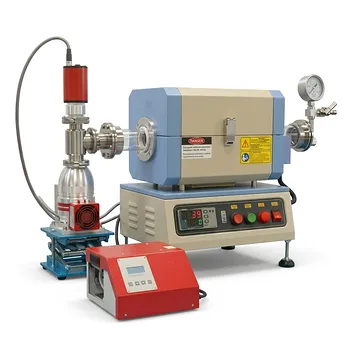
High Vacuum Compact Tube Furnace 1200C with Integrated Turbo Pump System and 8 Inch Heating Zone

1800C High Temperature Compact Vacuum Tube Furnace with 60mm OD Alumina Tube and Kanthal MoSi2 Heating Elements
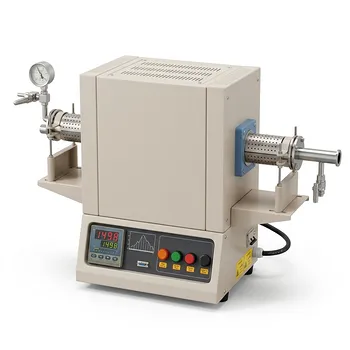
1500C High Temperature Compact Tube Furnace 2 Inch OD with Vacuum Flanges and Complete Accessories

1750°C High Temperature Benchtop Vacuum Atmosphere Tube Furnace with Kanthal Super 1800 Heating Elements and 60mm Alumina Processing Tube
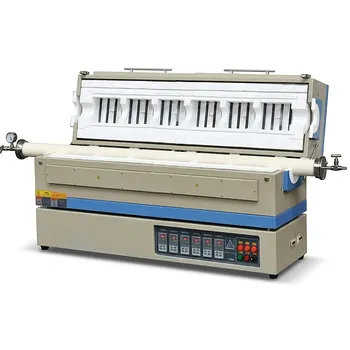
High Temperature 1700C Six Zone Split Tube Furnace with Alumina Tube and Water Cooled Flanges
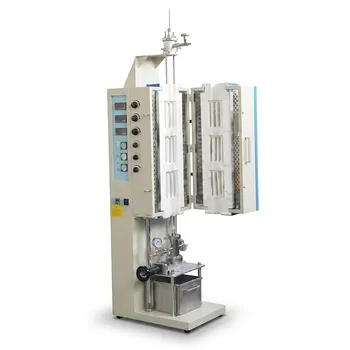
High Temperature Dual Zone Tube Furnace for Material Science Research and Professional Thermal Processing
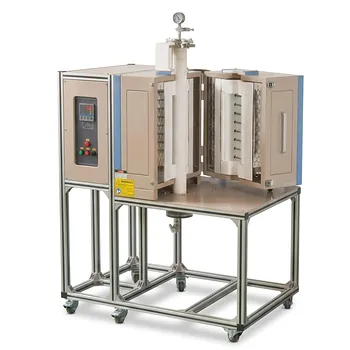
High Temperature 1700C Vertical Split Tube Furnace for Material Quenching and Single Crystal Growth
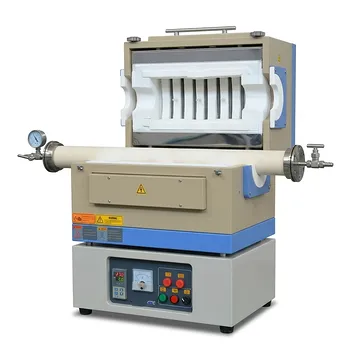
High Temperature 1600C Split Tube Furnace Vacuum Flanges Valves Optional 60mm 80mm Alumina Tube