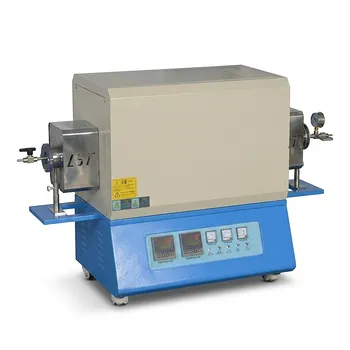
Why is a high-temperature vacuum tube furnace essential for preparing fully dense fused silica glass molds? Key Guide
Updated 3 months ago
A high-temperature vacuum tube furnace is essential because it provides the dual-action environment of 1250°C–1300°C thermal energy and high-vacuum pressure (up to 10⁻⁶ bar) required to fuse silica nanoparticles. This combination triggers sintering through atomic diffusion and viscous flow, while simultaneously extracting residual gases that would otherwise form trapped air bubbles. The result is a fully densified, non-porous fused silica glass with high optical transmittance and exceptional chemical stability.
Core Takeaway: To achieve a fully dense fused silica mold, the furnace must simultaneously soften silica particles to facilitate fusion and maintain a vacuum to eliminate internal voids. This process transforms a porous "brown body" into a transparent, structurally sound glass matrix by removing the physical and gaseous barriers to total densification.
The Mechanics of Sintering and Densification
Activating Atomic Diffusion and Viscous Flow
At temperatures reaching 1250°C to 1300°C, silica nanoparticles gain sufficient kinetic energy to undergo sintering densification. This process is driven by atomic diffusion and viscous flow, where the particles soften and merge at their contact points. Without this precise high-temperature threshold, the silica remains a collection of discrete particles rather than a unified glass matrix.
Eliminating Micropores
As the particles fuse, the spaces between them—known as micropores—begin to collapse. The high temperature ensures that the material is fluid enough to fill these gaps, reducing the internal surface area of the mold. This transition is what converts a brittle, opaque "brown body" into a structurally dense fused silica component.
Achieving High Optical Transmittance
The removal of internal boundaries and pores is the primary factor in determining the optical clarity of the final mold. By reaching the necessary sintering temperatures, the furnace ensures the material becomes amorphous and uniform. This lack of internal structure prevents light scattering, resulting in the high light transmittance required for precision glass molds.
The Necessity of a Vacuum Environment
Excluding Residual Gases
Even at high temperatures, air trapped between silica particles can become locked within the cooling glass, forming micro-bubbles. A high-vacuum environment (ranging from 10⁻⁵ to 10⁻⁶ bar) actively excludes these residual gases before the pores close. This ensures the final glass matrix is free of internal voids that would compromise its mechanical integrity.
Preventing Oxidation and Contamination
High-temperature environments can often lead to the oxidation of materials or the introduction of impurities from the atmosphere. The vacuum tube furnace provides a precisely controlled environment that safeguards the chemical purity of the silica. By removing oxygen and other reactive gases, the furnace prevents discoloration and chemical instability in the final mold.
Facilitating Homogeneous Heat Distribution
The design of a tube furnace ensures a precisely controlled temperature field along the length of the material. This stability is critical for ensuring that the entire silica mold densifies at a uniform rate. Inconsistent heating would lead to internal stresses or localized porosity, which could cause the mold to fail under thermal shock.
Understanding the Trade-offs and Pitfalls
Vacuum Level vs. Bubble Formation
If the vacuum level is insufficient during the initial heating phase, gas may be "pinched off" inside the silica as it densifies. Once the silica reaches its viscous state, these trapped gases cannot escape, leading to permanent internal opaqueness. Achieving a deep vacuum early in the cycle is non-negotiable for optical-grade results.
Temperature Precision vs. Structural Deformation
While high heat is required for densification, exceeding the recommended sintering temperature (e.g., going significantly beyond 1300°C) can lead to undesired deformation of the mold's geometry. Precise temperature control is a delicate balance between achieving full density and maintaining the dimensional accuracy of the mold's shape.
Cooling Rates and Internal Stress
Rapidly cooling the silica after densification can induce significant thermal stress, leading to cracks or shattering. A high-quality tube furnace must allow for controlled, gradual cooling (annealing) to ensure the physical stability of the fused silica.
How to Apply This to Your Project
When preparing fused silica molds, your choice of furnace parameters should align with the final application of the glass:
- If your primary focus is optical clarity: Prioritize a high-vacuum environment (10⁻⁶ bar) and a steady ramp-up to 1250°C to ensure every air bubble is evacuated before the silica fuses.
- If your primary focus is mechanical strength: Ensure the furnace maintains a constant temperature (up to 1300°C) for a sufficient duration to allow for total grain boundary migration and pore elimination.
- If your primary focus is chemical purity: Utilize a vacuum tube furnace specifically designed to prevent atmospheric contamination, ensuring the resulting glass is suitable for high-purity solubility or chemical experiments.
By masterfully controlling both the thermal energy and the atmospheric pressure, you ensure the transformation of raw silica into a high-performance, fully dense glass tool.
Summary Table:
| Factor | Requirement | Impact on Fused Silica |
|---|---|---|
| Temperature | 1250°C – 1300°C | Triggers sintering, atomic diffusion, and viscous flow for densification. |
| Vacuum Level | 10⁻⁵ to 10⁻⁶ bar | Extracts residual gases to eliminate micro-bubbles and internal opaqueness. |
| Atmosphere | High Vacuum | Prevents oxidation and contamination, ensuring chemical purity and stability. |
| Cooling | Controlled Annealing | Prevents internal stress and thermal shock to avoid cracking or shattering. |
Elevate Your Material Research with THERMUNITS
Precision is the foundation of material science. As a leading manufacturer of high-temperature laboratory equipment, THERMUNITS provides the advanced thermal processing solutions required for high-purity applications like fused silica densification.
Our comprehensive range includes:
- Furnaces: Vacuum, Tube, Muffle, Atmosphere, Rotary, Hot Press, and Dental Furnaces.
- Advanced Systems: CVD/PECVD systems, electric rotary kilns, and vacuum induction melting furnaces (VIM).
- Components: High-quality Thermal Elements and lab heat treatment accessories.
Whether you are in industrial R&D or academic material science, our equipment ensures the temperature stability and vacuum integrity your project demands.
Ready to optimize your heat treatment process?
Contact our technical experts today to find the perfect solution for your laboratory.
References
- Sebastian Kluck, Frederik Kotz. Sub‐Micron Replication of Fused Silica Glass and Amorphous Metals for Tool‐Based Manufacturing. DOI: 10.1002/advs.202405320
Mentioned Products
- High Temperature 1700C Tube Furnace with High Vacuum Turbomolecular Pump System and Multi Channel Mass Flow Controller Gas Mixer
- 1800C High Temperature Compact Vacuum Tube Furnace with 60mm OD Alumina Tube and Kanthal MoSi2 Heating Elements
- High Temperature 1700C Vertical Tube Furnace for Powder Spherification and Material Sintering
- High Temperature 1100C Compact Top Loading Vertical Vacuum Tube Furnace for High Vacuum Noble Metal Melting and Material Research
- 1100C High Temperature Vacuum Crucible Furnace with Quartz Chamber for Thermal Processing and Sintering
People Also Ask
- What is the role of a high-temperature tube furnace in the calcination process of ZnO/In2O3 nanocomposites?
- What impact does the heating rate of a tube furnace have on biochar microstructure? Optimize Your Material R&D.
- What is the function of a high-temperature tube furnace in the synthesis of g-C3N4? Optimize Thermal Polycondensation
- What is the critical function of a high-temperature tube furnace in Si/Al2O3/RGO synthesis? Key to Battery Innovation
- What are the primary functions of a high-temperature tube furnace for Inconel 718? Master Debinding & Pre-sintering.

Tech Team · ThermUnits
Last updated on Jun 02, 2026
Related Products

High Temperature 1700C Tube Furnace with High Vacuum Turbomolecular Pump System and Multi Channel Mass Flow Controller Gas Mixer

1800C High Temperature Compact Vacuum Tube Furnace with 60mm OD Alumina Tube and Kanthal MoSi2 Heating Elements

High Temperature 1700C Vertical Tube Furnace for Powder Spherification and Material Sintering
High Temperature 1100C Compact Top Loading Vertical Vacuum Tube Furnace for High Vacuum Noble Metal Melting and Material Research
1100C High Temperature Vacuum Crucible Furnace with Quartz Chamber for Thermal Processing and Sintering
1700C High Temperature Alumina Tube Furnace with 18 Inch Heated Zone and Vacuum Sealing Flanges
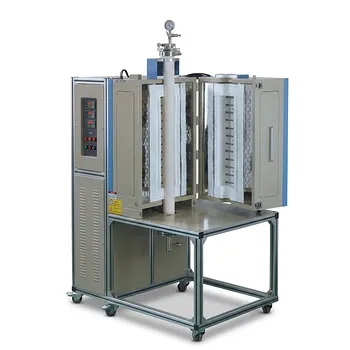
Three Zone Heating Split Vertical Tube Furnace 1700 High Temperature Vacuum Atmosphere Thermal Process System
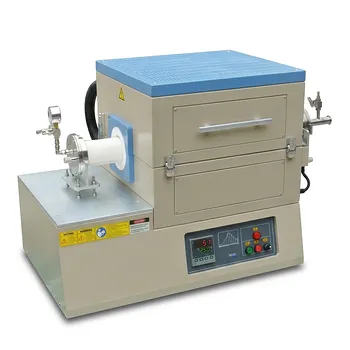
High Temperature 1700C Split Tube Furnace with Vacuum Flanges Valves and 60mm Alumina Tube
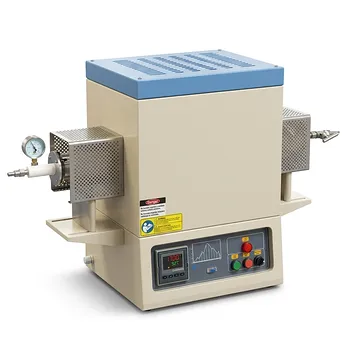
High Temperature Three Zone Tube Furnace 1700C with Alumina Tube and Water Cooled Flanges
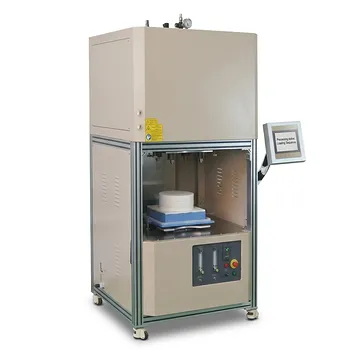
High Temperature Vertical Atmosphere Controlled Furnace with Automatic Bottom Loading and 1700°C Capacity for Advanced Material Research

High Temperature 1700C Benchtop Tube Furnace with 5 Inch Heating Zone High Purity Alumina Tube and Vacuum Sealing Flanges

1100C Tube Furnace with Vacuum Flange and Programmable Temperature Controller for Material Science and Industrial Heat Treatment

High Temperature 1700C Six Zone Split Tube Furnace with Alumina Tube and Water Cooled Flanges
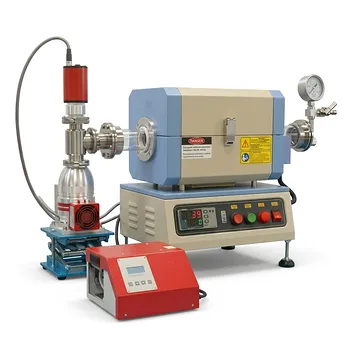
High Vacuum Compact Tube Furnace 1200C with Integrated Turbo Pump System and 8 Inch Heating Zone
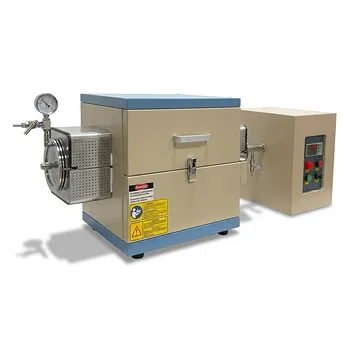
1200C High Temperature 5 Inch Split Vacuum Tube Furnace with 12 Inch Heating Zone and Separated PID Controller
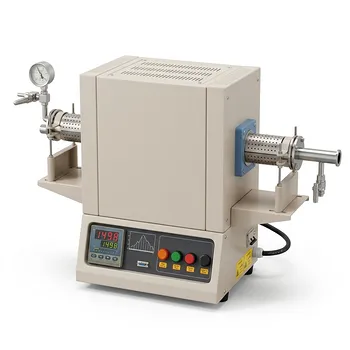
1500C High Temperature Compact Tube Furnace 2 Inch OD with Vacuum Flanges and Complete Accessories

1750°C High Temperature Benchtop Vacuum Atmosphere Tube Furnace with Kanthal Super 1800 Heating Elements and 60mm Alumina Processing Tube
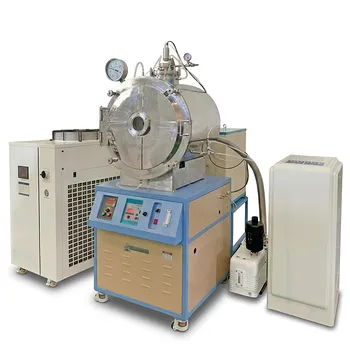
Ultra High Temperature Induction Heated Vacuum Furnace with Molten Salt Electrolysis Capability and 3000 Degree Precision Control

Vertical 1700C Vacuum and Atmosphere Tube Furnace with 80mm Alumina Tube