Why is a multi-zone tube furnace essential for the tellurization process of WTe2 thin films? High-Precision R&D
Updated 3 months ago
A multi-zone tube furnace is essential for tellurization because it provides independent, spatial control over the temperature gradients required to decouple tellurium sublimation from the tungsten reaction. This specific configuration allows the furnace to maintain a lower temperature zone for the tellurium source to ensure a steady vapor supply, while simultaneously maintaining a higher temperature zone for the tungsten precursor to facilitate a controlled chemical vapor deposition (CVD) reaction.
The multi-zone furnace acts as a precision thermal regulator that prevents premature reactions and ensures the correct stoichiometry of Tungsten Ditelluride ($WTe_2$) thin films. By separating the sublimation of raw materials from the film growth stage, it achieves the thermodynamic conditions necessary for high-quality, crystalline 2D materials.
Independent Control of Phase Transitions
Decoupling Sublimation and Reaction
In the tellurization process, the tellurium (Te) powder and the tungsten (W) precursor require different thermal environments to function correctly. A multi-zone furnace allows the second zone to heat Te powder to its sublimation point while the third zone independently manages the reaction temperature of the tungsten film.
Preventing Premature Reaction
Without independent zones, the tellurium might vaporize too early or the tungsten might reach reaction temperatures before enough Te vapor is present. This precise control ensures that the chemical reaction occurs under optimal kinetic conditions, leading to uniform film growth rather than uneven clusters.
Stabilizing Vapor Concentration
The generation rate of tellurium vapor is highly sensitive to temperature. By isolating the Te source in its own zone, researchers can maintain a constant vapor pressure, which is critical for ensuring that the resulting $WTe_2$ film has the correct ratio of atoms (stoichiometry).
Achieving Crystalline Quality and Purity
Thermal Annealing and Defect Elimination
Beyond the initial reaction, the furnace provides a stable thermal field for annealing the thin films under a protective Argon atmosphere. This controlled heating provides the energy necessary for atomic rearrangement, which helps eliminate internal defects and improves the carrier mobility of the $WTe_2$ nanofilms.
Purification via Vapor Transport
Multi-zone furnaces facilitate a "self-vapor-transport" mechanism used to purify $WTe_2$ crystals. By creating a gradient—for example, keeping one end at 415°C and the other at 200°C—excess tellurium can be evaporated from the crystal surface and condensed at the cooler end of the tube.
Managing Reaction Kinetics
The furnace’s ability to control internal pressure and gas flow rates works in tandem with the temperature zones. This synergy regulates the evaporation rate of the chalcogen (Te) and ensures the tellurization reaction occurs under optimized thermodynamic conditions, preventing the decomposition of precursors.
Understanding the Trade-offs
Complexity of Thermal Calibration
While multi-zone furnaces offer superior control, they require rigorous calibration to account for "thermal bleed" between adjacent zones. If the zones are not properly insulated or spaced, the temperature of the high-heat zone can inadvertently raise the temperature of the sublimation zone, leading to an uncontrolled vapor surge.
Material Limitations and Contamination
The use of quartz tubes and specific crucibles is necessary to withstand high temperatures, but these materials can introduce impurities if not properly cleaned. Furthermore, the reliance on a stable carrier gas (like Argon) means that any fluctuation in gas purity or flow rate can negate the benefits of precise temperature control.
Cost and Footprint
Industrial-grade multi-zone furnaces are significantly more expensive and occupy more laboratory space than single-zone units. For simple annealing tasks where spatial gradients are not required, the complexity of a multi-zone system may introduce unnecessary variables into the experimental setup.
How to Apply This to Your Project
Selecting the Right Configuration
When designing a tellurization process, your choice of furnace parameters should be dictated by your specific material goals.
- If your primary focus is stoichiometric precision: Use a three-zone furnace to independently control the source sublimation, the reaction zone, and a downstream condensation zone.
- If your primary focus is crystalline purity: Prioritize a furnace with high-precision temperature gradients to leverage self-vapor-transport for removing excess tellurium.
- If your primary focus is large-area uniformity: Ensure your furnace has a long, stable "hot zone" in the final stage to provide a uniform thermal field across the entire substrate.
Mastering the spatial temperature gradient is the single most effective way to transition from inconsistent $WTe_2$ samples to high-performance, electronic-grade thin films.
Summary Table:
| Feature | Benefit for WTe2 Process | Key Outcome |
|---|---|---|
| Independent Zones | Decouples sublimation from reaction | Prevents premature material reaction |
| Spatial Gradients | Facilitates self-vapor-transport | High crystalline purity & defect removal |
| Thermal Stability | Maintains constant vapor pressure | Precise stoichiometry & film uniformity |
| Precise Cooling | Controlled condensation of excess Te | Pure electronic-grade thin films |
Elevate Your Material Research with THERMUNITS Precision
Achieving the perfect stoichiometric balance for WTe2 thin films requires world-class thermal precision. THERMUNITS is a leading manufacturer of high-temperature laboratory equipment, providing the advanced multi-zone control necessary for cutting-edge material science and industrial R&D.
Our comprehensive range of thermal solutions includes:
- Tube & Multi-Zone Furnaces (Ideal for CVD/PECVD and Tellurization)
- Vacuum & Atmosphere Furnaces
- Muffle, Rotary, and Hot Press Furnaces
- Vacuum Induction Melting (VIM) & Dental Furnaces
Whether you are scaling up industrial production or refining laboratory nanofilms, our equipment delivers the thermodynamic stability your project demands.
Ready to optimize your heat treatment process?
Contact THERMUNITS Today to consult with our experts and find the ideal furnace solution for your lab.
References
- Zhisong Yu, Yue Wang. Direct Growth of Low Thermal Conductivity WTe2 Nanocrystalline Films on W Films. DOI: 10.3390/nano14050401
Mentioned Products
- Ten Zone Multi Orientation Laboratory Tube Furnace for 1200C High Temperature Gradient Thermal Processing
- High Throughput 1200C Four Channel Tube Furnace with 3 Inch Quartz Tubes for Multi Zone Annealing and Material Research
- 1200°C 10-Zone Split Tube Furnace with Horizontal and Vertical Mounting for Multi-Zone Thermal Gradients and Large Diameter Material Processing
- 1200C Max Four Zone Split Tube Furnace with Optional Large Diameter Quartz Tubes
- 1500C Eight Zone Split Tube Furnace for Thermal Gradient Processing and Advanced Material Research
People Also Ask
- What are the technical advantages of using a multi-zone independently controlled tube furnace in the modified USP process?
- Role of multi-zone tube furnaces in CVD growth of 2D materials? Optimize Precise Single-Crystal Thermal Control.
- How does a multi-zone tube furnace facilitate the synthesis of two-dimensional alpha-Ga2Se3 crystals? Precision Growth
- What is the role of a multi-zone tube furnace in material science research? Mastering Precise Temperature Gradients
- What key role does a laboratory high-temperature tube furnace play in the production of carbon nanofibers? Guide

Tech Team · ThermUnits
Last updated on Jun 03, 2026
Related Products
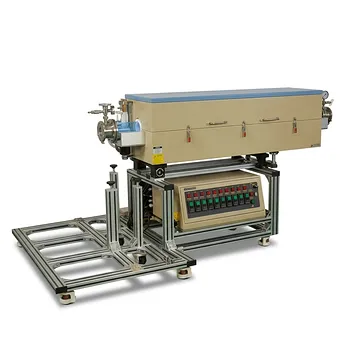
Ten Zone Multi Orientation Laboratory Tube Furnace for 1200C High Temperature Gradient Thermal Processing
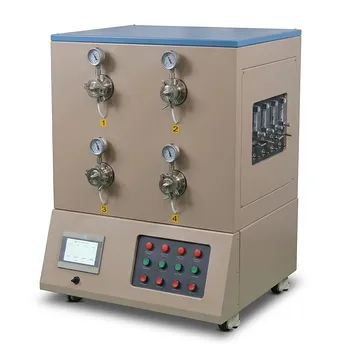
High Throughput 1200C Four Channel Tube Furnace with 3 Inch Quartz Tubes for Multi Zone Annealing and Material Research
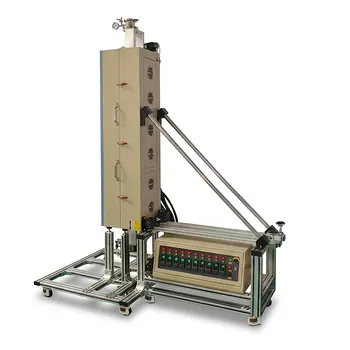
1200°C 10-Zone Split Tube Furnace with Horizontal and Vertical Mounting for Multi-Zone Thermal Gradients and Large Diameter Material Processing
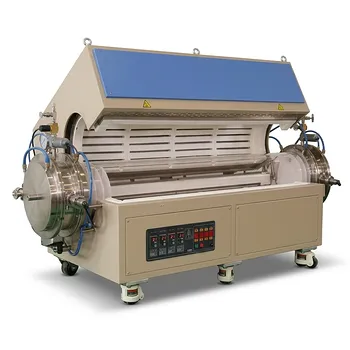
1200C Max Four Zone Split Tube Furnace with Optional Large Diameter Quartz Tubes
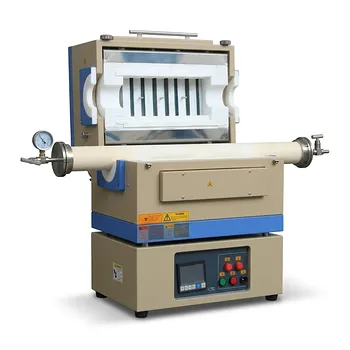
1500C Eight Zone Split Tube Furnace for Thermal Gradient Processing and Advanced Material Research
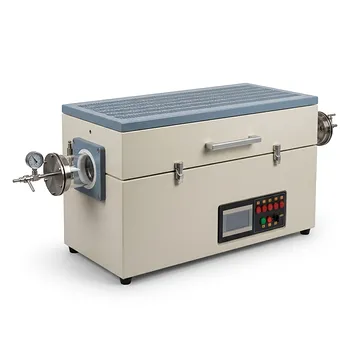
Five Zone 1200C High Temperature Split Tube Furnace with Touch Screen Controller and Multiple Quartz Tube Options
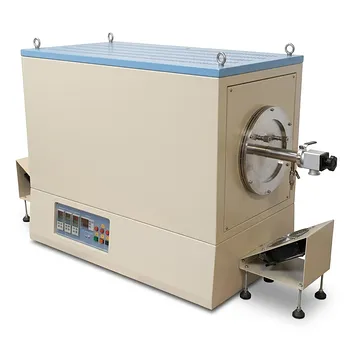
Four Zone Tube Furnace 1100C with 600mm Large Diameter Quartz Tube and Vacuum Flanges
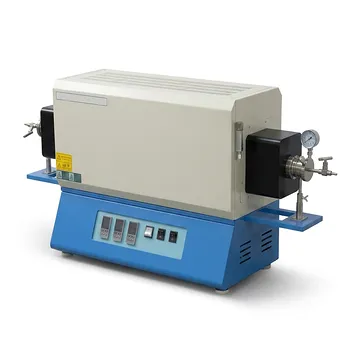
High Temperature Three Temperature Zone Tube Furnace for Advanced Material Science Sintering and Chemical Vapor Deposition Applications
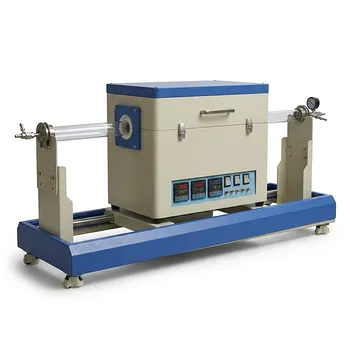
Double Temperature Zone Double Cover Tube Furnace for High Temperature CVD and Vacuum Annealing
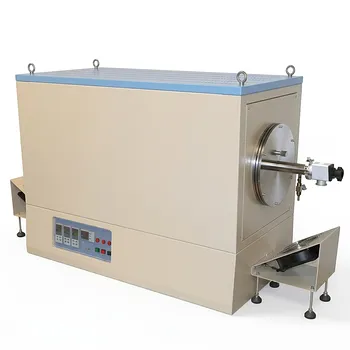
1100°C Three Zone Tube Furnace with 8.5 to 11 Inch OD Quartz Tube and Vacuum Flanges for Large Wafer Processing
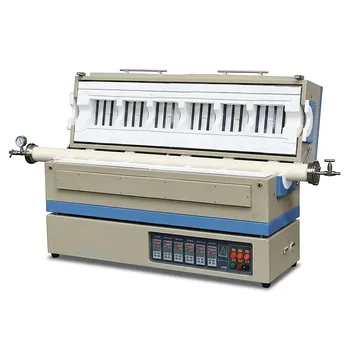
Six Zone Split Tube Furnace with Alumina Tube and Vacuum Flanges for 1500C High Temperature Thermal Processing and CVD
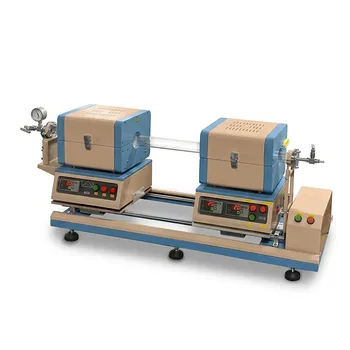
High Temperature 1200C Automatic Sliding Dual Zone Tube Furnace for 2D Transition Metal Dichalcogenides Growth and Material Sublimation Research
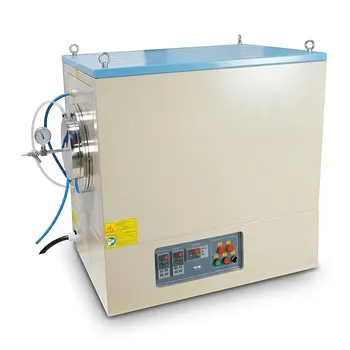
Dual Zone Tube Furnace 1100C with 11 Inch Quartz Tube and Vacuum Flanges for 8 Inch Wafer Processing
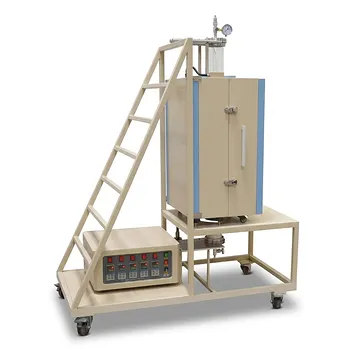
Five Zone Split Vertical Tube Furnace 1200C Max with 4 Inch Quartz Tube and Stainless Steel Vacuum Flanges
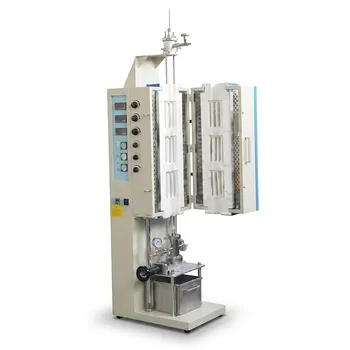
High Temperature Dual Zone Tube Furnace for Material Science Research and Professional Thermal Processing
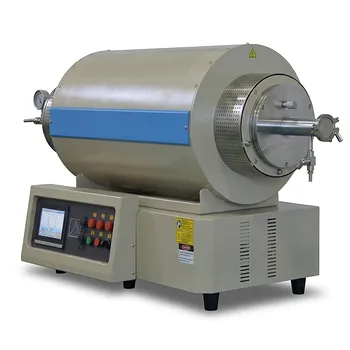
1200C Max Three Zone Tube Furnace 6 Inch OD Max with Tube and Flange

5 Inch Three Zone Rotary Tube Furnace with Integrated Gas Delivery System and 1200C Capability for Advanced Material CVD Processing

High Temperature 1700C Six Zone Split Tube Furnace with Alumina Tube and Water Cooled Flanges
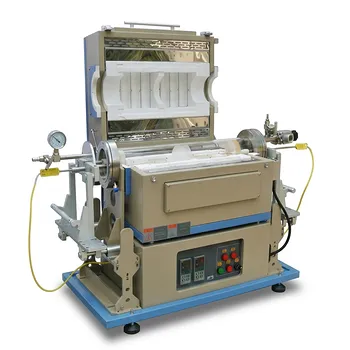
Two Zone IR Heating Rapid Thermal Processing RTP Tube Furnace with 4 Inch ID Quartz Tube and Sliding Sample Holders
