Why is an RGA necessary for high-vacuum CVD growth of hBN? Achieve Unmatched Precision and Repeatability
Updated 3 months ago
In high-vacuum Chemical Vapor Deposition (CVD) of hexagonal boron nitride (hBN), a Residual Gas Analyzer (RGA) is the primary tool for real-time monitoring of precursor partial pressure. This device provides the precise data needed to manage the concentration of the borazine precursor throughout the growth cycle. Because the controlled nucleation of hBN islands is exceptionally sensitive to these concentrations, the RGA ensures the environment remains stable enough for repeatable, high-quality results.
A Residual Gas Analyzer acts as the "eyes" of a high-vacuum system, quantifying both the necessary precursor levels and the presence of detrimental contaminants. It transforms hBN growth from an unpredictable process into a precise, repeatable scientific operation by stabilizing the chemical environment.
Precision Control of Precursor Dynamics
Monitoring Borazine Partial Pressure
The growth of hBN relies on the sublimation of precursors like Ammonia Borane into borazine vapor. The RGA tracks the partial pressure of this vapor in real-time, providing an immediate snapshot of the chemical availability in the chamber.
Managing Nucleation Sensitivity
The initial formation of hBN "islands" or nuclei is highly dependent on specific precursor concentrations. Even minor fluctuations can lead to uncontrolled growth or poor crystal quality, making the RGA’s feedback loop essential for stability.
Ensuring Process Repeatability
Without an RGA, it is difficult to guarantee that the precursor concentration is identical across different growth runs. By quantifying the gas environment, researchers can ensure repeatability and consistent film thickness.
Eliminating Environmental Interference
Detection of Atmospheric Leaks
High-vacuum systems are susceptible to microscopic leaks that introduce oxygen, moisture (H2O), and nitrogen. The RGA identifies these contaminants by monitoring specific mass-to-charge ratios, preventing the oxidation of the metal substrate.
Assessing Furnace Cleanliness
During high-temperature stages, materials within the furnace may outgas or evaporate. The RGA evaluates degassing efficiency, ensuring the furnace is sufficiently clean before the actual deposition of hBN begins.
Improving Phase Purity
By reducing background pressure and monitoring for impurities like CO and CO2, the RGA helps maintain a high mean free path for molecules. This minimizes intermolecular collisions and side reactions, resulting in higher structural density and phase purity.
The Role of Carrier and Process Gases
Balancing Hydrogen and Argon
Hydrogen acts as both a carrier gas and a surface-etching agent that removes unstable amorphous phases. The RGA monitors the ratio of hydrogen to other gases to ensure it effectively reduces surface oxides without over-etching the growing hBN film.
Achieving Atomic Cleanliness
To observe sub-angstrom structures in imaging, the hBN surface must be atomically clean. The RGA confirms the complete removal of organic residues (like PMMA) during the vacuum annealing phase by tracking the disappearance of organic mass signatures.
Understanding the Trade-offs
System Complexity and Cost
Integrating a high-precision RGA increases the capital cost and technical complexity of the CVD setup. It requires specialized vacuum ports and sophisticated software for data interpretation.
Calibration and Maintenance
RGA sensors can become "poisoned" or desensitized if exposed to high concentrations of certain precursors over time. They require regular calibration against known gas standards to maintain their quantitative accuracy.
Positioning and Sampling Errors
The RGA measures the gas composition at its specific location, which may differ slightly from the composition at the substrate surface. Proper chamber design is required to ensure the RGA's readings are truly representative of the growth zone.
How to Apply This to Your Project
Making the Right Choice for Your Goal
The necessity of an RGA depends on your requirements for material quality and experimental control.
- If your primary focus is high-resolution imaging (STEM): Use the RGA to confirm the total removal of organic contaminants during vacuum annealing to ensure an atomically clean surface.
- If your primary focus is large-area uniformity: Monitor the borazine partial pressure continuously to maintain a stable growth rate across the entire substrate.
- If your primary focus is fundamental research on nucleation: Utilize the RGA’s real-time feedback to correlate specific precursor concentrations with the resulting island density.
- If your primary focus is hardware troubleshooting: Use the RGA as a leak detector to identify atmospheric contamination before wasting expensive precursors on a failed growth run.
By leveraging a Residual Gas Analyzer, you move from observing the results of a growth cycle to actively controlling the atomic environment that dictates material quality.
Summary Table:
| RGA Function | Key Benefit | Impact on hBN Quality |
|---|---|---|
| Precursor Monitoring | Real-time partial pressure tracking | Controlled nucleation and growth rate |
| Leak Detection | Identifies O2, H2O, and N2 leaks | Prevents oxidation and phase impurities |
| Outgassing Analysis | Evaluates furnace cleanliness | Ensures an atomically clean growth surface |
| Gas Ratio Control | Balances H2/Carrier gas ratios | Optimizes etching and structural density |
Elevate Your Material Science Research with THERMUNITS
Precision in hexagonal boron nitride (hBN) growth requires high-performance thermal environments. THERMUNITS is a leading manufacturer of high-temperature laboratory equipment, specializing in advanced CVD/PECVD systems, Vacuum and Atmosphere Furnaces, and Tube Furnaces tailored for industrial R&D.
Whether you need an electric rotary kiln, vacuum induction melting furnace (VIM), or customized Thermal Elements, our solutions provide the stability and control necessary for cutting-edge material synthesis.
Ready to upgrade your lab's capabilities? Contact our engineering team today to discuss how our thermal processing solutions can ensure the success of your next project!
References
- Katherine A. Su, Michael S. Arnold. Chemical vapor deposition of hexagonal boron nitride on germanium from borazine. DOI: 10.1039/d4ra03704a
Mentioned Products
- Vertical Openable Tube Furnace 0-1700c High Temperature Laboratory System for CVD and Vacuum Heat Treatment
- High Temperature 1700C Tube Furnace with High Vacuum Turbomolecular Pump System and Multi Channel Mass Flow Controller Gas Mixer
- Three Zone Quartz Tube Furnace with 3 Channel Gas Mixer Vacuum Pump and Anti Corrosive Vacuum Gauge
- High Temperature Dual Zone Vacuum Tube Furnace for Material Research and CVD Processing
- Three Temperature Zone High Temperature Vacuum Tube Furnace for CVD and Material Sintering
People Also Ask
- Why is a Tube Furnace typically utilized for CVD? Achieve Precision in Graphene and 2D Material Synthesis
- What role does a high-temperature vertical tube furnace play in simulating high-carbon ferromanganese slag formation?
- What functions does a vertical high-temperature tube furnace perform? Master Industrial Sintering & R&D Simulation
- How does a vertical tube furnace facilitate thermoelectric alloy melting? Precision synthesis for material homogeneity.
- How is an industrial-grade vertical tube furnace utilized in smelting leaching residues? Enhance Metal Recovery Efficiency

Tech Team · ThermUnits
Last updated on Jun 03, 2026
Related Products
Vertical Openable Tube Furnace 0-1700c High Temperature Laboratory System for CVD and Vacuum Heat Treatment

High Temperature 1700C Tube Furnace with High Vacuum Turbomolecular Pump System and Multi Channel Mass Flow Controller Gas Mixer
Three Zone Quartz Tube Furnace with 3 Channel Gas Mixer Vacuum Pump and Anti Corrosive Vacuum Gauge
High Temperature Dual Zone Vacuum Tube Furnace for Material Research and CVD Processing
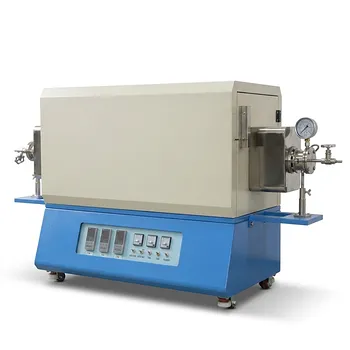
Three Temperature Zone High Temperature Vacuum Tube Furnace for CVD and Material Sintering
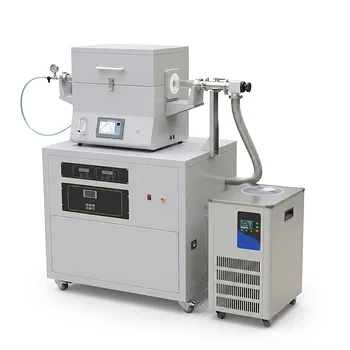
Split Chamber CVD Tube Furnace with Vacuum Station Chemical Vapor Deposition System Machine
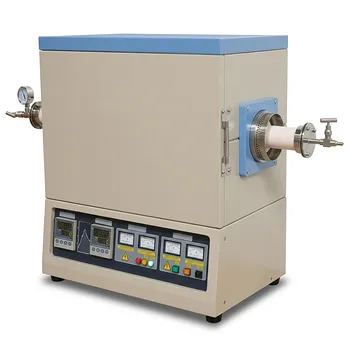
High Temperature 1700C Dual Zone Tube Furnace for Material Science and Industrial Chemical Vapor Deposition Research
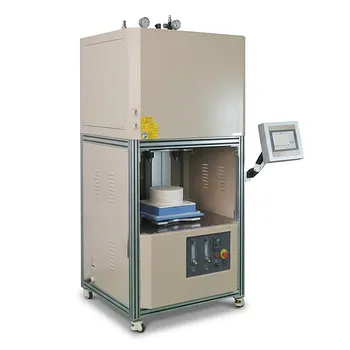
High Temperature Vertical Atmosphere Controlled Furnace 1700C Automatic Bottom Loading 13 Liter Vacuum Thermal System
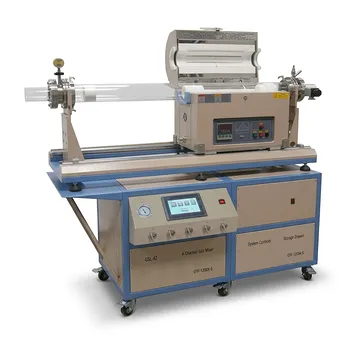
Dual Tube 100mm 80mm CVD Sliding Furnace with 4 Channel Gas Mixing and Vacuum System
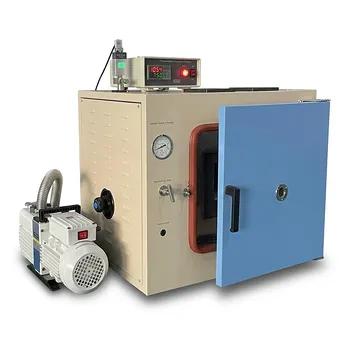
Compact High Vacuum Box Furnace 1050C Max 6.2L Ceramic Chamber Stainless Steel Shell Programmable Temperature Controller for Material Science Research
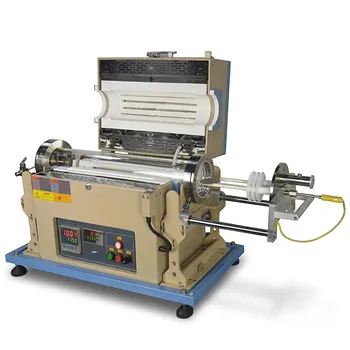
1200°C High Temperature 4 Inch Tube Furnace with Sliding Flange for CVD Systems
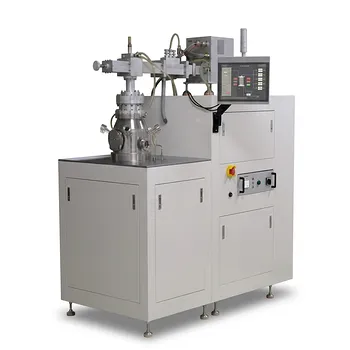
Cylindrical Resonator MPCVD Machine System for Microwave Plasma Chemical Vapor Deposition and Lab Diamond Growth
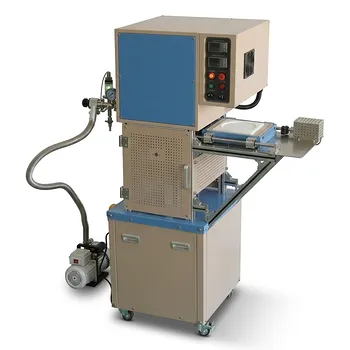
1200°C Bottom Loading Vacuum Furnace with Rapid Gas Cooling and 8.6 Inch Diameter Quartz Chamber
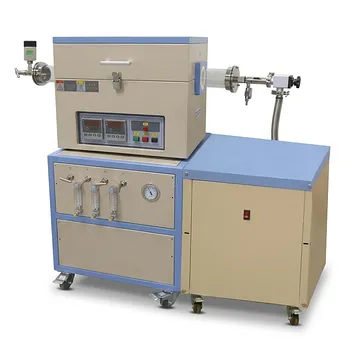
Dual Zone Quartz Tube Furnace with 80mm Diameter 1200C Max Temperature 3 Channel Gas Mixer and Vacuum Pump System
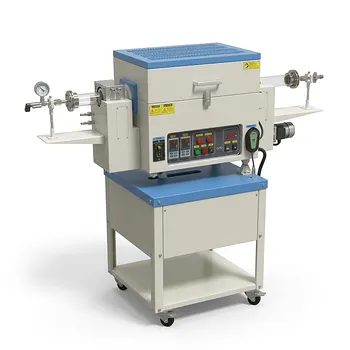
4 Inch Two Zone Rotary CVD Tube Furnace for High Temperature Battery Material Synthesis and Advanced Material Calcination
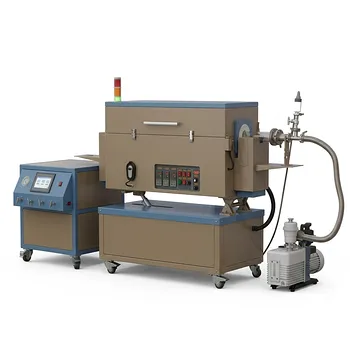
5 Inch Three Zone Rotary Tube Furnace with Integrated Gas Delivery System and 1200C Capability for Advanced Material CVD Processing
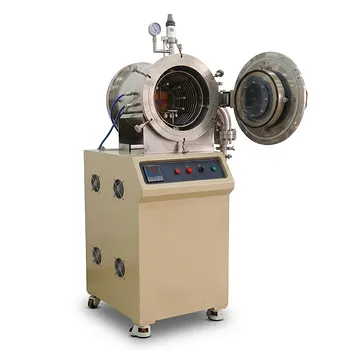
High Temperature Cold Wall High Vacuum Chamber Furnace 1400C for Advanced Material Processing
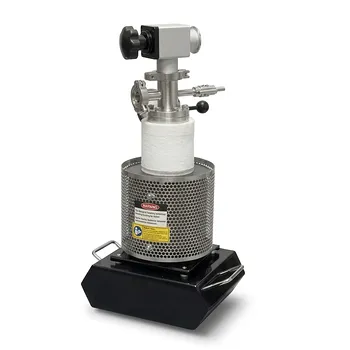
High Temperature 1100C Compact Top Loading Vertical Vacuum Tube Furnace for High Vacuum Noble Metal Melting and Material Research
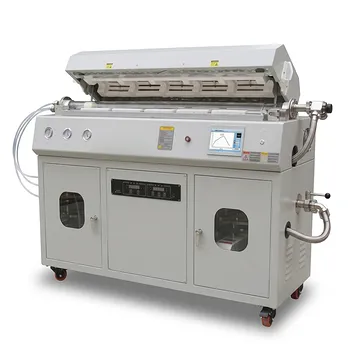
Multi Heating Zones CVD Tube Furnace System for Precision Chemical Vapor Deposition and Advanced Material Synthesis