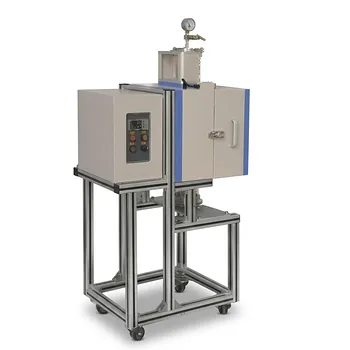
Why is a Tube Furnace with argon flow required for Nb-Ti-Ru alloys? Protect Material Purity and Research Accuracy
Updated 3 months ago
The requirement for a tube furnace with high-purity argon flow is driven by the extreme chemical reactivity of Niobium (Nb) and Titanium (Ti) at elevated temperatures. During annealing processes ranging from 900°C to 1300°C, these elements aggressively bond with atmospheric oxygen and nitrogen. The argon-purged tube furnace creates an essential inert shield that prevents contamination, ensuring the resulting material properties and phase data are accurate and uncontaminated.
Core Takeaway: To study or manufacture Nb-Ti-Ru alloys at high temperatures, you must eliminate atmospheric interference. High-purity argon in a sealed tube furnace prevents oxidation and nitridation, allowing researchers to observe the intrinsic thermodynamic behavior of the alloy rather than external chemical reactions.
The Chemical Vulnerability of Nb-Ti-Ru Alloys
High Reactivity of Niobium and Titanium
Niobium and Titanium are the primary constituents in these alloys and exhibit exceptionally high chemical activity when heated. At temperatures above 900°C, they act as "getters," meaning they will rapidly pull oxygen and nitrogen out of the surrounding air to form oxides and nitrides.
Prevention of Material Embrittlement
When Ti-based alloys react with oxygen and nitrogen, the resulting contamination often leads to severe material embrittlement. This degradation of mechanical properties makes the alloy brittle and prone to failure, rendering it useless for structural or high-performance applications.
Preserving Phase Equilibrium Integrity
For researchers, the goal of annealing is often to reach a state of thermodynamic equilibrium. If oxygen or nitrogen enters the system, it introduces new phases (like $TiO_2$) that do not belong in the pure Nb-Ti-Ru ternary system, leading to false data and incorrect phase diagrams.
The Role of the Tube Furnace in Atmosphere Control
Creating a Sealed Thermal Environment
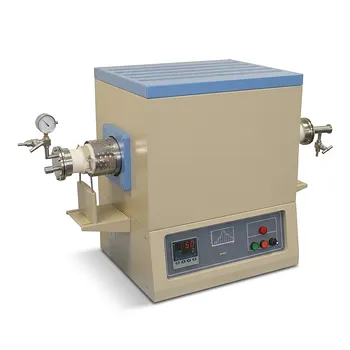
A tube furnace provides a controlled, sealed chamber that is much easier to purge than a standard muffle furnace. This isolation is critical for maintaining a "clean" environment where the only elements present are the alloy itself and the inert argon gas.
Ensuring Uniform Thermal Fields
Beyond atmosphere control, the tube furnace provides a highly uniform thermal field during long-term soaking periods. This consistency ensures that the entire sample undergoes the same microstructural evolution, such as grain growth or carbide dissolution, without localized variations.
Displacement of Residual Impurities
Continuous argon flow does more than just fill the tube; it actively "sweeps" away any residual gases that might outgas from the sample or the furnace walls. This dynamic flow ensures that the concentration of reactive species remains near zero throughout the entire 900°C to 1300°C cycle.
Protecting Microstructure and Composition
Eliminating Surface De-alloying
In complex alloys, high heat can sometimes cause certain elements to migrate or "burn off" at the surface. An inert argon atmosphere helps maintain the original design content of trace elements, ensuring that the surface properties of the sample match the core properties.
Facilitating Metallurgical Bonding
When used for sintering powder-based Nb-Ti alloys, the argon environment ensures that powder particles transition from mechanical contact to strong metallurgical bonding. Without this protection, oxide layers would form on the powder surfaces, preventing them from fusing together into a dense, high-performance material.
Preventing Uncontrolled Secondary Reactions
In cases where coatings or specific surface morphologies are present, such as titanium nanotubes, the argon flow prevents uncontrolled secondary oxidation. This level of control is essential for maintaining the micro-morphology and intended biological or chemical performance of the material.
Understanding the Trade-offs and Pitfalls
The Risk of Low-Purity Argon
Using "industrial grade" rather than "high-purity" argon can be a fatal mistake in Nb-Ti-Ru processing. Even trace amounts of moisture or oxygen in the gas supply can cause detectable oxidation over long annealing durations, negating the benefits of the tube furnace.
System Integrity and Leaks
A tube furnace is only as effective as its seals; even a microscopic leak can allow atmospheric oxygen to enter via back-diffusion. For reactive alloys like Nb-Ti-Ru, researchers must often use vacuum-tight fittings and positive pressure to ensure the environment remains truly inert.
Argon Consumption and Cost
Maintaining a continuous flow of high-purity argon over long homogenization cycles (which can last 6 hours or more) represents a significant operational cost. However, this is a necessary trade-off to avoid the much higher cost of losing a rare or expensive Nb-Ti-Ru sample to contamination.
How to Apply This to Your Project
Recommendations for Success
- If your primary focus is Phase Equilibrium Research: Use high-purity (99.999%) argon and a positive-pressure flow to ensure the phase data reflects the intrinsic properties of the ternary system.
- If your primary focus is Surface Integrity: Ensure the tube furnace is thoroughly purged before heating to prevent any "trapped" oxygen from reacting with the sample during the ramp-up phase.
- If your primary focus is Material Homogenization: Maintain a steady argon flow throughout the entire cooling cycle to prevent oxidation as the sample returns to room temperature.
By strictly controlling the atmosphere through a high-purity argon flow, you ensure that the high-temperature evolution of your Nb-Ti-Ru alloy is driven by thermodynamics, not environmental contamination.
Summary Table:
| Feature | Purpose in Nb-Ti-Ru Annealing | Key Benefit |
|---|---|---|
| High-Purity Argon | Displaces oxygen and nitrogen | Prevents material embrittlement and oxidation. |
| Sealed Tube Design | Isolates the sample from the atmosphere | Ensures a clean, controlled environment for heating. |
| Uniform Thermal Field | Consistent heat distribution (900°C-1300°C) | Guarantees repeatable microstructural evolution. |
| Dynamic Gas Flow | Sweeps away residual impurities | Maintains phase equilibrium integrity and surface quality. |
Elevate Your Material Research with THERMUNITS
Precision in thermal processing is the difference between a breakthrough and a failed experiment. THERMUNITS is a leading manufacturer of high-temperature laboratory equipment, specializing in solutions that protect your sensitive materials from environmental contamination.
From high-purity Atmosphere and Vacuum Tube furnaces to CVD/PECVD systems and Vacuum Induction Melting (VIM) furnaces, our equipment is engineered for the rigorous demands of material science and industrial R&D. We help researchers achieve the exact thermodynamic conditions needed for advanced alloys like Nb-Ti-Ru.
Ready to optimize your heat treatment process? Contact our technical team today to find the perfect furnace solution for your laboratory’s unique requirements.
References
- Melanie K. Moczadlo, Eric A. Lass. Microstructure and Phase Equilibria in BCC-B2 Nb-Ti-Ru Refractory Superalloys. DOI: 10.3390/ma17225429
Mentioned Products
- High Temperature Vertical Atmosphere Controlled Furnace with Automatic Bottom Loading and 1700°C Capacity for Advanced Material Research
- 1200C High Throughput Multi Channel Tube Furnace with 50mm Quartz Tubes for Annealing and Material Phase Diagram Research
- High Temperature 1700C 4 Channel Tube Furnace 1 Inch Alumina Tube for Hi-Throughput Annealing
- 1200C High Temperature 5 Inch Sliding Tube Furnace for Rapid Thermal Processing RTP and Wafer Annealing
- High Temperature 1700C Benchtop Tube Furnace with 5 Inch Heating Zone High Purity Alumina Tube and Vacuum Sealing Flanges
People Also Ask
- What role does atmosphere control play in technical ceramics and glass? Master Material Purity and Precision
- What is the function of a vertical tube furnace in MnOx-SiO2 research? Precision Control & Quenching
- What's the Role of Tube Furnaces in FeCuS-N-C Synthesis? Precision Pyrolysis & Atmosphere Control
- What role does a high-temperature atmosphere furnace play in the direct electrochemical reduction of CO2? - Key Insights
- What is the function of a high-temperature tube furnace with atmosphere control? Optimize Carbonization of Composites

Tech Team · ThermUnits
Last updated on Jun 02, 2026
Related Products
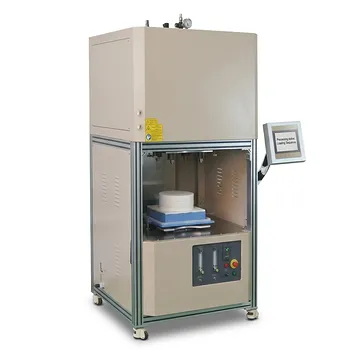
High Temperature Vertical Atmosphere Controlled Furnace with Automatic Bottom Loading and 1700°C Capacity for Advanced Material Research
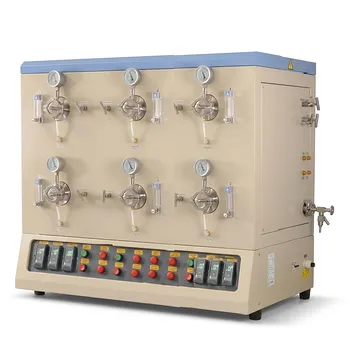
1200C High Throughput Multi Channel Tube Furnace with 50mm Quartz Tubes for Annealing and Material Phase Diagram Research
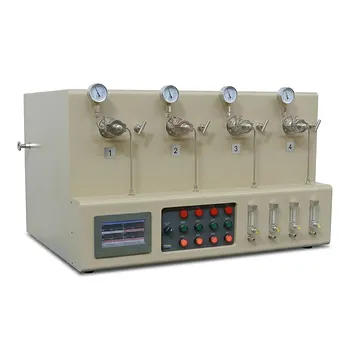
High Temperature 1700C 4 Channel Tube Furnace 1 Inch Alumina Tube for Hi-Throughput Annealing
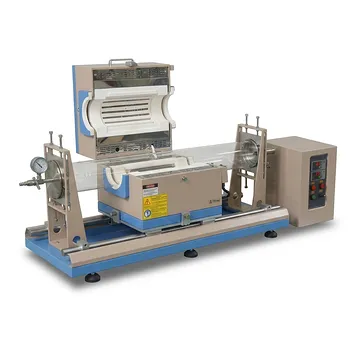
1200C High Temperature 5 Inch Sliding Tube Furnace for Rapid Thermal Processing RTP and Wafer Annealing

High Temperature 1700C Benchtop Tube Furnace with 5 Inch Heating Zone High Purity Alumina Tube and Vacuum Sealing Flanges

High Temperature 1700C Vertical Tube Furnace for Powder Spherification and Material Sintering
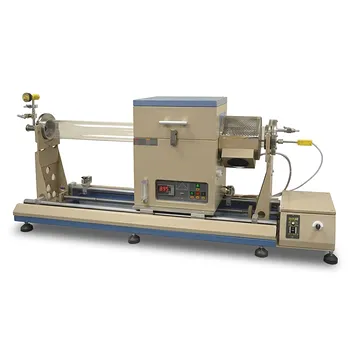
900 ºC Max Sliding RTP Tube Furnace with Rapid IR Heating and 4 Inch OD Quartz Tube

High Temperature Tube Furnace 1500C with Sliding Flanges and 50mm OD for Rapid Thermal Processing Fast Heating and Cooling

Compact High Temperature 1600C Tube Furnace with 50mm Alumina Tube and Vacuum Flanges for Material Sintering
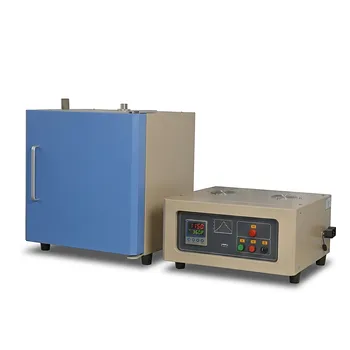
High Temperature Muffle Furnace with Alloy Chamber for Debinding and Sintering Applications

High Temperature Automated 5 Inch Tube Furnace for Autonomous Material Research and Advanced Laboratory R&D
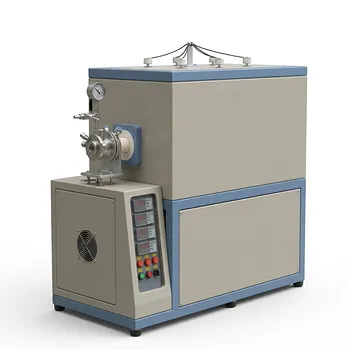
High Temperature 1700C Three Zone Tube Furnace with Alumina Tube 50mm 60mm 80mm OD for Material Research and Industrial Heat Treatment

High Temperature 1700C Tube Furnace with High Vacuum Turbomolecular Pump System and Multi Channel Mass Flow Controller Gas Mixer
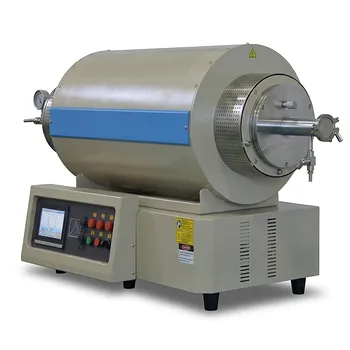
1200C Max Three Zone Tube Furnace 6 Inch OD Max with Tube and Flange
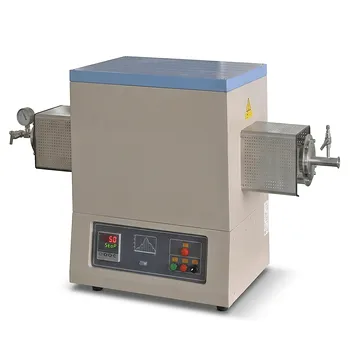
High Temperature 1700C Tube Furnace with 4 Inch OD Alumina Tube and Vacuum Sealing Flanges
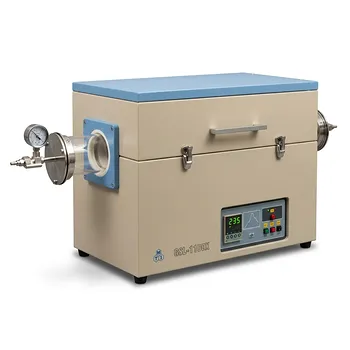
Single Zone Tube Furnace 5 Inch Quartz Tube 36 Inch Heating Zone Vacuum Flanges
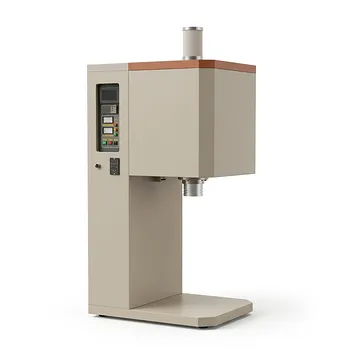
Vertical Openable Tube Furnace 0-1700c High Temperature Laboratory System for CVD and Vacuum Heat Treatment

1800C High Temperature Compact Vacuum Tube Furnace with 60mm OD Alumina Tube and Kanthal MoSi2 Heating Elements
1700C High Temperature Alumina Tube Furnace with 18 Inch Heated Zone and Vacuum Sealing Flanges