The Architecture of Metamorphosis: Why the Vacuum Tube Furnace is the Soul of Polyimide Nanofibers
May 31, 2026
The Invisible Transition
In material science, some of the most profound transformations happen in silence, behind thick quartz walls.
The journey from Polyamic Acid (PAA) to Polyimide (PI) is one such metamorphosis. On its own, PAA is a precursor with potential but lacks the "armor" required for the modern world. To become Polyimide—a material capable of surviving the vacuum of space or the interior of a lithium-ion battery—it must undergo imidization.
This is not a simple matter of turning up the heat. It is a systemic challenge where temperature, pressure, and chemical purity must converge at the exact same micro-second.
The Physics of the Void
The vacuum environment in a tube furnace isn't just a technical spec; it is a psychological necessity for the material's survival.
Most high-performance nanofibers are birthed in high-boiling point solvents like NMP or DMF. These chemicals are stubborn. They do not want to leave the polymer chain. Under normal atmospheric pressure, they linger until it is too late.
If these solvents remain when the temperature spikes, they vaporize violently. They create "bubbles"—microscopic craters that compromise the structural integrity of the membrane.
A vacuum tube furnace lowers the boiling point of these volatiles. It coaxes them out gently, ensuring the nanofiber remains a continuous, flawless strand rather than a perforated web.
The Three Pillars of Imidization
The success of polyimide production rests on three systemic controls:
- The Thermal Gradient: Imidization is a ladder, not a leap. A precise ramp—often as slow as 5°C/min—allows the polymer chains to close their rings without the "thermal shock" that leads to brittleness.
- The Atmospheric Shield: At 300°C, oxygen is no longer a life-giver; it is a corrosive agent. By flooding the chamber with Nitrogen or Argon, the furnace creates an inert sanctuary that prevents oxidative degradation.
- The Uniform Field: In a tube furnace, the heat is radial and consistent. This prevents "soft spots"—areas of incomplete conversion that would fail under chemical or mechanical stress.
Engineering the Trade-offs
Precision comes with a cost. In the world of R&D, we often trade volume for control.
Vacuum tube furnaces are specialized instruments. They require meticulous maintenance of vacuum seals and gaskets. A single leak can introduce enough oxygen to ruin a month of research.
Furthermore, the cooling phase is as critical as the heating phase. Rapid cooling can warp the membrane, undoing the work of the previous six hours. It is a process that rewards patience and penalizes shortcuts.
The Strategy of Success
| Challenge | Impact on Nanofiber | Furnace Solution |
|---|---|---|
| Residual Solvents | Structural Bubbling/Defects | High-performance Vacuum Extraction |
| Ring-Closure | Low Mechanical Strength | Multi-stage Programmable Heating |
| Oxidation | Chemical Degradation | Inert Atmosphere (Ar/N2) Control |
| Inconsistency | Brittle "Soft Spots" | Uniform Thermal Field Distribution |
The Engineer’s Infrastructure
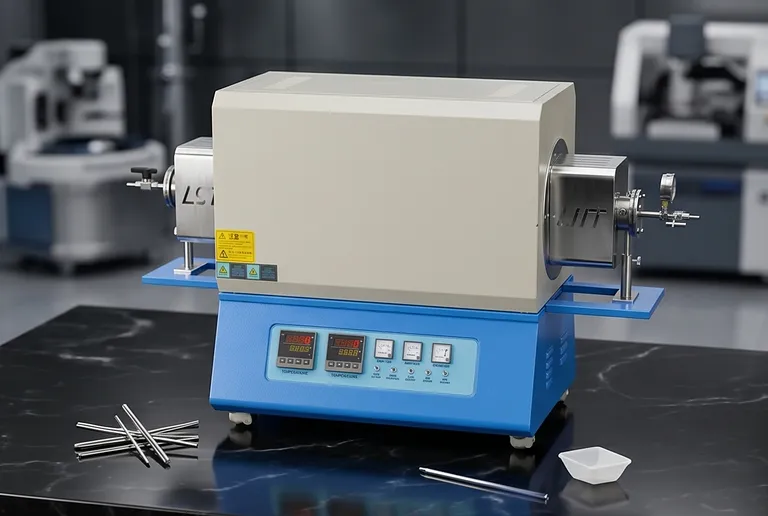
At THERMUNITS, we understand that a furnace is more than a heating element; it is the critical infrastructure for your next breakthrough.
Whether you are scaling from a laboratory sample to an industrial prototype, your material's performance is limited by the quality of its processing environment. Our Vacuum Tube Furnaces, Atmosphere Furnaces, and CVD systems are designed to provide the "controlled womb" that high-performance polymers demand.
From Dental Furnaces to Vacuum Induction Melting (VIM), we provide the tools for those who refuse to leave their material's integrity to chance.
To ensure your polyimide membranes achieve their full potential through precise thermal engineering, Contact Our Experts.
Quick Links
Suggested Products
High Temperature 1700C Vertical Tube Furnace for Powder Spherification and Material Sintering High Temperature Dual Zone Vacuum Tube Furnace for Material Research and CVD Processing Vertical Openable Tube Furnace 0-1700c High Temperature Laboratory System for CVD and Vacuum Heat Treatment High Temperature Hybrid Muffle and Tube Furnace with Vacuum Capability and PID Control Compact Split Tube Furnace with Integrated Vacuum System and Precision Temperature CalibratorFurther Reading
The Architecture of Heat: Why Verticality Defines Modern Metallurgical Simulation The Geometry of Heat: Engineering Magnetic Biochar Through Controlled Pyrolysis The Architecture of Absence: Why Atmosphere Control Defines the Fate of Mesoporous Carbon The Silent Guardian of Kinetics: The Engineering Logic Behind Stable Molten Salt Environments The Architecture of Isolation: Why Atmosphere Defines Material Destiny
ThermUnits
Last updated on Apr 14, 2026
Related Products

High Temperature 1700C Vertical Tube Furnace for Powder Spherification and Material Sintering
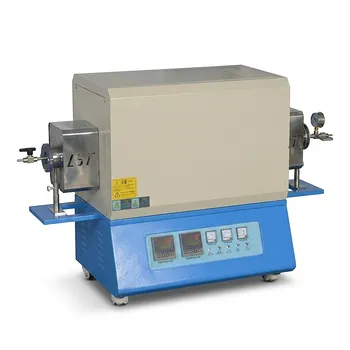
High Temperature Dual Zone Vacuum Tube Furnace for Material Research and CVD Processing
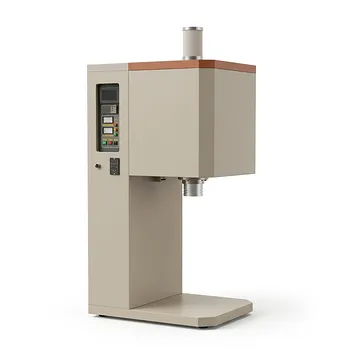
Vertical Openable Tube Furnace 0-1700c High Temperature Laboratory System for CVD and Vacuum Heat Treatment
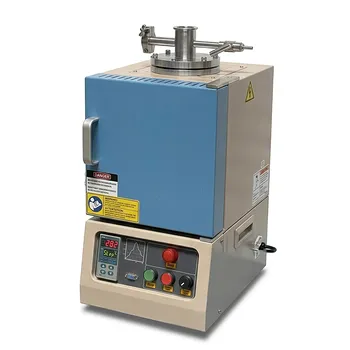
High Temperature Hybrid Muffle and Tube Furnace with Vacuum Capability and PID Control
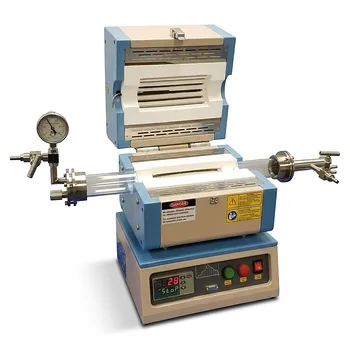
Compact Split Tube Furnace with Integrated Vacuum System and Precision Temperature Calibrator

High Temperature Automated 5 Inch Tube Furnace for Autonomous Material Research and Advanced Laboratory R&D
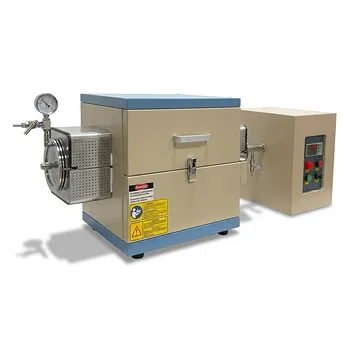
1200C High Temperature 5 Inch Split Vacuum Tube Furnace with 12 Inch Heating Zone and Separated PID Controller
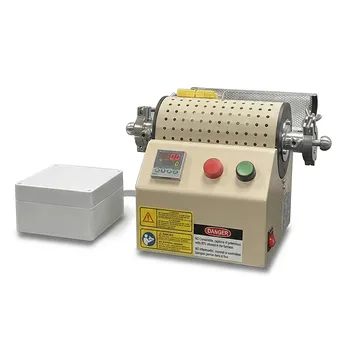
1000C Mini Tube Furnace with 20mm Quartz Tube and Vacuum Flanges for Material Science Research and Controlled Atmosphere Small Sample Processing
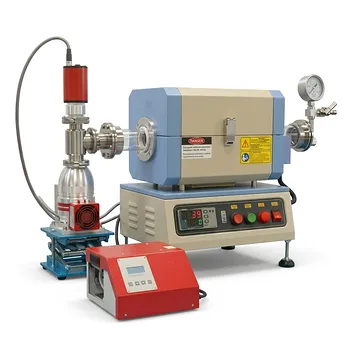
High Vacuum Compact Tube Furnace 1200C with Integrated Turbo Pump System and 8 Inch Heating Zone

Compact Vertical Split Quartz Tube Furnace with Stainless Steel Vacuum Flanges for Rapid Thermal Quenching and Controlled Atmosphere Material Processing

1100C Tube Furnace with Vacuum Flange and Programmable Temperature Controller for Material Science and Industrial Heat Treatment

Vertical 1700C Vacuum and Atmosphere Tube Furnace with 80mm Alumina Tube

1800C High Temperature Compact Vacuum Tube Furnace with 60mm OD Alumina Tube and Kanthal MoSi2 Heating Elements
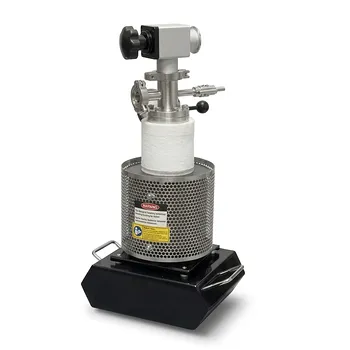
High Temperature 1100C Compact Top Loading Vertical Vacuum Tube Furnace for High Vacuum Noble Metal Melting and Material Research

1750°C High Temperature Benchtop Vacuum Atmosphere Tube Furnace with Kanthal Super 1800 Heating Elements and 60mm Alumina Processing Tube
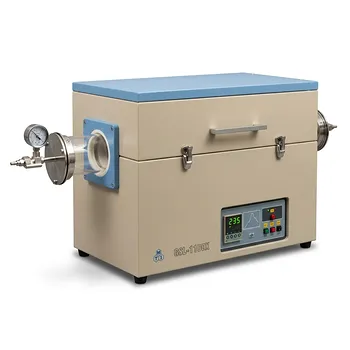
Single Zone Tube Furnace 5 Inch Quartz Tube 36 Inch Heating Zone Vacuum Flanges
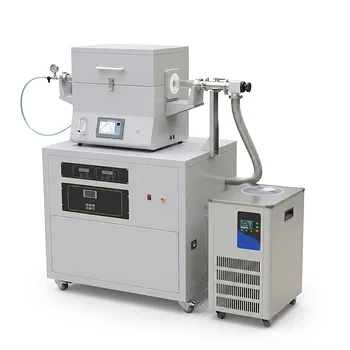
Split Chamber CVD Tube Furnace with Vacuum Station Chemical Vapor Deposition System Machine

High Temperature 1700C Six Zone Split Tube Furnace with Alumina Tube and Water Cooled Flanges

High Temperature 1700C Tube Furnace with High Vacuum Turbomolecular Pump System and Multi Channel Mass Flow Controller Gas Mixer