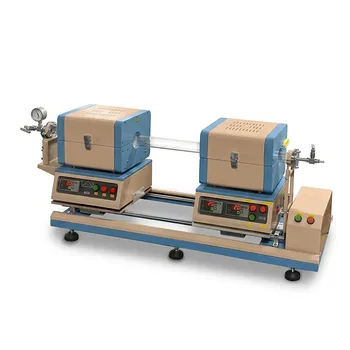
How Temperature Uniformity Affects Catalyst-Free CVD Carbon Nanostructures: Achieving Precision Growth
Updated 3 months ago
Temperature uniformity is the primary driver of structural consistency in metal-catalyst-free CVD. It ensures that reaction rates remain identical across the entire substrate surface, directly controlling the nucleation and growth of carbon nanostructures. This synchronization results in a highly uniform diameter distribution and coverage density, which are critical for maintaining stable coating quality during batch production.
Temperature uniformity dictates the thermodynamic landscape of the substrate surface, enabling precise control over the morphology and density of carbon nanostructures by managing nucleation kinetics without the need for traditional metal catalysts.
The Role of Thermodynamics in Catalyst-Free Growth
Nucleation Without Active Sites
In traditional CVD, metal catalysts provide specific sites for carbon nucleation. In a metal-catalyst-free process, nucleation depends entirely on the thermodynamic conditions at the substrate surface, such as a titanium substrate.
Managing Free Energy
The furnace's temperature control system regulates nucleation kinetics by managing the free energy during the formation of carbon islands. Without uniform heat, different areas of the substrate would reach nucleation thresholds at different times, leading to a chaotic and non-uniform growth pattern.
Ensuring Consistent Reaction Rates
High temperature uniformity ensures a consistent reaction rate across the entire substrate. This consistency is the physical foundation for controlling the thin-film growth rate, crystalline quality, and overall thickness uniformity of the carbon layer.
How Thermal Stability Influences Microstructure
Controlling Diameter and Density
When the thermal field is stable, the generated carbon nanotubes or nanorods exhibit highly synchronized diameter distribution. This uniformity is essential for applications requiring specific surface area characteristics or predictable electrochemical properties.
Temperature-Dependent Phase Shifts
Specific temperature ranges, typically between 750°C and 850°C, determine the final form of the nanostructure. Higher temperatures generally favor the formation of carbon nanotubes, while lower temperatures, when combined with specific gas pressures, may favor planar graphene nanoribbons.
Impact of Thermal Fluctuations
Minor temperature fluctuations within the furnace can cause significant shifts in morphology. For example, a slight drop in temperature can change the output from a dense, entangled network to short, sparse nanotubes, compromising the material's performance.
Understanding the Trade-offs
Precision vs. Throughput
Achieving extreme temperature uniformity often requires slower heating cycles or smaller reaction zones. This can limit batch throughput even though it significantly increases the quality and repeatability of the carbon nanostructures.
Gas Cracking vs. Diffusion
Temperature control precision directly influences the cracking rate of carbon source gases like cyclohexane or ethylene. If the temperature is too high, the precursor may crack prematurely in the gas phase rather than on the substrate, leading to soot formation instead of structured growth.
Thermal Gradient Challenges
While the center of a tube furnace is typically stable, the edges or ends of the tube often experience thermal gradients. These gradients can result in "edge effects" where nanostructures at the periphery of the substrate have different properties than those in the center.
Optimizing Your CVD Process for Carbon Synthesis
To achieve specific material goals, the thermal environment must be tailored to the intended application of the carbon nanostructure.
- If your primary focus is high-density nanotube arrays: Maintain a highly accurate and constant thermal field, typically around 750°C, to ensure high-density nucleation and oriented growth.
- If your primary focus is structural variety (e.g., nanocoils or ribbons): Focus on precise temperature shifts within the 650°C to 850°C range to navigate the transition between different helical or planar structures.
- If your primary focus is industrial batch consistency: Prioritize a furnace with excellent temperature zone stability and sealing performance to ensure every run produces identical coating qualities.
Precise control over the furnace's thermal field is the fundamental requirement for achieving the specific microstructures necessary for advanced electrochemical and material applications.
Summary Table:
| Factor | Impact on Carbon Nanostructures | Importance in CVD |
|---|---|---|
| Nucleation Kinetics | Manages surface free energy for catalyst-free growth | Ensures structural consistency |
| Thermal Stability | Synchronizes diameter distribution and coverage density | Critical for stable batch quality |
| Reaction Rate | Regulates growth speed and layer thickness | Foundation for microstructure control |
| Phase Shifts | Determines formation of nanotubes vs. nanoribbons | Enables specific material properties |
| Thermal Gradients | Can cause "edge effects" and non-uniform growth | Key challenge for industrial scaling |
Elevate Your Material Research with THERMUNITS
Achieving precision in metal-catalyst-free CVD requires uncompromising thermal stability. As a leading manufacturer of high-temperature laboratory equipment, THERMUNITS provides advanced Tube Furnaces, CVD/PECVD systems, and Atmosphere Furnaces specifically engineered for the rigors of material science and industrial R&D.
Our solutions, including Muffle, Vacuum, and Rotary furnaces, are designed to eliminate thermal gradients, ensuring the synchronized nucleation and consistent microstructure growth your advanced applications demand.
Ready to optimize your carbon synthesis and heat treatment processes?
Contact our experts today to find the perfect thermal solution for your lab!
References
- Tsanka Dikova, Neli Mintcheva. Morphology and Structure of TiO2 Nanotube/Carbon Nanostructure Coatings on Titanium Surfaces for Potential Biomedical Application. DOI: 10.3390/ma17061290
Mentioned Products
- Three Temperature Zone High Temperature Vacuum Tube Furnace for CVD and Material Sintering
- 5 Inch Three Zone Rotary Tube Furnace with Integrated Gas Delivery System and 1200C Capability for Advanced Material CVD Processing
- 1200C Sliding Tube Furnace for Rapid Thermal Processing and CVD Graphene Growth with 100mm OD Capacity
- 1200C Max Dual Sliding Tube Furnace with 50 mm Tube Flanges for CVD
- Two Zone Rotary Tube Furnace for Powder CVD Coating and Core Shell Material Synthesis 1100C
People Also Ask
- What is the primary function of a three-zone tube furnace in the synthesis process of corn-derived carbon nanotubes?
- Why Use a Three-Zone vs. Single-Zone Furnace for Fe-Ni-Cu Diffusion? Key Benefits for Lab Accuracy
- What advantages does a three-zone tube furnace offer for nanoparticle synthesis? Unlock Superior Thermal Precision.
- What role does an industrial-grade three-zone tube furnace play in VOx@VACNT synthesis? Precision Phase-State Control
- What functions does a 3-zone tube furnace provide for graphene-coated alumina fibers? Expert CVD Heat Treatment Guide

Tech Team · ThermUnits
Last updated on Jun 03, 2026
Related Products
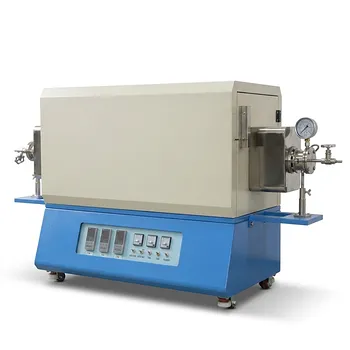
Three Temperature Zone High Temperature Vacuum Tube Furnace for CVD and Material Sintering
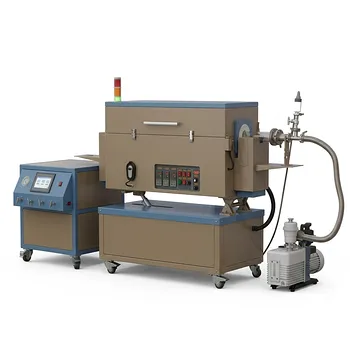
5 Inch Three Zone Rotary Tube Furnace with Integrated Gas Delivery System and 1200C Capability for Advanced Material CVD Processing
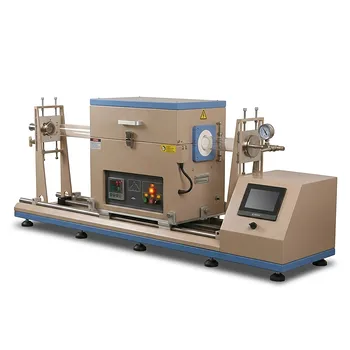
1200C Sliding Tube Furnace for Rapid Thermal Processing and CVD Graphene Growth with 100mm OD Capacity
1200C Max Dual Sliding Tube Furnace with 50 mm Tube Flanges for CVD
Two Zone Rotary Tube Furnace for Powder CVD Coating and Core Shell Material Synthesis 1100C
Vertical Openable Tube Furnace 0-1700c High Temperature Laboratory System for CVD and Vacuum Heat Treatment
Split Chamber CVD Tube Furnace with Vacuum Station Chemical Vapor Deposition System Machine
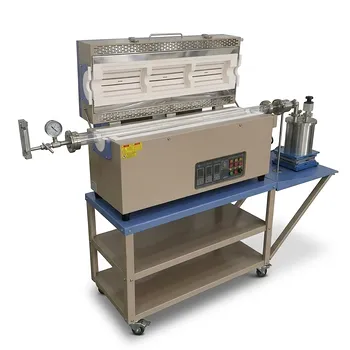
5 Inch Two Zone Rotary Tube Furnace 1100C for Powder CVD and Material Synthesis
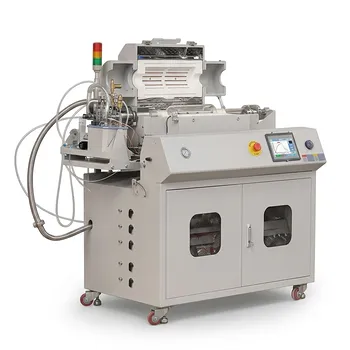
Versatile Chemical Vapor Deposition Tube Furnace System for Advanced Material Research and Industrial Coating Processes
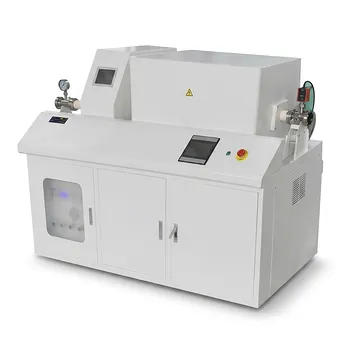
Chemical Vapor Deposition CVD System Slide PECVD Tube Furnace with Liquid Gasifier PECVD Machine
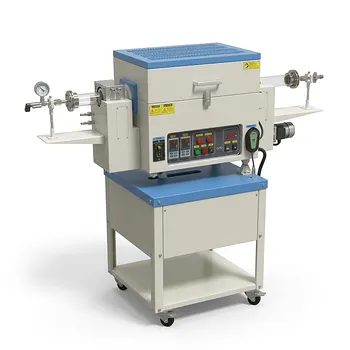
4 Inch Two Zone Rotary CVD Tube Furnace for High Temperature Battery Material Synthesis and Advanced Material Calcination
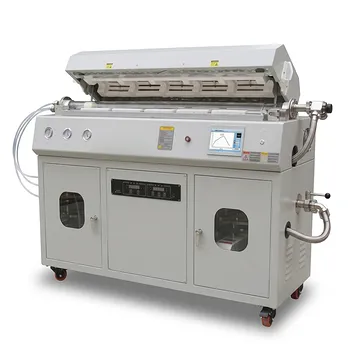
Multi Heating Zones CVD Tube Furnace System for Precision Chemical Vapor Deposition and Advanced Material Synthesis
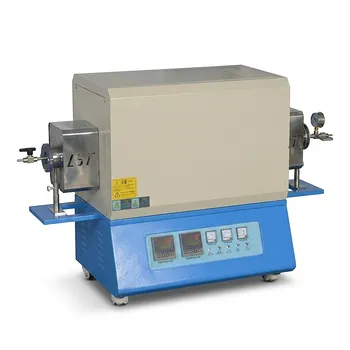
High Temperature Dual Zone Vacuum Tube Furnace for Material Research and CVD Processing
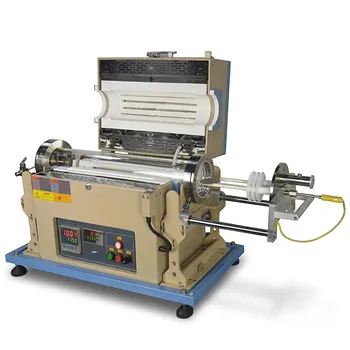
1200°C High Temperature 4 Inch Tube Furnace with Sliding Flange for CVD Systems
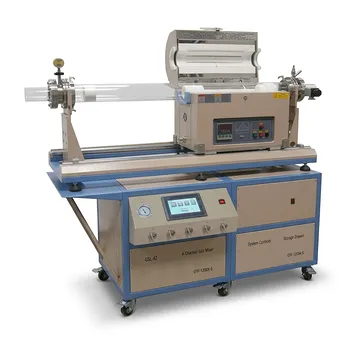
Dual Tube 100mm 80mm CVD Sliding Furnace with 4 Channel Gas Mixing and Vacuum System
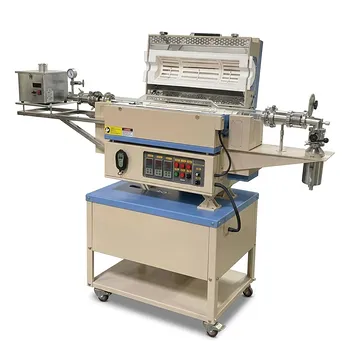
5 Inch Rotary Tube Furnace with Automatic Feeding and Receiving System 1200C Three Zone CVD Powder Processing
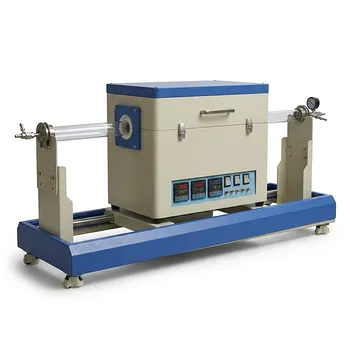
Double Temperature Zone Double Cover Tube Furnace for High Temperature CVD and Vacuum Annealing
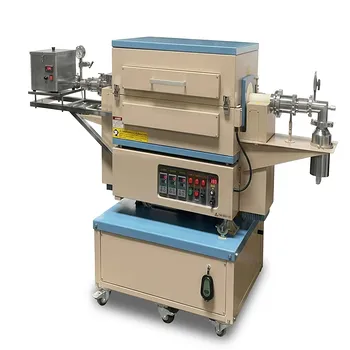
1500C 3-Zone Rotary Tube Furnace 60mm with Automatic Powder Feeding and Receiving System for Continuous Material Synthesis
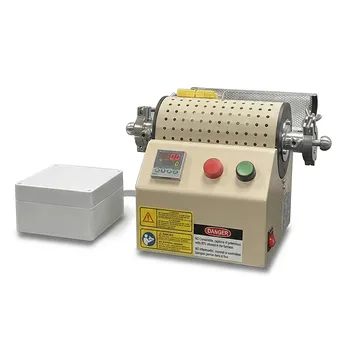
1000C Mini Tube Furnace with 20mm Quartz Tube and Vacuum Flanges for Material Science Research and Controlled Atmosphere Small Sample Processing