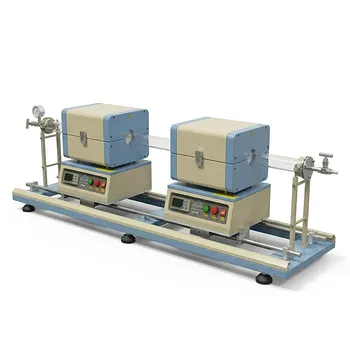
What are the advantages of induction-heated Cold-Wall CVD for hBN? Achieve Superior Film Purity and Texture Control.
Updated 3 months ago
The primary advantage of induction-heated Cold-Wall CVD for hBN synthesis is the localization of thermal energy specifically at the substrate, rather than the entire chamber. This design suppresses unwanted gas-phase reactions and particulate byproducts that often degrade film quality in traditional hot-wall systems. By decoupling precursor evaporation from high-temperature decomposition, researchers gain superior control over the purity and microscopic texture of the hexagonal boron nitride.
Cold-wall CVD systems utilize a segmented temperature gradient to isolate chemical reactions at the substrate surface. This approach minimizes homogeneous nucleation in the gas phase, resulting in cleaner films and significantly faster thermal cycling than hot-wall reactors.
Minimizing Gas-Phase Interference
One of the most significant challenges in hBN synthesis is preventing precursors from reacting prematurely before reaching the growth surface.
Suppression of Homogeneous Nucleation
In a cold-wall system, the chamber walls remain near room temperature, ensuring that the thermal energy is concentrated only where it is needed. This localized heating prevents homogeneous nucleation, a process where precursor molecules react in the gas phase to form unwanted particles. By suppressing these particulate byproducts, the system ensures a cleaner deposition environment and higher-quality thin-film crystal structures.
Segmented Temperature Gradients
Cold-wall reactors enable the physical separation of precursor evaporation and decomposition processes. Because the temperature gradient is segmented, users can independently control the sublimation of solid precursors, such as Ammonia Borane, at lower temperatures. This decoupling ensures a stable and uniform supply of boron and nitrogen elements to the high-temperature reaction zone at the substrate.
Enhancing Material Quality and Texture
The ability to manipulate thermal profiles rapidly allows for greater influence over the final material properties of the hBN film.
Regulation of Microscopic Texture
Induction heating provides the unique ability to initiate rapid cooling processes immediately after growth. This high cooling rate is a critical tool for regulating the microscopic texture and crystallinity of the hBN film. In contrast, hot-wall systems have high thermal mass and cool slowly, which can lead to unwanted grain growth or interfacial reactions during the cooling phase.
Reduction of Impurity Incorporation
Because the chamber walls remain cold, they do not participate in the chemical reaction or host accidental precursor decomposition. This lack of wall interaction significantly reduces the levels of impurity incorporation in the growing film. The result is a more pristine hBN layer, which is essential for high-performance optoelectronic devices and precision sensors.
Understanding the Trade-offs
While cold-wall systems offer superior precision, they are not universally superior for every application.
Hot-wall systems are often preferred for batch processing because they provide a highly uniform thermal field across a large volume. This makes them ideal for coating multiple wafers simultaneously, whereas cold-wall systems are generally optimized for single-wafer high-throughput processing. Additionally, the technical complexity and cost of RF induction heating setups can be significantly higher than simple resistive tube furnaces.
Making the Right Choice for Your Goal
Choosing between these systems depends on whether your priority lies in material purity or mass production scale.
- If your primary focus is high-purity single-layer hBN: Use a cold-wall system to minimize gas-phase reactions and achieve better control over the microscopic texture.
- If your primary focus is large-scale batch uniformity: A hot-wall system is more effective at providing the continuous, uniform temperature distribution required for simultaneous processing.
- If your primary focus is rapid experimental cycles: The fast heating and cooling rates of induction-heated cold-wall reactors allow for much quicker turnaround times between growth runs.
The strategic use of cold-wall CVD empowers researchers to push the limits of hBN quality by isolating the chemical growth environment from the surrounding hardware.
Summary Table:
| Feature | Cold-Wall CVD (Induction) | Hot-Wall CVD |
|---|---|---|
| Heat Localization | Specifically at the substrate | Entire chamber volume |
| Film Purity | High (suppresses gas-phase reactions) | Moderate (risk of particulates) |
| Thermal Cycling | Rapid heating and cooling | Slow due to high thermal mass |
| Contamination | Minimal (cold walls prevent residue) | Higher (reaction on chamber walls) |
| Best Application | High-purity single-layer films | Large-scale batch processing |
Elevate Your Material Research with THERMUNITS Precision
As a leading manufacturer of high-temperature laboratory equipment, THERMUNITS provides advanced thermal processing solutions tailored for material science and industrial R&D. Whether you are scaling up hexagonal boron nitride production or conducting fundamental research, our equipment ensures the accuracy your work demands.
Our Comprehensive Thermal Solutions include:
- CVD/PECVD Systems & Vacuum Induction Melting (VIM) Furnaces.
- Muffle, Vacuum, Atmosphere, and Tube Furnaces for diverse heat treatments.
- Rotary, Hot Press, and Dental Furnaces designed for specialized applications.
- Electric Rotary Kilns and high-performance Thermal Elements.
Ready to optimize your thin-film growth or high-temperature experiment? Contact THERMUNITS today to discover how our customized furnace solutions can accelerate your R&D breakthroughs.
References
- Anja Sutorius, Sanjay Mathur. Understanding vapor phase growth of hexagonal boron nitride. DOI: 10.1039/d4nr02624a
Mentioned Products
- Chemical Vapor Deposition CVD System Slide PECVD Tube Furnace with Liquid Gasifier PECVD Machine
- Split Chamber CVD Tube Furnace with Vacuum Station Chemical Vapor Deposition System Machine
- Versatile Chemical Vapor Deposition Tube Furnace System for Advanced Material Research and Industrial Coating Processes
- Multi Heating Zones CVD Tube Furnace System for Precision Chemical Vapor Deposition and Advanced Material Synthesis
- Cylindrical Resonator MPCVD Machine System for Microwave Plasma Chemical Vapor Deposition and Lab Diamond Growth
People Also Ask
- What are the advantages of PECVD systems for nano flame retardant films? Protect Heat-Sensitive Polymers with Precision
- How does a sliding rail design benefit the CVD process within a furnace ventilation hood? Enhance Control & Quenching
- What is the role of CVD/PECVD systems in the research of optoelectronic materials and functional coatings? Expert Guide
- How does PECVD differ from conventional thermal CVD? Key Advantages of Low-Temperature Deposition for R&D
- What role do by-product desorption and evacuation play in CVD film quality? Key Factors for High-Purity Films

Tech Team · ThermUnits
Last updated on Jun 03, 2026
Related Products
Chemical Vapor Deposition CVD System Slide PECVD Tube Furnace with Liquid Gasifier PECVD Machine
Split Chamber CVD Tube Furnace with Vacuum Station Chemical Vapor Deposition System Machine
Versatile Chemical Vapor Deposition Tube Furnace System for Advanced Material Research and Industrial Coating Processes
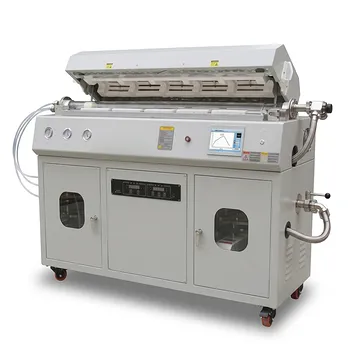
Multi Heating Zones CVD Tube Furnace System for Precision Chemical Vapor Deposition and Advanced Material Synthesis
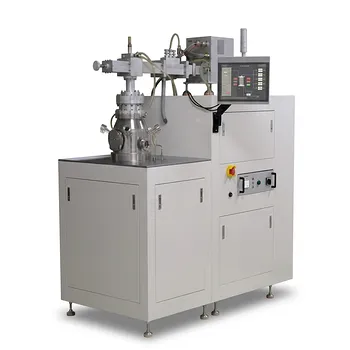
Cylindrical Resonator MPCVD Machine System for Microwave Plasma Chemical Vapor Deposition and Lab Diamond Growth
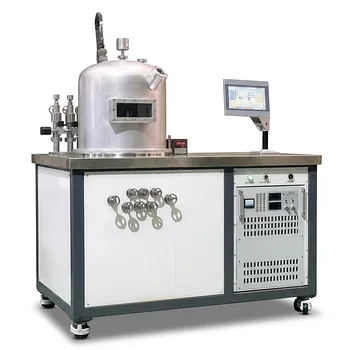
HFCVD Machine System for Nano Diamond Coating on Drawing Dies and Industrial Tools
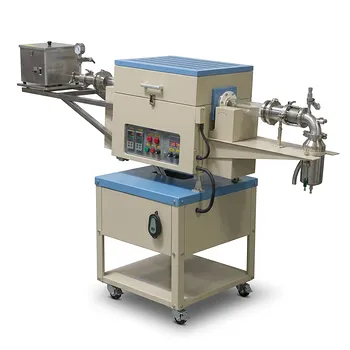
Two Zone Rotary CVD Furnace with Automatic Feeding and Receiving System for Powder Processing
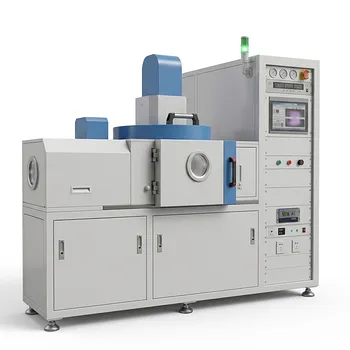
Radio Frequency Plasma Enhanced Chemical Vapor Deposition RF PECVD System for Laboratory and Industrial Thin Film Growth
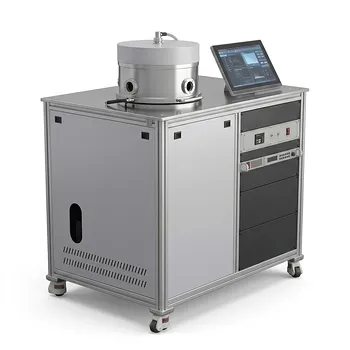
Inclined Rotary Plasma Enhanced Chemical Vapor Deposition PECVD System for Thin Film Deposition and Nanomaterial Synthesis
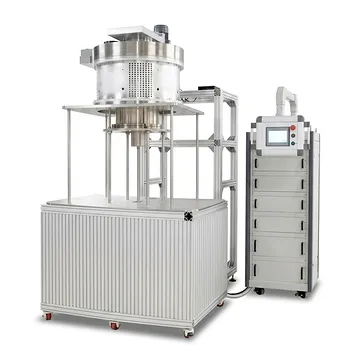
915MHz MPCVD Diamond Machine Microwave Plasma Chemical Vapor Deposition System Reactor
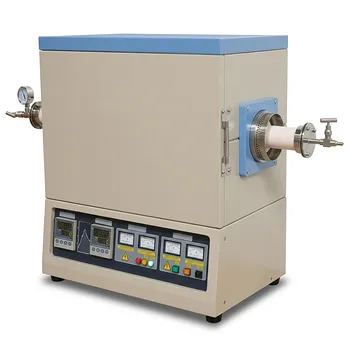
High Temperature 1700C Dual Zone Tube Furnace for Material Science and Industrial Chemical Vapor Deposition Research
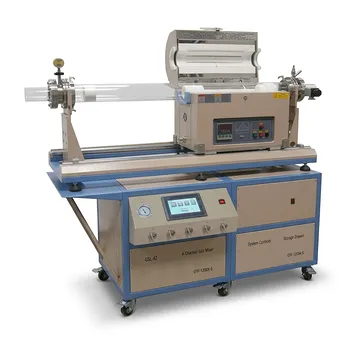
Dual Tube 100mm 80mm CVD Sliding Furnace with 4 Channel Gas Mixing and Vacuum System
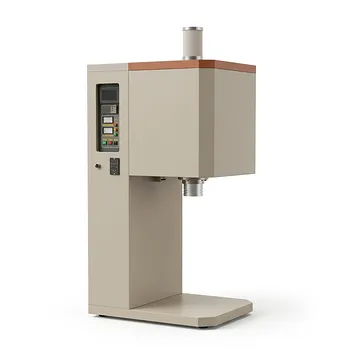
Vertical Openable Tube Furnace 0-1700c High Temperature Laboratory System for CVD and Vacuum Heat Treatment
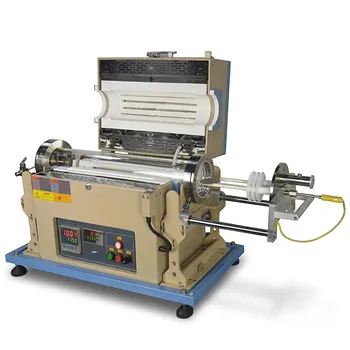
1200°C High Temperature 4 Inch Tube Furnace with Sliding Flange for CVD Systems
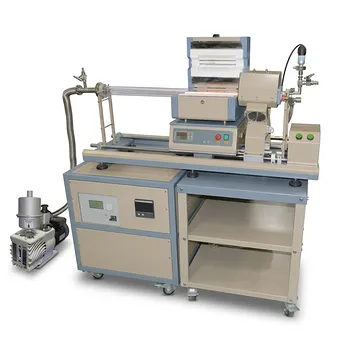
1200C Max Compact Auto-Sliding PECVD Furnace with 2 Inch Tube and Vacuum Pump
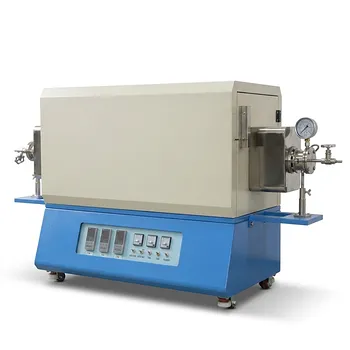
Three Temperature Zone High Temperature Vacuum Tube Furnace for CVD and Material Sintering
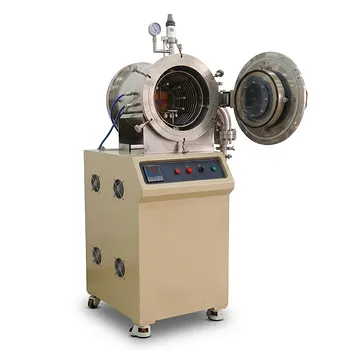
High Temperature Cold Wall High Vacuum Chamber Furnace 1400C for Advanced Material Processing
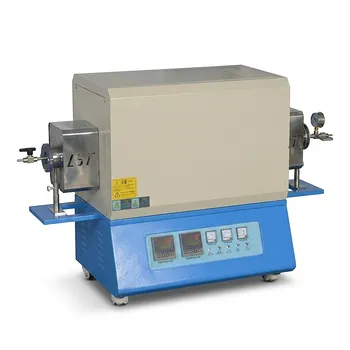
High Temperature Dual Zone Vacuum Tube Furnace for Material Research and CVD Processing
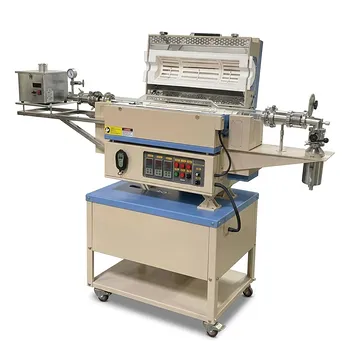
5 Inch Rotary Tube Furnace with Automatic Feeding and Receiving System 1200C Three Zone CVD Powder Processing