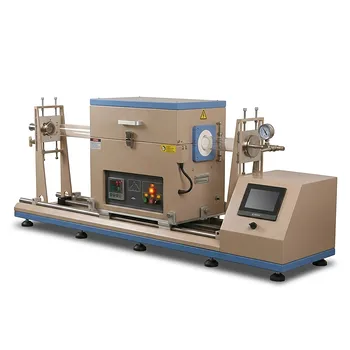
What are the advantages of using atmosphere furnaces for vanadium reduction? Precise Thermodynamic Verification.
Updated 3 months ago
The primary advantage of high-temperature atmosphere furnaces lies in their ability to precisely simulate and maintain specific hydrogen-to-water vapor partial pressure ratios ($P_{H2}/P_{H2O}$), which are critical for validating thermodynamic derivations. By strictly regulating the temperature field and gas composition, these furnaces allow researchers to observe real-time phase transitions from vanadium pentoxide ($V_2O_5$) to lower oxides like $VO_2$, $V_2O_3$, and $VO$. This empirical verification provides the essential process boundaries required for scaling laboratory calculations to industrial vanadium metal production.
Core Takeaway: High-temperature atmosphere furnaces bridge the gap between theoretical thermodynamics and industrial reality by providing a sealed, stable environment where gas ratios and thermal fields can be manipulated to confirm step-by-step reduction pathways.
Precise Control of Physicochemical Environments
Maintaining Gas Partial Pressure Ratios
The most critical factor in verifying thermodynamic calculations is the ability to control the $P_{H2}/P_{H2O}$ ratio. Atmosphere furnaces allow for a constant flow of high-purity hydrogen, which, when balanced with water vapor, creates the exact chemical potential needed to drive specific reduction steps.
Stable and High-Range Thermal Fields
Verification requires a wide operational window, typically ranging from 600°C to 1400°C. These furnaces provide a stable thermal field that ensures the entire sample experiences uniform energy levels, preventing localized variations that could skew thermodynamic data.
Precise Regulation of Gas Composition
Beyond hydrogen, these systems can maintain inert environments (such as nitrogen) or specific oxygen flows (e.g., 100 sccm). This flexibility allows for the removal of volatile components and the prevention of unintended oxidation during the sensitive reduction process.
Validation of Step-by-Step Reduction Pathways
Observing Actual Phase Transitions
Theoretical calculations predict when $V_2O_5$ will convert to $VO_2$, $V_2O_3$, and $VO$, but atmosphere furnaces allow for empirical observation of these points. By controlling the heating rate (often as precise as 5-6°C/min), researchers can "freeze" the reaction at specific stages to analyze the resulting crystal structure.
Defining Industrial Process Boundaries
The data gathered from these experiments establishes the physicochemical limits for large-scale production. Understanding exactly where a phase transition occurs in a controlled furnace prevents energy waste and material loss when moving to industrial-sized reactors.
Enhancing Material Crystallinity
Atmosphere furnaces do more than just reduce the material; they facilitate the transition from an amorphous state to a high-crystallinity system. For instance, maintaining 450°C for two hours can transform $V_2O_5$ into a stable orthorhombic crystal structure, which is vital for high-performance electrode materials.
Understanding the Trade-offs and Limitations
Atmosphere Purity vs. Leakage Risks
While these furnaces offer a sealed reaction space, any minor leak can introduce oxygen, which drastically alters the $P_{H2}/P_{H2O}$ ratio. This can lead to "ghost" results that appear to contradict thermodynamic calculations but are actually the result of contamination.
Thermal Lag in Samples
Even with a stable furnace environment, the internal temperature of the vanadium sample may lag behind the furnace's thermocouple reading. This discrepancy can lead to the misidentification of the exact temperature at which a phase transition occurs if the heating rate is too aggressive.
Crucibles and Contamination
At temperatures reaching 1400°C, the material of the sample holder or crucible can potentially react with the vanadium oxides or the reducing atmosphere. Choosing the wrong refractory material can introduce impurities that interfere with the redox reaction activity.
How to Apply This to Your Project
When selecting or operating a high-temperature atmosphere furnace for vanadium reduction verification, align your parameters with your specific research or production objective.
- If your primary focus is validating theoretical phase diagrams: Prioritize a furnace with high-precision gas mass flow controllers to maintain exact $P_{H2}/P_{H2O}$ ratios at constant temperatures.
- If your primary focus is synthesizing high-performance battery electrodes: Focus on strict control of the heating rate and oxidation duration to achieve the specific surface area and stable lattice structure required for charge-discharge performance.
- If your primary focus is industrial scale-up of vanadium metal: Use the furnace to identify the widest possible "safe" temperature and gas ratio windows to ensure process stability in less-controlled industrial environments.
By masterfully controlling the interaction between gas chemistry and thermal energy, you can transform theoretical vanadium chemistry into a predictable and repeatable industrial process.
Summary Table:
| Advantage | Key Feature | Impact on R&D/Production |
|---|---|---|
| Atmosphere Control | Precise $P_{H2}/P_{H2O}$ ratio simulation | Validates theoretical reduction pathways ($V_2O_5$ to $VO$) |
| Thermal Stability | Stable window from 600°C to 1400°C | Ensures uniform energy levels and prevents localized data skew |
| Gas Regulation | High-purity flows (H2, N2, O2) | Prevents unintended oxidation and enhances material crystallinity |
| Process Scaling | Defined physicochemical boundaries | Identifies energy-efficient windows for industrial scale-up |
Elevate Your Research with THERMUNITS Precision Solutions
Are you looking to bridge the gap between theoretical thermodynamics and industrial reality? THERMUNITS is a leading manufacturer of high-performance thermal processing equipment tailored for material science and industrial R&D.
Our comprehensive range of solutions—including Atmosphere, Vacuum, Tube, Rotary, and Hot Press furnaces, as well as CVD/PECVD systems and Vacuum Induction Melting (VIM) furnaces—is engineered to provide the precise gas control and thermal stability required for complex processes like vanadium reduction.
Why partner with THERMUNITS?
- Unmatched Precision: Advanced mass flow controllers for exact atmosphere regulation.
- Versatile Range: From laboratory heat treatment to industrial rotary kilns.
- Expert Support: Equipment designed to optimize surface area, lattice structure, and phase transition accuracy.
Contact our expert team today to find the perfect thermal solution for your laboratory or production line!
References
- M. A. Levchenko, Olena Volkova. Direct Reduction of Solid V<sub>2</sub>O<sub>5</sub> with Hydrogen at 600–1400 °C. DOI: 10.1002/srin.202300705
Mentioned Products
- High Temperature Hydrogen Atmosphere Box Furnace 1650C Max Reducing Environment Material Synthesis System 8x8x8 Chamber
- High Temperature Vertical Atmosphere Controlled Furnace with Automatic Bottom Loading and 1700°C Capacity for Advanced Material Research
- High Temperature 1200C Split Tube Furnace for CVD Research and Vacuum Atmosphere Heat Treatment
- 1200C Hydrogen Atmosphere Box Furnace with 5 Heated Sides and 64L Chamber
- 1750°C High Temperature Benchtop Vacuum Atmosphere Tube Furnace with Kanthal Super 1800 Heating Elements and 60mm Alumina Processing Tube
People Also Ask
- What is the role of a high-temperature box furnace in the solid-state synthesis of Europium-doped M3MgSi2O8 phosphors?
- What is the role of a high-temperature box furnace in Na3MnZr(PO4)3 synthesis? Engineering High-Performance NASICON.
- What role does an industrial-grade high-temperature furnace play in C2F sintering? Achieve Pure Phase and High Strength
- Why is a high-temperature box furnace required for 1250°C ferrite calcination? Ensure Precise Phase Transformation.
- How does a high-temp box furnace aid rare-earth oxysulfide phosphor synthesis? Enhance Purity & Luminescence

Tech Team · ThermUnits
Last updated on Jun 02, 2026
Related Products
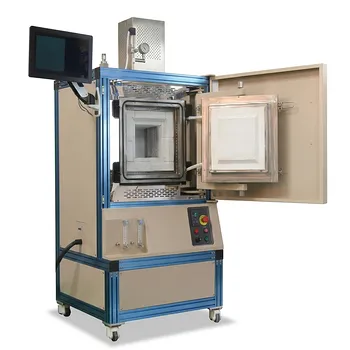
High Temperature Hydrogen Atmosphere Box Furnace 1650C Max Reducing Environment Material Synthesis System 8x8x8 Chamber
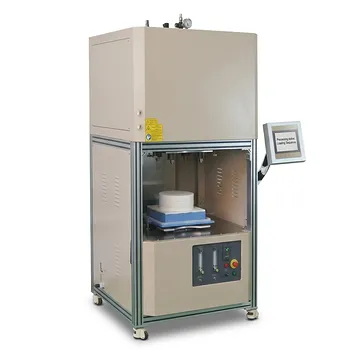
High Temperature Vertical Atmosphere Controlled Furnace with Automatic Bottom Loading and 1700°C Capacity for Advanced Material Research
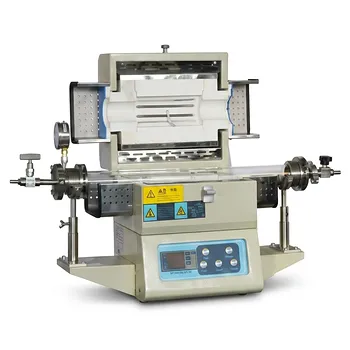
High Temperature 1200C Split Tube Furnace for CVD Research and Vacuum Atmosphere Heat Treatment
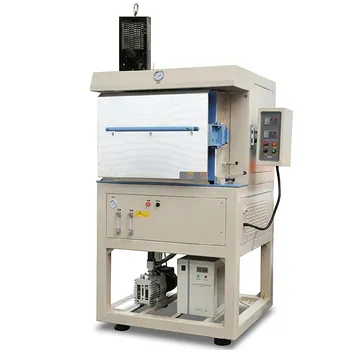
1200C Hydrogen Atmosphere Box Furnace with 5 Heated Sides and 64L Chamber
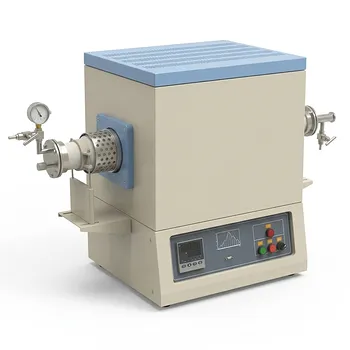
1750°C High Temperature Benchtop Vacuum Atmosphere Tube Furnace with Kanthal Super 1800 Heating Elements and 60mm Alumina Processing Tube
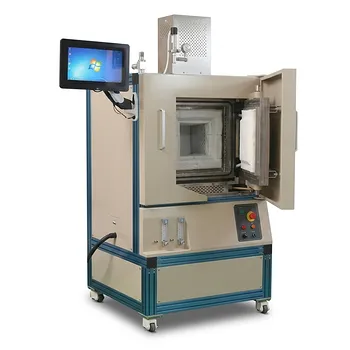
High Temperature Oxygen and Inert Atmosphere Controlled Furnace 8 Liter 1700C Sintering System for Advanced Materials RD
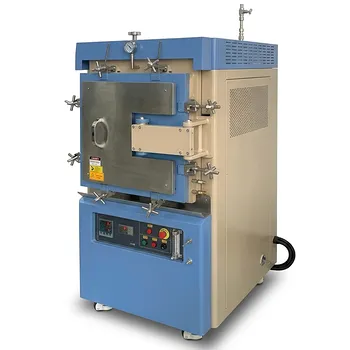
Atmosphere Controlled Muffle Furnace 1700C Maximum Temperature 80L High Capacity Vacuum Inert Gas Box Furnace
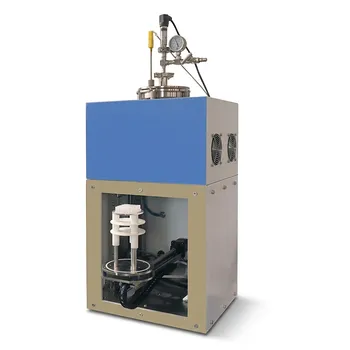
Rapid Thermal Processing RTP Atmosphere Controlled Bottom Loading Furnace 1100C High Throughput 50C per Second Heating Rate
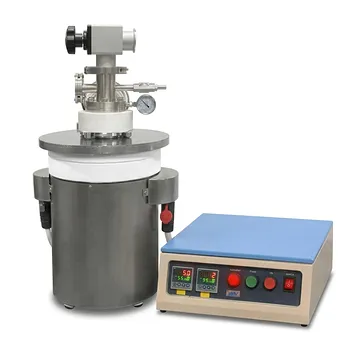
1100C High Temperature Vacuum Crucible Furnace with Quartz Chamber for Thermal Processing and Sintering

Vertical 1700C Vacuum and Atmosphere Tube Furnace with 80mm Alumina Tube

High Temperature 1700C Vertical Tube Furnace for Powder Spherification and Material Sintering

High Temperature 1700C Six Zone Split Tube Furnace with Alumina Tube and Water Cooled Flanges
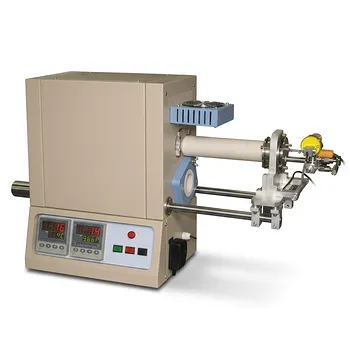
High Temperature Tube Furnace 1500C with Sliding Flanges and 50mm OD for Rapid Thermal Processing Fast Heating and Cooling
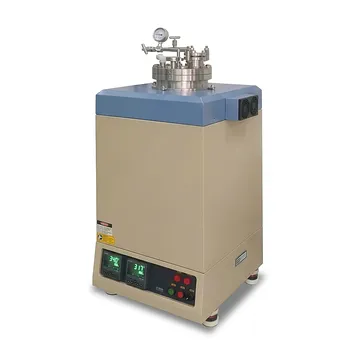
High Temperature 1000C Vacuum Furnace with 8 Inch ID Chamber for Material Sintering and Research Annealing

High Temperature 1700C Tube Furnace with High Vacuum Turbomolecular Pump System and Multi Channel Mass Flow Controller Gas Mixer

1200°C 5 Inch Vertical Quartz Tube Furnace with Stainless Steel Vacuum Flanges
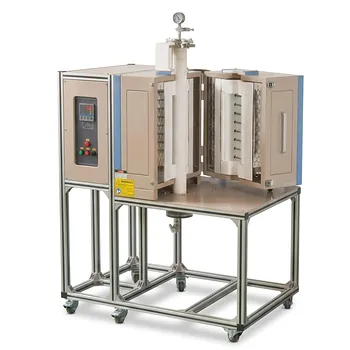
High Temperature 1700C Vertical Split Tube Furnace for Material Quenching and Single Crystal Growth

High Temperature 1700C Benchtop Tube Furnace with 5 Inch Heating Zone High Purity Alumina Tube and Vacuum Sealing Flanges

1800C High Temperature Compact Vacuum Tube Furnace with 60mm OD Alumina Tube and Kanthal MoSi2 Heating Elements