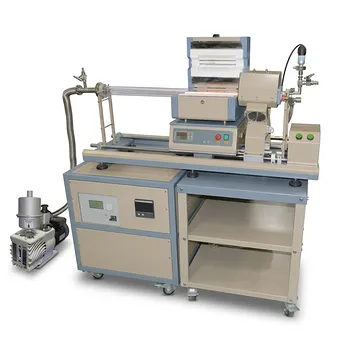
CVD vs. Mixed Sintering for Phosphidation: Key Benefits for Nanostructure Preservation and Purity
Updated 3 months ago
Using a chemical vapor deposition (CVD) mode for phosphidation provides a superior level of control and structural preservation that direct mixed sintering cannot match. By utilizing a non-contact gas-phase reaction, CVD ensures that phosphine gas reacts uniformly with precursors, maintaining delicate nanostructures and preventing the particle agglomeration typically caused by high-temperature sintering.
Core Takeaway: The CVD mode transforms phosphidation from a blunt thermal process into a precise chemical engineering technique. It preserves high surface area and nanostructure morphology while ensuring deep, uniform infiltration of phosphorus into the material lattice for enhanced stability and performance.
Preserving Delicate Nanostructure Morphology
Prevention of Particle Agglomeration
Unlike direct mixed sintering, which often forces solid particles into contact at high temperatures, the CVD mode facilitates a non-contact gas-phase reaction. This approach prevents the physical merging or "clumping" of particles, ensuring they remain distinct and functional.
Maintenance of High Surface Area
By avoiding agglomeration, the CVD process preserves the high specific surface area of the precursor. This is critical for catalysts, as it maintains the abundant interfacial active sites necessary for efficient chemical reactions.
Morphological Integrity
CVD allows the final material to retain specific nanostructure shapes, such as needle-like or sheet-like morphologies. Direct sintering often destroys these delicate geometries, leading to a loss of the unique physical properties required for advanced applications.
Precision Control and Chemical Purity
Precise Thermal Management
A tube furnace in CVD mode provides an extremely uniform thermal field and a constant heating rate. This level of control ensures that the phosphidation process occurs predictably across the entire sample, leading to consistent results.
Phase Purity and Stoichiometry
The use of a dual-zone thermal furnace allows for independent control over the sublimation temperature of the phosphorus source and the reaction temperature of the sample. This separation ensures a stable gas-phase phosphorus source, resulting in high crystallinity and the avoidance of phase purity issues or impurity residues.
Uniform Lattice Infiltration
In a CVD environment, phosphorus atoms can infiltrate the metal lattice (such as palladium) with extreme uniformity. This strengthens the electronic interaction and chemical bonding between the elements, creating stable compound phases that are difficult to achieve through simple mixing.
Enhanced Performance and Durability
Superior Step Coverage
CVD systems excel at step coverage and conformality, meaning the gas can penetrate and react with complex 3D microstructures. This ensures that even internal surfaces of hollow or porous structures are uniformly phosphidized.
Long-Term Chemical Stability
Materials synthesized via CVD phosphidation often exhibit significantly higher resistance to degradation. For example, catalysts produced this way can maintain stable activity even after tens of thousands of cycles in harsh environments like alkaline fuel cells.
Material Efficiency and Waste Reduction
The CVD process generally offers higher raw material utilization compared to physical or mixed methods. Because the reaction is driven by gas-phase interactions within a controlled atmosphere, there is significantly less waste and lower long-term maintenance costs.
Understanding the Trade-offs
System Complexity and Setup
Transitioning from mixed sintering to CVD requires a more complex equipment setup, including vacuum systems and precise gas flow controllers. This increase in technical complexity may require specialized training for operators to ensure safety and consistency.
Handling Hazardous Precursors
The CVD phosphidation process often involves the generation of phosphine gas (PH3), which is toxic and flammable. While the tube furnace provides a contained environment, it necessitates strict safety protocols and specialized scrubbing systems to manage exhaust gases.
Processing Time and Throughput
While CVD provides higher quality, it can sometimes be a slower process than direct sintering due to the time required for gas sublimation, infiltration, and furnace purging. For simple bulk materials where morphology is not a concern, the precision of CVD might exceed the project's basic requirements.
How to Apply This to Your Project
To determine if CVD-mode phosphidation is the right choice for your application, consider your primary performance goals:
- If your primary focus is catalyst activity: Use the CVD mode to maximize specific surface area and preserve the interfacial active sites that drive reaction efficiency.
- If your primary focus is structural integrity: Prioritize CVD to ensure that delicate 3D nanostructures (like nanowires or sheets) do not collapse or agglomerate during the heating process.
- If your primary focus is material durability: Choose CVD to achieve uniform lattice infiltration and stronger chemical bonding, which protects the material during long-term cycling.
- If your primary focus is simplicity and low cost: Direct mixed sintering may be sufficient if your final product does not rely on specific nanomorphology or high phase purity.
Selecting the CVD mode within a tube furnace is ultimately an investment in the precision, stability, and performance of your final material.
Summary Table:
| Feature | CVD Mode (Tube Furnace) | Direct Mixed Sintering |
|---|---|---|
| Morphology | Preserves delicate nanostructures | Often causes particle agglomeration |
| Surface Area | Maintains high specific surface area | Reduced due to physical clumping |
| Uniformity | Uniform gas-phase infiltration | Inconsistent solid-state reaction |
| Phase Purity | High (Precise dual-zone control) | Lower (Risk of impurity residues) |
| Stability | Enhanced long-term durability | Lower cycling performance |
Elevate Your Material Research with THERMUNITS
As a leading manufacturer of high-temperature laboratory equipment, THERMUNITS provides the precision thermal solutions required for advanced material science and industrial R&D.
Whether you are performing complex CVD phosphidation, carbonization, or high-vacuum heat treatments, our comprehensive range of equipment—including Dual-Zone Tube Furnaces, CVD/PECVD systems, and Vacuum Induction Melting (VIM) furnaces—is designed to deliver the thermal uniformity and atmosphere control your project demands.
Contact our technical experts today to discover how our high-performance thermal processing solutions can optimize your synthesis process and ensure superior material integrity.
References
- Zhong Li, Xiaochen Dong. Reversing the Interfacial Electric Field in Metal Phosphide Heterojunction by Fe‐Doping for Large‐Current Oxygen Evolution Reaction. DOI: 10.1002/advs.202308477
Mentioned Products
- Vertical Openable Tube Furnace 0-1700c High Temperature Laboratory System for CVD and Vacuum Heat Treatment
- 1200C Max Dual Sliding Tube Furnace with 50 mm Tube Flanges for CVD
- 5 Inch Three Zone Rotary Tube Furnace with Integrated Gas Delivery System and 1200C Capability for Advanced Material CVD Processing
- 5 Inch Two Zone Rotary Tube Furnace 1100C for Powder CVD and Material Synthesis
- Two Zone Rotary CVD Furnace with Automatic Feeding and Receiving System for Powder Processing
People Also Ask
- Why is a Tube Furnace typically utilized for CVD? Achieve Precision in Graphene and 2D Material Synthesis
- What role does a high-temperature vertical tube furnace play in simulating high-carbon ferromanganese slag formation?
- What functions does a vertical high-temperature tube furnace perform? Master Industrial Sintering & R&D Simulation
- How does a vertical tube furnace facilitate thermoelectric alloy melting? Precision synthesis for material homogeneity.
- How is an industrial-grade vertical tube furnace utilized in smelting leaching residues? Enhance Metal Recovery Efficiency

Tech Team · ThermUnits
Last updated on Jun 03, 2026
Related Products
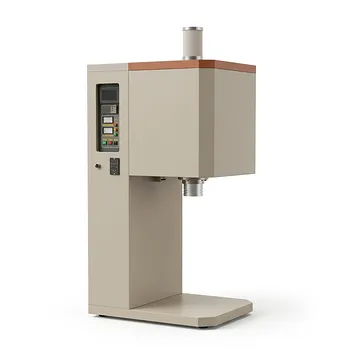
Vertical Openable Tube Furnace 0-1700c High Temperature Laboratory System for CVD and Vacuum Heat Treatment
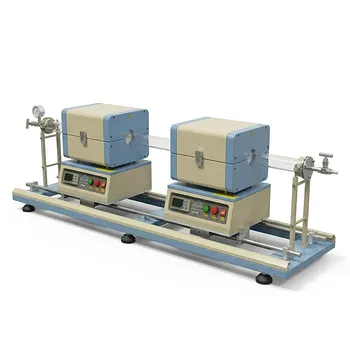
1200C Max Dual Sliding Tube Furnace with 50 mm Tube Flanges for CVD
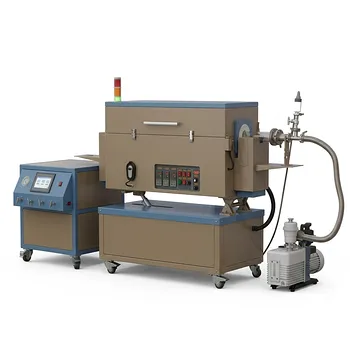
5 Inch Three Zone Rotary Tube Furnace with Integrated Gas Delivery System and 1200C Capability for Advanced Material CVD Processing
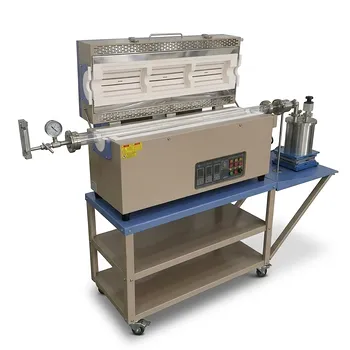
5 Inch Two Zone Rotary Tube Furnace 1100C for Powder CVD and Material Synthesis
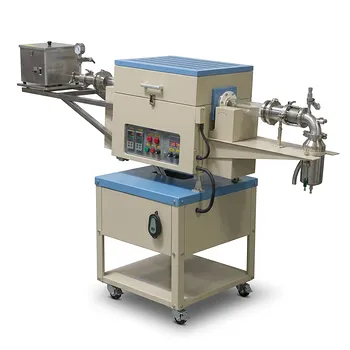
Two Zone Rotary CVD Furnace with Automatic Feeding and Receiving System for Powder Processing
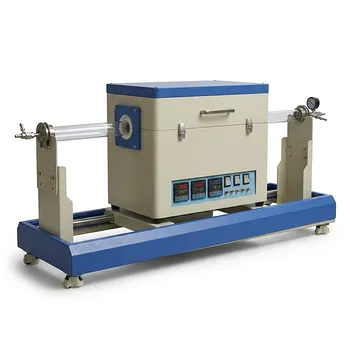
Double Temperature Zone Double Cover Tube Furnace for High Temperature CVD and Vacuum Annealing
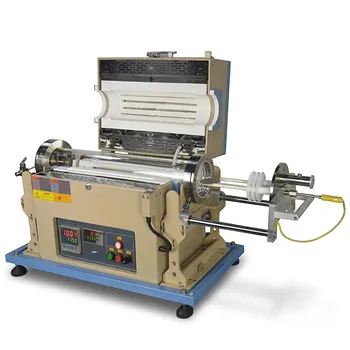
1200°C High Temperature 4 Inch Tube Furnace with Sliding Flange for CVD Systems
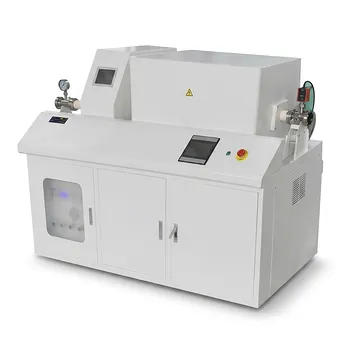
Chemical Vapor Deposition CVD System Slide PECVD Tube Furnace with Liquid Gasifier PECVD Machine
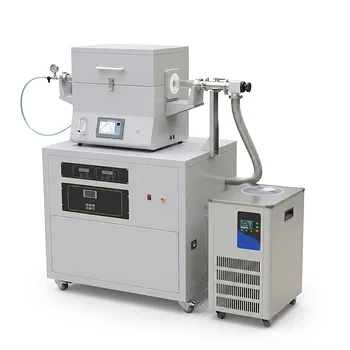
Split Chamber CVD Tube Furnace with Vacuum Station Chemical Vapor Deposition System Machine
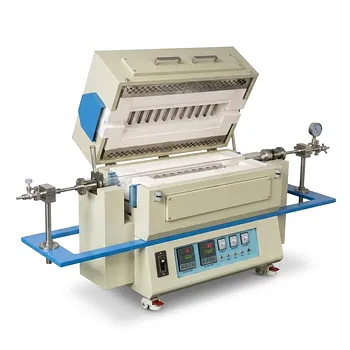
High Temperature Dual Zone Rotating Tube Furnace 1500C Silicon Carbide Heating for Advanced Material Synthesis
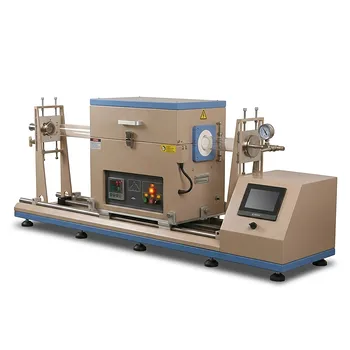
1200C Sliding Tube Furnace for Rapid Thermal Processing and CVD Graphene Growth with 100mm OD Capacity
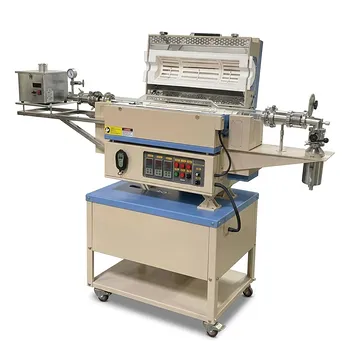
5 Inch Rotary Tube Furnace with Automatic Feeding and Receiving System 1200C Three Zone CVD Powder Processing
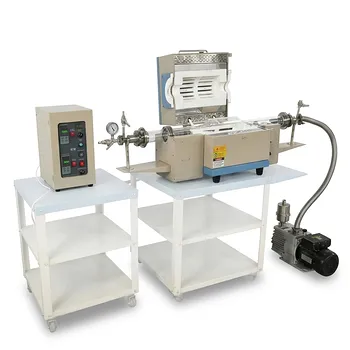
Two Zone Rotary Tube Furnace for Powder CVD Coating and Core Shell Material Synthesis 1100C
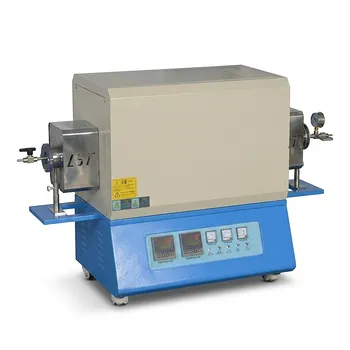
High Temperature Dual Zone Vacuum Tube Furnace for Material Research and CVD Processing
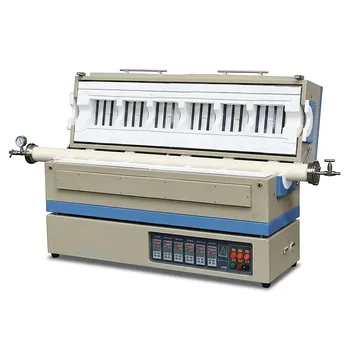
Six Zone Split Tube Furnace with Alumina Tube and Vacuum Flanges for 1500C High Temperature Thermal Processing and CVD

High Temperature 1700C Tube Furnace with High Vacuum Turbomolecular Pump System and Multi Channel Mass Flow Controller Gas Mixer
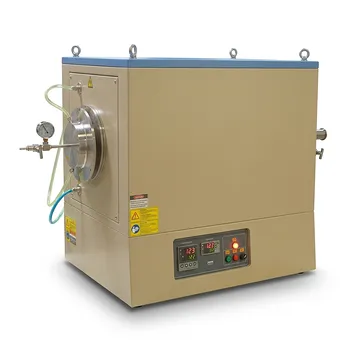
1100°C Large Diameter Quartz Tube Furnace with 24 Inch Heating Zone and Water Cooled Flanges

High Temperature 1700C Vertical Tube Furnace for Powder Spherification and Material Sintering

High Temperature 1700C Benchtop Tube Furnace with 5 Inch Heating Zone High Purity Alumina Tube and Vacuum Sealing Flanges