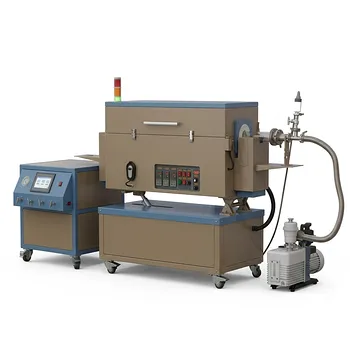
What are the unique advantages of using a Drop Tube Furnace (DTF) to study ash deposition? Simulate Real Boiler Kinetics
Updated 3 months ago
The primary advantage of using a Drop Tube Furnace (DTF) for ash deposition studies is its ability to replicate the extreme thermal and kinetic environments of industrial boilers. Unlike static laboratory tests, a DTF simulates high heating rates ($10^4$ to $10^5$ K/s) and ultra-short residence times (typically under 5 seconds), allowing researchers to observe the dynamic processes of slagging, fouling, and aerosol formation in real-time.
A Drop Tube Furnace provides a high-fidelity, quasi-one-dimensional combustion environment that bridges the gap between empirical ash indices and actual industrial performance. It allows for the precise study of ash melting and adhesion kinetics under controlled, high-temperature isothermal conditions.
Replicating Industrial Combustion Kinetics
Achieving Realistic Heating Rates
Standard laboratory methods, such as Thermogravimetric Analysis (TGA), suffer from heating rates that are far too low to simulate a utility boiler. A Drop Tube Furnace achieves heating rates of $10^4$ to $10^5$ K/s, ensuring that fuel particles undergo the same rapid devolatilization and fragmentation seen in large-scale suspension combustion.
Controlling Residence Times
To accurately study ash formation, the time a particle spends in the high-temperature zone must be strictly limited. DTFs are engineered to provide short residence times, often less than 5 seconds, which prevents the over-processing of samples and accurately reflects the travel time of particles through an industrial furnace's burner zone.
Simulating High-Temperature Environments
Industrial boilers often operate at temperatures exceeding 1200°C, where ash chemistry becomes highly reactive. A DTF can maintain an isothermal environment up to 1500°C, providing the necessary thermal energy to trigger the melting and sticking behaviors of complex fuel blends, such as coal and biomass.
Dynamic Observation vs. Static Indicators
Overcoming the Limitations of Empirical Indices
Traditional ash analysis relies on static empirical indices that fail to account for the kinetic processes of combustion. The DTF serves as a dynamic simulation platform, allowing researchers to capture the actual capture efficiency and melting behavior of ash as it interacts with surfaces.
Real-Time Monitoring of Slagging and Fouling
By utilizing specialized deposition probes within the furnace, operators can directly observe the adhesion characteristics of different fuel types. This is particularly critical when testing "problem" fuels, such as high-sulfur coal or biomass wastes like rice husks and pine sawdust, which exhibit unpredictable slagging patterns.
Representative Sample Collection
The laminar flow combustion state within a DTF ensures that the fly ash samples collected are chemically and physically representative of those found in industrial flue gas. This allows for accurate post-experimental analysis of pollutant emissions and aerosol formation.
Understanding the Trade-offs
Complexity of Particle Feeding
While a DTF provides high precision, it requires a sophisticated powder feeding system to maintain a consistent flow of pulverized fuel. Inconsistent feeding can lead to fluctuations in the air-fuel ratio, potentially skewing results regarding ash deposition rates.
Scale and Wall Effects
A DTF is a quasi-one-dimensional or axisymmetric environment, which simplifies the complex three-dimensional turbulence of a real boiler. While this abstraction is excellent for isolating chemical kinetics, it may not fully capture the macro-scale aerodynamic interactions that influence ash transport in massive industrial structures.
Resource Intensity
Operating a high-temperature DTF is significantly more resource-intensive than static ash testing. The need for high-purity furnace tubes, precise gas distribution systems, and continuous preheating requires a higher level of technical expertise and operational cost.
How to Apply DTF Data to Your Project
The utility of a Drop Tube Furnace depends on your specific research or operational goals regarding fuel performance and boiler maintenance.
- If your primary focus is evaluating new fuel blends: Use the DTF to determine the optimal co-firing ratios for biomass and coal by observing real-time slagging risks at specific temperatures.
- If your primary focus is boiler lifecycle management: Utilize DTF fly ash samples to predict the long-term fouling potential on convective heating surfaces and adjust cleaning cycles accordingly.
- If your primary focus is emission control: Leverage the DTF’s precise gas distribution to study how different air-fuel ratios and temperatures impact the formation of aerosols and sulfur-based pollutants.
By simulating the violent thermal reality of a furnace in a controlled laboratory setting, the Drop Tube Furnace remains the definitive tool for predicting ash behavior in modern power generation.
Summary Table:
| Feature | DTF Specification | Impact on Ash Deposition Research |
|---|---|---|
| Heating Rate | $10^4$ to $10^5$ K/s | Replicates rapid devolatilization of industrial boilers |
| Residence Time | Typically < 5 Seconds | Simulates travel time through burner zones accurately |
| Max Temperature | Up to 1500°C | Essential for triggering complex ash melting chemistry |
| Atmosphere | Controlled/Isothermal | Allows precise study of adhesion and capture efficiency |
| Flow State | Quasi-one-dimensional | Ensures representative fly ash and aerosol collection |
Optimize Your Combustion Research with THERMUNITS
As a leading manufacturer of high-temperature laboratory equipment for material science and industrial R&D, THERMUNITS provides the precision tools required for advanced thermal processing. From specialized Tube Furnaces and CVD/PECVD systems for ash kinetics to Vacuum Induction Melting (VIM) and Rotary Kilns for large-scale simulations, we offer comprehensive solutions tailored to your research goals.
Whether you are evaluating biomass blends or improving boiler lifecycle management, our equipment ensures the accuracy and durability your lab demands.
Ready to elevate your thermal research? Contact our experts today to discuss our range of Muffle, Vacuum, Atmosphere, and Hot Press furnaces designed for your specific applications!
References
- Hafizh Ghazidin, Hariana Hariana. Investigation of ash problems potential for a blend of high-sulfur coal and bamboo pellet biomass. DOI: 10.1088/1742-6596/2828/1/012038
Mentioned Products
- 1200C Tube Furnace with Internal Magnetic Sample Sliding for Direct Vaporizing Deposition and Rapid Thermal Processing
- 1200C Sliding Internal Crucible Tube Furnace for Controlled Atmosphere Thin Film Deposition and Material Sublimation Research
- Three Zone Rotary Tube Furnace for High Temperature Powder Processing and Material Research
- Automated 1200 C Tube Furnace for AI Material Research with 6 Inch OD and Sliding Flange
- Split Chamber CVD Tube Furnace with Vacuum Station Chemical Vapor Deposition System Machine
People Also Ask
- What role does a SiC-coated graphite susceptor play in H2Se selenization? Boost RTP Thermal Uniformity & Film Purity.
- What are the functional advantages of an RTP system for surface deposition? Enhance Heterojunction Interface Integrity
- How are K-type Thermocouples configured and what are their functions in thermal monitoring? Enhance Your R&D Precision
- How does a K-type thermocouple contribute to temperature monitoring within a tube furnace reactor? Expert Insights
- What role does a Rapid Thermal Processing (RTP) furnace play in Selenium recovery? Efficient Material Separation.

Tech Team · ThermUnits
Last updated on Jun 03, 2026
Related Products
1200C Tube Furnace with Internal Magnetic Sample Sliding for Direct Vaporizing Deposition and Rapid Thermal Processing
1200C Sliding Internal Crucible Tube Furnace for Controlled Atmosphere Thin Film Deposition and Material Sublimation Research
Three Zone Rotary Tube Furnace for High Temperature Powder Processing and Material Research
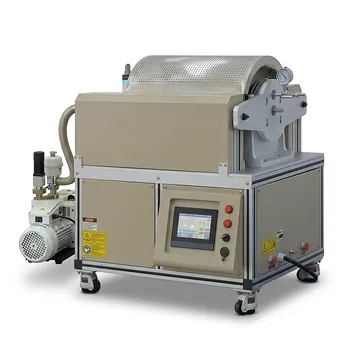
Automated 1200 C Tube Furnace for AI Material Research with 6 Inch OD and Sliding Flange
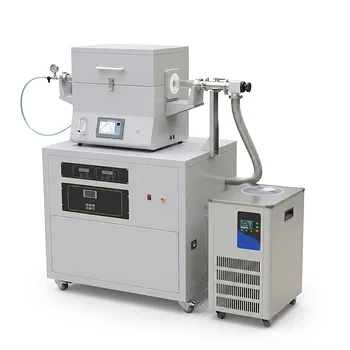
Split Chamber CVD Tube Furnace with Vacuum Station Chemical Vapor Deposition System Machine
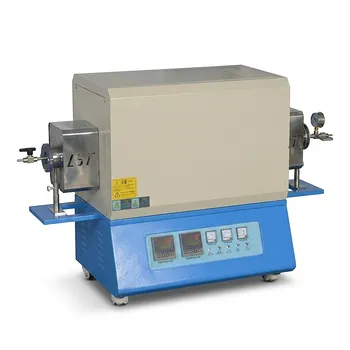
High Temperature Dual Zone Vacuum Tube Furnace for Material Research and CVD Processing
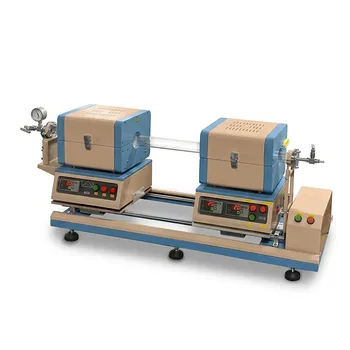
High Temperature 1200C Automatic Sliding Dual Zone Tube Furnace for 2D Transition Metal Dichalcogenides Growth and Material Sublimation Research
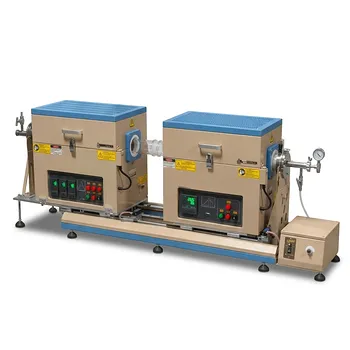
1200C Dual Temperature Zone Slidable Tube Furnace for 2D Material Growth and TCVD Synthesis
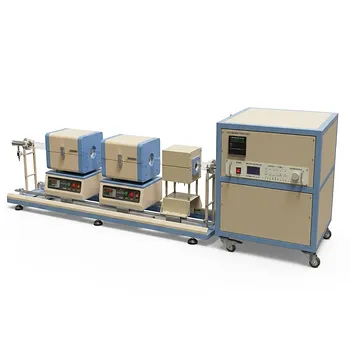
1200C Dual Sliding Tube Furnace with Dual Tubes and Flanges for PECVD Processes

High Temperature 1700C Six Zone Split Tube Furnace with Alumina Tube and Water Cooled Flanges
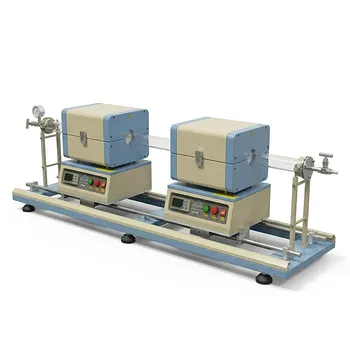
1200C Max Dual Sliding Tube Furnace with 50 mm Tube Flanges for CVD
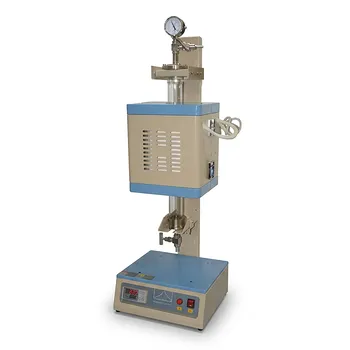
Compact Vertical Split Quartz Tube Furnace with Stainless Steel Vacuum Flanges for Rapid Thermal Quenching and Controlled Atmosphere Material Processing
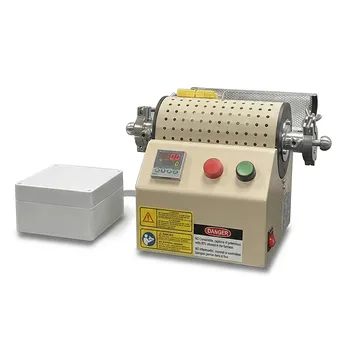
1000C Mini Tube Furnace with 20mm Quartz Tube and Vacuum Flanges for Material Science Research and Controlled Atmosphere Small Sample Processing
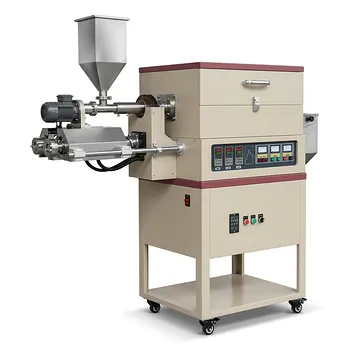
Laboratory Tilting Rotary Tubular Furnaces for Material Science and Industrial Heat Treatment
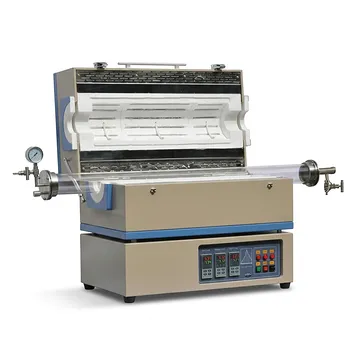
24 Inch Three Zone Split Tube Furnace with Optional Quartz Tube and Vacuum Flange System for High Temperature Material Synthesis
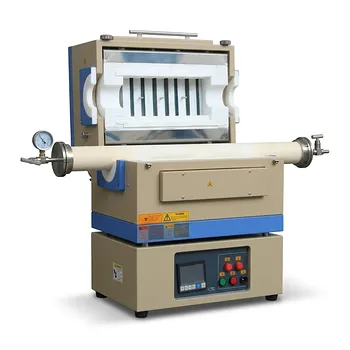
1500C Eight Zone Split Tube Furnace for Thermal Gradient Processing and Advanced Material Research
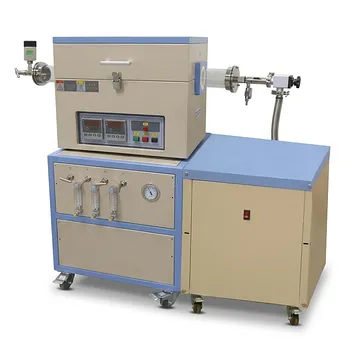
Dual Zone Quartz Tube Furnace with 80mm Diameter 1200C Max Temperature 3 Channel Gas Mixer and Vacuum Pump System
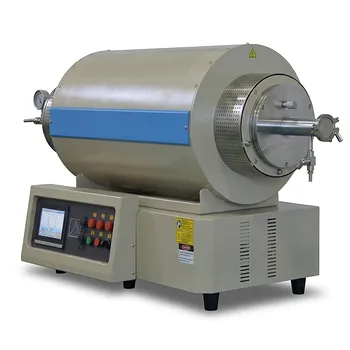
1200C Max Three Zone Tube Furnace 6 Inch OD Max with Tube and Flange
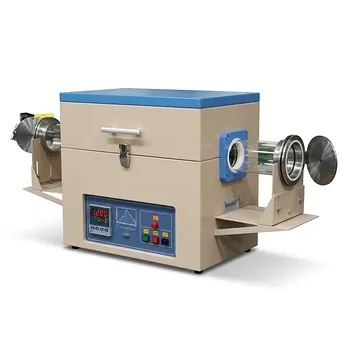
High Temperature 1200C Split Tube Furnace with Hinged Vacuum Flanges and 4 Inch Quartz Tube for Laboratory Research