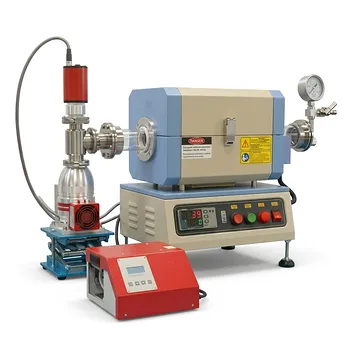
What conditions does a tube furnace provide for siliconizing titanium? Achieve High-Purity Thermal Control
Updated 3 months ago
Industrial tube atmosphere furnaces provide a precisely controlled thermal field and a reliable, oxygen-free chemical environment. These conditions allow for the high-temperature diffusion of silicon into the titanium substrate while preventing the formation of brittle oxides or the "alpha case" layer that typically degrades titanium alloys above 500°C.
Core Takeaway: To achieve a successful siliconizing reaction, the furnace must simultaneously act as a high-precision thermal engine for atom migration and a rigorous chemical shield against atmospheric contamination.
Management of the Chemical Environment
Atmospheric Isolation and Oxygen Displacement
The primary function of the tube furnace is to create a sealed environment that effectively isolates the workpiece from ambient air. By introducing high-purity nitrogen (N2) or inert gases like argon, the system displaces oxygen and moisture that would otherwise cause the silicon powder and titanium substrate to oxidize prematurely.
Prevention of the "Alpha Case"
Titanium alloys are highly reactive and begin to absorb oxygen and nitrogen at temperatures exceeding 500°C. Without the furnace's ability to maintain a preset reductive or inert environment, the alloy would develop a hard, brittle surface layer known as the alpha case, which severely compromises the material's mechanical integrity.
Precision Thermal Field Dynamics
Constant Temperature Zone Stability
The siliconizing process relies on diffusion kinetics, where silicon atoms must migrate into the titanium lattice over extended periods. The industrial tube furnace provides a constant temperature thermal field that ensures the reaction proceeds uniformly across the entire surface of the component.
Programmed Heating and Kinetic Control
Modern furnaces use precisely programmed heating cycles to reach the specific temperatures—often ranging between 400°C and 950°C—required for atomic migration. This control allows the user to manage the rate of the reaction, ensuring that the silicon-rich layer reaches the desired depth without over-aging the underlying titanium microstructure.
Understanding the Trade-offs and Pitfalls
Gas Purity vs. Reaction Quality
Even minor trace amounts of oxygen in the protective gas can lead to interfacial voids or poor adhesion of the siliconized layer. While nitrogen is a standard protective gas, at extremely high temperatures, titanium may still react with it; therefore, the furnace must maintain high flow rates or utilize vacuum-level sealing to ensure the atmosphere remains truly non-reactive.
Thermal Gradients and Part Geometry
In larger industrial tubes, maintaining a perfectly uniform temperature across the entire "hot zone" can be challenging. If thermal gradients exist, different areas of the titanium part may exhibit varying thicknesses of the siliconized layer, leading to inconsistent wear resistance and potential structural failure under stress.
How to Optimize Your Siliconizing Process
Making the Right Choice for Your Goal
To ensure the integrity of the siliconizing reaction, consider the specific requirements of your application:
- If your primary focus is surface hardness and wear resistance: Ensure the furnace provides a high-purity argon or nitrogen atmosphere to prevent the formation of a brittle alpha case.
- If your primary focus is deep silicon diffusion: Prioritize a furnace with high thermal stability and a long constant-temperature zone to allow for the extended holding times required for atom migration.
- If your primary focus is material fatigue strength: Utilize precisely programmed cooling cycles to manage the internal microstructural evolution of the titanium alloy.
By mastering the balance between atmospheric purity and thermal precision, the industrial tube furnace transforms a volatile chemical reaction into a repeatable metallurgical process.
Summary Table:
| Critical Condition | Functional Benefit | Material Impact |
|---|---|---|
| Atmospheric Isolation | Displaces oxygen/moisture using inert gases | Prevents brittle "alpha case" & oxidation |
| Thermal Stability | Maintains a constant temperature zone | Ensures uniform silicon diffusion depth |
| Kinetic Control | Precisely programmed heating/cooling cycles | Manages alloy microstructure & fatigue strength |
| Gas Purity | High-flow nitrogen or vacuum-level sealing | Eliminates interfacial voids & ensures adhesion |
Elevate Your Material Research with THERMUNITS
To achieve repeatable metallurgical excellence in siliconizing and other advanced heat treatments, you need a furnace that balances atmospheric purity with thermal precision. THERMUNITS is a leading manufacturer of high-temperature laboratory equipment for material science and industrial R&D.
We offer a comprehensive range of thermal processing solutions tailored for demanding applications, including:
- Tube & Atmosphere Furnaces (Perfect for siliconizing and inert gas processing)
- Vacuum & Muffle Furnaces
- CVD/PECVD Systems
- Vacuum Induction Melting (VIM) & Hot Press Furnaces
Ensure the integrity of your titanium alloys and optimize your diffusion kinetics with our industry-leading technology. Contact us today to discuss your project requirements!
References
- Yu Zhao, Bo Cheng. Formation Mechanism of Ti–Si Multi-Layer Coatings on the Surface of Ti–6Al–4V Alloy. DOI: 10.3390/coatings14040450
Mentioned Products
- Compact Vertical Split Quartz Tube Furnace with Stainless Steel Vacuum Flanges for Rapid Thermal Quenching and Controlled Atmosphere Material Processing
- 1750°C High Temperature Benchtop Vacuum Atmosphere Tube Furnace with Kanthal Super 1800 Heating Elements and 60mm Alumina Processing Tube
- Vertical 1700C Vacuum and Atmosphere Tube Furnace with 80mm Alumina Tube
- High Temperature Vertical Hybrid Furnace with Alumina Tube and SiC Heating for SOFC Coin Cell Testing and Atmosphere Processing
- High Temperature Vertical Atmosphere Controlled Furnace with Automatic Bottom Loading and 1700°C Capacity for Advanced Material Research
People Also Ask
- Why integrate a vertical split tube furnace with hydraulic loading for HSECC? Essential for In-Situ Fire Simulation.
- What is the role of a split vertical tube furnace during flash sintering of 8YSZ and 20SDC? Master Ultra-Fast R&D
- What is the primary engineering purpose for using a customized ventilation hood when operating a split tube furnace? RCF Safety
- Why is a quartz tube furnace necessary for phosphorus-doped MoS2/GO preparation? Ensure Purity & Precise Synthesis
- What is the primary function of a Quartz Tube Furnace in ZnO VLS growth? Master High-Precision Nanowire Synthesis

Tech Team · ThermUnits
Last updated on Jun 03, 2026
Related Products

Compact Vertical Split Quartz Tube Furnace with Stainless Steel Vacuum Flanges for Rapid Thermal Quenching and Controlled Atmosphere Material Processing

1750°C High Temperature Benchtop Vacuum Atmosphere Tube Furnace with Kanthal Super 1800 Heating Elements and 60mm Alumina Processing Tube

Vertical 1700C Vacuum and Atmosphere Tube Furnace with 80mm Alumina Tube
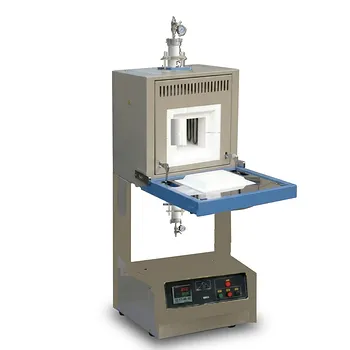
High Temperature Vertical Hybrid Furnace with Alumina Tube and SiC Heating for SOFC Coin Cell Testing and Atmosphere Processing
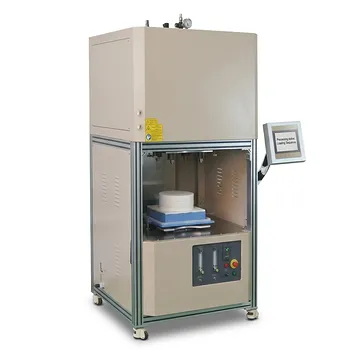
High Temperature Vertical Atmosphere Controlled Furnace with Automatic Bottom Loading and 1700°C Capacity for Advanced Material Research
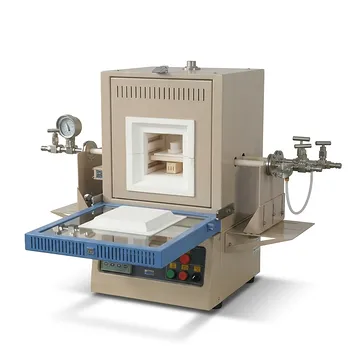
1700C Compact Hybrid Furnace with Dual Layer Box Sintering and Controlled Atmosphere Alumina Tubes
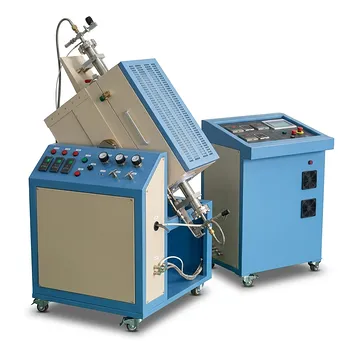
1100C High Pressure Rocking Tube Furnace with 2 Inch Super Alloy Processing Tube for Material Synthesis

1100C Tube Furnace with Vacuum Flange and Programmable Temperature Controller for Material Science and Industrial Heat Treatment
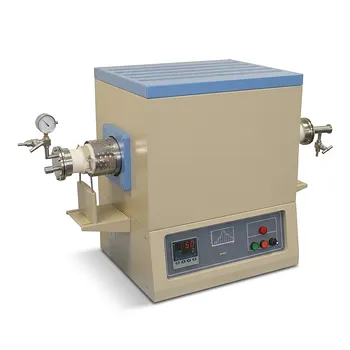
1700C High Temperature Alumina Tube Furnace with 18 Inch Heated Zone and Vacuum Sealing Flanges
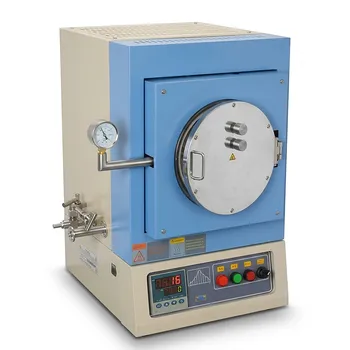
1100°C High Temperature Quartz Chamber Furnace 8 Inch OD with 7.6 Liter Capacity and Vacuum Atmosphere Capability

Compact High Temperature 1600C Tube Furnace with 50mm Alumina Tube and Vacuum Flanges for Material Sintering

High Temperature 1700C Vertical Tube Furnace for Powder Spherification and Material Sintering
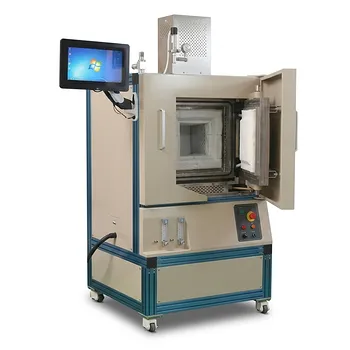
High Temperature Oxygen and Inert Atmosphere Controlled Furnace 8 Liter 1700C Sintering System for Advanced Materials RD
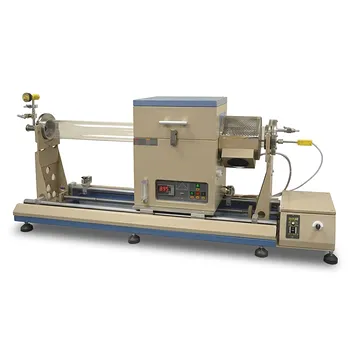
900 ºC Max Sliding RTP Tube Furnace with Rapid IR Heating and 4 Inch OD Quartz Tube
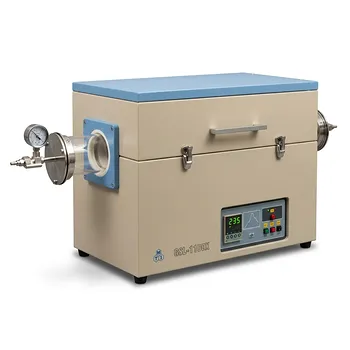
Single Zone Tube Furnace 5 Inch Quartz Tube 36 Inch Heating Zone Vacuum Flanges

1200°C 5 Inch Vertical Quartz Tube Furnace with Stainless Steel Vacuum Flanges
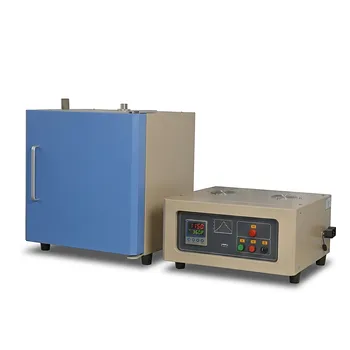
High Temperature Muffle Furnace with Alloy Chamber for Debinding and Sintering Applications

1800C High Temperature Compact Vacuum Tube Furnace with 60mm OD Alumina Tube and Kanthal MoSi2 Heating Elements
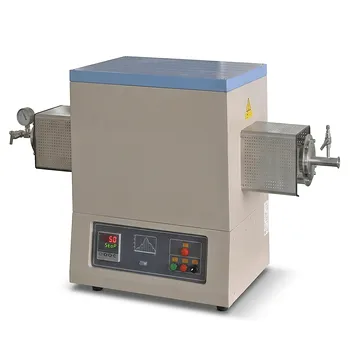
High Temperature 1700C Tube Furnace with 4 Inch OD Alumina Tube and Vacuum Sealing Flanges