What is the function of an FC-CVD system in the production of CNTf? Master Large-Scale Carbon Nanotube Fabrication
Updated 3 months ago
Floating Catalyst Chemical Vapor Deposition (FC-CVD) is the foundational synthesis engine for producing macroscopic Carbon Nanotube Fabric (CNTf). By continuously injecting catalyst precursors and carbon sources into a high-temperature vertical furnace, the system enables nanotubes to grow directly in the gas phase. This process allows the tubes to entangle into bundles "in-flight," resulting in a self-supporting, non-woven fabric characterized by high electrical conductivity and mechanical strength.
The FC-CVD system enables the transition from microscopic nanotubes to macroscopic materials by facilitating growth and entanglement within a gas stream rather than on a fixed surface. This "substrate-free" approach is essential for the continuous production of conductive scaffolds, aerogels, and fibers used in advanced structural and electronic applications.
The Mechanics of Gas-Phase Synthesis
Simultaneous Precursor Introduction
The FC-CVD system gasifies catalyst precursors (such as ferrocene) and carbon sources (such as ethanol or methane) simultaneously before they enter the reaction zone. This ensures that the building blocks for the nanotubes are uniformly distributed throughout the gas stream.
In-Situ Nanotube Growth
Unlike traditional CVD, which grows nanotubes on a stationary substrate, FC-CVD facilitates growth directly in the 3D space of the furnace. As the precursors decompose in the high-temperature environment (typically around 850°C to 1100°C), nanotubes form and propagate while suspended in the carrier gas.
Self-Assembly and Entanglement
As the nanotubes grow, they naturally collide and entangle with one another due to the turbulence and flow of the gas. This self-assembly creates a continuous, three-dimensional network or "aerogel" that can be collected as a macroscopic fabric or fiber.
Material Characteristics of FC-CVD Products
Macroscopic Structural Integrity
The primary output of an FC-CVD system is a macroscopic, non-woven fabric that possesses unidirectional alignment. This structure allows the material to be handled as a standalone sheet or film, serving as a high-quality template for further chemical treatments.
High Conductivity and Strength
Because the nanotubes form a continuous, interconnected network, the resulting fabric exhibits a high-conductivity network. This makes it an ideal conductive scaffold for depositing metal oxides or other functional materials in battery and supercapacitor research.
Flexibility and Optical Properties
By adjusting the injection rates and furnace residence time, the system can produce Single-Walled Carbon Nanotube (SWCNT) films. These films offer excellent flexibility and light transmittance, making them suitable for transparent electronics and heteroepitaxial growth of other 2D materials like hexagonal Boron Nitride.
Understanding the Trade-offs
Process Control vs. Scalability
While FC-CVD is superior for the continuous production of bulk materials, it requires extremely precise regulation of gas flow and temperature zones. Slight fluctuations can lead to variations in nanotube diameter, length, and the degree of entanglement.
Purity and Residue
Because the catalyst (often iron-based) is "floating" in the gas phase, it can become trapped within the fabric structure. This may necessitate post-synthesis purification steps if high-purity carbon is required for sensitive electronic applications.
Morphology Constraints
FC-CVD is optimized for producing randomly oriented or partially aligned networks. If a project requires perfectly vertical, forest-like arrays of nanotubes, traditional substrate-based CVD is often the more appropriate, albeit less scalable, choice.
Selecting the Right Synthesis Approach
How to Apply This to Your Project
- If your primary focus is continuous production of conductive sheets: Utilize FC-CVD to create self-supporting fabrics that eliminate the need for secondary binding agents.
- If your primary focus is high-purity individual nanotubes for analysis: Consider substrate-based CVD with pre-deposited catalyst particles to ensure isolated growth and easier characterization.
- If your primary focus is maximizing gas-solid contact for catalysis: A Fluidized Bed CVD system may be more effective than a vertical FC-CVD furnace for ensuring uniform heat transfer across bulk powders.
The FC-CVD system stands as the most effective method for bridging the gap between molecular carbon synthesis and the creation of industrial-scale, multifunctional fabrics.
Summary Table:
| Feature | FC-CVD Mechanism | Primary Benefit |
|---|---|---|
| Synthesis Method | Gas-phase (floating) growth | Substrate-free continuous production |
| Reaction Temp | 850°C to 1100°C | Uniform precursor decomposition |
| Product Form | Entangled Aerogel / Fabric | Macroscopic structural integrity |
| Core Advantage | In-flight self-assembly | High electrical & mechanical strength |
Accelerate Your Carbon Nanomaterial Research with THERMUNITS
As a leading manufacturer of high-temperature laboratory equipment, THERMUNITS provides the precision thermal solutions required for cutting-edge material science. Whether you are scaling up Carbon Nanotube Fabric production or exploring advanced CVD/PECVD applications, our comprehensive range of Muffle, Vacuum, Atmosphere, Tube, and Rotary furnaces ensures consistent, high-quality results for industrial R&D.
Ready to optimize your thermal processing?
Contact THERMUNITS Today to discover our custom heat treatment solutions—from vacuum induction melting (VIM) and electric rotary kilns to specialized thermal elements—designed to empower your laboratory's innovation.
References
- Shegufta Upama, Juan J. Vilatela. Joule Heating in Controlled Atmospheres to Process Nanocarbon/Transition Metal Oxide Composites and Electrodes. DOI: 10.1021/acsanm.4c02081
Mentioned Products
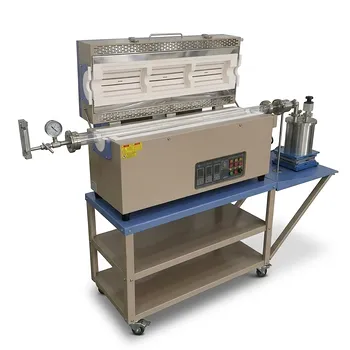
- Versatile Chemical Vapor Deposition Tube Furnace System for Advanced Material Research and Industrial Coating Processes
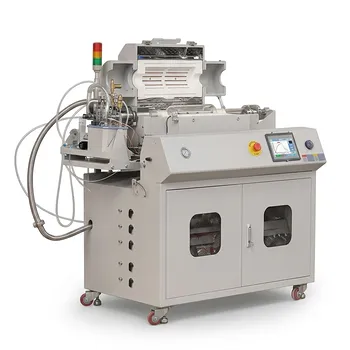
- Chemical Vapor Deposition CVD System Slide PECVD Tube Furnace with Liquid Gasifier PECVD Machine
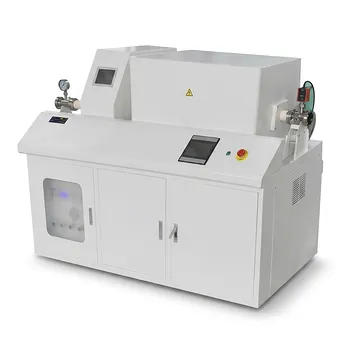
- Radio Frequency Plasma Enhanced Chemical Vapor Deposition RF PECVD System for Laboratory and Industrial Thin Film Growth
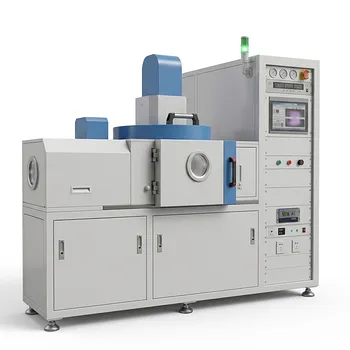
- HFCVD Machine System for Nano Diamond Coating on Drawing Dies and Industrial Tools
- Split Chamber CVD Tube Furnace with Vacuum Station Chemical Vapor Deposition System Machine
People Also Ask
- How does a sliding rail design benefit the CVD process within a furnace ventilation hood? Enhance Control & Quenching
- What role do by-product desorption and evacuation play in CVD film quality? Key Factors for High-Purity Films
- How does the deposition process occur within a Chemical Vapor Deposition (CVD) reactor? Explore the 5-Stage Growth Cycle
- Why is CVD preferred over PVD for high-aspect-ratio features? Superior Conformality for Semiconductor Fabrication
- How do temperature regimes influence the growth rate of films in a CVD system? Master CVD Kinetics for Superior Thin Films

Tech Team · ThermUnits
Last updated on Jun 02, 2026
Related Products
Versatile Chemical Vapor Deposition Tube Furnace System for Advanced Material Research and Industrial Coating Processes
Chemical Vapor Deposition CVD System Slide PECVD Tube Furnace with Liquid Gasifier PECVD Machine
Radio Frequency Plasma Enhanced Chemical Vapor Deposition RF PECVD System for Laboratory and Industrial Thin Film Growth
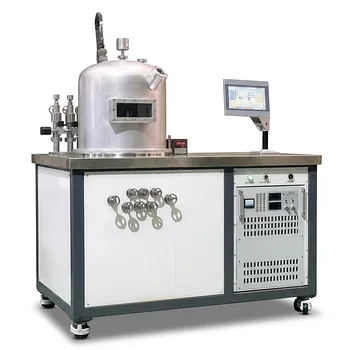
HFCVD Machine System for Nano Diamond Coating on Drawing Dies and Industrial Tools
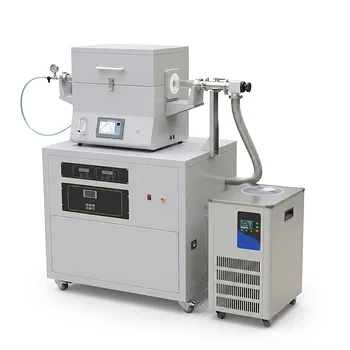
Split Chamber CVD Tube Furnace with Vacuum Station Chemical Vapor Deposition System Machine
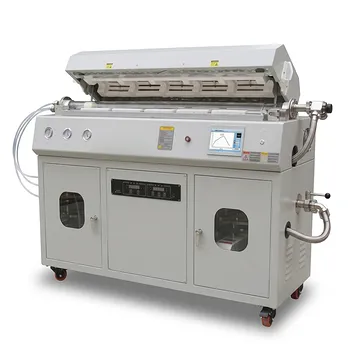
Multi Heating Zones CVD Tube Furnace System for Precision Chemical Vapor Deposition and Advanced Material Synthesis
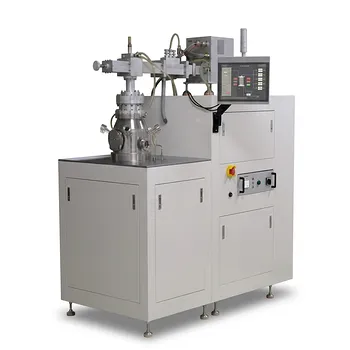
Cylindrical Resonator MPCVD Machine System for Microwave Plasma Chemical Vapor Deposition and Lab Diamond Growth
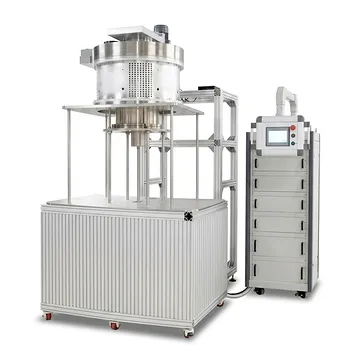
915MHz MPCVD Diamond Machine Microwave Plasma Chemical Vapor Deposition System Reactor
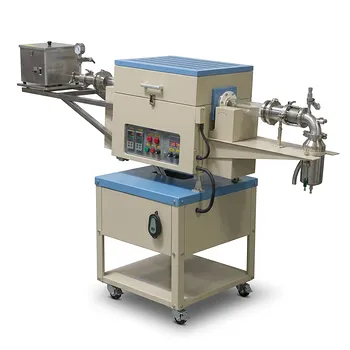
Two Zone Rotary CVD Furnace with Automatic Feeding and Receiving System for Powder Processing
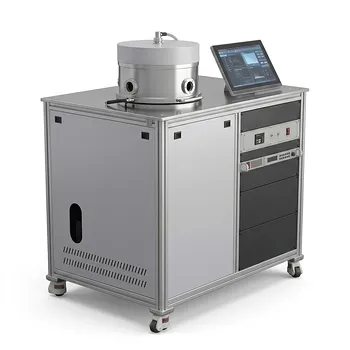
Inclined Rotary Plasma Enhanced Chemical Vapor Deposition PECVD System for Thin Film Deposition and Nanomaterial Synthesis
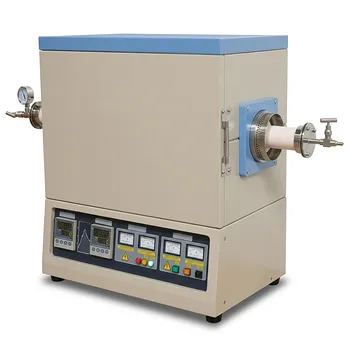
High Temperature 1700C Dual Zone Tube Furnace for Material Science and Industrial Chemical Vapor Deposition Research
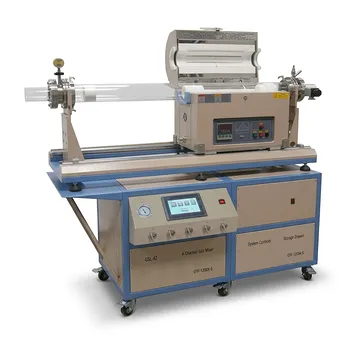
Dual Tube 100mm 80mm CVD Sliding Furnace with 4 Channel Gas Mixing and Vacuum System
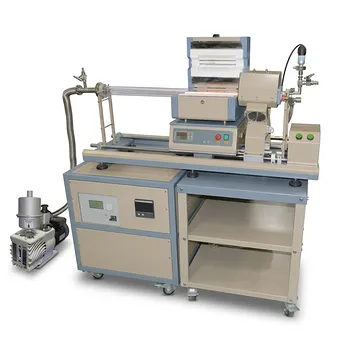
1200C Max Compact Auto-Sliding PECVD Furnace with 2 Inch Tube and Vacuum Pump
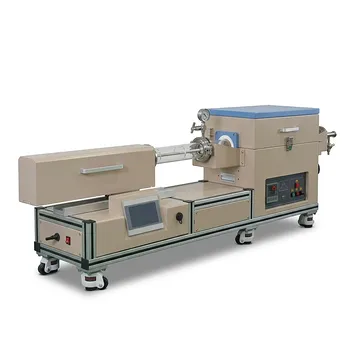
1200C Sliding Internal Crucible Tube Furnace for Controlled Atmosphere Thin Film Deposition and Material Sublimation Research
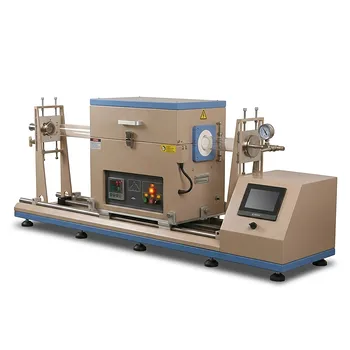
1200C Sliding Tube Furnace for Rapid Thermal Processing and CVD Graphene Growth with 100mm OD Capacity
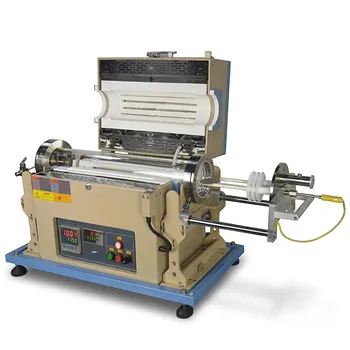
1200°C High Temperature 4 Inch Tube Furnace with Sliding Flange for CVD Systems
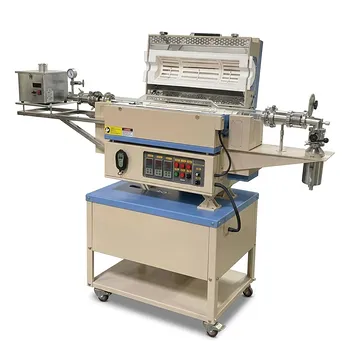
5 Inch Rotary Tube Furnace with Automatic Feeding and Receiving System 1200C Three Zone CVD Powder Processing
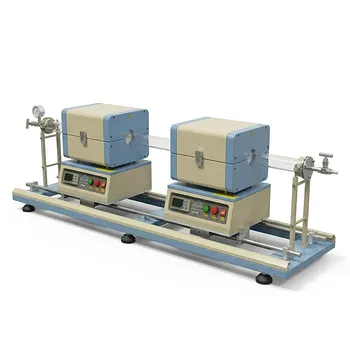
1200C Max Dual Sliding Tube Furnace with 50 mm Tube Flanges for CVD
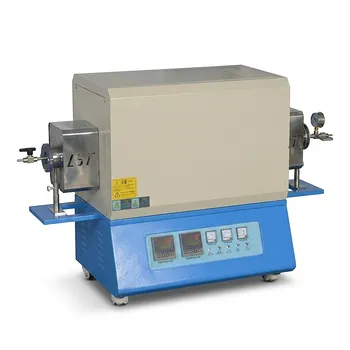
High Temperature Dual Zone Vacuum Tube Furnace for Material Research and CVD Processing