What is the importance of combining high vacuum systems with argon gas flow control? Optimize Perovskite Film Purity.
Updated 3 months ago
Combining high vacuum systems with argon gas flow control is the technical foundation for achieving high-purity, uniform perovskite thin films. This synergy eliminates atmospheric contaminants like oxygen and moisture while providing a precise, repeatable delivery mechanism for vaporized precursors. Together, they create a stable dynamic environment that ensures the ideal stoichiometry and crystallinity required for high-performance optoelectronic devices.
The integration of a high vacuum and regulated argon flow transforms the reaction chamber into a controlled microenvironment where precursor transport is governed by physics rather than chance. This combination is essential for minimizing impurities and ensuring large-area uniformity through the precise management of molecular diffusion and vapor concentration.
Optimizing Molecular Kinetics and Transport
Increasing the Mean Free Path
A high vacuum system (often reaching pressures of $10^{-1}$ mbar or lower) significantly reduces the density of gas molecules within the chamber. This increases the mean free path of precursor molecules, allowing them to travel further without colliding with other particles. Consequently, the diffusion efficiency of the reactants is enhanced, ensuring they reach the substrate surface effectively.
Precise Vapor Delivery via Carrier Gas
While the vacuum sets the stage, high-purity argon gas acts as the vehicle for the precursors. Regulated by Mass Flow Controllers (MFCs), the argon transports organic and inorganic vapors to the deposition zone with extreme precision. This steady flow ensures that the reactants are distributed uniformly across the entire substrate, which is critical for scaling up perovskite production.
Lowering Sublimation Thresholds
Maintaining a low-pressure environment effectively lowers the boiling and sublimation points of organic monomers and halides. This allows for efficient vaporization at lower temperatures, protecting sensitive precursor materials from thermal degradation. It ensures a stable and consistent flux of precursors, which is vital for growing high-quality crystalline structures.
Environmental Control and Phase Purity
Eliminating Atmospheric Contaminants
Perovskite materials are notoriously sensitive to oxygen and humidity, which can cause rapid degradation or the formation of unwanted oxide impurities. The vacuum system's primary role is to purge the chamber of air and moisture before and during the growth process. The inert argon atmosphere then provides a secondary layer of protection, maintaining a low-oxygen microenvironment.
Balancing Supersaturation and Growth Rates
The interaction between the vacuum level and the argon flow rate allows operators to dynamically balance the supersaturation of reactants. By adjusting the flow (e.g., 70 sccm), one can regulate the growth rate and lateral dimensions of the perovskite grains. This level of control is necessary to achieve complete conversion of precursors, such as turning residual $PbI_2$ into the desired perovskite phase.
Ensuring Stoichiometric Consistency
Minor fluctuations in gas flow can lead to variations in vapor concentration, resulting in "patchy" films with poor electrical properties. Precise gas flow control ensures that organic halide vapors reach the reaction zone at a constant ratio relative to the inorganic framework. This consistency is the key to achieving the correct stoichiometry and specific crystallographic orientations across large-area thin films.
Understanding the Trade-offs and Challenges
System Complexity and Maintenance
While the combination of vacuum and MFCs provides superior control, it significantly increases system complexity. High-vacuum seals are prone to leaks, and MFCs require regular calibration to ensure the flow rates remain accurate over time. Any failure in these components can lead to immediate batch loss due to contamination or non-uniform growth.
Balancing Flow vs. Vacuum Level
There is an inherent tension between introducing a carrier gas and maintaining a high vacuum. Increasing the argon flow rate to improve transport can inadvertently increase the chamber pressure, which may reduce the mean free path. Engineers must find the "sweet spot" where the flow is sufficient for transport but the pressure remains low enough to maintain high diffusion efficiency.
How to Apply This to Your Thin Film Project
Making the Right Choice for Your Goal
To achieve the best results with CVD-processed perovskites, your hardware configuration should match your specific research or production objectives.
- If your primary focus is phase purity and crystallinity: Prioritize the vacuum system's ability to reach base pressures below $10^{-3}$ mbar to ensure all trace moisture is removed before introducing precursors.
- If your primary focus is large-area uniformity: Invest in high-precision Mass Flow Controllers with a low error margin (±1% or better) to ensure the carrier gas maintains a perfectly steady concentration across the substrate.
- If your primary focus is throughput and growth speed: Focus on the "dynamic vacuum" balance, using a higher argon flow rate coupled with a high-capacity pump to maintain the necessary low-pressure environment despite the increased gas load.
Mastering the synergy between vacuum depth and gas flow precision is the definitive path to producing perovskite films with superior optoelectronic characteristics.
Summary Table:
| Feature | Role in CVD Process | Benefit to Perovskite Films |
|---|---|---|
| High Vacuum | Increases mean free path & removes O2/H2O | Eliminates contaminants & enhances diffusion |
| Argon Flow (MFC) | Precise precursor vapor delivery | Ensures large-area uniformity & stoichiometry |
| Low Pressure | Lowers sublimation thresholds | Prevents thermal degradation of organic precursors |
| Dynamic Control | Balances supersaturation rates | Regulates grain growth & phase purity |
Elevate Your Material Research with THERMUNITS
As a leading manufacturer of high-temperature laboratory equipment, THERMUNITS provides the precision tools necessary for advanced material science and industrial R&D. Our comprehensive range of solutions—including CVD/PECVD systems, Vacuum and Atmosphere Furnaces, and Tube Furnaces—is engineered to provide the exact vacuum depth and gas flow stability required for high-performance perovskite thin films.
Ready to achieve superior heat treatment results? Contact our experts today to discuss how our thermal processing solutions can optimize your laboratory's efficiency and film quality!
References
- Dmitry S. Muratov, Aldo Di Carlo. Single‐Step Chemical Vapor Deposition of Methyl Ammonium Lead Halide Perovskite for p–i‐n Solar Cells. DOI: 10.1002/slct.202400147
Mentioned Products
- Radio Frequency Plasma Enhanced Chemical Vapor Deposition RF PECVD System for Laboratory and Industrial Thin Film Growth
- Inclined Rotary Plasma Enhanced Chemical Vapor Deposition PECVD System for Thin Film Deposition and Nanomaterial Synthesis
- High Temperature 800C Rapid Thermal Processing Furnace with Rotating Sample Holder for Close Spaced Sublimation and Thin Film Solar Cell Research
- 1200C Sliding Internal Crucible Tube Furnace for Controlled Atmosphere Thin Film Deposition and Material Sublimation Research
- HFCVD Machine System for Nano Diamond Coating on Drawing Dies and Industrial Tools
People Also Ask
- What are the advantages of PECVD systems for nano flame retardant films? Protect Heat-Sensitive Polymers with Precision
- How does PECVD differ from conventional thermal CVD? Key Advantages of Low-Temperature Deposition for R&D
- What is the role of CVD/PECVD systems in the research of optoelectronic materials and functional coatings? Expert Guide
- What are the benefits of using PECVD for optical and photonic coatings? Achieve High-Precision Thin-Film Deposition
- How do RF frequency and power settings influence the characteristics of a PECVD process? Master Quality & Efficiency

Tech Team · ThermUnits
Last updated on Jun 03, 2026
Related Products
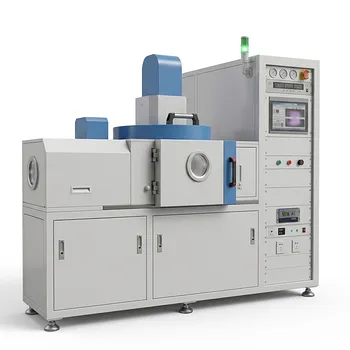
Radio Frequency Plasma Enhanced Chemical Vapor Deposition RF PECVD System for Laboratory and Industrial Thin Film Growth
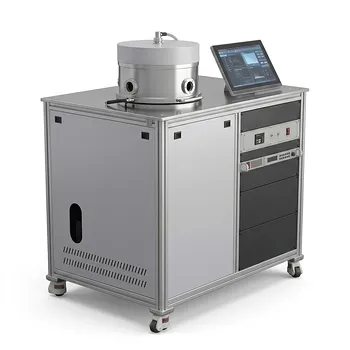
Inclined Rotary Plasma Enhanced Chemical Vapor Deposition PECVD System for Thin Film Deposition and Nanomaterial Synthesis
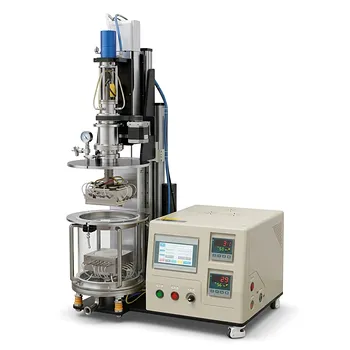
High Temperature 800C Rapid Thermal Processing Furnace with Rotating Sample Holder for Close Spaced Sublimation and Thin Film Solar Cell Research
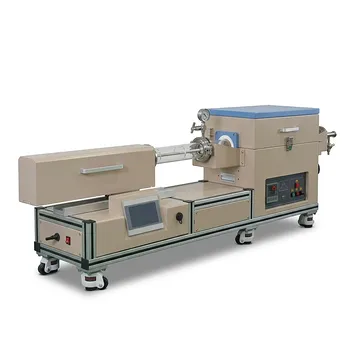
1200C Sliding Internal Crucible Tube Furnace for Controlled Atmosphere Thin Film Deposition and Material Sublimation Research
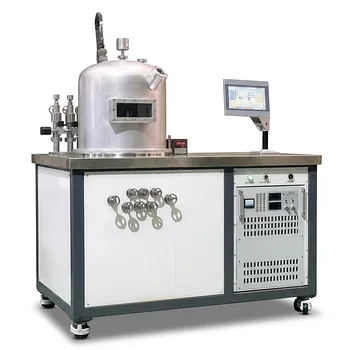
HFCVD Machine System for Nano Diamond Coating on Drawing Dies and Industrial Tools
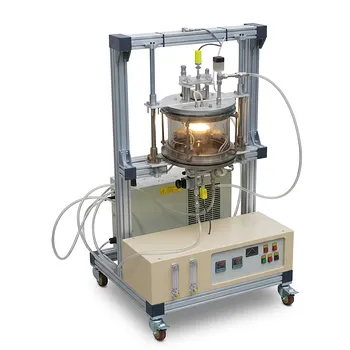
Two Zones CSS Furnace for Rapid Thermal Processing Thin Film Coating 3 Inch Diameter 650C
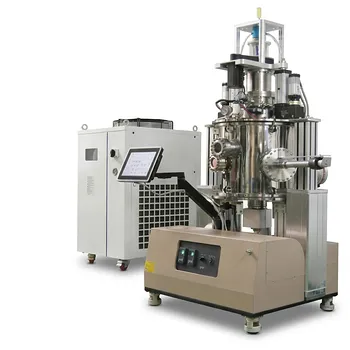
950C Rapid Thermal Processing Furnace for 12 Inch Wafer CSS Coating with Rotating Substrate Holder
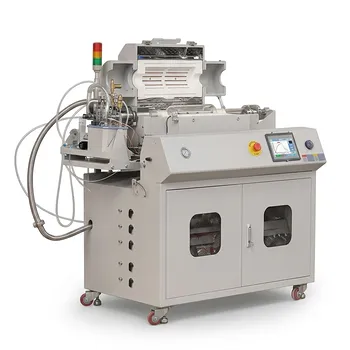
Versatile Chemical Vapor Deposition Tube Furnace System for Advanced Material Research and Industrial Coating Processes
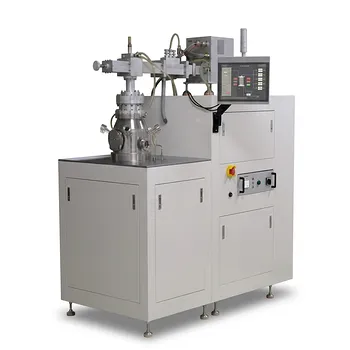
Cylindrical Resonator MPCVD Machine System for Microwave Plasma Chemical Vapor Deposition and Lab Diamond Growth
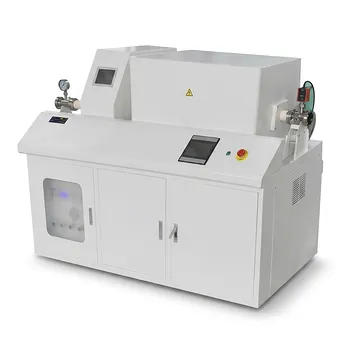
Chemical Vapor Deposition CVD System Slide PECVD Tube Furnace with Liquid Gasifier PECVD Machine
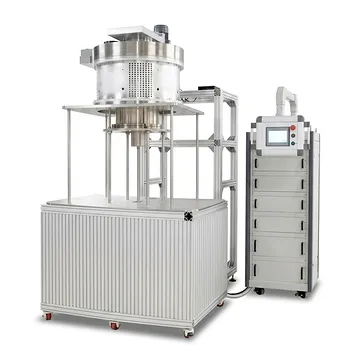
915MHz MPCVD Diamond Machine Microwave Plasma Chemical Vapor Deposition System Reactor
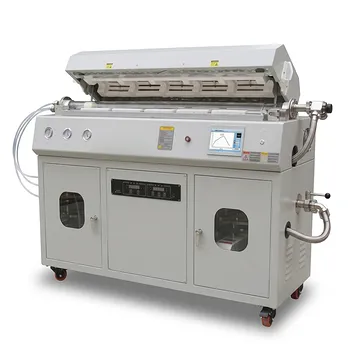
Multi Heating Zones CVD Tube Furnace System for Precision Chemical Vapor Deposition and Advanced Material Synthesis
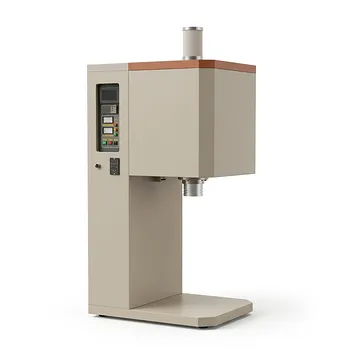
Vertical Openable Tube Furnace 0-1700c High Temperature Laboratory System for CVD and Vacuum Heat Treatment
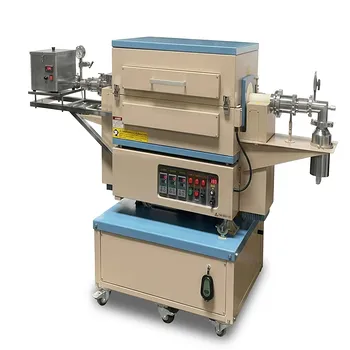
1500C 3-Zone Rotary Tube Furnace 60mm with Automatic Powder Feeding and Receiving System for Continuous Material Synthesis
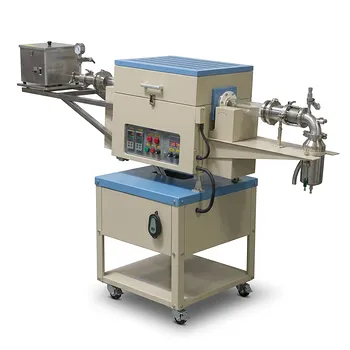
Two Zone Rotary CVD Furnace with Automatic Feeding and Receiving System for Powder Processing
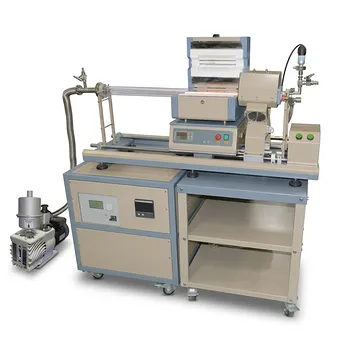
1200C Max Compact Auto-Sliding PECVD Furnace with 2 Inch Tube and Vacuum Pump
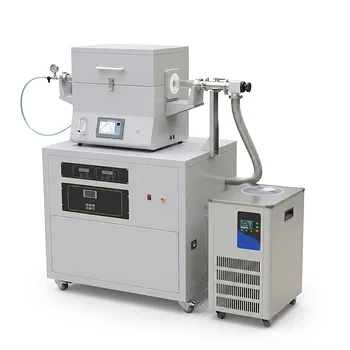
Split Chamber CVD Tube Furnace with Vacuum Station Chemical Vapor Deposition System Machine
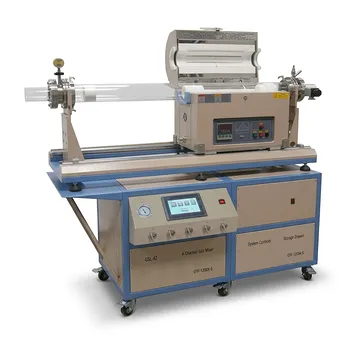
Dual Tube 100mm 80mm CVD Sliding Furnace with 4 Channel Gas Mixing and Vacuum System
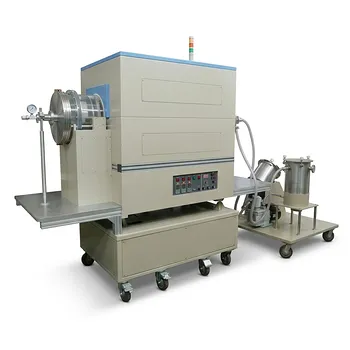
Three Zone Rotary Tube Furnace with Automatic Powder Feeding for Large Scale CVD Coating 1100C
