What is the purpose of Nitrogen atmosphere annealing for TZO thin films? Enhance Conductivity & Crystalline Stability
Updated 5 months ago
Nitrogen atmosphere annealing in a high-temperature tube furnace is a critical post-deposition process used to refine the crystalline structure, activate dopants, and protect the chemical integrity of Tantalum-doped Zinc Oxide (TZO) thin films. By providing a controlled thermal environment, this process eliminates internal stresses from the sputtering process and ensures that Tantalum ions are effectively incorporated into the Zinc Oxide crystal lattice, which significantly increases carrier mobility and electrical performance.
The core purpose of this process is to provide the thermal energy required for atomic rearrangement and recrystallization while maintaining an inert environment that prevents unintended oxidation. This dual-action treatment optimizes the film's microstructure, resulting in superior conductivity and crystalline stability.
Enhancing Structural Integrity and Crystallinity
Elimination of Internal Deposition Stresses
Thin films deposited via magnetron sputtering often harbor significant internal stresses and lattice distortions. The high-temperature environment of the tube furnace provides the necessary energy for thermal diffusion, allowing the atoms to settle into a more stable, lower-energy state.
Promotion of Recrystallization and Grain Growth
Annealing facilitates the transformation of the film's microstructure, often leading to grain growth and a reduction in grain boundary defects. This process typically improves the crystalline quality by 5% to 10%, creating a more ordered delafossite or wurtzite structure that is essential for optoelectronic applications.
Optimization of the Microstructure
By providing a constant thermal field, the furnace allows for a uniform atomic rearrangement across the entire film surface. This results in a more homogeneous material with reduced structural flaws, which directly correlates to improved durability and performance stability.
Dopant Activation and Electrical Performance
Integration of Tantalum into the Lattice
For TZO films to be effective, Tantalum ions must substitute for Zinc ions within the crystal lattice sites. High-temperature annealing provides the activation energy required for this effective substitution, which is the primary driver for optimizing the material's semiconductor properties.
Increasing Carrier Mobility and Concentration
As Tantalum ions are successfully incorporated into the lattice, they release free electrons that contribute to the film's conductivity. The reduction in grain boundary defects further minimizes electron scattering, leading to a significant increase in carrier mobility.
Regulation of Oxygen Vacancies
In Zinc Oxide-based materials, oxygen vacancies act as natural electron donors. Annealing in a controlled Nitrogen atmosphere allows researchers to regulate the concentration of these vacancies, balancing the need for high conductivity with the requirement for optical transparency.
The Role of the Nitrogen Atmosphere
Prevention of Unintended Oxidation
At high temperatures, thin films are highly susceptible to reacting with residual oxygen or moisture, which can form disordered oxide particles. High-purity nitrogen acts as a protective blanket, purging the furnace tube and ensuring the chemical integrity of the TZO film is maintained.
Maintenance of Surface Morphology
A stable nitrogen flow ensures the fluidity of the atmosphere and the stability of the thermal field. This prevents surface degradation, allowing the TZO thin film to maintain nanometer-level flatness and low RMS roughness, which is vital for the growth of subsequent functional layers.
Nitrogen as a Carrier Gas
Beyond protection, the nitrogen flow serves as a carrier gas that helps maintain a consistent environment inside the tube. This prevents the accumulation of volatile byproducts and ensures that the heat treatment remains uniform across the entire batch of samples.
Understanding the Trade-offs
Temperature Sensitivity and Degradation
While high temperatures are necessary for recrystallization, exceeding the optimal threshold (often between 500°C and 900°C depending on the substrate) can cause film degradation or unwanted reactions with the substrate. Finding the "sweet spot" is essential to avoid destroying the thin film's functional properties.
Atmosphere Purity and Contamination
The effectiveness of the annealing process is heavily dependent on the purity of the Nitrogen gas. Any trace amounts of oxygen or moisture in the nitrogen stream can lead to localized oxidation, which increases resistivity and diminishes the optical clarity of the film.
Processing Time vs. Grain Size
Longer annealing times can promote larger grain sizes, which generally improves mobility. However, excessive annealing can lead to over-growth, which may increase surface roughness and complicate the integration of the film into multi-layer electronic devices.
How to Apply This to Your Project
Recommendations for Implementation
- If your primary focus is Maximum Conductivity: Prioritize higher annealing temperatures (within the material's limits) to ensure complete Tantalum substitution and the maximization of carrier concentration.
- If your primary focus is Optical Transparency: Carefully regulate the Nitrogen flow rate and pressure to maintain the ideal balance of oxygen vacancies, ensuring high light transmission without sacrificing electrical stability.
- If your primary focus is Device Integration: Use shorter annealing durations and precise temperature control to maintain a low RMS roughness and nanometer-level flatness for subsequent layering.
Mastering the balance between thermal energy and atmospheric purity is the definitive path to producing high-quality Tantalum-doped Zinc Oxide thin films.
Summary Table:
| Process Aspect | Key Mechanism | Primary Benefit for TZO Films |
|---|---|---|
| Structural Integrity | Thermal diffusion & grain growth | Elimination of internal stresses; improved crystallinity |
| Dopant Activation | Ta ion substitution into ZnO lattice | Increased carrier mobility and concentration |
| Atmosphere Control | High-purity Nitrogen purging | Prevention of oxidation; maintenance of chemical purity |
| Surface Morphology | Uniform atomic rearrangement | Nanometer-level flatness and low RMS roughness |
Optimize Your Material Research with THERMUNITS
Achieving precise Nitrogen atmosphere annealing requires reliable thermal environments and exact atmospheric control. THERMUNITS is a leading manufacturer of high-temperature laboratory equipment, providing specialized solutions for material science and industrial R&D.
Our comprehensive range of equipment includes Tube, Atmosphere, Vacuum, and Muffle furnaces, as well as CVD/PECVD systems and Vacuum Induction Melting (VIM) furnaces, designed to ensure superior crystalline stability and dopant activation for your thin film projects.
Ready to elevate your heat treatment precision?
Contact our technical experts today for a customized solution!
References
- Kai Yi, Deliang Wang. Effect of tantalum doping on the microstructure and photoelectrical properties of transparent conductive zinc oxide films. DOI: 10.52396/justc-2024-0006
Mentioned Products
- 1200C Sliding Internal Crucible Tube Furnace for Controlled Atmosphere Thin Film Deposition and Material Sublimation Research
- Double Temperature Zone Double Cover Tube Furnace for High Temperature CVD and Vacuum Annealing
- 1200C High Throughput Multi Channel Tube Furnace with 50mm Quartz Tubes for Annealing and Material Phase Diagram Research
- 950C Rapid Thermal Processing Furnace for 12 Inch Wafer CSS Coating with Rotating Substrate Holder
- 900 ºC Max Sliding RTP Tube Furnace with Rapid IR Heating and 4 Inch OD Quartz Tube
People Also Ask
- What are the advantages of a tube atmosphere furnace for CdS thin films? Enhance Crystallinity & Prevent Sulfur Loss
- Why is an atmosphere tube furnace considered core equipment for CVD? Essential for Precision Thin-Film & 2D Materials
- Why is an atmosphere-controlled tube furnace required for the annealing of Sb2S3? Optimize Semi-conductor Performance
- How does a slanted tube furnace contribute to the crystal growth of Sr4Os3O12? Optimize Thermal Fields and Purity
- Why must deposited LiMn2O4 thin films undergo annealing in a digital tube furnace? Unlock High-Performance Cathodes

Tech Team · ThermUnits
Last updated on Apr 14, 2026
Related Products
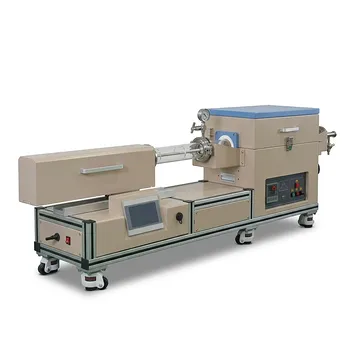
1200C Sliding Internal Crucible Tube Furnace for Controlled Atmosphere Thin Film Deposition and Material Sublimation Research
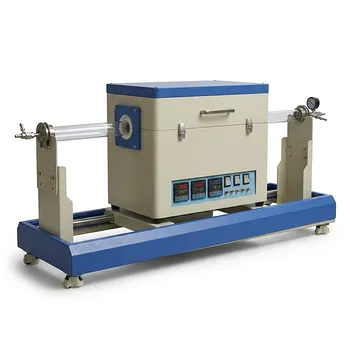
Double Temperature Zone Double Cover Tube Furnace for High Temperature CVD and Vacuum Annealing
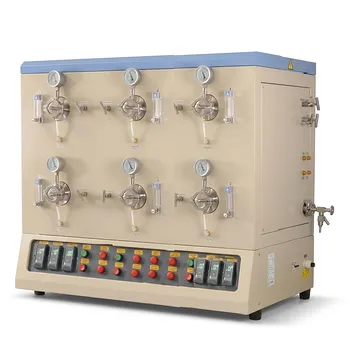
1200C High Throughput Multi Channel Tube Furnace with 50mm Quartz Tubes for Annealing and Material Phase Diagram Research
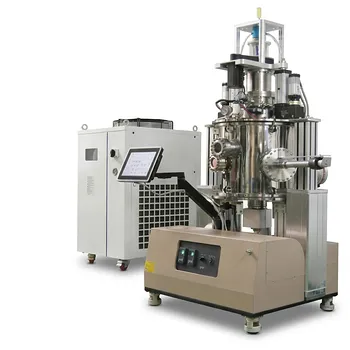
950C Rapid Thermal Processing Furnace for 12 Inch Wafer CSS Coating with Rotating Substrate Holder
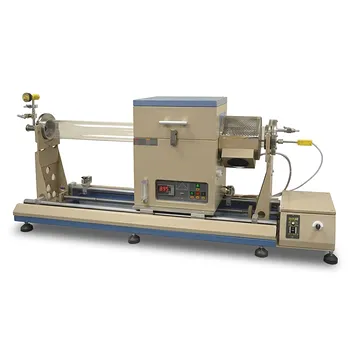
900 ºC Max Sliding RTP Tube Furnace with Rapid IR Heating and 4 Inch OD Quartz Tube
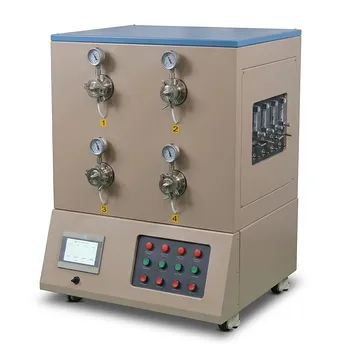
High Throughput 1200C Four Channel Tube Furnace with 3 Inch Quartz Tubes for Multi Zone Annealing and Material Research
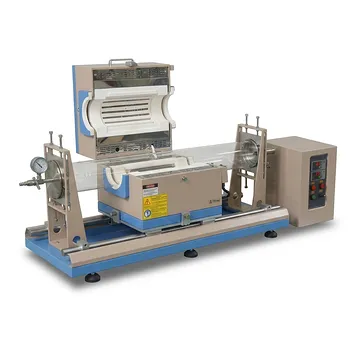
1200C High Temperature 5 Inch Sliding Tube Furnace for Rapid Thermal Processing RTP and Wafer Annealing
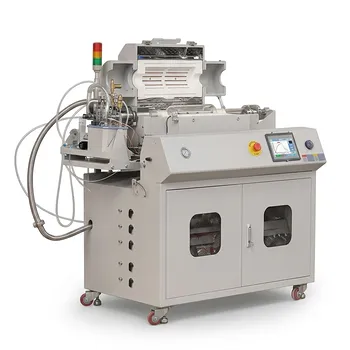
Versatile Chemical Vapor Deposition Tube Furnace System for Advanced Material Research and Industrial Coating Processes
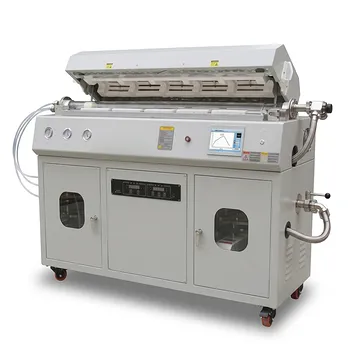
Multi Heating Zones CVD Tube Furnace System for Precision Chemical Vapor Deposition and Advanced Material Synthesis
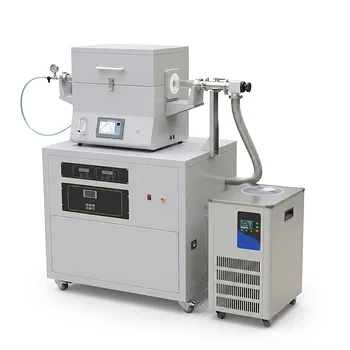
Split Chamber CVD Tube Furnace with Vacuum Station Chemical Vapor Deposition System Machine

Compact Vertical Split Quartz Tube Furnace with Stainless Steel Vacuum Flanges for Rapid Thermal Quenching and Controlled Atmosphere Material Processing

5 Inch Three Zone Rotary Tube Furnace with Integrated Gas Delivery System and 1200C Capability for Advanced Material CVD Processing
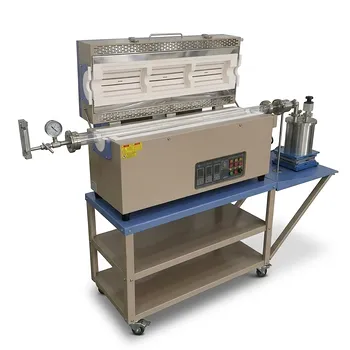
5 Inch Two Zone Rotary Tube Furnace 1100C for Powder CVD and Material Synthesis
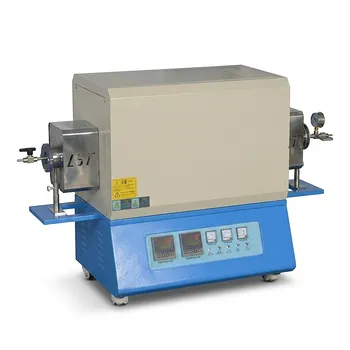
High Temperature Dual Zone Vacuum Tube Furnace for Material Research and CVD Processing

1800C High Temperature Compact Vacuum Tube Furnace with 60mm OD Alumina Tube and Kanthal MoSi2 Heating Elements
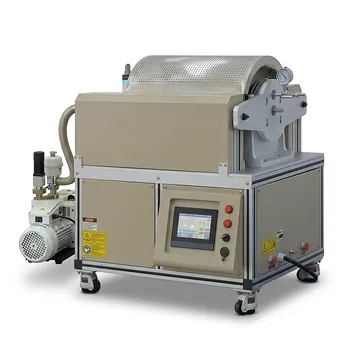
Automated 1200 C Tube Furnace for AI Material Research with 6 Inch OD and Sliding Flange
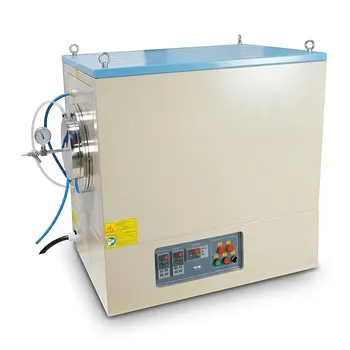
Dual Zone Tube Furnace 1100C with 11 Inch Quartz Tube and Vacuum Flanges for 8 Inch Wafer Processing
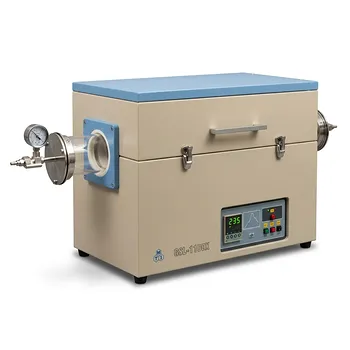
Single Zone Tube Furnace 5 Inch Quartz Tube 36 Inch Heating Zone Vacuum Flanges
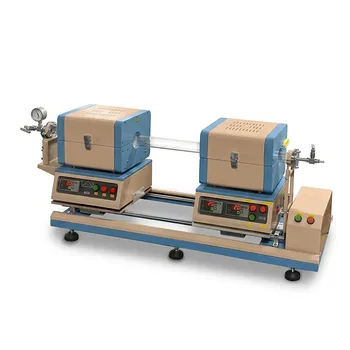
High Temperature 1200C Automatic Sliding Dual Zone Tube Furnace for 2D Transition Metal Dichalcogenides Growth and Material Sublimation Research