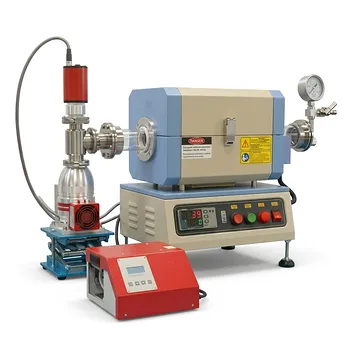
What role does a vacuum controlled tube furnace play in Ti2AlN MAX phase thin films? Optimize Phase Transformation.
Updated 3 months ago
The vacuum controlled tube furnace is the critical thermal processing environment required to transform amorphous sputtered coatings into crystalline $Ti_2AlN$ MAX phase thin films. By providing a precise 750 °C annealing environment, the furnace supplies the activation energy necessary for atomic rearrangement, driving the material from a disordered state into a highly ordered, layered structure that exhibits both metallic and ceramic properties.
Core Takeaway: A vacuum controlled tube furnace acts as a phase-transformation catalyst, utilizing precise temperature control and an oxidation-free environment to convert metastable deposited films into stable, high-performance $Ti_2AlN$ MAX phases.
Driving Crystalline Phase Transformation
Converting Amorphous Deposits to MAX Phases
Initial $Ti-Al-N$ thin films deposited via sputtering techniques are typically amorphous, lacking the defining layered structure of a MAX phase. The tube furnace provides the thermal energy required to trigger atomic rearrangement, allowing titanium, aluminum, and nitrogen atoms to migrate into their specific lattice positions.
Facilitating the Layered Atomic Structure
The specific temperature of 750 °C is vital for the formation of the $Ti_2AlN$ phase. This heat treatment ensures the creation of a highly ordered layered structure, which is the hallmark of MAX phase materials, giving them their unique combination of high fracture toughness and thermal conductivity.
Maintaining Chemical Purity and Stoichiometry
Prevention of High-Temperature Oxidation
Because titanium and aluminum are highly reactive, any presence of oxygen at high temperatures would lead to the formation of unwanted oxides rather than nitrides. The vacuum control (often reaching levels as low as $10^{-5}$ mbar) effectively expels oxygen and water vapor, ensuring the chemical stability of the final $Ti_2AlN$ product.
Atmosphere Control and Nitriding
In some preparation methods, the tube furnace facilitates the continuous flow of high-purity gases like argon for protection or ammonia as a nitrogen source. This controlled atmosphere ensures precise stoichiometry, allowing nitrogen to diffuse deeply into the metal structure to form a stable nitride film.
Optimizing Structural and Mechanical Integrity
Stress Relief and Lattice Integrity
The annealing process within the vacuum furnace helps eliminate internal stresses that accumulate during the initial deposition or substrate processing. By relaxing these stresses, the furnace improves lattice integrity, which is essential for forming uniform and durable thin films.
Inducing Phase Separation and Hardening
Precise isothermal annealing can induce spinodal decomposition, where the material separates into nanoscale titanium-rich and aluminum-rich domains. This process is often used to investigate phase transformation pathways and can lead to age hardening, significantly enhancing the mechanical properties of the alloy.
Understanding the Trade-offs
Temperature Precision vs. Phase Purity
If the furnace temperature deviates even slightly from the target (e.g., 750 °C), the film may either remain amorphous or form undesirable intermetallic phases. Maintaining a strict thermal gradient is difficult but necessary to avoid the formation of brittle phases that compromise the "metallic-ceramic" duality.
Vacuum Integrity vs. Processing Time
While a higher vacuum (lower mbar) provides better protection against oxidation, it requires significantly longer pump-down times and more expensive equipment. Engineers must balance the required level of purity against the throughput needs of the thin film preparation process.
How to Apply This to Your Project
Selecting Your Furnace Parameters
The following recommendations are based on typical preparation goals for transition metal nitride thin films:
- If your primary focus is phase purity: Ensure your furnace can maintain a high vacuum of at least $10^{-5}$ mbar and use high-purity argon purging to eliminate all traces of oxygen.
- If your primary focus is mechanical toughness: Prioritize a furnace with a sophisticated cooling rate controller to induce specific microstructures, such as duplex or lamellar grains, during the post-annealing stage.
- If your primary focus is stoichiometry control: Utilize a tube furnace equipped with mass flow controllers to provide a steady stream of nitrogen-bearing gas (like ammonia) during the heating cycle.
Selecting the correct vacuum and temperature profile is the single most important factor in ensuring your thin film achieves the high-performance characteristics of a true $Ti_2AlN$ MAX phase.
Summary Table:
| Key Function | Impact on Ti2AlN MAX Phase | Critical Parameters |
|---|---|---|
| Phase Transformation | Converts amorphous deposits to layered crystalline structures | 750 °C Isothermal Heat |
| Purity Maintenance | Prevents unwanted oxidation and ensures chemical stability | $10^{-5}$ mbar Vacuum |
| Atmosphere Control | Facilitates nitriding and maintains precise stoichiometry | Ar / Ammonia Gas Flow |
| Structural Integrity | Relieves internal lattice stresses and improves durability | Controlled Cooling Rates |
Precision Thermal Solutions for Your Advanced Material R&D
Unlock the full potential of your thin film research with THERMUNITS, a premier manufacturer of high-precision laboratory heat treatment equipment. Our expert-grade Vacuum Tube Furnaces provide the critical stable environment required for perfect Ti2AlN MAX phase synthesis.
From CVD/PECVD systems and Rotary furnaces to advanced Hot Press, Vacuum Induction Melting (VIM), and Dental furnaces, we empower material scientists and industrial R&D teams with the tools needed for breakthrough results.
Enhance your lab’s thermal processing precision—contact THERMUNITS today to discuss your custom furnace requirements!
References
- Semih Duran, İhsan Efeoğlu. Application of honeycomb pattern to Ti2AlN MAX phase films by plasma etching. DOI: 10.1007/s00339-024-07407-9
Mentioned Products
- 1200C Sliding Internal Crucible Tube Furnace for Controlled Atmosphere Thin Film Deposition and Material Sublimation Research
- High Temperature Compact Vacuum Tube Furnace 1750C Max 60mm OD Alumina Tube
- Compact Vertical Split Quartz Tube Furnace with Stainless Steel Vacuum Flanges for Rapid Thermal Quenching and Controlled Atmosphere Material Processing
- 1700C High Temperature Alumina Tube Furnace with 18 Inch Heated Zone and Vacuum Sealing Flanges
- Three Temperature Zone High Temperature Vacuum Tube Furnace for CVD and Material Sintering
People Also Ask
- What are the advantages of a tube atmosphere furnace for CdS thin films? Enhance Crystallinity & Prevent Sulfur Loss
- Why is an atmosphere tube furnace considered core equipment for CVD? Essential for Precision Thin-Film & 2D Materials
- Why is an atmosphere-controlled tube furnace required for the annealing of Sb2S3? Optimize Semi-conductor Performance
- How does a slanted tube furnace contribute to the crystal growth of Sr4Os3O12? Optimize Thermal Fields and Purity
- Why must deposited LiMn2O4 thin films undergo annealing in a digital tube furnace? Unlock High-Performance Cathodes

Tech Team · ThermUnits
Last updated on Jun 03, 2026
Related Products
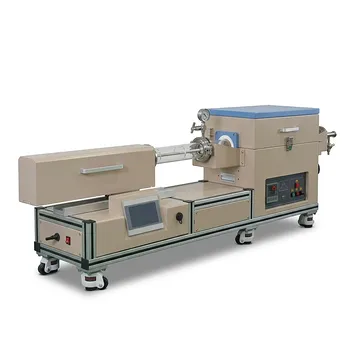
1200C Sliding Internal Crucible Tube Furnace for Controlled Atmosphere Thin Film Deposition and Material Sublimation Research
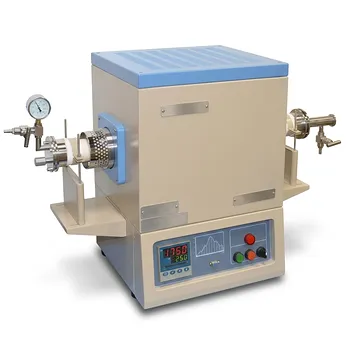
High Temperature Compact Vacuum Tube Furnace 1750C Max 60mm OD Alumina Tube
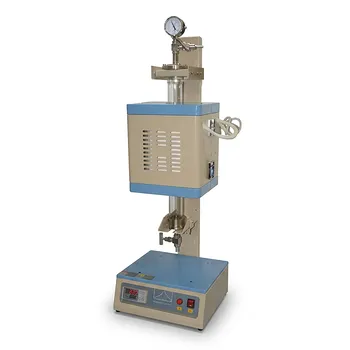
Compact Vertical Split Quartz Tube Furnace with Stainless Steel Vacuum Flanges for Rapid Thermal Quenching and Controlled Atmosphere Material Processing
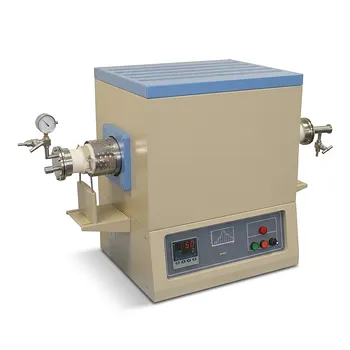
1700C High Temperature Alumina Tube Furnace with 18 Inch Heated Zone and Vacuum Sealing Flanges
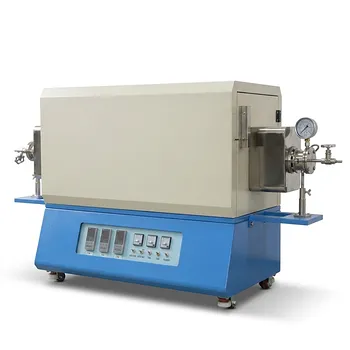
Three Temperature Zone High Temperature Vacuum Tube Furnace for CVD and Material Sintering

High Temperature 1700C Vertical Tube Furnace for Powder Spherification and Material Sintering
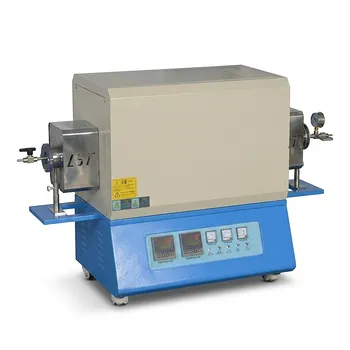
High Temperature Dual Zone Vacuum Tube Furnace for Material Research and CVD Processing

Compact High Temperature 1600C Tube Furnace with 50mm Alumina Tube and Vacuum Flanges for Material Sintering
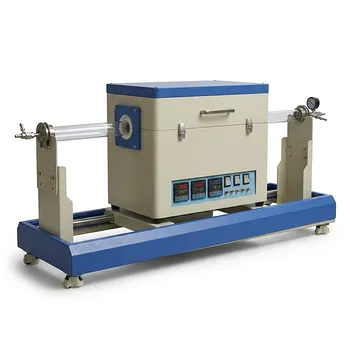
Double Temperature Zone Double Cover Tube Furnace for High Temperature CVD and Vacuum Annealing
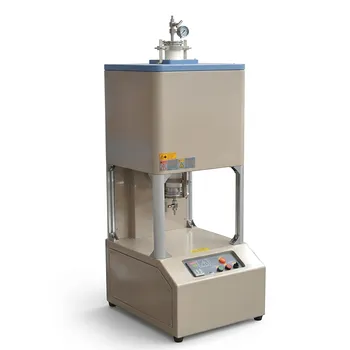
Vertical 1700C Vacuum and Atmosphere Tube Furnace with 80mm Alumina Tube

High Temperature 1700C Tube Furnace with High Vacuum Turbomolecular Pump System and Multi Channel Mass Flow Controller Gas Mixer
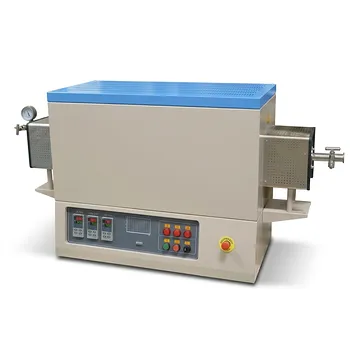
Three Zone Alumina Tube Furnace with Vacuum Flanges High Temperature 1700C Thermal Gradient CVD System

1800C High Temperature Compact Vacuum Tube Furnace with 60mm OD Alumina Tube and Kanthal MoSi2 Heating Elements
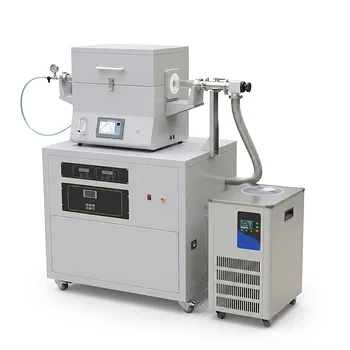
Split Chamber CVD Tube Furnace with Vacuum Station Chemical Vapor Deposition System Machine
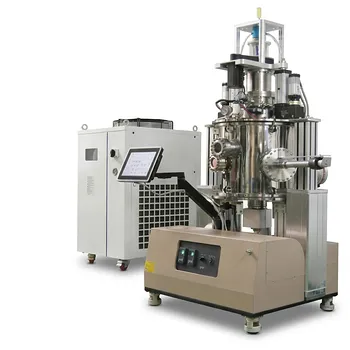
950C Rapid Thermal Processing Furnace for 12 Inch Wafer CSS Coating with Rotating Substrate Holder
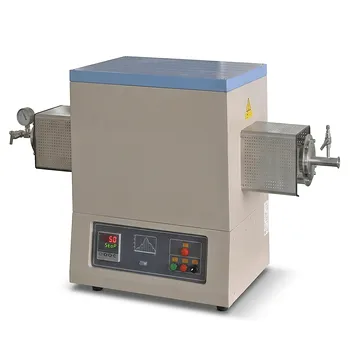
High Temperature 1700C Tube Furnace with 4 Inch OD Alumina Tube and Vacuum Sealing Flanges
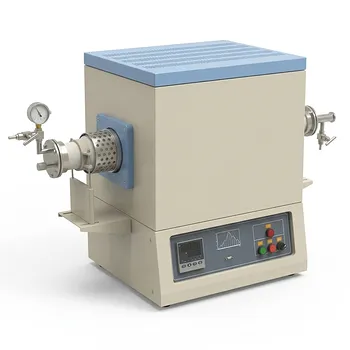
1750°C High Temperature Benchtop Vacuum Atmosphere Tube Furnace with Kanthal Super 1800 Heating Elements and 60mm Alumina Processing Tube
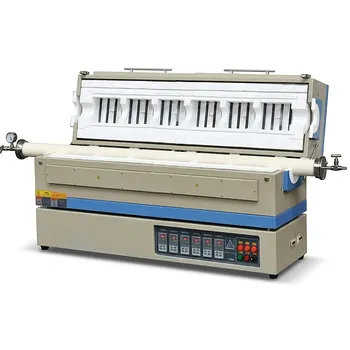
High Temperature 1700C Six Zone Split Tube Furnace with Alumina Tube and Water Cooled Flanges
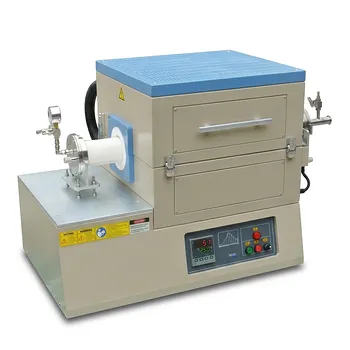
High Temperature 1700C Split Tube Furnace with Vacuum Flanges Valves and 60mm Alumina Tube