Why is an additional annealing treatment under nitrogen protection typically required for VOx@VACNT? Key Optimization Steps
Updated 3 months ago
The requirement for post-deposition annealing under nitrogen protection is a dual-purpose optimization step. This process leverages Ostwald Ripening to transform amorphous deposits into high-quality crystals while simultaneously utilizing an inert atmosphere to prevent the degradation of vanadium into non-functional oxidation states.
To achieve high-performance thermochromic properties, the VOx@VACNT hybrid must undergo a transition from a small-grain amorphous state to a larger-grain crystalline structure. This structural evolution must occur within a strictly controlled nitrogen environment to ensure the vanadium remains in its active tetravalent (V4+) state.
The Structural Necessity of Post-Deposition Annealing
Leveraging Ostwald Ripening for Particle Growth
During the initial vapor deposition, vanadium oxide particles often settle in a fine, amorphous state with an average size of approximately 70 nanometers. The annealing process maintains a high temperature for a specific duration—typically 15 minutes—to trigger Ostwald Ripening.
This phenomenon allows smaller particles to dissolve and redeposit onto larger ones, effectively increasing the particle size to roughly 170 nanometers. This growth is essential for reducing grain boundary defects and stabilizing the material.
Enhancing Crystallinity and Physical Properties
Crystalline structures are inherently more stable and provide superior physical-chemical properties compared to their amorphous counterparts. Annealing provides the thermal energy necessary for atoms to rearrange into a highly ordered crystal lattice.
Without this step, the material remains disordered, which negatively impacts its efficiency and durability in real-world applications. A well-ordered crystal structure is the foundation of the material's functional performance.
The Role of Nitrogen in Chemical Preservation
Preventing the Formation of Pentavalent Oxides
Vanadium is highly sensitive to oxygen when exposed to high temperatures. In the presence of even trace amounts of air, vanadium dioxide ($VO_2$) will rapidly oxidize into pentavalent vanadium oxides (like $V_2O_5$) or intermediate phases such as $V_6O_{13}$.
These higher oxidation states are undesirable because they do not possess the thermochromic properties required for smart material applications. Nitrogen acts as a protective shield, excluding oxygen from the reaction chamber.
Preserving the Tetravalent (V4+) State
The goal of the entire synthesis is to maintain vanadium in its tetravalent (V4+) state. This specific chemical state is what enables the material to undergo a standard phase transition at approximately 68 degrees Celsius.
By strictly controlling the atmosphere with continuous high-purity nitrogen flow, the material retains its infrared regulation capabilities. This ensures the final product can effectively switch between insulating and metallic states as intended.
Understanding the Trade-offs
The Risk of Excessive Growth
While larger particles generally improve crystallinity, excessive annealing can lead to over-ripening. If particles grow too large or begin to coalesce unevenly, the surface area-to-volume ratio changes, which may diminish the responsiveness of the VOx@VACNT hybrid.
Atmospheric Sensitivity
The margin for error regarding the nitrogen environment is slim. Any leakage of oxygen during the 15-minute annealing window can result in a heterogeneous phase composition, where parts of the sample are functional and others are inert.
How to Apply Detailed Control to Your Process
When finalizing the VOx@VACNT synthesis, your choice of parameters should be dictated by your specific performance requirements:
- If your primary focus is phase transition accuracy: You must prioritize the nitrogen flow rate and purity to ensure the V4+ state is perfectly preserved for a clean $68^\circ C$ transition.
- If your primary focus is structural durability: You must focus on the annealing duration to ensure Ostwald Ripening reaches the target 170nm size, providing the necessary crystalline stability.
- If your primary focus is infrared modulation efficiency: You must find the balance between temperature and time to maximize crystallinity without causing the particles to detach from the VACNT substrate.
Properly executed, this post-processing step transforms a raw deposit into a sophisticated, high-performance thermochromic hybrid.
Summary Table:
| Process Parameter | Pre-Annealing State | Post-Annealing (N2 Protected) |
|---|---|---|
| Material Structure | Amorphous / Disordered | High-Quality Crystal Lattice |
| Average Particle Size | ~70 nanometers | ~170 nanometers (Ostwald Ripening) |
| Oxidation State | Unstable VOx | Optimized Tetravalent (V4+) State |
| Phase Transition | Inconsistent / Inactive | Stable at ~68°C |
Elevate Your Material Research with THERMUNITS Precision
Achieving the perfect crystalline structure for VOx@VACNT requires uncompromising thermal and atmospheric control. THERMUNITS is a leading manufacturer of high-temperature laboratory equipment for material science and industrial R&D. We provide the specialized tools necessary to manage delicate processes like Ostwald Ripening and oxidation state preservation.
Our comprehensive range of thermal solutions includes:
- Atmosphere and Vacuum Furnaces for strict nitrogen environment control.
- Tube, Muffle, and Rotary Furnaces for uniform heat distribution.
- CVD/PECVD systems and Vacuum Induction Melting (VIM) for advanced material synthesis.
- Dental and Hot Press Furnaces tailored for specific industrial applications.
Ready to optimize your heat treatment process? Contact our experts today to discover how THERMUNITS can bring superior repeatability and infrared modulation efficiency to your laboratory research.
References
- Inga Dönges, Jörg J. Schneider. Selective Synthesis of 3D Aligned VO<sub>2</sub> and V<sub>2</sub>O<sub>5</sub> Carbon Nanotube Hybrid Materials by Chemical Vapor Deposition. DOI: 10.1002/chem.202402024
Mentioned Products
- High Temperature Vertical Atmosphere Controlled Furnace with Automatic Bottom Loading and 1700°C Capacity for Advanced Material Research
- High Temperature 1000C Vacuum Furnace with 8 Inch ID Chamber for Material Sintering and Research Annealing
- High Temperature Cold Wall Vacuum Furnace for Advanced Material Sintering and Annealing 1600C Heating Area 200x200x300mm
- Double Temperature Zone Double Cover Tube Furnace for High Temperature CVD and Vacuum Annealing
- High Temperature 1500C Benchtop Muffle Furnace 3.6L Alumina Fiber Chamber Programmable Controller Sintering Annealing Carbonization Thermal Processing System
People Also Ask
- What role does atmosphere control play in technical ceramics and glass? Master Material Purity and Precision
- What is the function of a vertical tube furnace in MnOx-SiO2 research? Precision Control & Quenching
- What's the Role of Tube Furnaces in FeCuS-N-C Synthesis? Precision Pyrolysis & Atmosphere Control
- What role does a high-temperature atmosphere furnace play in the direct electrochemical reduction of CO2? - Key Insights
- What is the function of a high-temperature tube furnace with atmosphere control? Optimize Carbonization of Composites

Tech Team · ThermUnits
Last updated on Jun 03, 2026
Related Products
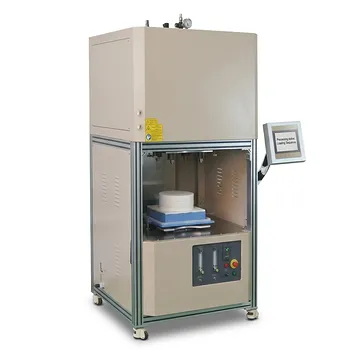
High Temperature Vertical Atmosphere Controlled Furnace with Automatic Bottom Loading and 1700°C Capacity for Advanced Material Research
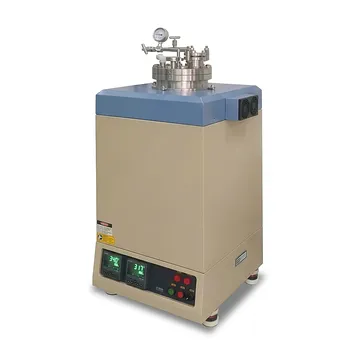
High Temperature 1000C Vacuum Furnace with 8 Inch ID Chamber for Material Sintering and Research Annealing
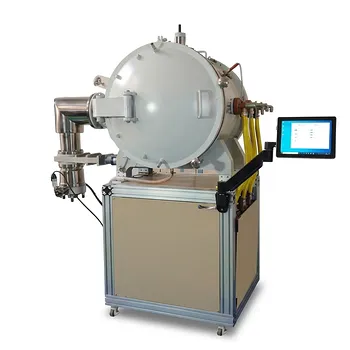
High Temperature Cold Wall Vacuum Furnace for Advanced Material Sintering and Annealing 1600C Heating Area 200x200x300mm
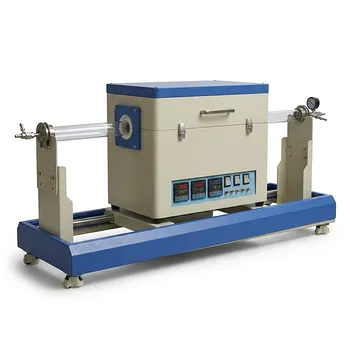
Double Temperature Zone Double Cover Tube Furnace for High Temperature CVD and Vacuum Annealing
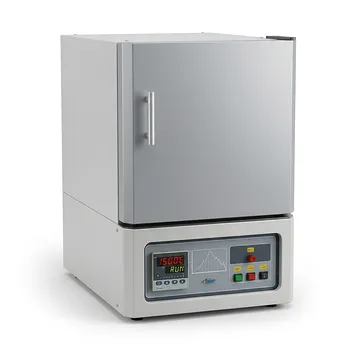
High Temperature 1500C Benchtop Muffle Furnace 3.6L Alumina Fiber Chamber Programmable Controller Sintering Annealing Carbonization Thermal Processing System
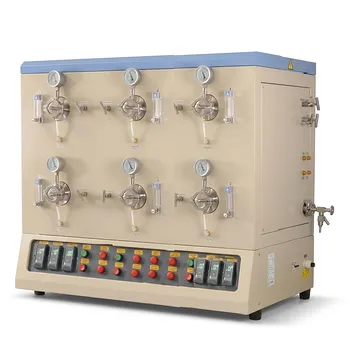
1200C High Throughput Multi Channel Tube Furnace with 50mm Quartz Tubes for Annealing and Material Phase Diagram Research
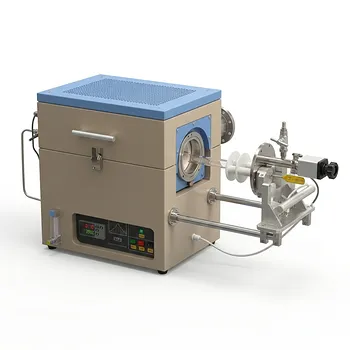
Compact Atmosphere Controlled Rapid Thermal Processing RTP Furnace with 4 Inch ID Quartz Tube 1100C
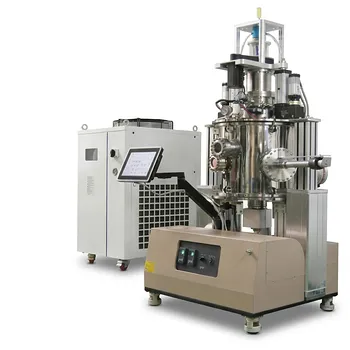
950C Rapid Thermal Processing Furnace for 12 Inch Wafer CSS Coating with Rotating Substrate Holder
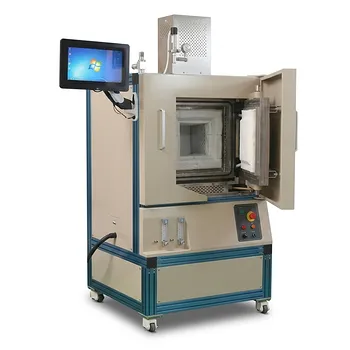
High Temperature Oxygen and Inert Atmosphere Controlled Furnace 8 Liter 1700C Sintering System for Advanced Materials RD

High Temperature 1700C Vertical Tube Furnace for Powder Spherification and Material Sintering
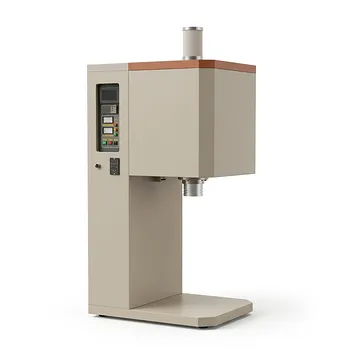
Vertical Openable Tube Furnace 0-1700c High Temperature Laboratory System for CVD and Vacuum Heat Treatment
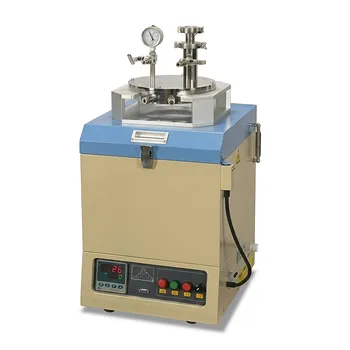
Vertical Vacuum Furnace 1100C High Temperature 8 Inch Quartz Chamber Water Cold Flange System
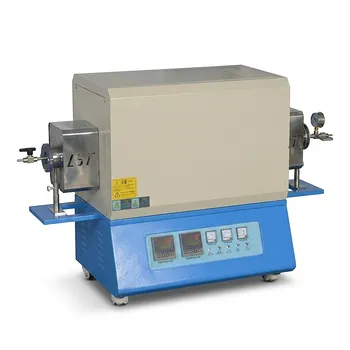
High Temperature Dual Zone Vacuum Tube Furnace for Material Research and CVD Processing
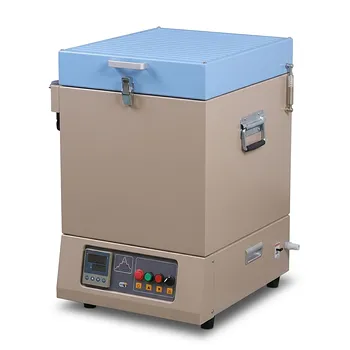
High Temperature Vertical Crucible Furnace with 22L Heating Chamber and 1200C Maximum Temperature
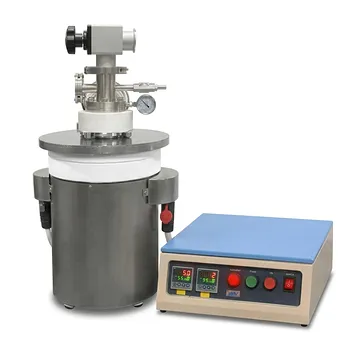
1100C High Temperature Vacuum Crucible Furnace with Quartz Chamber for Thermal Processing and Sintering
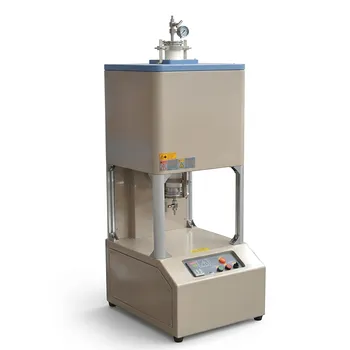
Vertical 1700C Vacuum and Atmosphere Tube Furnace with 80mm Alumina Tube
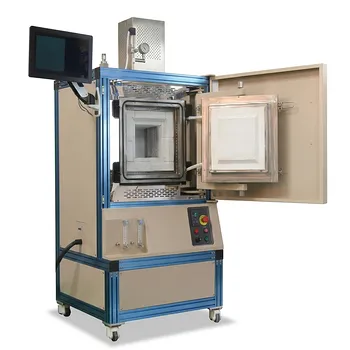
High Temperature Hydrogen Atmosphere Box Furnace 1650C Max Reducing Environment Material Synthesis System 8x8x8 Chamber
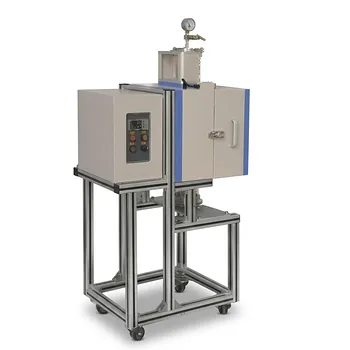
1200°C 5 Inch Vertical Quartz Tube Furnace with Stainless Steel Vacuum Flanges
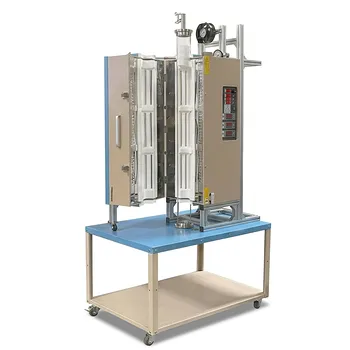
1200C Three Zone Split Vertical Tube Furnace 4 Inch Quartz Tube Stainless Steel Vacuum Flanges