Why is high-purity nitrogen required for CuCrO2 thin film annealing? Key Protective Atmosphere Benefits
Updated 3 months ago
The use of high-purity nitrogen during the annealing of $CuCrO_2$ thin films is a critical control mechanism rather than a passive shield. It creates an inert environment that prevents uncontrolled deep oxidation and the adsorption of atmospheric impurities at high temperatures. By strictly managing the chemical environment, nitrogen ensures the film maintains its specific delafossite phase, $p$-type conductivity, and semiconductor performance.
High-purity nitrogen acts as a chemical stabilizer that prevents the over-oxidation of copper ions and regulates the formation of intrinsic defects. This precise atmosphere control is the primary requirement for achieving the stoichiometric balance necessary for high-performance transparent electronics.
Preventing Over-Oxidation and Maintaining Copper Valency
Preservation of the Monovalent Copper State
$CuCrO_2$ belongs to the delafossite family, where the copper must remain in the monovalent state ($Cu^+$) to maintain phase stability. High-purity nitrogen isolates the film from ambient oxygen, preventing these ions from over-oxidizing into the divalent state ($Cu^{2+}$).
Inhibition of Secondary Phase Formation
Uncontrolled exposure to oxygen at high temperatures can lead to the formation of undesired oxide phases, such as $CuO$ or $Cu_2O$. A stable nitrogen flow ensures that the chemical reaction remains focused on the $CuCrO_2$ lattice rather than forming disordered oxide particles that degrade film quality.
Protecting Optical Transparency
Maintaining the $Cu^+$ state is essential for the material's high transparency. The presence of divalent copper ($Cu^{2+}$) or intermediate oxidation phases can introduce absorption centers that diminish the film's optical performance.
Engineering Point Defects for P-type Conductivity
Management of Oxygen Vacancies
The semiconductor characteristics of $CuCrO_2$ are heavily dependent on intrinsic defects, specifically oxygen vacancies and copper vacancies. An inert nitrogen atmosphere allows for the controlled management of these defects during the thermal reorganization process.
Ensuring Electrical Performance
$P$-type conductivity in these films is often a result of specific hole-generating defects within the lattice. By excluding environmental impurities and excess oxygen, the nitrogen atmosphere ensures that the electronic properties are governed by the material's stoichiometry rather than external contaminants.
Surface and Morphology Stability
A continuous flow of nitrogen prevents the adsorption of environmental impurities that could disrupt the film's surface. This results in better nanometer-level flatness and low surface roughness, which are vital for the uniform growth of subsequent functional layers in electronic devices.
Understanding the Trade-offs and Challenges
The Cost of Purity vs. Film Quality
While ultra-high purity nitrogen is expensive, using lower grades can introduce trace amounts of water vapor or oxygen. Even parts-per-million levels of contamination can cause "oxidative ablation" or unwanted doping, rendering the semiconductor properties inconsistent.
Gas Flow Dynamics and Thermal Uniformity
While nitrogen acts as a heat transfer medium, excessive flow rates can lead to localized cooling or non-uniform temperature distribution across the furnace. This can result in inhomogeneous chemical reactions and variations in the film's morphology.
Stoichiometric Sensitivity
Nitrogen is inert, but it does not actively "fix" a lack of oxygen if the initial film is oxygen-deficient. The annealing process must find a delicate balance; it must prevent further oxidation without causing the unintended volatilization of existing film components.
How to Apply This to Your Process
When configuring your thermal furnace for $CuCrO_2$ annealing, your choice of atmosphere should align with your specific device requirements.
- If your primary focus is Maximum Transparency: Prioritize ultra-high purity nitrogen (99.999% or higher) to strictly prevent the formation of $Cu^{2+}$ ions and secondary oxide phases.
- If your primary focus is Electrical Conductivity: Closely monitor the nitrogen flow rate and pressure to ensure a stable environment that optimizes the formation of $p$-type charge carriers.
- If your primary focus is Surface Smoothness: Ensure a continuous, laminar flow of nitrogen to prevent the accumulation of disordered particles and environmental dust on the film surface.
Maintaining a rigorous nitrogen atmosphere is the definitive method for ensuring the chemical stability and phase purity of delafossite thin films.
Summary Table:
| Parameter | Role of Nitrogen Atmosphere | Impact on CuCrO2 Film |
|---|---|---|
| Copper Valency | Maintains monovalent $Cu^+$ state | Prevents $CuO/Cu_2O$ secondary phases |
| Phase Purity | Isolates from ambient impurities | Ensures stable delafossite structure |
| Conductivity | Regulates intrinsic point defects | Optimizes $p$-type semiconductor performance |
| Morphology | Provides stable laminar gas flow | Ensures nanometer-level surface smoothness |
Elevate Your Material Research with THERMUNITS
As a leading manufacturer of high-temperature laboratory equipment, THERMUNITS provides the precision atmosphere control necessary for advanced material science. Whether you are annealing $CuCrO_2$ thin films or developing next-generation semiconductors, our range of Atmosphere, Vacuum, and Tube Furnaces ensures the rigorous environment required for success.
Why choose THERMUNITS for your R&D?
- Precise Gas Control: Specialized systems designed for high-purity nitrogen and inert gas management.
- Thermal Uniformity: Guaranteed temperature stability for consistent film morphology and stoichiometric balance.
- Comprehensive Range: We offer everything from CVD/PECVD systems and Muffle furnaces to Vacuum Induction Melting (VIM) and Hot Press furnaces.
Don't let atmospheric contamination compromise your thin film performance. Contact THERMUNITS today to find your perfect thermal solution!
References
- Akash Hari Bharath, Kalpathy B. Sundaram. Characterization of reactively sputter deposited CuCrO<sub>2</sub> thin films using Cu and Cr targets. DOI: 10.1039/d4ma00799a
Mentioned Products
- High Temperature 800C Rapid Thermal Processing Furnace with Rotating Sample Holder for Close Spaced Sublimation and Thin Film Solar Cell Research
- 950C Rapid Thermal Processing Furnace for 12 Inch Wafer CSS Coating with Rotating Substrate Holder
- Two Zones CSS Furnace for Rapid Thermal Processing Thin Film Coating 3 Inch Diameter 650C
- Rapid Thermal Processing Furnace 1100C Atmosphere Controlled Bottom Loading RTP System for Wafer Annealing and Catalysis Research
- Rapid Thermal Processing Atmosphere Controlled Bottom Loading Furnace 1100C with 50C Per Second Heating Rate for Wafer Annealing
People Also Ask
- What role does a SiC-coated graphite susceptor play in H2Se selenization? Boost RTP Thermal Uniformity & Film Purity.
- What is the purpose of coating ceramic sheets with platinum paste? Achieve Stable High-Temp Ohmic Contacts
- What are the functional advantages of an RTP system for surface deposition? Enhance Heterojunction Interface Integrity
- What are the advantages of RTPR for Pd1/PU catalyst synthesis? Achieve superior single-atom dispersion and stability.
- How does a high-temperature tube furnace optimize palladium thin film pre-annealing? Improve Grain Growth & Stress Relief

Tech Team · ThermUnits
Last updated on Jun 03, 2026
Related Products
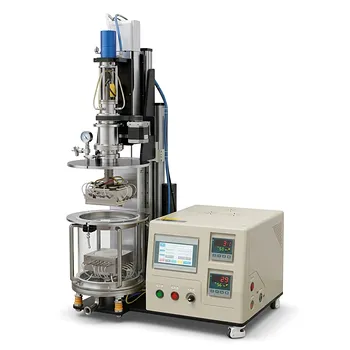
High Temperature 800C Rapid Thermal Processing Furnace with Rotating Sample Holder for Close Spaced Sublimation and Thin Film Solar Cell Research
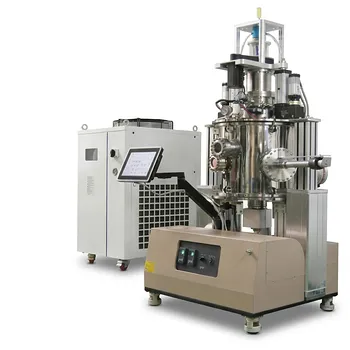
950C Rapid Thermal Processing Furnace for 12 Inch Wafer CSS Coating with Rotating Substrate Holder
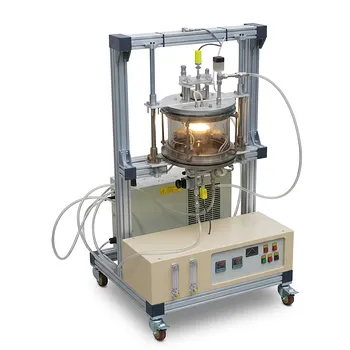
Two Zones CSS Furnace for Rapid Thermal Processing Thin Film Coating 3 Inch Diameter 650C
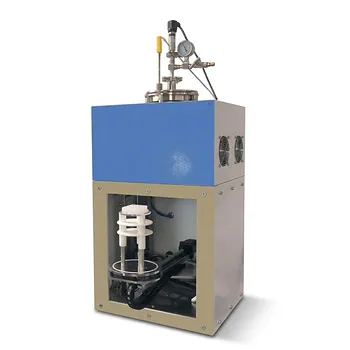
Rapid Thermal Processing Furnace 1100C Atmosphere Controlled Bottom Loading RTP System for Wafer Annealing and Catalysis Research
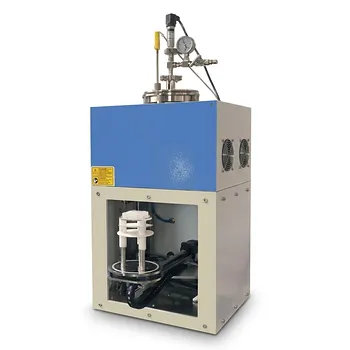
Rapid Thermal Processing Atmosphere Controlled Bottom Loading Furnace 1100C with 50C Per Second Heating Rate for Wafer Annealing
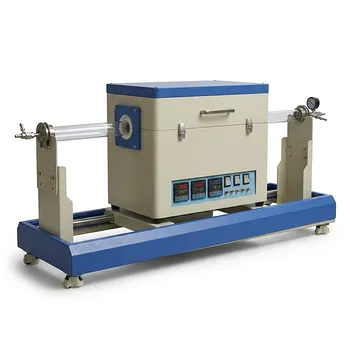
Double Temperature Zone Double Cover Tube Furnace for High Temperature CVD and Vacuum Annealing
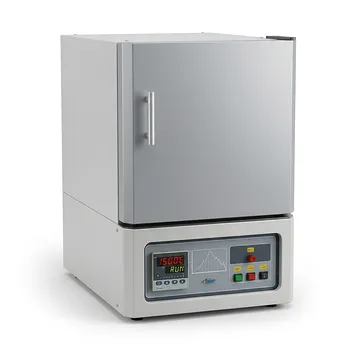
High Temperature 1500C Benchtop Muffle Furnace 3.6L Alumina Fiber Chamber Programmable Controller Sintering Annealing Carbonization Thermal Processing System
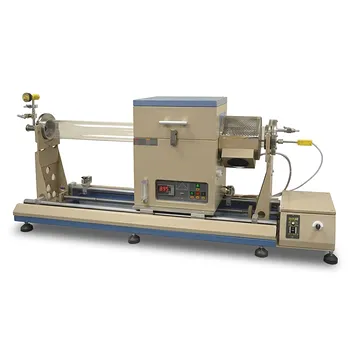
900 ºC Max Sliding RTP Tube Furnace with Rapid IR Heating and 4 Inch OD Quartz Tube
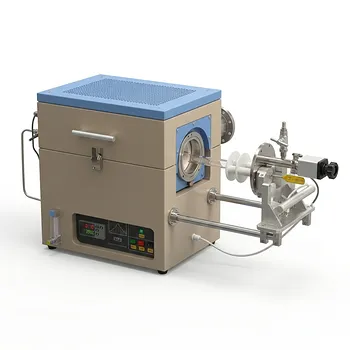
Compact Atmosphere Controlled Rapid Thermal Processing RTP Furnace with 4 Inch ID Quartz Tube 1100C
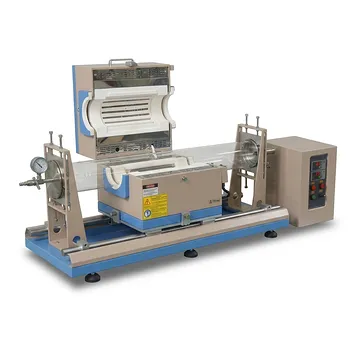
1200C High Temperature 5 Inch Sliding Tube Furnace for Rapid Thermal Processing RTP and Wafer Annealing
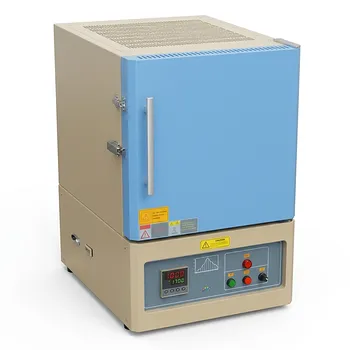
Large Bench Top 1700C High Temperature Muffle Furnace with 19L Chamber for Advanced Material Sintering and Annealing
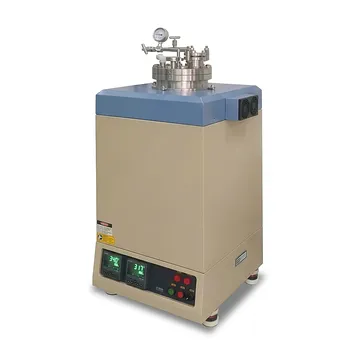
High Temperature 1000C Vacuum Furnace with 8 Inch ID Chamber for Material Sintering and Research Annealing
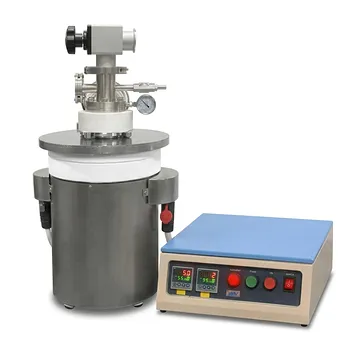
1100C High Temperature Vacuum Crucible Furnace with Quartz Chamber for Thermal Processing and Sintering
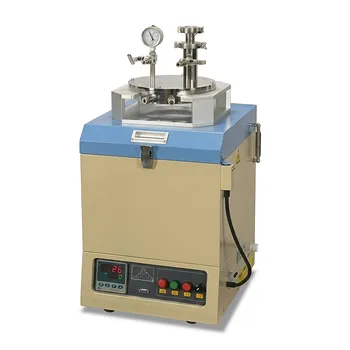
Vertical Vacuum Furnace 1100C High Temperature 8 Inch Quartz Chamber Water Cold Flange System
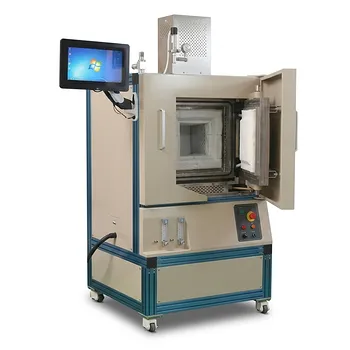
High Temperature Oxygen and Inert Atmosphere Controlled Furnace 8 Liter 1700C Sintering System for Advanced Materials RD
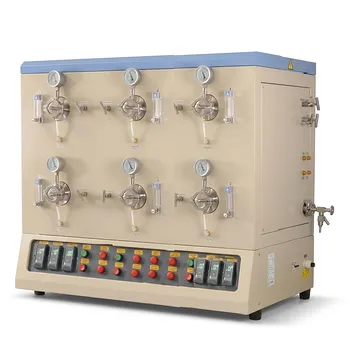
1200C High Throughput Multi Channel Tube Furnace with 50mm Quartz Tubes for Annealing and Material Phase Diagram Research
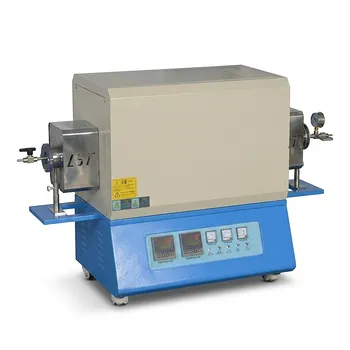
High Temperature Dual Zone Vacuum Tube Furnace for Material Research and CVD Processing
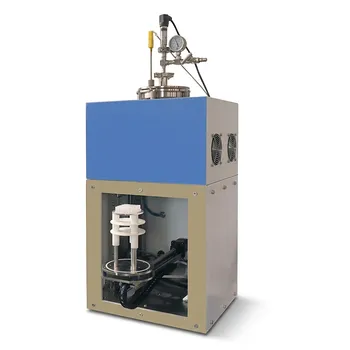
Rapid Thermal Processing RTP Atmosphere Controlled Bottom Loading Furnace 1100C High Throughput 50C per Second Heating Rate
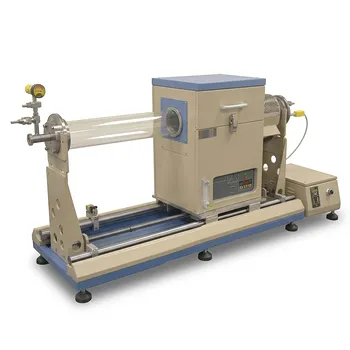
Rapid Thermal Processing Sliding Tube Furnace with 4 Inch OD Quartz Tube and 900C IR Heating