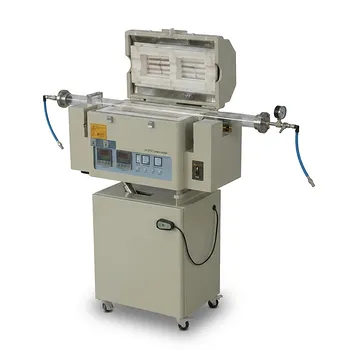
What is the function of the tube furnace and quartz tube in OA-CVD for MoS2? Optimizing Monolayer Crystal Growth
Updated 3 months ago
The tube furnace and quartz tube serve as the thermal engine and the high-purity vessel required to transform solid precursors into crystalline Molybdenum Disulfide ($MoS_2$). In Oxygen-Assisted Chemical Vapor Deposition (OA-CVD), the furnace establishes precise temperature gradients to vaporize sulfur and molybdenum oxide precursors sequentially, while the quartz tube provides a chemically inert, hermetically sealed environment. This combination allows for the controlled transport and deposition of gas-phase precursors onto a substrate to form high-quality monolayer films.
The success of $MoS_2$ growth depends on the synergy between the furnace's thermal precision and the quartz tube's environmental isolation. Together, they enable a stable, oxygen-enriched atmosphere that facilitates the epitaxial growth of large-area, single-crystal flakes.
The Tube Furnace: Orchestrating Thermal Gradients
Differential Vaporization of Precursors
The primary role of the tube furnace is to create a precise and controlled thermal field with specific axial temperature gradients. By utilizing multiple heating zones, the furnace can simultaneously sublimate sulfur powder in a low-temperature zone and molybdenum oxide ($MoO_3$) in a high-temperature zone.
Thermal Stability and Crystal Quality
High-precision temperature control, often maintained around 750°C to 800°C, is critical for ensuring a consistent reaction rate. This stability determines the thickness consistency and lattice quality of the resulting $MoS_2$ films, preventing defects and ensuring uniform monolayer growth across the substrate.
Establishing the Reaction Zone
The horizontal design of the furnace allows for a high aspect ratio, which is essential for establishing a downstream flow. This design ensures that vaporized precursors are carried from their respective heating zones to the cooler substrate, where they undergo a controlled chemical reaction.
The Quartz Tube: Maintaining Reaction Integrity
High-Purity Reaction Chamber
The quartz tube acts as a hermetically sealed environment that isolates the reaction from atmospheric interference. Its high-purity composition ensures that no metallic impurities are introduced into the growth process, which is vital for maintaining the electrical properties of the $MoS_2$ film.
Controlled Atmosphere and Transport
Within the quartz tube, a specific mixture of Argon and Oxygen ($Ar/O_2$) serves as the carrier gas. The tube maintains the pressure and flow dynamics necessary to transport gas-phase precursors to the substrate, while the added oxygen helps refine the growth kinetics for better crystal quality.
Chemical and Thermal Durability
Quartz is chosen for its chemical stability and resistance to high temperatures, allowing it to withstand repeated heating cycles without reacting with the sulfur or metal precursors. Its transparency also offers the secondary benefit of visual monitoring, allowing researchers to observe the status of the precursors and the reaction environment.
Understanding the Trade-offs and Limitations
Thermal Lag and Gradient Drift
While tube furnaces provide stable heat, they are subject to thermal lag, where the internal temperature of the quartz tube may differ from the furnace’s sensor readings. This discrepancy can lead to inconsistent sublimation rates if not properly calibrated, potentially resulting in multi-layer growth instead of the desired monolayers.
Quartz Devitrification and Contamination
Repeated exposure to high temperatures and sulfur vapors can cause the quartz tube to undergo devitrification, leading to structural weakness and potential flaking. Over time, precursor residues can accumulate on the tube walls, which may act as nucleation sites or sources of contamination if the tube is not rigorously cleaned between growth runs.
Applying This to Your Growth Process
Strategic Setup for Specific Goals
- If your primary focus is large-area wafer scale growth: Prioritize a multi-zone furnace with a long constant-temperature zone to ensure uniform sulfurization across the entire substrate surface.
- If your primary focus is high crystalline purity: Use a dedicated high-purity quartz liner and ensure the tube is vacuum-sealed to reach low base pressures before introducing the $Ar/O_2$ mix.
- If your primary focus is growing the 1T' phase of $MoS_2$: Ensure your furnace can maintain highly stable temperatures at specific thresholds (e.g., 750°C) under a strictly controlled carrier gas flow.
Mastering the interaction between the furnace's thermal zones and the quartz tube's atmosphere is the definitive path to achieving reproducible, high-performance $MoS_2$ electronics.
Summary Table:
| Component | Key Function | Impact on MoS2 Quality |
|---|---|---|
| Tube Furnace | Precise thermal gradients & multi-zone heating | Controls sublimation rates and layer thickness consistency |
| Quartz Tube | High-purity vessel & atmospheric isolation | Ensures electrical purity and prevents metallic contamination |
| Carrier Gas | Transport of sulfur and oxide precursors | Refines growth kinetics for large-area, single-crystal flakes |
Optimize Your 2D Material Synthesis with THERMUNITS
As a leading manufacturer of high-temperature laboratory equipment, THERMUNITS provides the thermal precision required for advanced MoS2 growth and material science research. Our comprehensive range of solutions—including CVD/PECVD systems, Tube, Vacuum, and Atmosphere furnaces—is designed to meet the rigorous demands of industrial R&D.
Ready to enhance your lab's efficiency? Contact our experts today to discover how our specialized heat treatment equipment can elevate your research results!
References
- Jitendra Singh, Hung‐Wei Yen. Growth of Wafer‐Scale Single‐Crystal 2D Semiconducting Transition Metal Dichalcogenide Monolayers. DOI: 10.1002/advs.202307839
Mentioned Products
- High Temperature 1200C Automatic Sliding Dual Zone Tube Furnace for 2D Transition Metal Dichalcogenides Growth and Material Sublimation Research
- 1200C Dual Temperature Zone Slidable Tube Furnace for 2D Material Growth and TCVD Synthesis
- 5 Inch Three Zone Rotary Tube Furnace with Integrated Gas Delivery System and 1200C Capability for Advanced Material CVD Processing
- Dual Tube 100mm 80mm CVD Sliding Furnace with 4 Channel Gas Mixing and Vacuum System
- Vertical Openable Tube Furnace 0-1700c High Temperature Laboratory System for CVD and Vacuum Heat Treatment
People Also Ask
- What are the technical advantages of a dual-zone tube furnace for phosphidation? Optimize Cobalt Nanowall Synthesis.
- What is the value of a dual-zone tube furnace in coal ash deposition? Precision Simulation of Sodium Vapor Scaling.
- Why is a double-temperature zone tube furnace utilized for the preparation of monolayer MoS2? Precision CVD Explained
- What is the function of a high-precision dual-zone tube furnace in MAPbI3 deposition? Expert Perovskite Synthesis.
- What technical advantages does a Dual-zone Tube Furnace provide for ZnSe sulfidation? Precision & Quality Control.

Tech Team · ThermUnits
Last updated on Jun 03, 2026
Related Products
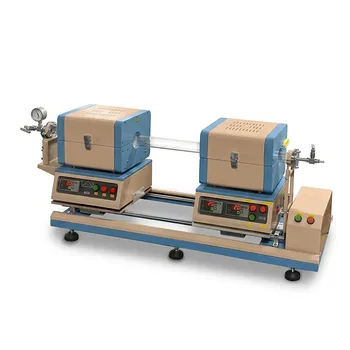
High Temperature 1200C Automatic Sliding Dual Zone Tube Furnace for 2D Transition Metal Dichalcogenides Growth and Material Sublimation Research
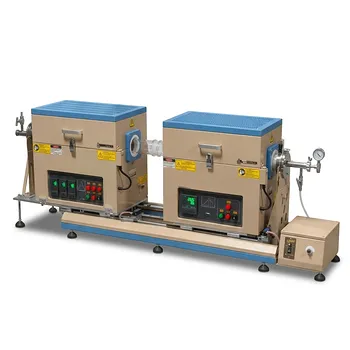
1200C Dual Temperature Zone Slidable Tube Furnace for 2D Material Growth and TCVD Synthesis
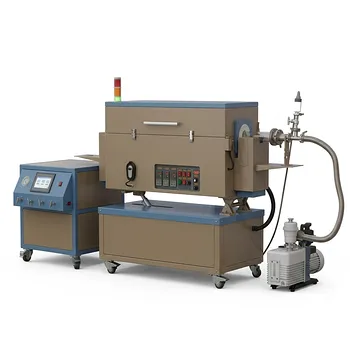
5 Inch Three Zone Rotary Tube Furnace with Integrated Gas Delivery System and 1200C Capability for Advanced Material CVD Processing
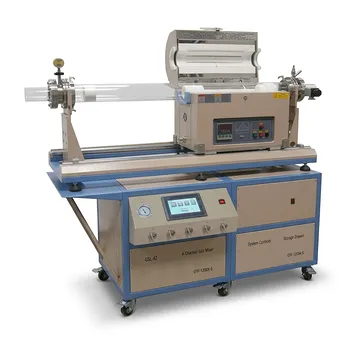
Dual Tube 100mm 80mm CVD Sliding Furnace with 4 Channel Gas Mixing and Vacuum System
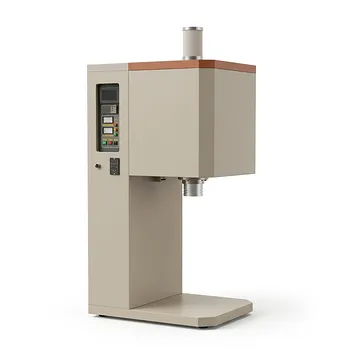
Vertical Openable Tube Furnace 0-1700c High Temperature Laboratory System for CVD and Vacuum Heat Treatment
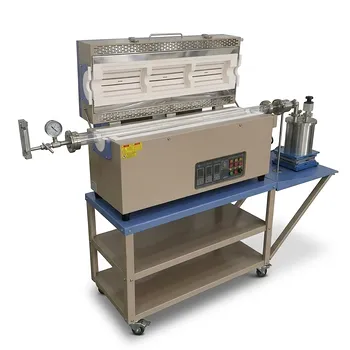
5 Inch Two Zone Rotary Tube Furnace 1100C for Powder CVD and Material Synthesis
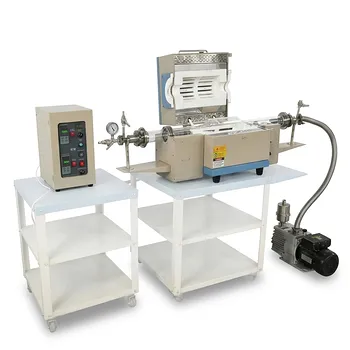
Two Zone Rotary Tube Furnace for Powder CVD Coating and Core Shell Material Synthesis 1100C
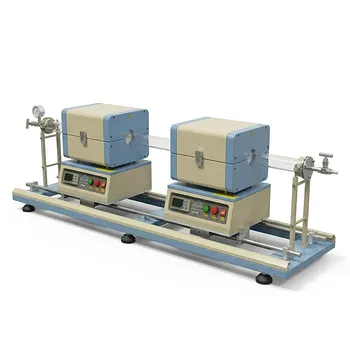
1200C Max Dual Sliding Tube Furnace with 50 mm Tube Flanges for CVD
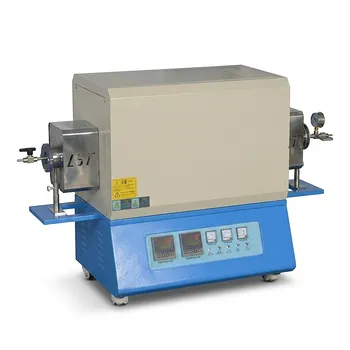
High Temperature Dual Zone Vacuum Tube Furnace for Material Research and CVD Processing
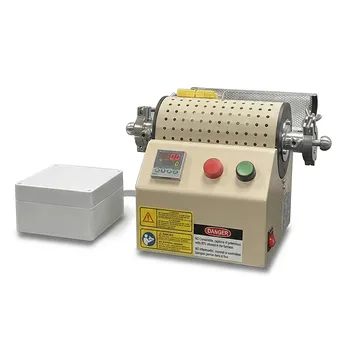
1000C Mini Tube Furnace with 20mm Quartz Tube and Vacuum Flanges for Material Science Research and Controlled Atmosphere Small Sample Processing
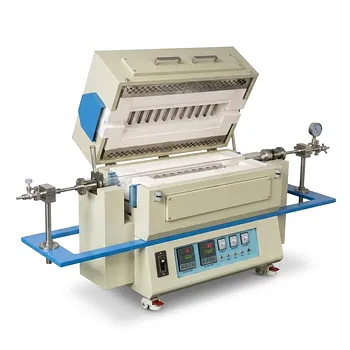
High Temperature Dual Zone Rotating Tube Furnace 1500C Silicon Carbide Heating for Advanced Material Synthesis
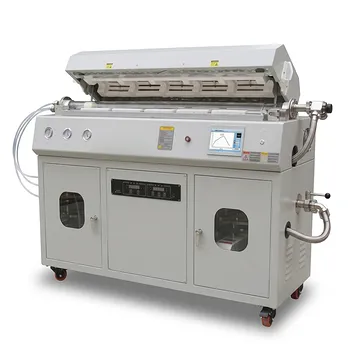
Multi Heating Zones CVD Tube Furnace System for Precision Chemical Vapor Deposition and Advanced Material Synthesis
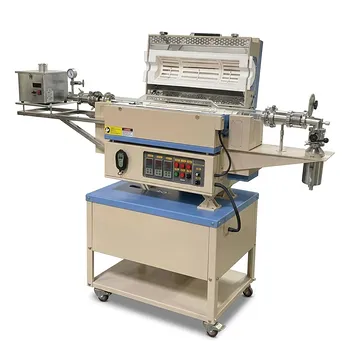
5 Inch Rotary Tube Furnace with Automatic Feeding and Receiving System 1200C Three Zone CVD Powder Processing
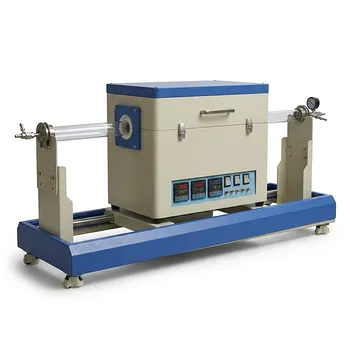
Double Temperature Zone Double Cover Tube Furnace for High Temperature CVD and Vacuum Annealing
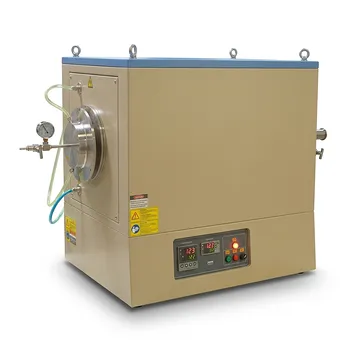
1100°C Large Diameter Quartz Tube Furnace with 24 Inch Heating Zone and Water Cooled Flanges
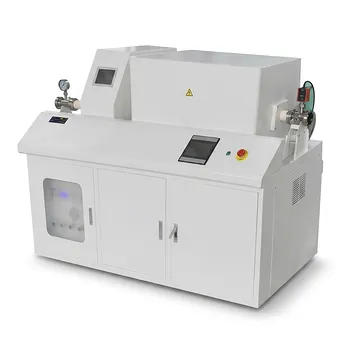
Chemical Vapor Deposition CVD System Slide PECVD Tube Furnace with Liquid Gasifier PECVD Machine
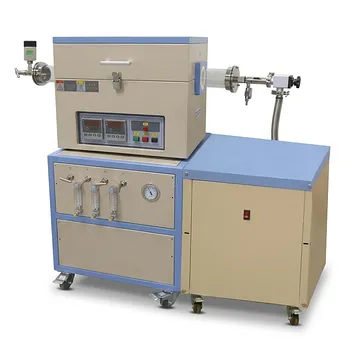
Dual Zone Quartz Tube Furnace with 80mm Diameter 1200C Max Temperature 3 Channel Gas Mixer and Vacuum Pump System
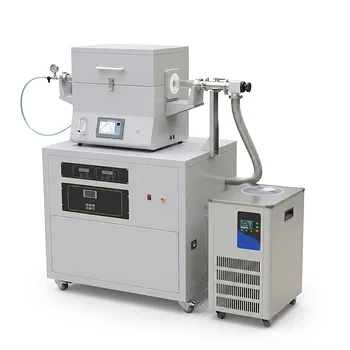
Split Chamber CVD Tube Furnace with Vacuum Station Chemical Vapor Deposition System Machine

High Temperature 1700C Tube Furnace with High Vacuum Turbomolecular Pump System and Multi Channel Mass Flow Controller Gas Mixer