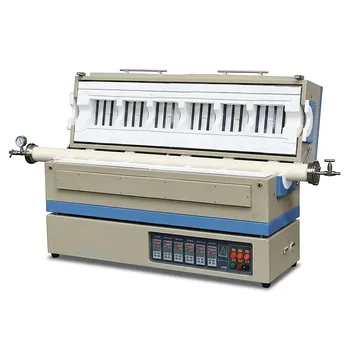
Why is a three-zone split furnace required for Alloy 800H tensile testing? Ensure Thermal Uniformity & Data Accuracy.
Updated 5 months ago
To ensure the accuracy of high-temperature tensile testing for Alloy 800H, a three-zone split furnace is required to provide independent thermal control across the specimen. This configuration allows for the compensation of heat loss at the specimen ends and grips, creating a highly uniform temperature field throughout the gauge length. Without this precise regulation, temperature gradients would lead to non-uniform deformation and unreliable mechanical property data.
The core advantage of a three-zone split furnace is its ability to eliminate temperature gradients by independently adjusting power to the top, middle, and bottom heating elements. This ensures that the entire parallel section of an Alloy 800H specimen remains within a tight thermal tolerance, which is essential for repeatable yield and tensile strength measurements.
The Challenge of Thermal Gradients in Tensile Testing
Compensating for End-Section Heat Loss
During high-temperature tests, such as those conducted at 760°C or 800°C, significant heat is conducted away from the specimen through the heavy metallic grips and pull rods.
A single-zone furnace cannot account for this localized cooling, typically resulting in a specimen that is cooler at the ends than in the center.
The three-zone design addresses this by providing independent heating power to the top and bottom sections, effectively "boosting" the heat at the ends to match the center.
Establishing a Uniform Temperature Field
High-precision testing requires maintaining temperature fluctuations within a narrow window, often as tight as ±1°C to ±3°C.
By regulating three separate heating zones, the furnace ensures that the parallel gauge section of the Alloy 800H specimen experiences a consistent thermal environment.
This uniformity is the foundation for obtaining accurate stress-strain data, as material behavior in Alloy 800H is highly sensitive to even minor temperature deviations.
Why Alloy 800H Demands High Precision
Evaluating Heterogeneous Welded Joints
Alloy 800H is frequently used in welded applications, where the heat-affected zone (HAZ) and fusion zone must be characterized.
A three-zone furnace allows researchers to precisely control the thermal environment across these different regions, ensuring that the mechanical properties measured are a result of the microstructure and not a temperature gradient.
If the temperature were not uniform, the weakest point of the specimen might be masked by localized cooling, leading to an incorrect assessment of the weld's integrity.
Capturing Temperature-Sensitive Phenomena
At elevated temperatures, Alloy 800H undergoes complex processes like dynamic grain growth and dynamic strain aging.
These metallurgical behaviors are heavily dependent on the exact local temperature; any gradient along the specimen would cause non-uniform deformation.
The three-zone furnace eliminates these variables, allowing for the calibration of creep activation energy and the development of accurate predictive models for industrial service.
Understanding the Trade-offs
Increased System Complexity
While three-zone furnaces provide superior uniformity, they require three independent PID controllers and multiple thermocouples positioned precisely along the specimen.
This increases the complexity of the experimental setup and requires more rigorous calibration compared to simpler single-zone systems.
Calibration and Sensor Placement
The accuracy of the system is entirely dependent on the placement of thermocouples; if the sensors are not properly aligned with the three zones, the furnace may "over-correct."
This can lead to artificial hot spots, which are just as detrimental to data integrity as the cold spots the furnace was designed to eliminate.
Applying Thermal Control to Your Project
Recommendations for High-Temperature Testing
- If your primary focus is Weld Characterization: Use a three-zone furnace to ensure the fusion zone and HAZ are tested at an identical temperature to the base metal, preventing "false failures" in the wrong regions.
- If your primary focus is Creep or Strain Aging Models: Prioritize a furnace system that guarantees fluctuations within ±1°C to ensure the thermodynamic parameters you calculate are physically meaningful.
- If your primary focus is Standard Bulk Properties: Ensure that thermocouples are attached directly to the top, middle, and bottom of the gauge length to verify that the three-zone control is functioning as intended.
Precise independent zone control is the only way to transform a high-temperature furnace from a simple heater into a reliable scientific instrument for Alloy 800H analysis.
Summary Table:
| Key Feature | Advantage for Alloy 800H Testing | Impact on Research Data |
|---|---|---|
| Independent Power Control | Compensates for heat loss at specimen ends and grips. | Eliminates non-uniform deformation. |
| Three-Zone PID Control | Maintains tight thermal tolerance (±1°C to ±3°C). | Ensures repeatable yield and tensile strength data. |
| Zonal Calibration | Allows precise testing of welded joints and HAZ. | Accurately identifies material failure points. |
| High Thermal Stability | Eliminates cold spots in the parallel gauge section. | Enables reliable creep activation energy modeling. |
Elevate Your Material Research with THERMUNITS
Precision is the foundation of scientific discovery. THERMUNITS is a leading manufacturer of high-temperature laboratory equipment, providing the specialized thermal solutions required for advanced material science and industrial R&D.
Whether you are conducting high-temperature tensile testing on Alloy 800H or exploring new metallurgical boundaries, our comprehensive range of furnaces—including Tube, Muffle, Vacuum, Atmosphere, Rotary, and Hot Press furnaces, as well as CVD/PECVD systems and Vacuum Induction Melting (VIM) furnaces—is designed to deliver industry-leading temperature uniformity and control.
Ready to optimize your heat treatment process? Contact our technical experts today to find the perfect thermal processing solution for your laboratory needs.
References
- Wenjing Li, Robyn Sloan. High-Temperature Creep and Microstructure Evolution of Alloy 800H Weldments with Inconel 625 and Haynes 230 Filler Materials. DOI: 10.3390/app14041347
Mentioned Products
- Three Zone Split Tube Furnace 36 Inch Heating Length High Temperature 1200C Material Research Furnace with Vacuum Flanges
- High Temperature 1500C Three Zone Split Tube Furnace with 80mm Alumina Tube and Vacuum Flange
- High Temperature Three Zone Split Tube Furnace 1200C Max 35.4 Inch Heating Length 8 Inch ID Tube
- 1200°C Three Zone Split Tube Furnace with 18 Inch Heating Length and Vacuum Flanges
- Three Zone Heating Split Vertical Tube Furnace 1700 High Temperature Vacuum Atmosphere Thermal Process System
People Also Ask
- What functions does a 3-zone tube furnace provide for graphene-coated alumina fibers? Expert CVD Heat Treatment Guide
- Why Use a Three-Zone vs. Single-Zone Furnace for Fe-Ni-Cu Diffusion? Key Benefits for Lab Accuracy
- What advantages does a three-zone tube furnace offer for nanoparticle synthesis? Unlock Superior Thermal Precision.
- What is the primary function of a three-zone tube furnace in the synthesis process of corn-derived carbon nanotubes?
- What role does an industrial-grade three-zone tube furnace play in VOx@VACNT synthesis? Precision Phase-State Control

Tech Team · ThermUnits
Last updated on Apr 14, 2026
Related Products
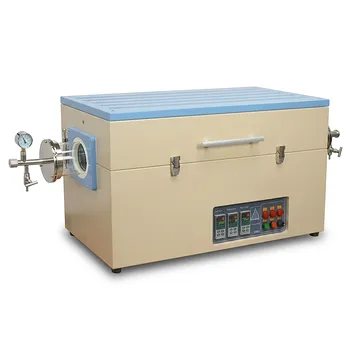
Three Zone Split Tube Furnace 36 Inch Heating Length High Temperature 1200C Material Research Furnace with Vacuum Flanges
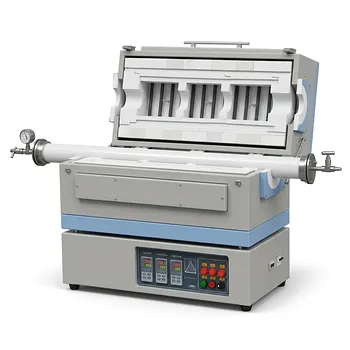
High Temperature 1500C Three Zone Split Tube Furnace with 80mm Alumina Tube and Vacuum Flange
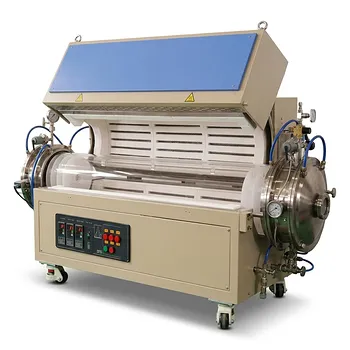
High Temperature Three Zone Split Tube Furnace 1200C Max 35.4 Inch Heating Length 8 Inch ID Tube
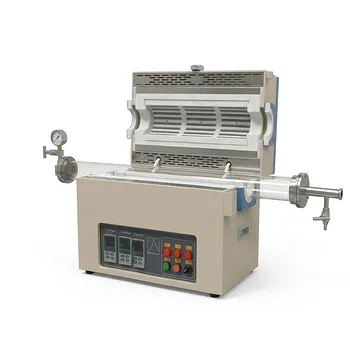
1200°C Three Zone Split Tube Furnace with 18 Inch Heating Length and Vacuum Flanges
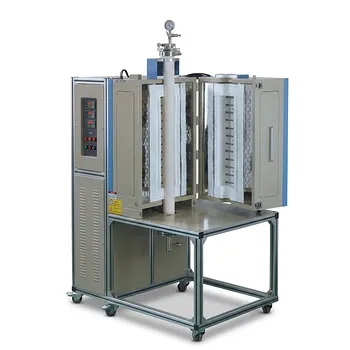
Three Zone Heating Split Vertical Tube Furnace 1700 High Temperature Vacuum Atmosphere Thermal Process System
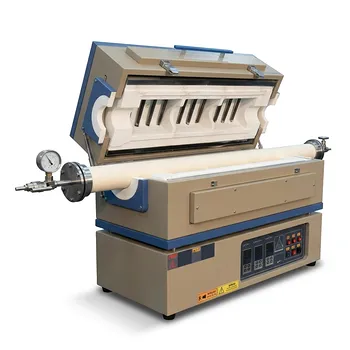
1600C Three Zone Split Tube Furnace with Alumina Tube and Vacuum Flange
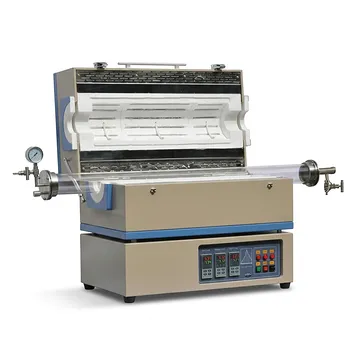
24 Inch Three Zone Split Tube Furnace with Optional Quartz Tube and Vacuum Flange System for High Temperature Material Synthesis
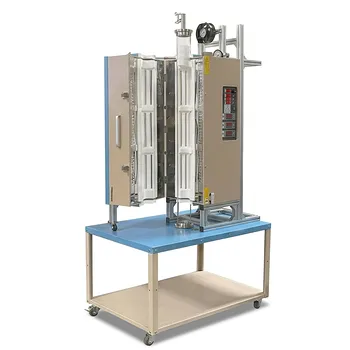
1200C Three Zone Split Vertical Tube Furnace 4 Inch Quartz Tube Stainless Steel Vacuum Flanges
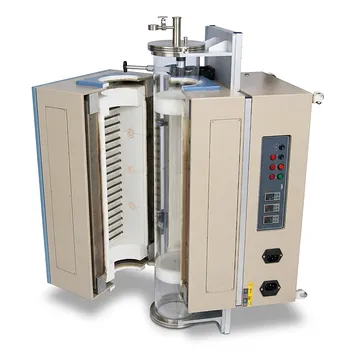
Large Vertical Three Zone Tube Furnace with 8 Inch or 11 Inch Quartz Tube and High Vacuum Flanges 1200C
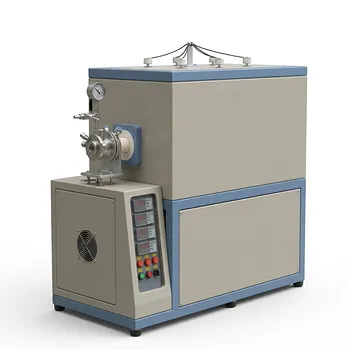
High Temperature 1700C Three Zone Tube Furnace with Alumina Tube 50mm 60mm 80mm OD for Material Research and Industrial Heat Treatment
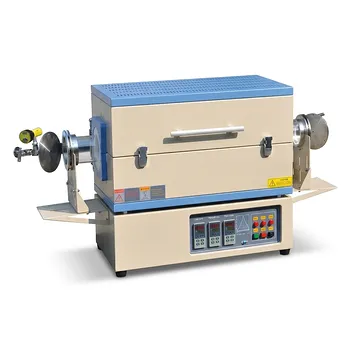
Three Zone Tube Furnace with 24 Inch Heating Length and Hinged Flange Quartz Tube System
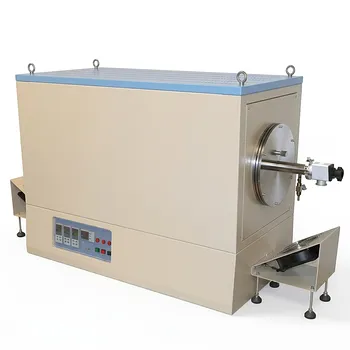
1100°C Three Zone Tube Furnace with 8.5 to 11 Inch OD Quartz Tube and Vacuum Flanges for Large Wafer Processing
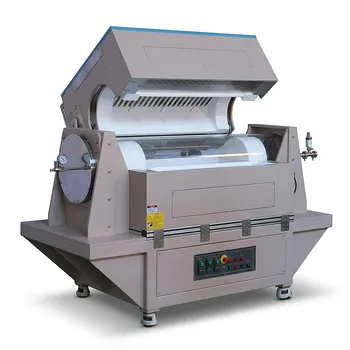
Three Zone Tube Furnace with 11 Inch or 15 Inch Quartz Tube and Hinged Flanges for Vacuum Atmosphere Heat Treatment
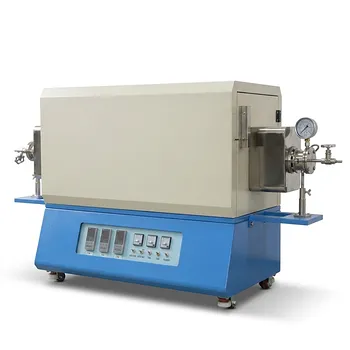
Three Temperature Zone High Temperature Vacuum Tube Furnace for CVD and Material Sintering
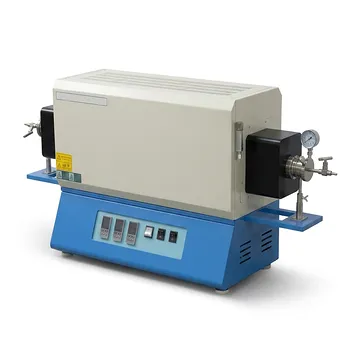
High Temperature Three Temperature Zone Tube Furnace for Advanced Material Science Sintering and Chemical Vapor Deposition Applications
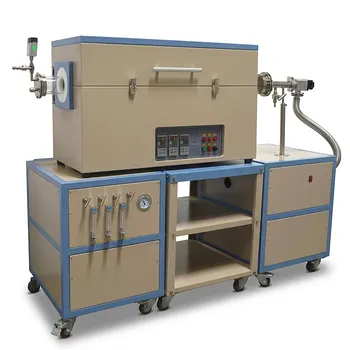
Three Zone Quartz Tube Furnace with 3 Channel Gas Mixer Vacuum Pump and Anti Corrosive Vacuum Gauge
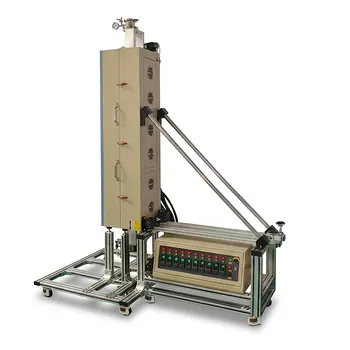
1200°C 10-Zone Split Tube Furnace with Horizontal and Vertical Mounting for Multi-Zone Thermal Gradients and Large Diameter Material Processing
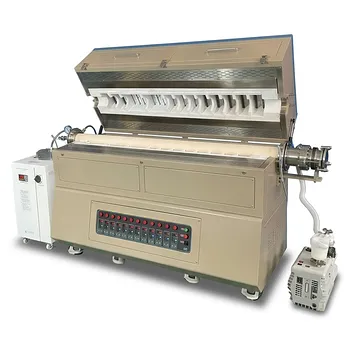
Twelve Zone 1700°C Multi Zone Split Tube Furnace with 100mm Alumina Processing Tube and Independent Temperature Gradient Control
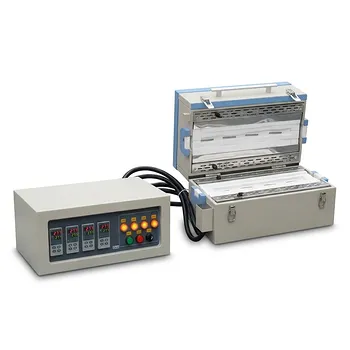
Four Zone 1200C Multi Zone Split Tube Furnace with Independent Digital Temperature Controllers for One or Two Inch Processing Tubes