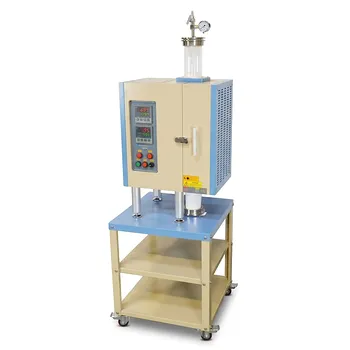
Why adjust the z-value of the substrate holder in Mist CVD? Optimize droplet dynamics & film quality in tubular furnaces.
Updated 3 months ago
Adjusting the spatial position (z-value) of the substrate holder is essential to control the thermal environment and the physical size of the precursor droplets. In a tubular mist CVD furnace, the z-value determines the specific temperature a substrate experiences and filters the mist particles that reach the surface. This calibration allows researchers to achieve precise film thickness, conformality, and chemical stoichiometry.
The z-value serves as a critical tuning parameter that balances the thermal gradient of the furnace with droplet filtration dynamics, ensuring that only the most effective precursor particles interact with the substrate at the optimal temperature.
Managing Droplet Dynamics and Surface Quality
The Mechanism of Droplet Filtration
As mist travels from the inlet through the tube, gravity and premature decomposition act as natural filters for larger droplets. By increasing the distance (z-value) from the inlet, larger, heavier droplets are removed from the stream. This leaves only fine particles to reach the substrate, which is necessary for high-precision growth.
Achieving Conformal Thin Films
Fine particles at a greater distance from the inlet exhibit a lower sticking coefficient. This physical property is vital when depositing films onto complex microstructures. The lower sticking coefficient allows precursors to penetrate deep into trenches or pores before adhering, resulting in a conformal and low-roughness finish.
Leveraging the Thermal Gradient
Temperature-Dependent Volatilization
Tubular furnaces are not uniform in temperature; they possess a distinct internal temperature distribution gradient. Different chemical precursors, such as Cu(acac)2 or THQ, have unique sublimation and decomposition temperatures. Adjusting the z-value allows the substrate or precursor source to be placed exactly where the local temperature matches its specific chemical requirements.
Regulating Component Concentration
In multi-component film growth, the concentration ratio of different precursors must be strictly controlled. By strategically positioning different precursor tubes along the z-axis, engineers can ensure each material volatilizes at its optimal rate. This precise positioning prevents one component from dominating the reaction zone, ensuring the final film has the correct stoichiometric balance.
Understanding the Trade-offs
Growth Rate vs. Surface Morphology
There is a fundamental trade-off between deposition speed and film quality. Placing the substrate closer to the inlet (lower z-value) increases the growth rate due to higher droplet density, but often results in increased surface roughness. Conversely, moving the substrate further away improves smoothness but significantly slows down the production process.
Position Sensitivity and Consistency
Small deviations in the z-position can lead to inconsistent batch results. Because the temperature and droplet distribution change rapidly along the axis of the tube, even a few millimeters of error can alter the chemical composition or thickness of the film. High-precision mounting hardware is required to ensure repeatability across different experimental runs.
Optimizing Your Mist CVD Setup
To achieve the best results, you must align the z-value with your specific material requirements and structural goals.
- If your primary focus is surface smoothness: Increase the z-value to allow for natural filtration of large droplets and to leverage the lower sticking coefficient of fine particles.
- If your primary focus is high throughput: Decrease the z-value to position the substrate in a region of higher precursor concentration, accepting a potential increase in surface roughness.
- If your primary focus is compositional accuracy: Use the furnace's thermal gradient to place different precursor sources at their specific sublimation points, ensuring the correct vapor pressure for each component.
Mastering the spatial positioning within your furnace transforms the z-axis from a simple placement variable into a powerful tool for atomic-level film engineering.
Summary Table:
| Parameter | Low z-value (Near Inlet) | High z-value (Far from Inlet) | Key Benefit |
|---|---|---|---|
| Droplet Size | Larger droplets present | Fine droplets only (filtered) | Improved surface smoothness |
| Growth Rate | High deposition speed | Lower deposition speed | Better control over thickness |
| Film Morphology | Higher roughness | Conformal & low-roughness | Superior microstructural quality |
| Temp. Control | Higher thermal exposure | Localized gradient specific | Precise chemical stoichiometry |
| Sticking Coeff. | Higher (Fast adhesion) | Lower (Deep penetration) | Excellent trench conformality |
Elevate Your Material Research with THERMUNITS Precision
At THERMUNITS, we understand that mastering the spatial and thermal variables of your furnace is the key to breakthrough material science. As a leading manufacturer of high-temperature laboratory equipment, we provide the precision tools necessary for advanced R&D and industrial applications.
Whether you are performing Mist CVD, PECVD, or complex heat treatments, our comprehensive range of equipment is designed for reliability and accuracy:
- Furnace Solutions: Tube, Muffle, Vacuum, Atmosphere, Rotary, and Hot Press Furnaces.
- Advanced Systems: CVD/PECVD setups, Vacuum Induction Melting (VIM) furnaces, and Electric Rotary Kilns.
- Specialized Tools: Dental Furnaces, Thermal Elements, and custom laboratory heat treatment solutions.
Ready to optimize your thermal processing? Our experts are here to help you select the perfect system for your specific research goals.
Contact THERMUNITS Today to Request a Quote
References
- Abdul Kuddus, Hajime Shirai. Spatial and Size Distributions of Ti(C<sub>5</sub>H<sub>7</sub>O<sub>2</sub>)<sub>2</sub>[(CH<sub>3</sub>)<sub>2</sub>CHO]<sub>2</sub> Mist Particles in a Tubular Furnace for Conformal and Uniform Deposition of Amorphous TiO<sub>2</sub> Thin Films. DOI: 10.1002/pssa.202400383
Mentioned Products
- 1200C Max Dual Sliding Tube Furnace with 50 mm Tube Flanges for CVD
- 1200°C High Temperature 4 Inch Tube Furnace with Sliding Flange for CVD Systems
- Two Zone Rotary Tube Furnace for Powder CVD Coating and Core Shell Material Synthesis 1100C
- 1200C Sliding Tube Furnace for Rapid Thermal Processing and CVD Graphene Growth with 100mm OD Capacity
- 5 Inch Two Zone Rotary Tube Furnace 1100C for Powder CVD and Material Synthesis
People Also Ask
- Why is a Tube Furnace typically utilized for CVD? Achieve Precision in Graphene and 2D Material Synthesis
- CVD Tube Furnace Advantages for Pd-P Catalyst Durability: Precision Control for 40,000+ Cycles
- Why use CVD and a tube furnace for Pd3P0.95/NC catalyst phosphidation? Ensure high phase purity and performance.
- What is the function of CVD furnaces in graphene prep? Enhancing Photodetector Charge Transport
- How does a Chemical Vapor Deposition (CVD) tube furnace facilitate synchronized nitridation? Precision Nano-Engineering.

Tech Team · ThermUnits
Last updated on Jun 02, 2026
Related Products
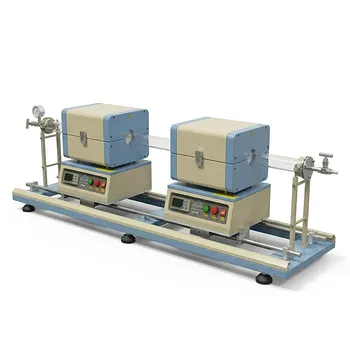
1200C Max Dual Sliding Tube Furnace with 50 mm Tube Flanges for CVD
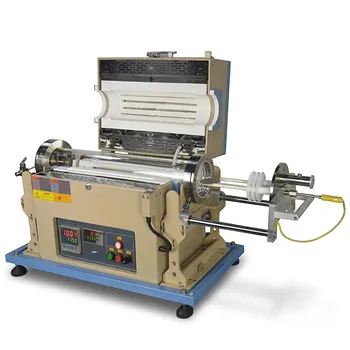
1200°C High Temperature 4 Inch Tube Furnace with Sliding Flange for CVD Systems
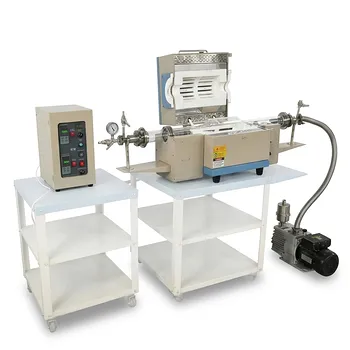
Two Zone Rotary Tube Furnace for Powder CVD Coating and Core Shell Material Synthesis 1100C
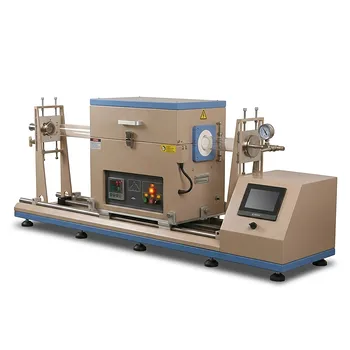
1200C Sliding Tube Furnace for Rapid Thermal Processing and CVD Graphene Growth with 100mm OD Capacity
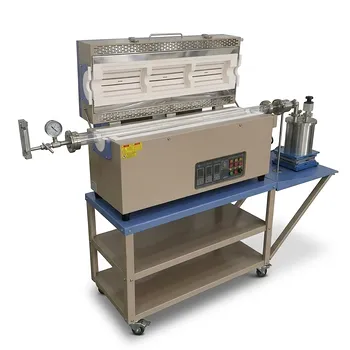
5 Inch Two Zone Rotary Tube Furnace 1100C for Powder CVD and Material Synthesis
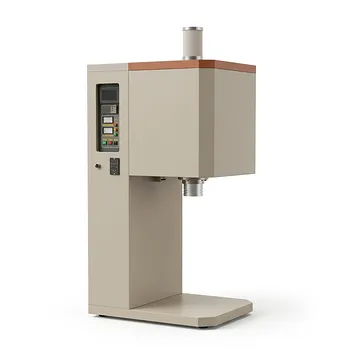
Vertical Openable Tube Furnace 0-1700c High Temperature Laboratory System for CVD and Vacuum Heat Treatment
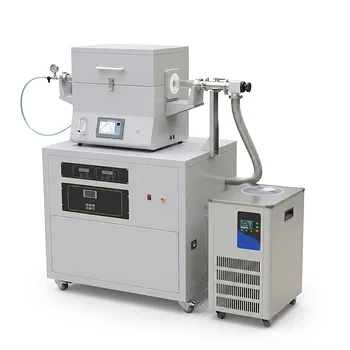
Split Chamber CVD Tube Furnace with Vacuum Station Chemical Vapor Deposition System Machine
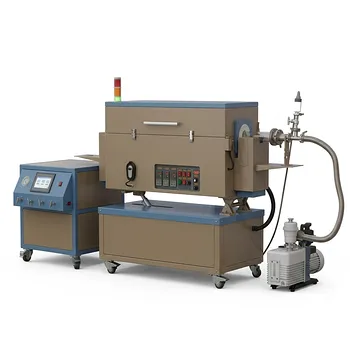
5 Inch Three Zone Rotary Tube Furnace with Integrated Gas Delivery System and 1200C Capability for Advanced Material CVD Processing
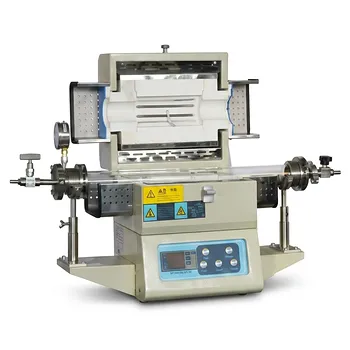
High Temperature 1200C Split Tube Furnace for CVD Research and Vacuum Atmosphere Heat Treatment
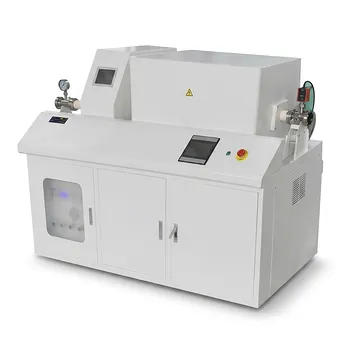
Chemical Vapor Deposition CVD System Slide PECVD Tube Furnace with Liquid Gasifier PECVD Machine
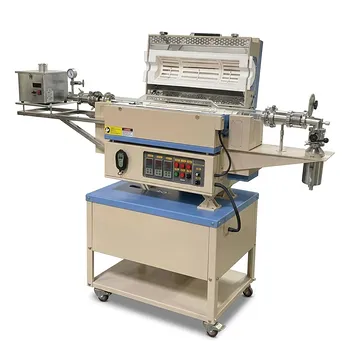
5 Inch Rotary Tube Furnace with Automatic Feeding and Receiving System 1200C Three Zone CVD Powder Processing
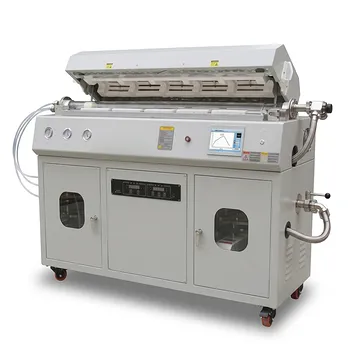
Multi Heating Zones CVD Tube Furnace System for Precision Chemical Vapor Deposition and Advanced Material Synthesis
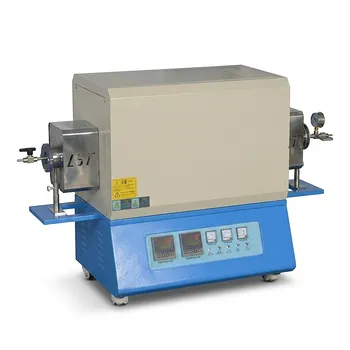
High Temperature Dual Zone Vacuum Tube Furnace for Material Research and CVD Processing
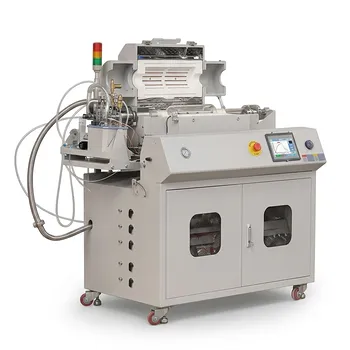
Versatile Chemical Vapor Deposition Tube Furnace System for Advanced Material Research and Industrial Coating Processes
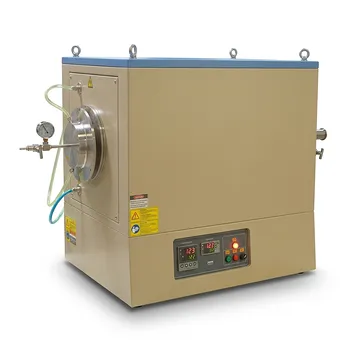
1100°C Large Diameter Quartz Tube Furnace with 24 Inch Heating Zone and Water Cooled Flanges
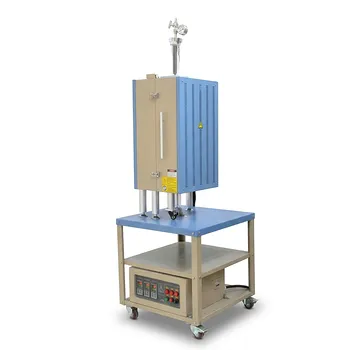
1200C Three Zone Vertical Tube Furnace with 2 Inch Quartz Tube and Vacuum Flanges
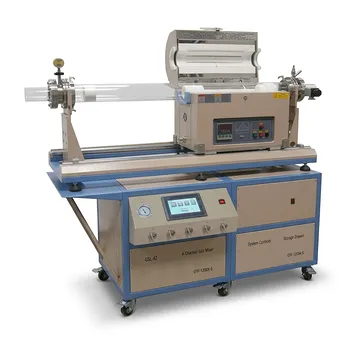
Dual Tube 100mm 80mm CVD Sliding Furnace with 4 Channel Gas Mixing and Vacuum System
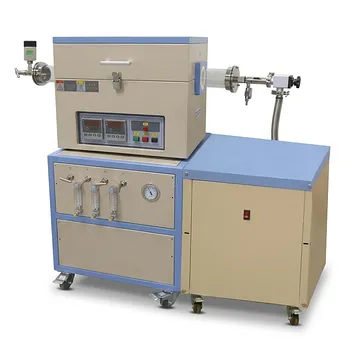
Dual Zone Quartz Tube Furnace with 80mm Diameter 1200C Max Temperature 3 Channel Gas Mixer and Vacuum Pump System

High Temperature 1700C Tube Furnace with High Vacuum Turbomolecular Pump System and Multi Channel Mass Flow Controller Gas Mixer