What specific process conditions does a Tube Furnace provide for Chlorine Passivation? Optimize Solar Cell Efficiency
Updated 3 months ago
The specific process conditions provided by a tube furnace for chlorine passivation involve a stable, high-temperature atmospheric environment, typically maintained between 420°C and 450°C. This environment acts as the kinetic driver for chlorine ions (from precursors like Magnesium Chloride or Cadmium Chloride) to diffuse into the thin film, where they concentrate at grain boundaries to neutralize deep-level defects.
Core Takeaway: A tube furnace enables high-efficiency solar cell production by providing a uniform thermal field and controlled atmosphere that facilitates the deep diffusion of chlorine and selenium, effectively reducing non-radiative recombination centers.
Precise Thermal Management
Maintaining Stable Annealing Temperatures
The tube furnace provides a uniform thermal environment, often calibrated to 420°C or 450°C, depending on the specific passivation chemistry. This stability ensures that the entire surface of the $CdSe_xTe_{1-x}$ thin film receives consistent energy for the chemical transformation.
Driving Kinetic Diffusion
High-temperature processing serves as the primary kinetic driver for atomic migration within the film. In $CdSe_xTe_{1-x}$ structures, this heat allows selenium atoms to diffuse from the $CdSeTe$ region into the $CdTe$ layer, optimizing the bandgap profile.
Concentration at Grain Boundaries
The thermal field ensures that chlorine ions don't just sit on the surface but penetrate deep into the film. By concentrating at the grain boundaries, these ions passivate defects that would otherwise trap charge carriers and reduce efficiency.
Atmospheric and Precursor Control
Managing Chlorine Precursors
Tube furnaces allow for the controlled introduction of chlorine sources, such as Magnesium Chloride ($MgCl_2$) or Cadmium Chloride ($CdCl_2$). The furnace atmosphere ensures these precursors interact effectively with the film without introducing unwanted contaminants.
Facilitating Oxidation and Crystalline Transformation
In certain configurations, the furnace provides a controlled air annealing environment. This oxygen-rich atmosphere can facilitate the oxidation of specific layers and the conversion of amorphous structures into high-quality crystalline oxides.
Multi-Zone Pressure Control
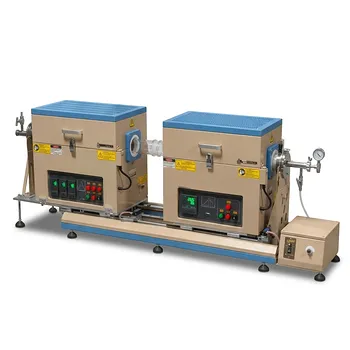
Advanced tube furnaces utilize multi-zone configurations to manage precursors and reaction zones independently. This allows for the sublimation of materials in an upstream zone while maintaining a precise reaction temperature for the thin film downstream.
Understanding the Trade-offs
Uniformity vs. Throughput
While tube furnaces provide exceptional thermal uniformity, they are often batch-processing tools. Achieving the same level of precise atmosphere control in high-speed, continuous production environments remains a significant engineering challenge.
Risk of Cross-Contamination
Because the furnace tube is a closed environment, residual chlorine or selenium can linger between runs. Regular maintenance and tube "bake-outs" are necessary to prevent legacy elements from affecting the doping profile of subsequent batches.
Thermal Stress and Gradients
Rapid cooling or heating cycles can introduce residual stresses within the thin film. To mitigate this, operators must carefully program ramp rates to ensure the interface between the oxide layer and the substrate remains stable.
How to Apply This to Your Project
Making the Right Choice for Your Goal
- If your primary focus is maximizing open-circuit voltage ($V_{oc}$): Prioritize precise temperature control at 420°C to ensure chlorine ions fully saturate grain boundaries without over-diffusing the selenium profile.
- If your primary focus is optimizing carrier lifetime: Ensure a stable, oxygen-controlled atmosphere during annealing to eliminate deep-level defects and reduce non-radiative recombination centers.
- If your primary focus is interface engineering: Utilize a multi-zone tube furnace to control the sublimation of precursors independently from the film's crystallization temperature.
By mastering the thermal and atmospheric variables within a tube furnace, you can transform a defective thin film into a high-performance semiconductor optimized for carrier transport.
Summary Table:
| Process Parameter | Required Condition | Benefit to CdSexTe1-x Thin Films |
|---|---|---|
| Temperature Range | 420°C – 450°C | Acts as the kinetic driver for atomic migration and diffusion. |
| Thermal Stability | High Uniformity | Ensures consistent bandgap profiles and energy distribution. |
| Atmosphere Control | Oxygen-rich / Air | Facilitates oxidation and high-quality crystalline transformation. |
| Precursor Handling | Controlled $MgCl_2$/$CdCl_2$ | Enables chlorine ions to neutralize deep-level defects at grain boundaries. |
| Configuration | Multi-zone Heating | Allows independent control of sublimation and reaction temperatures. |
Maximize Your Research Precision with THERMUNITS
Are you looking to achieve superior performance in solar cell production or advanced material science? THERMUNITS is a leading manufacturer of high-temperature laboratory equipment, providing the precision and reliability required for complex processes like chlorine passivation and thin-film annealing.
Our comprehensive range of thermal solutions is designed for industrial R&D and material science excellence, including:
- Tube & Atmosphere Furnaces: Perfect for controlled atmosphere and multi-zone reaction stability.
- CVD/PECVD Systems: Essential for high-performance semiconductor and thin-film deposition.
- Specialized Equipment: Muffle, Vacuum, Rotary, and Hot Press furnaces, as well as Vacuum Induction Melting (VIM) systems.
Enhance your lab's efficiency and heat treatment accuracy today.
Contact THERMUNITS Now to discuss your specific process requirements with our technical experts!
References
- Alan R. Bowman, Jonathan D. Major. Spatially resolved photoluminescence analysis of the role of Se in CdSexTe1−x thin films. DOI: 10.1038/s41467-024-52889-z
Mentioned Products
- 1200C Sliding Internal Crucible Tube Furnace for Controlled Atmosphere Thin Film Deposition and Material Sublimation Research
- Two Zones CSS Furnace for Rapid Thermal Processing Thin Film Coating 3 Inch Diameter 650C
- 5 Inch Two Zone Rotary Tube Furnace 1100C for Powder CVD and Material Synthesis
- 1200C Max Dual Sliding Tube Furnace with 50 mm Tube Flanges for CVD
- 5 Inch Rotary Tube Furnace with Automatic Feeding and Receiving System 1200C Three Zone CVD Powder Processing
People Also Ask
- What are the advantages of a tube atmosphere furnace for CdS thin films? Enhance Crystallinity & Prevent Sulfur Loss
- Why is an atmosphere tube furnace considered core equipment for CVD? Essential for Precision Thin-Film & 2D Materials
- Why is an atmosphere-controlled tube furnace required for the annealing of Sb2S3? Optimize Semi-conductor Performance
- How does a slanted tube furnace contribute to the crystal growth of Sr4Os3O12? Optimize Thermal Fields and Purity
- Why must deposited LiMn2O4 thin films undergo annealing in a digital tube furnace? Unlock High-Performance Cathodes

Tech Team · ThermUnits
Last updated on Jun 02, 2026
Related Products
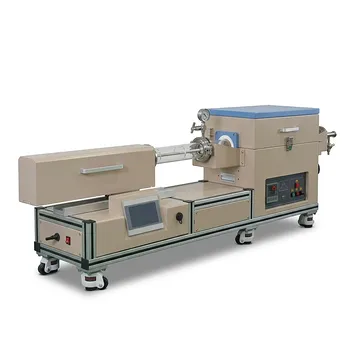
1200C Sliding Internal Crucible Tube Furnace for Controlled Atmosphere Thin Film Deposition and Material Sublimation Research
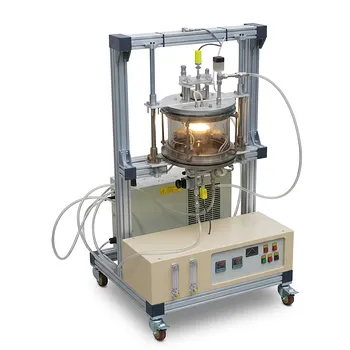
Two Zones CSS Furnace for Rapid Thermal Processing Thin Film Coating 3 Inch Diameter 650C
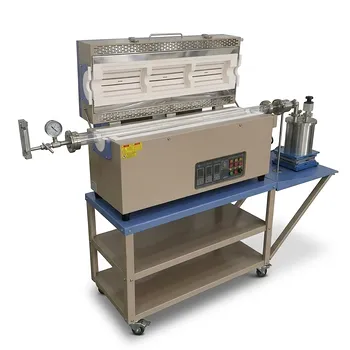
5 Inch Two Zone Rotary Tube Furnace 1100C for Powder CVD and Material Synthesis
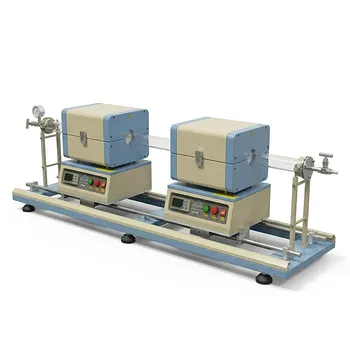
1200C Max Dual Sliding Tube Furnace with 50 mm Tube Flanges for CVD
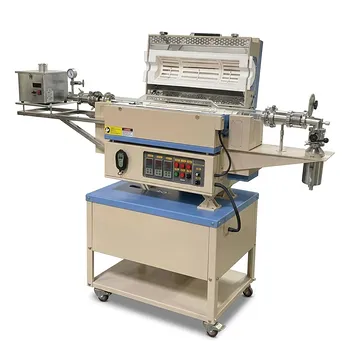
5 Inch Rotary Tube Furnace with Automatic Feeding and Receiving System 1200C Three Zone CVD Powder Processing
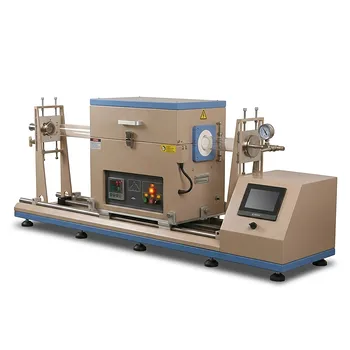
1200C Sliding Tube Furnace for Rapid Thermal Processing and CVD Graphene Growth with 100mm OD Capacity
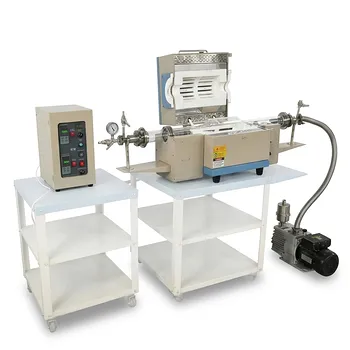
Two Zone Rotary Tube Furnace for Powder CVD Coating and Core Shell Material Synthesis 1100C
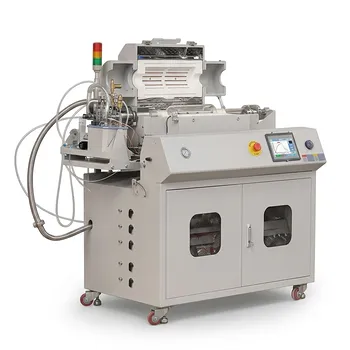
Versatile Chemical Vapor Deposition Tube Furnace System for Advanced Material Research and Industrial Coating Processes
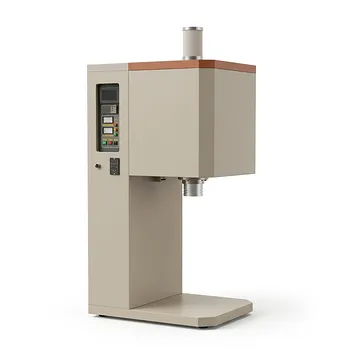
Vertical Openable Tube Furnace 0-1700c High Temperature Laboratory System for CVD and Vacuum Heat Treatment
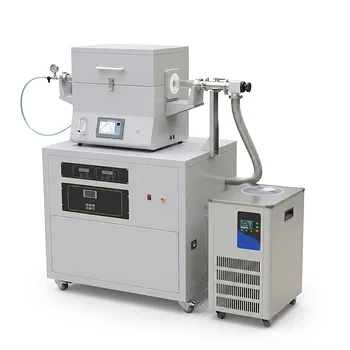
Split Chamber CVD Tube Furnace with Vacuum Station Chemical Vapor Deposition System Machine
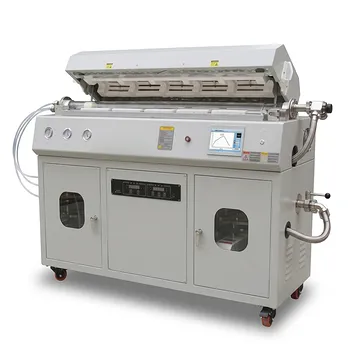
Multi Heating Zones CVD Tube Furnace System for Precision Chemical Vapor Deposition and Advanced Material Synthesis
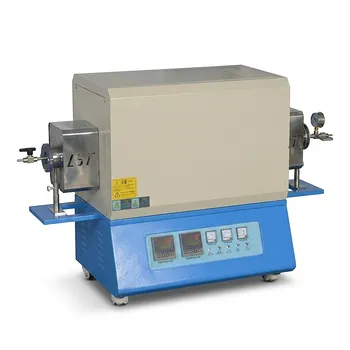
High Temperature Dual Zone Vacuum Tube Furnace for Material Research and CVD Processing
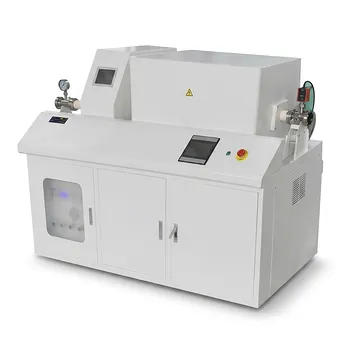
Chemical Vapor Deposition CVD System Slide PECVD Tube Furnace with Liquid Gasifier PECVD Machine

5 Inch Three Zone Rotary Tube Furnace with Integrated Gas Delivery System and 1200C Capability for Advanced Material CVD Processing
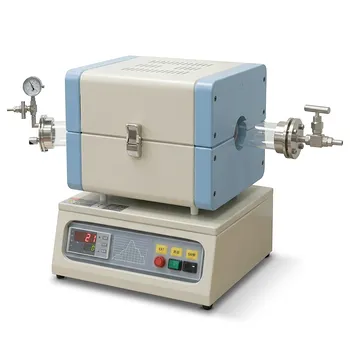
1200C Tube Furnace with Internal Magnetic Sample Sliding for Direct Vaporizing Deposition and Rapid Thermal Processing
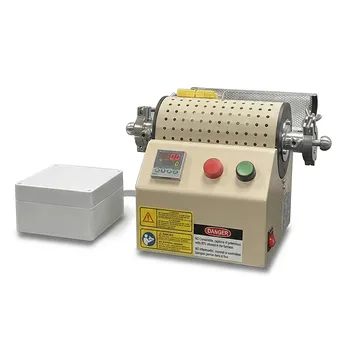
1000C Mini Tube Furnace with 20mm Quartz Tube and Vacuum Flanges for Material Science Research and Controlled Atmosphere Small Sample Processing
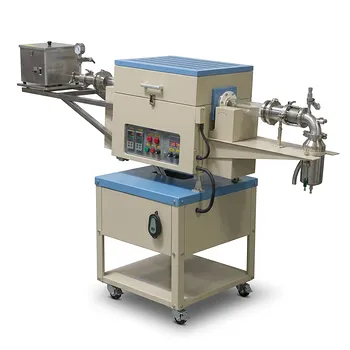
Two Zone Rotary CVD Furnace with Automatic Feeding and Receiving System for Powder Processing
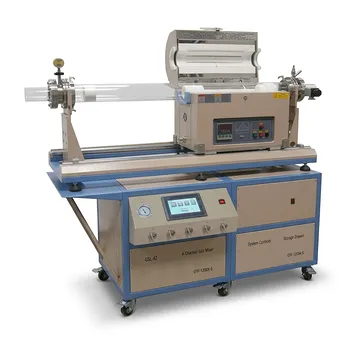
Dual Tube 100mm 80mm CVD Sliding Furnace with 4 Channel Gas Mixing and Vacuum System
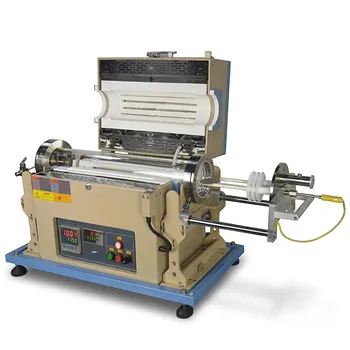
1200°C High Temperature 4 Inch Tube Furnace with Sliding Flange for CVD Systems