All Questions
How Does Atmosphere Control Optimize Vanadium Oxide Reduction? Master The Heat & Gas Sync For Superior Results
Master vanadium oxide reduction by coordinating argon/hydrogen switching with precise heating to prevent sintering and ensure material purity.
What Role Does A High-Temperature Atmosphere Furnace Play In The Post-Treatment Thermal Selenization Of Ni-Ru Materials?
Learn how atmosphere furnaces drive Ni-Ru phase transformation and band structure optimization for high-performance catalytic applications.
Why Is A Stable Co2 Atmosphere Required In An Atmosphere Furnace For Black Alder Activation? Optimize Your Results.
Learn how CO2 selective etching and atmosphere control in furnaces optimize pore structure and yield for Black Alder-based activated carbon.
What Is The Significance Of 900°C Secondary Pyrolysis In An Atmosphere Furnace For Ncg/Pt? Optimize Pt-N4 Catalysts.
Learn how 900°C pyrolysis in atmosphere tube furnaces creates stable Pt-N4 sites in NCG/Pt catalysts for superior HER performance and durability.
Why Does Sn(S0.92Se0.08)2 Heat Treatment Require N2 Protection? Prevent Oxidation & Maximize Semiconductor Efficiency.
Discover how nitrogen protection prevents oxidation and preserves the stoichiometry of Sn(S0.92Se0.08)2 thin films during tube furnace heat treatment.
How Does A Pressureless Sintering Furnace Contribute To The Consolidation Phase Of Al-Si-Cu-Mg Composites? Key Insights
Learn how pressureless sintering furnaces drive densification and phase precipitation in Al-Si-Cu-Mg composites while preventing oxidation.
Why Do Atmosphere Furnaces Require Precise Multi-Channel Gas Mixing? Optimize Your Advanced Material Synthesis
Discover how precise gas mixing in atmosphere furnaces controls doping, surface defects, and chemical purity for sensitive material heat treatment.
Why Is A High-Precision Vacuum Or Atmosphere Furnace Necessary For The Preparation Of Non-Oxide Ceramics Sensitive To Oxygen?
Discover why vacuum and atmosphere furnaces are vital for non-oxide ceramics to prevent oxidation, maintain stoichiometry, and achieve high density.
What Specific Role Does An Ultra-High Purity Hydrogen Atmosphere Play During The High-Temperature Synthesis Of Carbon Nanotubes From Biomass Precursors? Enhance Cnt Quality & Growth
Discover how ultra-high purity hydrogen acts as a reductive agent and etchant to optimize carbon nanotube synthesis from biomass precursors.
What Is The Objective Of Using A High-Temperature Annealing Furnace For Nitrogen Pre-Annealing? Optimize Passivation
Learn how high-temperature nitrogen pre-annealing stabilizes ultra-thin oxide layers and reduces recombination current density for semiconductors.
Why Is A High-Temperature Atmosphere Furnace And Argon Needed For Mo–Si–B Alloys? Ensure Precision & Purity.
Learn why 1600°C atmosphere furnaces and 99.998% argon are vital for Mo–Si–B alloy homogenization, preventing oxidation and ensuring material density.
What Is The Function Of Atmosphere Furnaces For Biomass Pyrolysis? Optimize Biochar Quality & Carbon Yield
Learn how atmosphere and tube furnaces enable oxygen-free pyrolysis, precise heating, and high-quality biochar production for industrial R&D.
How Do Sealed Furnaces Simulate Rr1000 Hot Corrosion? Precise Gas Control For Turbine Material R&D
Explore how sealed atmosphere furnaces simulate hot corrosion in RR1000 alloys using precise gas mixing and thermal control for aerospace R&D.
Why Is High-Purity Argon (Ar) Required For Ni-Sacs Heat Treatment? Ensure Atomic Dispersion & High Catalytic Performance
Discover why high-purity argon is vital for Ni-SACs synthesis to prevent carbon oxidation and ensure atomic dispersion during high-temp heat treatment.
What Is The Function Of A High-Temperature Atmosphere Furnace In Corn Stover Biomass Carbon Prep? Precision Pyrolysis
Discover how high-temperature atmosphere furnaces enable oxygen-free pyrolysis and structural control for high-performance corn stover biomass carbon.
Why Use Oxygen Flow For Sintering Nickel Cathodes? Ensuring Ni³⁺ Stability And High Battery Performance.
Discover why continuous high-purity oxygen is essential in tube furnaces to stabilize Ni³⁺, prevent cation mixing, and enhance cathode performance.
What Role Does An Atmosphere Furnace Play In The Reduction Or Pyrolysis Of Rb-Loaded Samples? Prevent Metal Oxidation
Learn how atmosphere furnaces prevent oxidation and stabilize the electronic structure of Rb-loaded samples during 500°C pyrolysis processes.
Why Is An Atmosphere Control System Required For The High-Temperature Thermal Treatment Of Animal-Derived Waste?
Learn why atmosphere control is vital for animal waste pyrolysis, preventing incineration and maximizing production of bio-char and syngas.
What Physical Conditions Does A High-Temperature Atmosphere Furnace Provide For Mxene Exfoliation? Process Guide
Learn how high-temperature atmosphere furnaces enable fluorine-free MXene synthesis through precise thermal control and inert protection environments.
How Does An Atmosphere Reduction Furnace Contribute To The Activation Of Catalysts? Master Nio To Ni Conversion
Discover how atmosphere reduction furnaces activate NiO catalysts for toluene pyrolysis via precise gas control and thermal profiling.
Why Use An Inert Gas System For Biochar Pyrolysis? Protect Carbon Structure & Maximize Surface Area
Learn why inert gas systems are vital for biochar pyrolysis in tube furnaces. Prevent oxidation, boost carbon yield, and optimize pore structures.
Why Is Continuous Gas Flow Necessary For Boron Evaporation Research? Unlock Accurate Kinetics In Atmosphere Furnaces
Discover why an open system with continuous gas flow is vital to prevent saturation and accurately measure boron evaporation in atmosphere furnaces.
Why Must The Synthesis Of Bismuth Sulfide (Bi2S3) Nanobelts Be Conducted Under An Inert Atmosphere? Ensure Phase Purity
Learn why an inert atmosphere in a tube furnace is critical for Bi2S3 nanobelt synthesis to prevent oxidation and ensure high phase purity.
What Is The Function Of An Atmosphere Tube Furnace In Sp-Fe3O4-C Synthesis? Precision Carbonization Explained
Discover how atmosphere tube furnaces control pyrolysis and reduction to create high-performance SP-Fe3O4-C mesoporous carbon frameworks.
Why Are Nitrogen Purging And Atmosphere Control Systems Necessary For Mlpb? Optimize Magnetism & Biochar Yield
Learn how nitrogen purging prevents combustion and guides magnetic phase formation during MLPB pyrolysis for superior biochar synthesis.
What Role Does A High-Temperature Annealing Furnace Play In Forming Ordered Pt3(Coni) Intermetallic Catalysts?
Learn how high-temperature annealing furnaces drive atomic diffusion and structural transitions to create high-performance Pt3(CoNi) catalysts.
What Is The Purpose Of Nitrogen Atmosphere Annealing For Tzo Thin Films? Enhance Conductivity & Crystalline Stability
Discover how nitrogen annealing in tube furnaces improves TZO thin film crystallinity, dopant activation, and electrical performance.
What Role Does A Laboratory Atmosphere Chamber Furnace Play In Iron Coke Carbonization? Expert Process Optimization
Learn how Atmosphere Chamber Furnaces optimize iron coke carbonization through precise temperature control and oxygen-free atmosphere regulation.
How Do Atmosphere Furnaces Contribute To Cost And Productivity Gains In Industrial Manufacturing? Boost Roi & Efficiency
Learn how atmosphere furnaces reduce costs and boost productivity by eliminating post-processing and optimizing high-volume industrial heat treatments.
What Are The Advantages Of Using Atmosphere Furnaces For Material Science Research? Achieve Precise Sample Integrity.
Discover how atmosphere furnaces prevent oxidation and enable precise thermochemical treatments for superior material science research and R&D.
What Role Does Atmosphere Control Play In Technical Ceramics And Glass? Master Material Purity And Precision
Discover how atmosphere control regulates stoichiometry and prevents structural defects in technical ceramics and glass during high-heat processing.
Why Are Atmosphere Furnaces Critical For Electronics? Maximize Yield With Oxidation-Free Heat Treatment
Explore how atmosphere furnaces prevent oxidation and ensure material integrity in electronics, semiconductor, and precision manufacturing.
How Does An Atmosphere Furnace Improve The Quality Of Powder Metallurgy Components? Achieve High-Density Sintering.
Learn how atmosphere furnaces enhance powder metallurgy by preventing oxidation, reducing oxides, and ensuring high-density, precise sintering results.
Advantages Of Atmosphere Furnaces For Heat Treatment: Elevating Aerospace And Automotive Precision
Discover how atmosphere furnaces prevent oxidation, control carbon levels, and enhance fatigue resistance in critical metallurgical components.
What Is The Primary Function And Operating Principle Of An Atmosphere Furnace? Mastering Controlled Thermal Processing
Learn how atmosphere furnaces use gas control to prevent oxidation and enable active chemical reactions in high-temperature material processing.
What Safety Features Are Required For Atmosphere Furnaces Using Flammable Or Toxic Gases? Expert Fail-Safe Guide
Discover essential safety features for atmosphere furnaces, including interlocks, relief ports, and flame supervision for flammable or toxic gases.
How Is Atmosphere Uniformity And Positive Pressure Maintained Within Continuous Atmosphere Furnaces? Optimize Heat Quality
Learn how continuous furnaces use positive pressure, forced convection, and flame curtains to maintain atmosphere uniformity and prevent oxidation.
What Methods Are Used To Monitor And Control The Carbon Potential (Cp) In An Atmosphere Furnace? Master Cp Precision.
Explore top methods for carbon potential control: oxygen probes, IR gas analyzers, and shim-stock tests to ensure superior furnace heat treatment.
How Is Endothermic Gas (Rx Gas) Generated For Use In Atmosphere Furnaces? Master Precise Heat Treatment Atmospheres
Learn how RX gas is produced using fuel, catalysts, and high heat to create protective atmospheres for high-precision metal heat treatment.
What Is The Difference Between Neutral And Active Atmospheres? Master Thermal Processing For Superior Surface Quality.
Learn the differences between neutral and active atmospheres. Optimize thermal processing to protect surfaces or engineer hardness via carburizing.
What Types Of Sealing Systems Are Employed In Atmosphere Furnaces To Ensure Atmosphere Integrity? Top Sealing Solutions
Explore key sealing systems for atmosphere furnaces, including oil seals, sand barriers, and water-cooled gaskets, to ensure maximum gas purity.
What Are The Primary Technical Advantages Of Atmosphere Furnaces Compared To Vacuum Furnaces? Optimize High-Volume Production
Explore why atmosphere furnaces offer lower costs, higher throughput, and advanced surface treatments like carburizing for industrial R&D.
What Is The Primary Function And Operating Principle Of An Atmosphere Furnace? Master Controlled Thermal Processing
Explore how atmosphere furnaces control gas environments to prevent oxidation and modify material surfaces for superior heat treatment results.
Featured Products
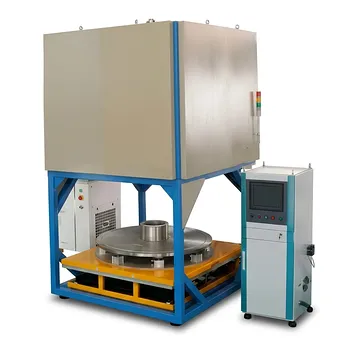
1400C Bottom Loaded Inert Gas Atmosphere Box Furnace with 125L Capacity and Precision Hydraulic Lift
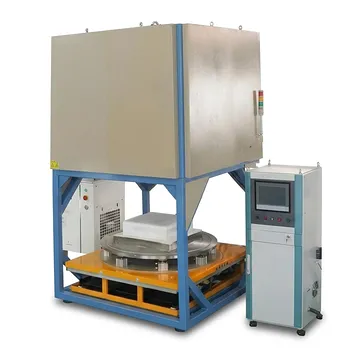
Bottom Loaded Inert Gas Atmosphere Box Furnace 1400C Maximum Temperature 125L High Capacity Laboratory Heat Treatment System
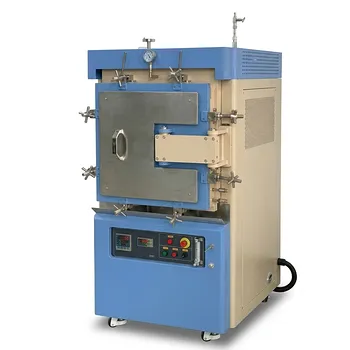
High Temperature Economic Hydrogen Gas Box Furnace 1600C Atmosphere Controlled Thermal Processing System 65L Capacity
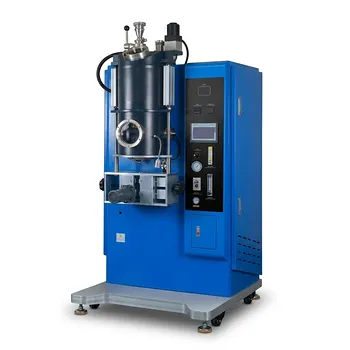
Atmosphere Controlled Continuous Casting Furnace with Secondary Charge Function for Induction Melting and Metal Alloy Wire Production
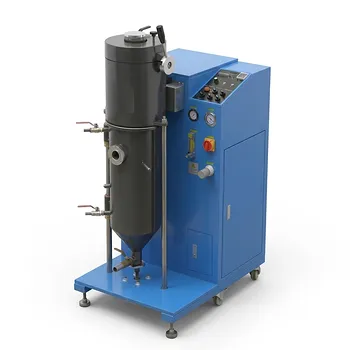
Atmosphere Controlled Induction Melting Granulating Casting Furnace 1500C 5kg Capacity