All Questions
How Does A Laboratory Atmosphere Furnace Ensure The Synthesis Quality Of Biochar? Master Biochar Pyrolysis Control
Discover how atmosphere furnaces ensure high-quality biochar synthesis by maintaining anaerobic conditions and precise thermochemical control.
What Is The Function Of An Atmosphere Furnace In Carbon Synthesis? Precision Pore Engineering For Gas Separation.
Learn how high-temperature atmosphere furnaces enable precise carbonization (600-800°C) for synthesizing ultra-microporous carbon gas sieves.
Why Is Argon Gas Required As A Protective Atmosphere During Carbonization? Preserve Material Integrity & Iron Activity
Learn why argon is essential for carbonizing iron-porous carbon nanomaterials, preventing oxidation and preserving active iron sites and pores.
Why Is It Necessary To Incorporate A Nitrogen Supply System During The Heating And Transmission Of Steel Wire In Thermal Experiments? | Stop Oxidation
Learn why nitrogen supply systems are vital in steel wire thermal experiments to prevent oxidation, eliminate scale resistance, and ensure data accuracy.
Why Is It Necessary To Maintain A Strict Nitrogen (N2) Atmosphere During The Operation Of A Pyrolysis Furnace? (Pro Tips)
Learn why N2 is vital for pyrolysis: it prevents combustion, protects nanostructures, and preserves material integrity for high-quality results.
Why Is A High-Purity Nitrogen (N2) Atmosphere Necessary During 800 °C Catalyst Pyrolysis? Protect Your Material Integrity
Learn how high-purity N2 prevents oxidation and ensures structural integrity during 800°C catalyst pyrolysis for superior material performance.
Why Is An Atmosphere-Controlled Annealing Furnace Required For The Post-Treatment Of Synthesized Ktiopo4 Thin Films? Ktp
Learn how atmosphere-controlled annealing optimizes KTP thin films for sodium-ion batteries by enhancing phase purity and structural integrity.
How Does A Carbon Dioxide Atmosphere Furnace Contribute To Activated Titania-Carbon Gels? Maximize Porosity & Surface Area
Learn how CO2 atmosphere furnaces enable physical activation to create high-porosity titania-carbon gels for superior electrochemical performance.
What Is The Significance Of A Mass Flow Controller (Mfc) For Atmosphere Control? Ensure Precision In Co-Gasification
Discover how MFCs optimize co-gasification by regulating gas flow, capturing true kinetics, and maintaining stable atmosphere for research.
Why Is High-Purity Nitrogen Required For Cucro2 Thin Film Annealing? Key Protective Atmosphere Benefits
Discover how high-purity nitrogen stabilizes CuCrO2 thin films, prevents oxidation, and ensures p-type conductivity during furnace annealing.
Why Is The Control Of The Heating Rate In An Atmosphere Tube Furnace Critical? Optimize Your Material Activation
Master heating rate control in atmosphere tube furnaces to prevent pore collapse and maximize BET surface area during high-temperature activation.
What Is The Necessity Of Introducing An Argon Atmosphere During The High-Temperature Calcination Of Titanium Dioxide? Essential Benefits
Discover why argon is vital for TiO2 calcination. Learn how it prevents oxidation, preserves nanostructures, and enhances visible light absorption.
Why Is Strict Environmental Control Necessary For Lfp Sintering Furnaces? Protect Battery Integrity & Performance
Discover why atmosphere control in sintering furnaces is vital for LFP repair to prevent oxidation and ensure conductive carbon coating quality.
Why Is A Strictly Maintained Argon Environment Necessary For 900 °C Feconi@Cnts Annealing? Prevent Oxidative Destruction
Learn why an inert argon shield is vital for 900°C FeCoNi@CNTs annealing in tube furnaces to prevent CNT combustion and metal nanoparticle oxidation.
What Is The Necessity Of A Nitrogen Environment In A Carbonization Furnace? Prevent Oxidation & Ensure Csu Quality
Discover why a nitrogen environment is vital for CSU carbonization at 900°C. Prevent oxidative loss, preserve microstructure, and ensure high yield.
Why Is A Laboratory Atmosphere Furnace Essential For Biochar Sintering? Master Pyrolysis & Control Carbon Purity
Discover how atmosphere furnaces enable precise biochar pyrolysis, prevent ashing, and reduce NOx emissions for advanced sintering applications.
Why Is A Hydrogen-Reducing Atmosphere Necessary For Ir@Tio2 Core-Shell Formation? Expert Annealing & Sintering Guide
Discover why hydrogen is essential for Ir@TiO2 core-shell formation: enabling iridium migration, preventing oxidation, and ensuring shell continuity.
What Role Does An Atmosphere Furnace Play In Cn & Aux-Cn Preparation? Master Thermal Polycondensation & Stability.
Discover how atmosphere furnaces drive thermal polycondensation and prevent oxidation for stable Carbon Nanodot (CN) and Aux-CN synthesis.
How Does An Atmosphere Heat Treatment Furnace Facilitate The Surface Modification Of Carbon Spheres Using Ammonia (Nh3)?
Learn how atmosphere furnaces use sequential CO2 and NH3 phases to modify carbon spheres for enhanced nitrogen doping and superior gas adsorption.
Atmosphere Annealing Furnace For Carbon Spheres: Engineering Precise Oxygen Functional Groups & Surface Chemistry
Learn how atmosphere annealing furnaces tune oxygen functional groups and graphitization in mesoporous carbon spheres for advanced electrocatalysis.
How Does An Atmosphere Control System Prevent Spontaneous Combustion? Safe Post-Treatment For Koh-Activated Nanofibers
Discover how atmosphere control systems regulate nitrogen-to-oxygen ratios to safely passivate KOH-activated nanofibers and prevent fire risks.
How Does Atmosphere Protection In A Furnace Ensure The Microstructural Evolution Of Nano Ti(Cn)-Based Cermets? Expert Guide
Discover how atmosphere protection prevents oxidation and drives the essential core-shell microstructural evolution in nano Ti(CN)-based cermets.
How Does A High-Temperature Atmosphere Furnace Facilitate V2O5/Carbon Fiber (V-Cf) Interlayers? Boost Battery Performance
Learn how atmosphere furnaces enable precise carbonization and V2O5 crystallization to create high-performance interlayers for advanced batteries.
What Is The Operational Mechanism Of A Controlled Atmosphere Furnace In Vanadium Oxidation? Optimizing V2O5 Synthesis.
Learn how controlled atmosphere furnaces convert metal vanadium to V2O5 with precise thermal and oxygen control for high-purity material science.
What Is The Function Of A Tube Atmosphere Furnace In The Preparation Of Fibrous Carbon Cloth? Mastering Carbonization
Learn how tube atmosphere furnaces enable controlled carbonization, prevent oxidation, and optimize graphitization for high-performance carbon cloth.
Why Is A High-Vacuum Or Atmosphere Sintering Furnace Required For The 1100°C Thermal Treatment Of Lmto? Expert Insights
Discover why 1100°C LMTO synthesis requires atmosphere furnaces to prevent oxidation, stabilize valence states, and ensure structural integrity.
What Is The Function Of Argon Flow In Snse Cooling? Protecting Film Purity And Integrity
Learn why argon flow is vital for 2D tin selenide growth. Discover how it prevents oxidation and thermal stress for high-quality thin films.
What Role Does A High-Temperature Atmosphere Furnace Play In The Preparation Of Modified Graphite Materials? R&D Guide
Explore how high-temperature atmosphere furnaces enable surface engineering, doping, and structural expansion for advanced modified graphite research.
Why Is A High-Pressure Gas Atmosphere Sintering Furnace Necessary For Caalsin3 Phosphor? Optimize Quantum Efficiency
Understand how high-pressure sintering suppresses nitride decomposition and ensures stable CaAlSiN3 crystal growth for superior LED phosphor stability.
What Is The Role Of A High-Temperature Atmosphere Furnace In Co/Co0.85Se@Nc Synthesis? Optimize Catalyst Performance
Explore the critical role of atmosphere furnaces in Co/Co0.85Se@NC catalyst synthesis, from carbonization to precise selenization control.
How Does A Multi-Stage Atmosphere Furnace Facilitate The Loi Method? Achieve Precise Unburned Carbon Analysis.
Learn how multi-stage atmosphere furnaces improve LOI methods by isolating carbon oxidation through nitrogen, CO2, and air phases for ash analysis.
What Role Does A Mixed Atmosphere Furnace Play In Carbon Specimen Treatment? Optimize Nanodiamond Stabilization.
Learn how a mixed atmosphere furnace (5% H2/Ar) stabilizes carbon nanostructures at 1050°C and removes impurities for high-quality nanodiamonds.
Why Is The Use Of Atmosphere-Controlled Furnaces Necessary For Butanolysis Lignin? Prevent Oxidation & Ensure Carbonization
Discover why atmosphere-controlled furnaces are essential for butanolysis lignin pyrolysis, preventing combustion and ensuring high carbon yield.
How Is An Oxidation-Reduction Furnace Used To Process W-Mmc Chips? Turn Scrap Into High-Purity Recycled Powder.
Discover how oxidation-reduction furnaces recycle W-MMC chips into high-purity metal powder via high-temperature oxidation and hydrogen reduction.
What Is The Role Of A High-Temperature Atmosphere Furnace In Hfco-N-C Catalyst Preparation? Expert Synthesis Guide.
Discover how atmosphere furnaces enable HfCo-N-C catalyst synthesis through precise pyrolysis (850°C-1050°C) and controlled inert environments.
What Is The Role Of Nitrogen Flow During Apricot Kernel Carbonization? Essential Tips For High-Yield Pyrolysis
Learn how high-purity nitrogen flow ensures successful pyrolysis, prevents combustion, and maximizes carbon yield during apricot kernel carbonization.
Why Is A High-Precision Oxygen Partial Pressure Controller Necessary During The Growth Of Lacro3/Lamno3 Heterostructures?
Understand how high-precision oxygen controllers manage vacancies and stoichiometry to tune magnetic anisotropy in complex oxide heterostructures.
Why Is An Atmosphere Furnace With Nitrogen Protection Needed For Sintering 3D-Printed Cnt Preforms? Protect Your Purity.
Discover how nitrogen atmosphere furnaces prevent oxidation and preserve the structure of 3D-printed carbon nanotubes during high-temp sintering.
How Does An Atmosphere Control System Contribute To Rice Husk Thermal Conversion? Optimize Ash & Silica Research
Learn how atmosphere control systems simulate pyrolysis and combustion to optimize rice husk conversion and improve silica purity.
Why Is An Atmosphere-Controlled Muffle Furnace Required For Lemon Peel Carbonization? Prevent Ashing & Optimize Porosity
Learn why atmosphere control is vital for lemon peel carbonization at 400°C to prevent combustion and ensure high-quality biochar production.
What Is The Role Of A High-Temperature Atmosphere Furnace In The Conversion Process Of Zif-8 To Z8-650? Precision Matters.
Learn how atmosphere furnaces enable the precise pyrolytic conversion of ZIF-8 to Z8-650 through inert argon protection and thermal regulation.
In What Ways Does An Atmosphere Control System Affect Nanoporous Gold Structure? Control Oxygen For Precision Design.
Discover how atmosphere control and oxygen levels dictate nanoporous gold structure by regulating germanium oxidation and nucleation kinetics.
Why Is An Additional Annealing Treatment Under Nitrogen Protection Typically Required For Vox@Vacnt? Key Optimization Steps
Learn how nitrogen annealing optimizes VOx@VACNT hybrids by promoting Ostwald Ripening and preserving the V4+ state for superior material properties.
Why Is A Forced Air Drying Oven Or Atmosphere Furnace Required For Kcl-Co Nanofiber Stabilization? Ensure Integrity.
Discover how forced air ovens and atmosphere furnaces stabilize KCl-Co nanofibers by triggering cross-linking to prevent collapse during carbonization.
Why Is A High-Purity Nitrogen Atmosphere System Essential During The Pyrolysis Of Corn Biomass? Prevent Oxidation
Discover how high-purity nitrogen prevents biomass combustion, preserves biochar structure, and maximizes bio-oil recovery during pyrolysis.
Why Is A Tube Or Box Furnace Required For Limnxfe1-Xpo4 Sintering? Ensure Precise Atmosphere Control & High Performance
Discover how precision atmosphere control in tube and box furnaces prevents oxidation in LiMnxFe1-xPO4 cathode materials to ensure peak performance.
Why Is High-Purity Argon Gas Required As A Protective Atmosphere During The Heat Treatment Of Regenerated Graphite?
Learn why high-purity argon is essential for graphite regeneration to prevent oxidation, ensure selective pyrolysis, and maintain lattice structure.
How Does A High-Temperature Atmosphere Furnace Facilitate The Effective Nitrogen Doping Of N-Rgonr? Expert Insights
Learn how high-temperature atmosphere furnaces enable precise N-rGONR synthesis through thermal decomposition, redox reactions, and gas control.
What Is The Function Of A High-Temperature Annealing Furnace In Swcnt Pretreatment? Enhance Purity And Lattice Quality
Learn how high-temperature annealing furnaces purify SWCNTs by selectively removing amorphous carbon and repairing lattice defects for R&D success.
What Is The Critical Function Of Continuous Nitrogen Gas Injection? Enhance Carbon Yield And Safety In Torrefaction
Understand the role of Nitrogen in biomass torrefaction: preventing combustion, removing volatiles, and maximizing carbon retention for bio-char.
Why Is Long-Duration Heat Treatment In An Argon-Protected Annealing Furnace Necessary For Mg-Al-Ca Alloys? Key Benefits
Discover how long-duration argon annealing ensures homogeneity and prevents oxidation in Mg-Al-Ca alloys for superior mechanical performance.
Why Is A Reduction Furnace With Atmosphere Control Required For Ru/3D Pg Heat Treatment? Achieve Precise Catalyst Synthesis
Discover why atmosphere-controlled furnaces are essential for Ru/3D PG catalysts to prevent sintering and preserve graphene's structural integrity.
How Does 900 °C Treatment In An Atmosphere Tube Furnace Affect Ptco Nanoparticles? | Optimize Catalyst Synthesis
Discover how 900°C heat treatment in atmosphere tube furnaces induces ordered intermetallic PtCo phases, boosting catalytic activity and stability.
What Role Does A High-Temperature Atmosphere Tube Furnace Play In Co-Doped Zif-8 Conversion? Optimize Co/N/C Catalysts.
Learn how atmosphere tube furnaces enable precise pyrolysis of Co-doped ZIF-8 into Co/N/C substrates via carbonization, N-doping, and Zn evaporation.
What Is The Significance Of Furnace Sealing And Gas Flow Control In An Atmosphere Furnace? Optimize Carbon Synthesis
Learn how furnace sealing and gas flow control ensure oxygen-free carbonization, uniform heteroatom doping, and precise pore structure development.
Why Is A Vacuum Pump Utilized For Atmosphere Annealing Of Tio2? Achieve Precise Defect Engineering & Material Purity
Learn why vacuum pumps are essential for TiO2 annealing to eliminate atmospheric contaminants, prevent oxidation, and enable precise defect engineering.
How Does A High-Pressure H2/Ar Atmosphere Furnace Facilitate Tio2-Ov? Optimize Reduction For Visible Light Sensitivity.
Learn how high-pressure atmosphere furnaces use H2/Ar reduction at 500°C to create oxygen vacancies in TiO2, enhancing its visible light absorption.
Why Is A Continuous And Stable Nitrogen Flow Essential During The Sintering Of Aln Nanofibers? Ensure Material Purity.
Learn how stable nitrogen flow prevents oxidation, regulates grain size, and ensures chemical synthesis during AlN nanofiber sintering in furnaces.
What Is The Mechanism Of Using A High-Temperature Atmosphere Furnace For The Secondary Activation Of Carbon At 700 °C?
Learn how high-temperature atmosphere furnaces drive carbon activation at 700°C through chemical etching to create high-surface-area nanosheets.
What Is The Primary Function Of A Tube Atmosphere Furnace For Vpo@Cnfs? Precision Synthesis Guide
Discover how tube atmosphere furnaces facilitate pyrolysis and in-situ crystallization for high-performance VPO@CNFs composite electrodes.
Why Is A Vacuum Or Atmosphere Furnace Necessary For The Preparation Of Air-Sensitive Chemical Materials? Ensure Purity.
Learn how vacuum and atmosphere furnaces protect air-sensitive materials from oxidation, moisture, and contamination to ensure chemical stability.
Why Must A Reducing Protective Atmosphere Be Used During Heat Treatment Of Cu/W Nano-Multilayers? Ensure Metal Purity
Learn how an Ar + 5% H2 reducing atmosphere prevents oxidation and enables copper migration for strong Cu/W nano-multilayer joints in tube furnaces.
Why Must Carbothermic Reduction Of Spent Li-Battery Powders Be In An Atmosphere Furnace? Ensure High-Yield Recovery
Learn how atmosphere control furnaces prevent metal re-oxidation and maximize recovery efficiency in lithium battery recycling processes.
Why Is An Air Atmosphere Furnace Used For Secondary Heat Treatment? Remove Carbon Char & Restore Material Purity
Learn how air atmosphere furnaces use controlled oxidation at 550°C to remove carbon char from pyrolysis residues and restore fiber quality.
What Is The Function Of Mass Flow Controllers (Mfc) In Magnesium Carbonate Calcination? Key To Kinetic Precision
Discover how MFCs ensure precise gas mixing and partial pressure control, vital for repeatable magnesium carbonate steam calcination kinetics.
Why Is A Stable N2 Atmosphere Necessary For Co–Ni–N–C Catalyst Pyrolysis? Essential For Structure & Activity
Learn why a stable N2 atmosphere is crucial for Co–Ni–N–C catalyst pyrolysis to prevent oxidation, remove Zn templates, and ensure high porosity.
Why Is Atmosphere Control Critical For N-Doped Carbon Nanospheres? Mastering High-Temp Material Synthesis
Discover how atmosphere control in tube furnaces prevents oxidation and ensures the structural integrity of nitrogen-doped carbon nanospheres.
Why Is An Atmosphere Control Furnace Required For Hydrogen Reduction Of Nickel Catalysts? Maximize Catalytic Performance
Learn why atmosphere control furnaces are essential for nickel catalyst reduction, ensuring precise particle size, activity, and long-term stability.
Why Is A High-Precision Mass Flow Meter Required To Control 5% H2/Ar Mixed Gas During The Thermal Treatment Of Feconimncr Catalysts? Essential For Hea-Heo Synthesis
Discover how high-precision mass flow meters enable stable HEA-HEO synthesis in FeCoNiMnCr catalysts by preventing over-reduction and sintering.
What Are The Benefits Of Using An Atmosphere Annealing Furnace To Treat Tungsten Diselenide? Restore Peak Performance.
Learn how atmosphere annealing at 200°C restores oxidized WSe2 by reversing oxidation and recovering fluorescence and Raman spectral integrity.
What Are The Primary Functions Of Ammonia (Nh3) Atmosphere During 850°C Annealing? Enhance N-Doping And Catalyst Stability
Learn the vital role of NH3 in tube furnaces at 850°C: nitrogen doping, lattice repair, and optimizing metal coordination for high-performance catalysts.
Why Is Atmosphere Control Precision Critical In A Vacuum Or Atmosphere Furnace? Key To Advanced Material Performance
Learn how precise atmosphere control prevents oxidation, maintains stoichiometry, and optimizes material properties in vacuum and atmosphere furnaces.
What Are The Primary Functions Of A High-Temperature Tube Atmosphere Furnace? Precision Control For Porous Carbon
Learn how tube atmosphere furnaces enable precise thermal control and oxygen-free environments for high-performance porous carbon synthesis.
What Is The Necessity Of An Argon Atmosphere For Na2Ni3S4 Crystal Heating? Ensure Material Purity And Integrity
Discover why an argon atmosphere is vital for Na2Ni3S4 synthesis to prevent oxidation, ensure stoichiometry, and protect unique physical properties.
What Role Does An Atmosphere Muffle Furnace Play In The Decarburization And Oxidation Of Silica Glass? Achieve Max Purity
Explore how atmosphere muffle furnaces remove carbon impurities and optimize oxidation in silica glass for maximum optical clarity and structural purity.
What Is The Purpose Of N2 In An Oxidation Furnace? Master Material Protection And Pore Control
Learn how high-purity nitrogen prevents premature oxidation, protects carbon structures, and ensures precise pore development in research furnaces.
Why Is A High-Purity Nitrogen Atmosphere Required During Carbonization Of Omc? Protect Your Material Integrity
Learn why high-purity nitrogen is essential to prevent oxidation and preserve the pore structure of Ordered Mesoporous Carbon during carbonization.
What Is The Role Of The High-Temperature Atmosphere Furnace In The Two-Step Thermal Stabilization Process Of Pitch Fibers?
Learn how atmosphere furnaces enable pitch fiber stabilization through precise oxidative cross-linking for high-performance carbon fiber production.
Why Is A Tube Atmosphere Furnace With Argon Protection Required For The Annealing Process Of Carbon Shells? Prevent Oxidation
Discover why argon-protected tube furnaces are vital for carbon shell annealing to prevent oxidation and ensure precise structural integrity.
What Role Does An Atmosphere Tube Furnace Using H2/N2 Play In Catalyst Reduction? Optimize Activation And Dispersion
Discover how atmosphere tube furnaces using H2/N2 mixtures facilitate catalyst reduction, improve metal dispersion, and enhance surface activity.
How Does A Precision Gas Control System For H2/Ar Mixtures Contribute To Mo2C Catalysts? Optimize Phase Purity.
Learn how precision H2/Ar gas control optimizes Mo2C catalyst synthesis, ensuring phase purity, preventing sintering, and enhancing stability.
Why Is A Mixed Gas Of 5% H2 And 95% N2 Necessary For Pps/C Catalyst Heat Treatment? Maximize Catalyst Performance.
Understand the dual role of H2 and N2 in PPS/C catalyst heat treatment to prevent oxidation, facilitate sulfur doping, and ensure catalyst stability.
Why Is Atmospheric Control In A Furnace Critical When Using Sio Thermal Evaporation? Master Sinw Growth & Stability
Learn how atmospheric control drives SiNW morphology, enables SiO disproportionation, and creates the SiO2 sheath essential for structural integrity.
Why Is High-Purity Argon Gas Introduced During Nzvi Cooling? Ensure Peak Reactivity & Prevent Surface Oxidation
Learn why high-purity argon is vital for nZVI cooling: it prevents oxidation, maintains metallic state, and preserves nanoparticle reactivity.
How Does A High-Temperature Tube Atmosphere Furnace Ensure The Quality Of 8Ysz Coatings During Annealing? Expert Guide
Learn how precise thermal energy and inert atmospheres in tube furnaces optimize 8YSZ coating hardness, bonding, and structural integrity.
What Is The Purpose Of High-Temp Treatment In Air Furnaces For Catalysts? Boost Smsi And Prevent Sintering
Discover how rapid high-temperature treatment in air furnaces removes ligands and boosts SMSI in catalysts while preventing thermal aggregation.
Why Is A Laboratory Tube Atmosphere Furnace Required For Ru/In2O3-Zro2 Catalyst Reduction? Optimize Precision Results
Learn how a laboratory tube furnace optimizes Ru/In2O3-ZrO2 catalysts through precise 523 K reduction and H2/Ar atmosphere control for R&D success.
What Role Does An Air Atmosphere Furnace Play In In2O3-Zro2 Support Prep? Optimize Calcination & Phase Control
Learn how air atmosphere furnaces enable calcination, phase transformation, and impurity removal for In2O3-ZrO2 composite oxide supports.
Why Is An Atmosphere Tube Furnace Required For The Post-Treatment Of Carbon Products? Achieve 99.83% Purity & Conductivity
Discover how atmosphere tube furnaces achieve 99.83% carbon purity, prevent oxidative burnout, and optimize conductivity through thermal refinement.
What Role Does A High-Temperature Atmosphere Furnace Play In The Direct Electrochemical Reduction Of Co2? - Key Insights
Learn how atmosphere furnaces facilitate CO2 to carbon nanomaterial conversion through precise temperature control and molten salt chemistry.
In An Atmosphere Tube Furnace, Why Use An Additional Ceramic Boat Under Copper Foil? Protect Quartz Tubes From Damage.
Discover why using a secondary ceramic boat in tube furnaces prevents quartz tube damage, chemical reactions, and contamination during copper synthesis.
How Does A Box Atmosphere Furnace Contribute To The Pre-Oxidation Of Ms-Soecs? Enhance Durability & Efficiency.
Learn how box atmosphere furnaces optimize MS-SOEC pre-oxidation, improving catalyst infiltration and long-term structural stability in R&D.
Why Is The Sintering Process For Ms-Soecs Typically Conducted In A Vacuum Or Atmosphere Furnace? Protect Your Materials.
Explore why MS-SOEC sintering needs vacuum or controlled atmospheres to prevent metal oxidation and achieve superior electrolyte densification.
What Role Does An Industrial-Grade Tube Atmosphere Furnace Play In Carbonizing Cellulose Aerogels? Achieve High Porosity
Learn how atmosphere furnaces enable anaerobic pyrolysis for cellulose carbon aerogels through oxygen isolation and precise thermal management.
Why Is A Nitrogen Protection System Required For Hematite Nanoparticles? Ensure Phase Purity & Prevent Oxidation
Learn how nitrogen protection ensures phase purity and prevents oxidation during hematite nanoparticle calcination and reduction processes.
What Are The Advantages Of Using An Atmosphere-Controlled High-Temperature Sintering Furnace? Precise Oxygen Control
Discover how atmosphere-controlled furnaces optimize transmutation target preparation through precise oxygen potential regulation and stoichiometry.
Why Use A Tube Atmosphere Furnace With Nitrogen For Mdbc Carbonization? Ensure High Yield & Material Integrity
Discover why nitrogen atmosphere tube furnaces are essential for MDBC carbonization to prevent oxidation and ensure structural integrity.
Why Is An Atmosphere Control System With High-Purity Argon Required During The Heat Treatment Of Sn@C/Sioc? Prevent Oxidation
Learn why high-purity argon is vital to prevent tin oxidation and carbon ablation during 900°C heat treatment of Sn@C/SiOC composites.
How Does The Continuous Flow Of High-Purity Argon Gas Protect Materials? Enhance Your Furnace Process Integrity
Learn how argon flow prevents oxidation and stabilizes evaporation during high-temperature dealloying for superior material integrity.
What Are The Advantages Of Using Atmosphere Furnaces For Vanadium Reduction? Precise Thermodynamic Verification.
Learn how atmosphere furnaces enable precise control of gas ratios and temperatures to validate vanadium pentoxide reduction and phase transitions.
Featured Products
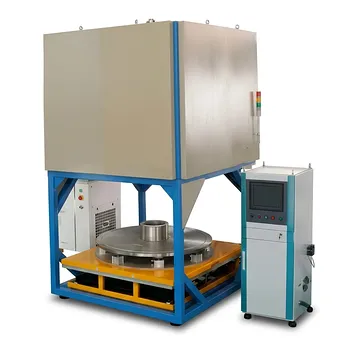
1400C Bottom Loaded Inert Gas Atmosphere Box Furnace with 125L Capacity and Precision Hydraulic Lift
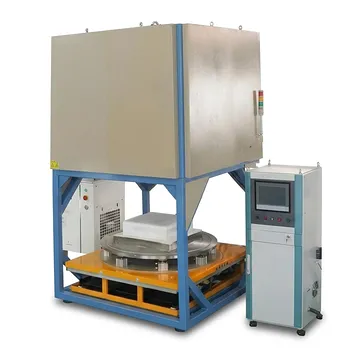
Bottom Loaded Inert Gas Atmosphere Box Furnace 1400C Maximum Temperature 125L High Capacity Laboratory Heat Treatment System
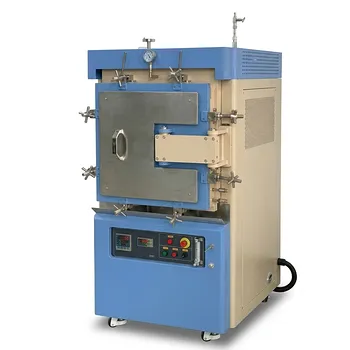
High Temperature Economic Hydrogen Gas Box Furnace 1600C Atmosphere Controlled Thermal Processing System 65L Capacity
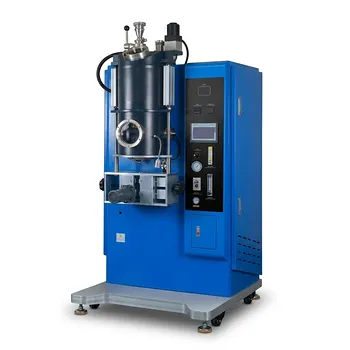
Atmosphere Controlled Continuous Casting Furnace with Secondary Charge Function for Induction Melting and Metal Alloy Wire Production
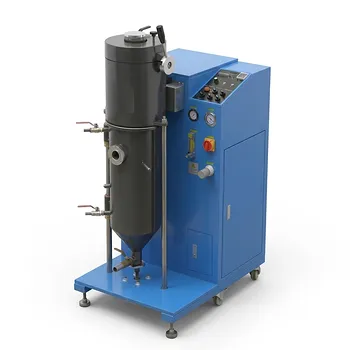
Atmosphere Controlled Induction Melting Granulating Casting Furnace 1500C 5kg Capacity