All Questions
What Is The Primary Function Of A High-Temperature Tube Furnace For Nconi-Nc Synthesis? Achieve Precise Mof Pyrolysis.
Learn how high-temperature tube furnaces enable pyrolytic carbonization of MOFs at 1000°C to create high-performance carbon-based catalyst supports.
Purpose Of The Reverse Gradient Step In Cvt Growth? Master Crystal Purity With Dual-Zone Furnaces
Discover why the reverse gradient step is essential for CVT crystal growth to ensure high purity, structural integrity, and improved RRR.
What Are The Technical Advantages Of Using A Dual-Zone Tube Furnace For Growing Large Pdcoo2 Crystals Via Cvt? Expert Tips
Learn how dual-zone tube furnaces optimize PdCoO2 crystal growth through precise temperature gradients, independent zone control, and stable CVT.
Why Is Vacuum Sealing In Quartz Tubes Necessary For The High-Temperature Thermal Processing Of Pdcoo2? Expert Insights.
Learn why vacuum sealing in quartz tubes is vital for PdCoO2 synthesis, focusing on oxidation prevention, volatile retention, and purity control.
What Are The Advantages Of An Atmosphere Tube Furnace For Lfp Regeneration? Enhance Purity And Performance
Discover how atmosphere tube furnaces optimize LFP regeneration by preventing oxidation, enhancing carbon coating, and improving crystallinity.
What Are The Functions Of High-Temperature Ceramic Boats And Tin Foil In Tube Furnace Pyrolysis? Enhance Lab Precision
Discover how ceramic boats and tin foil wrapping optimize tube furnace pyrolysis by creating micro-atmospheres and preventing oxidation.
Why Is A Vacuum Tube Furnace Utilized For The Pyrolysis Of Garlic Skin-Based Biochar? Optimize Pore Structure & Activity
Discover why vacuum tube furnaces are vital for garlic skin pyrolysis to enhance biochar pore structure, surface chemistry, and adsorption activity.
How Does A Glass Substrate Function During The Growth Of Cam Crystals In A Tube Furnace? Mastering Svd For High Purity
Discover how glass substrates regulate nucleation and kinetics to grow high-quality CAM single crystals using SVD in high-precision tube furnaces.
Why Use A Precision Tube Furnace For Cam Crystal Growth? Optimize Svd For High-Crystallinity Hexagonal Plates.
Discover why precision tube furnaces are essential for growing high-quality CAM crystals using Substrate-confined Vapor Deposition (SVD).
Role Of Tube & Muffle Furnaces In Niobium Oxide Calcination: Achieve High-Precision Hierarchical Macroporous Structures
Learn how tube and muffle furnaces enable precise thermal control for the segmented calcination of hierarchical macroporous niobium oxide synthesis.
Why Is Precise Atmosphere Control Necessary In A Tube Furnace For Cofe2O4? Optimize Your Nanomaterial Performance
Learn how precise atmosphere control in tube furnaces prevents oxidation and engineers oxygen vacancies to optimize CoFe2O4 nanomaterial properties.
Why Is A Laboratory Tube Furnace Essential For The Calcination And Transformation Of Cofe2-Mof Into Cofe2O4? Guide
Discover how tube furnaces provide the thermal precision and atmospheric control needed to transform CoFe2-MOF into high-performance CoFe2O4 spinel.
What Are The Advantages Of A Vertical Tube Furnace For Iron Coke Testing? | Achieve High-Precision Cri Analysis
Discover how vertical tube furnaces optimize iron coke reactivity testing through precise atmospheric control and uniform gas-solid interaction.
What Is The Function Of A High-Temperature Tube Furnace? Achieve Precise Austenitization For Micro-Alloyed Steel
Discover how high-temperature tube furnaces provide stable heating and inert atmospheres for perfect steel austenitization and chemical integrity.
What Technical Considerations Are Critical When Selecting A Process Tube For High-Temperature Operations? Expert Guide
Learn how to select the right process tube for high-temperature furnaces. Compare quartz, alumina, and mullite for thermal and chemical stability.
How Does A Rotary Tube Furnace Improve The Processing Of Granular Materials? Enhance Uniformity And Reaction Kinetics
Learn how rotary tube furnaces optimize granular material processing through dynamic agitation, uniform heating, and enhanced gas-solid interactions.
What Is The Role Of A Multi-Zone Tube Furnace In Material Science Research? Mastering Precise Temperature Gradients
Learn how multi-zone tube furnaces enable precise temperature gradients for CVD, 2D material synthesis, and advanced crystal growth research.
What Are The Specific Advantages And Use Cases For A Split Tube Furnace? Optimize Lab Efficiency & Material Research
Explore the advantages of split tube furnaces, from rapid cooling to easy reactor integration. Perfect for semiconductor and material science R&D.
What Types Of Controlled Atmospheres Can Be Maintained Within A Tube Furnace? Master Precise Chemical Heat Treatment
Explore how tube furnaces maintain inert, reducing, oxidizing, and vacuum atmospheres to ensure material integrity and successful synthesis.
How Is Temperature Regulation And Stability Maintained In A Tube Furnace? Mastering Precision For R&D Excellence
Explore how PID controllers and closed-loop feedback systems ensure precise temperature regulation and thermal stability in tube furnaces for R&D.
What Is The Physical Principle Behind The Heating Mechanism Of A Tube Furnace? Joule Heating & Heat Transfer Explained
Learn the physics of tube furnace heating: Joule heating, radiative transfer, and PID control. Optimize your material science heat treatment today.
What Materials Are Used For Tube Furnace Process Tubes? Temperature Limits & Selection Guide For Research
Explore process tube materials like quartz, alumina, and alloys. Understand temperature limits and chemical resistance for tube furnace applications.
What Is The Primary Function And Application Of A Tube Furnace? Master Precise Thermal Control For Material Science
Discover how tube furnaces provide precise radial uniformity and controlled atmospheres for CVD, metallurgical sintering, and catalyst activation.
What Are The Cross-Cutting Advantages Of Tube Furnaces In Terms Of Energy Efficiency And Scalability? Efficiency & Scale
Discover how tube furnaces offer superior energy efficiency and modular scalability for material science R&D, from microgram to industrial batches.
How Does The Use Of A Tube Furnace Enhance Chemical Synthesis And Catalysis Studies? Optimize Kinetics & Material Purity
Explore how tube furnaces optimize chemical synthesis via precise kinetic control, atmospheric flexibility, and uniform heating for pure catalysts.
What Benefits Do Tube Furnaces Offer For Ceramic Processing And Metallurgy? Achieve High-Precision Material Outcomes.
Discover how tube furnaces optimize ceramic sintering and metallurgical processing through uniform 360° heating and precise atmospheric control.
What Are The Specific Applications Of Tube Furnaces In Semiconductor Fabrication And Research? Lab Solutions For R&D
Discover the role of tube furnaces in diffusion, thermal oxidation, and CVD. Learn how to achieve precise material modification and batch efficiency.
How Are Tube Furnaces Utilized In The Synthesis And Characterization Of Advanced Materials? Expert Thermal Solutions
Discover how tube furnaces enable advanced material synthesis through CVD, sintering, and precise atmospheric control for high-performance R&D.
Why Is The 360-Degree Cylindrical Geometry Of A Tube Furnace Advantageous? Unlock Superior Thermal Uniformity
Explore how cylindrical geometry eliminates thermal gradients and 'center heat lag' for precise material science and industrial R&D applications.
What Atmosphere Control Capabilities Do Tube Furnaces Provide? Master Precision Gas & Vacuum Environments For R&D.
Learn how tube furnaces provide precise vacuum, inert, and reactive atmosphere control for CVD, pyrolysis, and high-purity material research.
What Temperature Ranges And Heating Elements Are Characteristic Of Modern Tube Furnaces? Explore 1800°C Capabilities
Discover temperature ranges (500-1800°C) and heating elements like MoSi2 in modern tube furnaces. Optimize your material science heat treatments.
What Materials Are Typically Used To Fabricate Work Tubes For High-Temperature Tube Furnaces? Expert Selection Guide
Discover the best work tube materials for high-temperature furnaces, from Alumina to Quartz. Learn how to choose based on temperature and chemistry.
What Are The Primary Components And Operating Principles Of A Tube Furnace? Optimize Your Lab's Heat Treatment
Learn the key components and operating principles of tube furnaces for precise temperature control and uniform thermal processing in lab R&D.
Featured Products
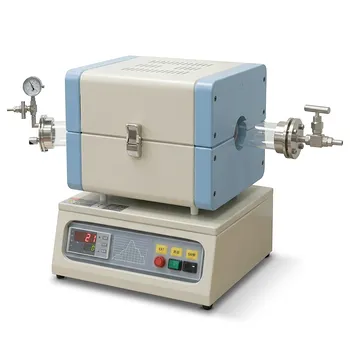
1200C Tube Furnace with Internal Magnetic Sample Sliding for Direct Vaporizing Deposition and Rapid Thermal Processing
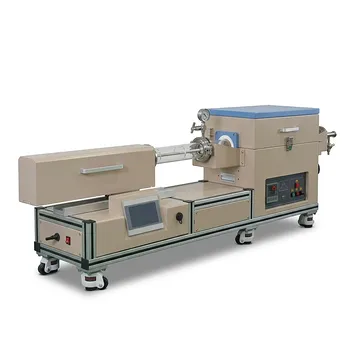
1200C Sliding Internal Crucible Tube Furnace for Controlled Atmosphere Thin Film Deposition and Material Sublimation Research
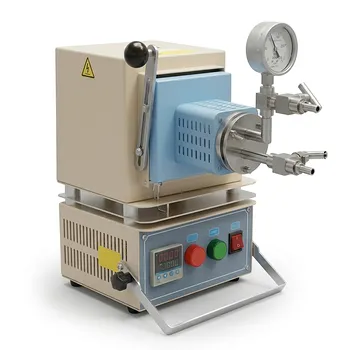
Compact Hybrid Muffle and Tube Furnace for 1000C Controlled Atmosphere Laboratory Material Sintering
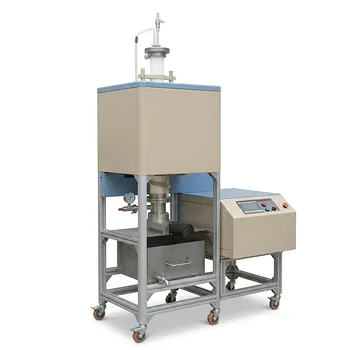
1700C High Temperature Quenching Tube Furnace with 60mm Alumina Tube and Automatic Electromagnet Release System
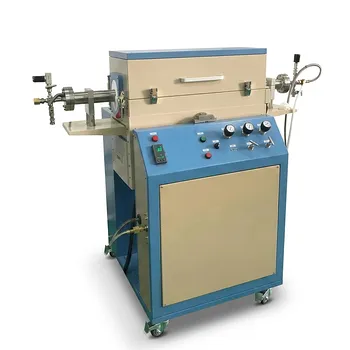
High Temperature Rocking Tube Furnace 1700°C Alumina Processing Tube with Precision Oscillation for Material Synthesis