All Questions
Why Is A Thermocouple Sensor Indispensable For Monitoring The Vertical Tube Furnace During Gallium Oxide Nanowire Production? Optimize Vls Growth
Discover how thermocouples ensure thermal stability and precise VLS growth for gallium oxide nanowires in high-temperature vertical tube furnaces.
Why Is A Vertical Tube Furnace Preferred For Ga2O3 Cvd? Optimize Convection & Nanowire Growth
Learn how vertical tube furnaces enhance Ga2O3 nanowire synthesis through convection, ensuring uniform VLS growth and vapor stability.
How Does A Tube Furnace With Controlled Oxygen Flow Contribute To Pad? Enhance Epitaxial Growth & Oxide Purity
Learn how controlled oxygen in a tube furnace optimizes epitaxial growth in PAD by removing organics and ensuring precise oxygen stoichiometry.
Why Is A High-Temperature Tube Furnace Used For The Calcination Of Bismuth-Based Mofs? Precise Bi2O3 Synthesis Guide
Discover how tube furnaces enable precise calcination of Bi-MOFs into Bi2O3 nanorods, ensuring uniform silver doping and material crystallinity.
What Core Functions Does An Industrial Tube Atmosphere Furnace Provide During High-Temperature Carburizing At 1050 °C? Master Heat Treatment Precision
Understand the critical role of tube furnaces in 1050°C carburizing: from airtight atmospheric control to precise thermal dynamics and diffusion.
What Is The Role Of A Tube Furnace During The Annealing Treatment Of Ti-6Al-7Nb Alloy? Optimize Surface Quality
Learn how tube furnaces optimize Ti-6Al-7Nb annealing by preventing oxidation and removing stress to ensure a high-quality carburized layer.
Why Is An Ar/H2 (95/5) Mixed Atmosphere Necessary When Annealing Si/Al2O3/Rgo Materials In A Tube Furnace?
Learn how an Ar/H2 mixed atmosphere prevents silicon oxidation and restores RGO conductivity for high-performance battery material annealing.
What Is The Critical Function Of A High-Temperature Tube Furnace In Si/Al2O3/Rgo Synthesis? Key To Battery Innovation
Learn how high-temperature tube furnaces enable thermal reduction and structural bonding for Si/Al2O3/RGO composite battery materials at 700°C.
Why Is An Atmosphere Control Tube Furnace Required For Irsa-Mo2C/C Treatment At 900°C? Master Catalyst Synthesis.
Learn how atmosphere control tube furnaces enable carbothermal reduction and Ir atomic dispersion at 900°C for superior IrSA-Mo2C/C catalysts.
What Role Does A High-Temperature Tube Furnace Play In The Polymer Derived Ceramics (Pdc) Process? Pyrolysis Explained
Learn how tube furnaces enable precise precursor pyrolysis in PDC, ensuring material integrity through controlled heating and inert atmospheres.
What Role Does A High-Temperature Tube Atmosphere Furnace Play In The Solid-State Synthesis Of Caga4O7:Mn2+ Phosphor?
Learn how tube atmosphere furnaces ensure phase purity and prevent Mn2+ oxidation in CaGa4O7:Mn2+ phosphor synthesis at 1573 K.
How Does A High-Temp Tube Furnace Ensure Stability For Rare Earth Hexaborides? Expert Atmospheric & Thermal Control
Learn how high-temperature tube furnaces provide PID thermal precision and inert gas isolation for high-purity Rare Earth Hexaboride synthesis.
What Technical Advantages Does A High-Temp Vertical Tube Furnace Offer For Jarosite Reduction? Maximize Your Yields.
Discover how vertical tube furnaces optimize Jarosite Residue reduction with stable 1400°C heat, gas injection, and precise atmosphere control.
Why Is The Use Of A Tube Furnace With Argon Gas Flow Necessary? Prevent Oxidation & Ensure Pure Copper Homogenization
Learn why argon flow in tube furnaces is vital for copper alloy annealing to prevent oxidation and maintain high electrical conductivity.
What Is The Purpose Of Introducing High-Purity Argon (Ar) During The Tube Furnace Pyrolysis Process? Ensure Pure Synthesis
Learn why high-purity argon is vital in tube furnace pyrolysis to prevent oxidation and ensure precise structural and chemical material stability.
What Role Does A High-Temperature Tube Furnace Play In The Production Of Nitrogen-Doped Porous Carbon? Optimize Synthesis
Discover the critical role of tube furnaces in nitrogen-doped porous carbon production, from precision pyrolysis to controlled graphitization.
What Is The Primary Purpose Of Using Atmosphere Control Tube Furnaces In Uoc Reduction? Ensuring Precision & Purity
Learn how atmosphere control tube furnaces enable precise chemical transformation, morphology control, and stoichiometric accuracy in UOC reduction.
What Necessary Conditions Does A Horizontal Tube Furnace Provide During The Reduction Stage Of Pd/Cnt Catalysts?
Learn how horizontal tube furnaces provide controlled atmospheres and isothermal stability for Pd/CNT catalyst reduction, ensuring high dispersion.
Why Is A High-Precision Atmosphere Tube Furnace Required For Cnt Treatment? Achieve Perfect Surface Regulation.
Discover how high-precision atmosphere tube furnaces enable selective pyrolysis and protect CNT integrity during thermal treatment for advanced R&D.
What Role Does A High-Temperature Tube Furnace Play In Executing Nitrogen Absorption Kinetic Experiments? Expert Insights
Learn how high-temperature tube furnaces provide the isothermal precision and atmospheric control needed for nitrogen absorption kinetic experiments.
Why Is An Atmosphere-Controlled Tube Furnace Necessary For The Preparation Of Biochar Used In Nitrogen Absorption Applications?
Learn why atmosphere-controlled tube furnaces are essential for biochar pyrolysis, preventing combustion, and engineering pores for nitrogen capture.
How Does A Tube Furnace System Equipped With Gas Mass Flow Controllers Facilitate The Mcw Process? Optimize Graphene Yield
Explore how tube furnaces and MFCs enable the MCW process for high-yield graphene production through precise thermal and gas flow control.
What Core Conditions Does A Tube Furnace Provide For Lignin Graphitization? Key Factors For High-Quality Graphene
Learn how tube furnaces provide 1000°C thermal stability and inert argon atmospheres for high-purity lignin graphitization and M@G structures.
How Does A Tube Furnace Facilitate Sintering For Srcro3? Master Perovskite Synthesis With Precise Thermal Control
Discover how tube furnaces optimize solid-phase sintering for perovskite oxides. Learn about atmosphere control, diffusion, and phase purity.
How Does A Vertical Tube Furnace Facilitate Thermoelectric Alloy Melting? Precision Synthesis For Material Homogeneity.
Learn how vertical tube furnaces achieve thermoelectric alloy homogenization through precise thermal cycles, soaking, and controlled atmospheres.
How Does A Tube Atmosphere Furnace Facilitate The Absorption-Annealing Process For Ag-Cnt Films? Process Optimization
Learn how tube atmosphere furnaces optimize Ag-CNT film annealing via controlled thermal decomposition and inert gas protection for high conductivity.
Why Is High-Purity Nitrogen (N2) Required During The Carbonization Process In A Tube Atmosphere Furnace? Prevent Oxidation
Learn why high-purity nitrogen is vital for tube furnace carbonization to prevent oxidation, preserve nanostructures, and ensure high material yield.
What Conditions Does A Tube Furnace Provide For Fmbp Of High-Entropy Nanomaterials? Precision Synthesis Guide
Learn how laboratory tube furnaces enable FMBP for high-entropy nanomaterials through isothermal zones, atmosphere control, and rapid heating.
What Are The Technical Advantages Of Using A Tube Furnace For Max Phase Preparation? Boost Purity At Lower Temperatures
Learn how combining tube furnaces with sol-gel methods enables low-temp Cr2AlC MAX phase synthesis with superior purity and fine grain control.
What Is The Significance Of Using A High-Purity Nitrogen Atmosphere In A Tube Furnace For Max Phase Synthesis?
Learn how high-purity nitrogen prevents oxidation and preserves the crystal integrity of Chromium Aluminum Carbon MAX phases in tube furnaces.
How Does A Programmable Horizontal Tube Furnace Contribute To The Annealing Of Cr-Al-C Max Phases? Enhance Phase Purity
Learn how programmable horizontal tube furnaces optimize Cr-Al-C MAX phase synthesis through precise thermal control and inert atmosphere management.
Why Use N2 For High-Entropy Fluoride Carbonization? Prevent Oxidation & Ensure Material Purity In Tube Furnaces.
Learn why a nitrogen environment in tube furnaces is vital for high-entropy fluoride synthesis by preventing oxidation and ensuring material purity.
Why Is A Laboratory Tube Furnace With A High-Precision Temperature Control System Required For Na2Ni3S4? Expert Insights
Discover why high-precision tube furnaces are essential for Na2Ni3S4 synthesis, ensuring uniform flux melting and large single crystal growth.
What Core Experimental Conditions Does A Horizontal Tube Furnace Provide For Catalytic Graphitization At 1300°C? Guide
Discover how horizontal tube furnaces provide inert atmospheres and precise 1300°C control for high-quality catalytic graphitization.
What Are The Primary Process Objectives Of Using A High Vacuum Tube Furnace For The Pre-Treatment Of Ws2? Optimize Surface Energy
Learn how high vacuum tube furnaces achieve surface decontamination and optimize surface energy for WS2 while preserving material integrity.
How Does Calcination In A Tube Furnace Under Air Vs. Argon Affect Ceramic Skeletons? Optimize Purity And Conductivity
Compare air vs. Argon calcination in tube furnaces. Learn how atmosphere choice affects template removal, material purity, and conductivity.
What Is The Purpose Of Using A Tube Atmosphere Furnace With Argon Gas For 3Dbt@C? Key For 1100°C In-Situ Carbonization
Discover how Argon atmospheres in tube furnaces enable in-situ carbonization for 3DBT@C networks, preventing oxidation and boosting conductivity.
What Is The Function Of A High-Temperature Tube Furnace In The Preparation Of Ni/Fe@Ndc Catalysts? Key Roles Explained
Learn how tube furnaces enable in-situ encapsulation, metal reduction, and N-doped carbonization for high-performance Ni/Fe@NDC catalyst synthesis.
What Are The Primary Process Responsibilities Of A Horizontal Tubular Furnace In A Mist Cvd System? Expert Insights
Learn how horizontal tubular furnaces manage thermal fields, solvent evaporation, and pyrolysis to ensure high-quality film growth in mist CVD.
How Does A Vacuum Tube Furnace Achieve Material Densification During The Final Sintering Stage Of Fused Silica Glass?
Learn how vacuum tube furnaces use viscous flow and high vacuum to achieve dense, bubble-free fused silica glass with superior optical clarity.
What Process Environment Does A Vacuum Tube Furnace Provide For Silica Glass Pyrolysis? Ensure Crack-Free Results
Learn how vacuum tube furnaces create an oxygen-free, low-pressure environment for crack-free silica glass pyrolysis and structural integrity.
Why Is A High-Precision Tube Furnace Required For The High-Temperature Activation Of Jute-Based Carbon Materials? Guide
Learn how high-precision tube furnaces optimize jute fiber activation through thermal uniformity, inert atmospheres, and surface area expansion.
What Role Does A Tube Atmosphere Furnace Play In The Carbonization Of Jute? Expert Guide To High-Performance Carbon
Explore how tube atmosphere furnaces optimize jute carbonization through inert environments, PID thermal control, and precise pore engineering.
What Role Does An Industrial Tube Furnace Play In The Synthesis Of Calcium Ferrites For Material Research? Precise Control
Learn how industrial tube furnaces enable precise calcination, phase control, and atmosphere management for high-purity calcium ferrite synthesis.
How Does A Vacuum Or Atmosphere Tube Furnace Facilitate The Synthesis Of Defective Carbon From Mof? Master Thermal Control
Discover how tube furnaces enable precise MOF pyrolysis and atmosphere control to engineer intrinsic defective carbon for advanced catalysis.
Why Is A Vacuum Tube Furnace Utilized For The Degassing Treatment Of Ndfeb Powder? - Preserve Magnetic Coercivity
Learn how vacuum tube furnaces stabilize hydrides and prevent carbon contamination in NdFeB powder to maintain peak magnetic coercivity.
How Does A Tube Furnace System Maintain Environment Stability During A Polypropylene Pyrolysis Reaction? Expert Guide
Learn how tube furnaces ensure stability in polypropylene pyrolysis through PID control, nitrogen purging, and precise thermal management for R&D.
What Role Does A High-Temperature Tube Furnace Play In The Pretreatment Of Hzsm-5 Catalysts? Achieve Peak Activation
Learn how high-temperature tube furnaces enable precise thermal activation, surface purification, and modification of HZSM-5 catalysts for R&D.
How Does The Arrangement Of Selenium Powder And Ni-N-C Inside A Tube Furnace Affect The Selenization Process? Key Insights
Master selenization in a tube furnace. Learn how precursor placement and gas flow control NiSe2 nanoparticle growth and reaction kinetics for R&D.
What Is The Function Of A High-Temperature Tube Furnace In The Annealing Of Ni-N-C Composites? Optimize Catalyst Synthesis
Learn how high-temperature tube furnaces enable precise pyrolysis, atmosphere control, and pore engineering for synthesizing high-performance Ni-N-C.
Why Is It Necessary To Place Mos2 Devices In A Dual-Zone Tube Furnace For Annealing? Optimize Lattice Repair & Doping
Learn why dual-zone tube furnaces are vital for MoS2 annealing to repair lattice damage and activate dopants, ensuring high-performance device R&D.
What Role Does The Drop Tube Furnace Play In The Initial Preparation Stage Of Hollow Carbon Nanospheres (Hcns)? - Core-Shell Synthesis
Learn how Drop Tube Furnaces enable rapid heating and residence time control to create core-shell precursors for Hollow Carbon Nanospheres (HCNS).
Why Is An Atmosphere-Controlled Tube Furnace Required For Phosphate Dechlorination Experiments Involving Electro-Refined Salt?
Discover how atmosphere-controlled tube furnaces enable precise dechlorination, impurity removal, and structural stability in electro-refined salts.
Why Is A High-Temperature Tube Furnace Required For Koh Activation? Create High-Surface Area Carbon Materials
Learn how high-temperature tube furnaces enable KOH etching and inert environments to produce high-performance porous carbon for supercapacitors.
How Does A High Vacuum Tube Furnace Contribute To The Primary Carbonization Process Of Biomass Waste? Expert Insights
Learn how high vacuum tube furnaces optimize biomass carbonization through precise thermal control and anaerobic environments for high-quality biochar.
Why Is A High-Temperature Tube Furnace Required During The Activation Stage Of Molecular Sieve Catalysts? Expert Guide
Learn why tube furnaces are vital for catalyst activation, offering the precise thermal and atmospheric control needed for superior pore structures.
What Is The Significance Of Controlling The Heating Rate Of A Tube Furnace During Ctp Carbonization? Ensure Material Density
Learn how precise heating rates in tube furnaces prevent bloating and ensure high-density, crack-free carbon materials during CTP carbonization.
Why Is An Inert Atmosphere Required When Using A Laboratory Tube Furnace For The Carbonization Of Coal Tar Pitch (Ctp)?
Learn why inert atmospheres are vital for CTP carbonization in tube furnaces to prevent combustion and ensure high-performance carbon structures.
How Does A High-Temperature Tube Furnace Impact Coal-Based Hard Carbon Evolution? Master 1300°C Structural Control.
Learn how 1300°C tube furnace carbonization optimizes hard carbon structure, pore closure, and storage capacity for sodium-ion batteries.
Why Is An Atmosphere Tube Furnace Required During The Pre-Carbonization Stage Of Coal-Based Hard Carbon Synthesis?
Discover why atmosphere tube furnaces are essential for coal-based hard carbon synthesis to prevent oxidation and ensure precise in-situ templating.
What Role Do High-Vacuum Or Atmospheric Tube Furnaces Play In The Post-Treatment Of Lamno3 Thin Films? Optimizing Results
Discover how tube furnaces optimize LaMnO3 thin films through oxygen diffusion and Mn valence shifts to enhance magnetic and structural performance.
Why Control Tube Furnace Heating At 2°C/Min For Mo-Doped Cobalt Phosphide? Ensure Structural & Phase Integrity.
Discover how a 2°C/min heating rate in tube furnaces prevents nanocage collapse and ensures uniform phosphorization for superior catalyst activity.
How Does The Structural Layout Of A Tube Furnace Affect The Quality Of Materials During The Phosphorization Stage?
Learn how tube furnace layout, gas flow, and thermal zones influence material purity and crystal structure during the phosphorization process.
Role Of Tube Furnaces In Polyimide Tr Process? Achieve High-Performance Pbo Conversion And Gas Separation.
Learn how industrial tube furnaces drive polyimide-to-PBO conversion with precise 350-450°C thermal control and inert atmosphere for gas separation.
What Is The Primary Function Of An Atmosphere Tube Furnace In The Synthesis Of Omc? Master Precise Carbonization
Learn how atmosphere tube furnaces enable precise carbonization, template removal, and graphitization for high-quality OMC synthesis.
Why Is A Horizontal Tube Furnace Preferred For Apht Growth Of Hbn? Master Precision Thermal Control & Crystal Synthesis
Learn why horizontal tube furnaces are essential for APHT growth of hBN, featuring ultra-slow cooling, precise gradients, and atmosphere control.
What Is The Primary Function Of An Industrial Tube Furnace During Ndfeb Recycling? Key To Rare Earth Recovery
Learn how industrial tube furnaces enable NdFeB magnet recycling through thermal demagnetization at 750°C, ensuring efficient rare earth recovery.
How Do A High-Temperature Tube Furnace And A Controlled Atmosphere Contribute To Niwmo Carbides? Key Synthesis Roles
Learn how high-temperature tube furnaces and argon atmospheres enable the synthesis of MoNi3 and WC carbides while preventing metal oxidation.
Why Use A Micro-Flow Quartz Tube Reactor For Ethylene Epoxidation Kinetics? Ensure Chemical Inertness For Pure Data.
Learn why quartz tube reactors are vital for ethylene epoxidation kinetic testing, offering chemical inertness and high-precision data integrity.
How Does A Laboratory Tube Furnace Facilitate Active Site Formation In Ag/Alpha-Al2O3 Catalysts? Optimize Your Results
Learn how tube furnaces enable precise Ag/alpha-Al2O3 catalyst calcination through thermal decomposition, atmospheric control, and sintering prevention.
What Is The Significance Of A High-Temperature Tube Furnace For Arsenic Stability? Master Precision Heat Treatment
Discover how tube furnaces enable precise arsenic stability research in copper matte by simulating smelting conditions and atmospheric control.
Why Is A High-Temperature Quartz Boat Used For Tin Catalyst Synthesis? Ensure Purity & Thermal Stability
Discover why quartz boats are vital for TiN catalyst synthesis: ensuring high purity, thermal stability, and optimized gas-solid reactions.
What Is The Function Of A High Vacuum Tube Furnace In The Preparation Of Transition Metal Nitride Thin Films? Precise Nitride Synthesis
Learn how high vacuum tube furnaces enable precise transition metal nitride thin film synthesis through controlled temperature and atmospheric purity.
What Core Role Does A Vacuum Tube Furnace Play In Fe3O4@Csac Preparation? Ensure Precise Phase & Structural Integrity
Explore how vacuum tube furnaces enable Fe3O4@CSAC synthesis through precise thermal decomposition, magnetic phase transformation, and carbon protection.
How Does A Vacuum Tube Furnace Contribute To The Annealing Of Zirconium-Based Biomaterials? Enhance Implant Performance
Explore how vacuum tube furnaces optimize zirconium biomaterials via oxidation prevention, stress relief, and precise microstructural control.
Why Is A 4-Hour Holding Time Superior For V2Alc Max Phase Synthesis? Achieve Structural Maturity & Purity
Learn how a 4-hour holding time in a tube furnace optimizes atomic diffusion and minimizes impurities in V2AlC MAX phase synthesis.
How Does The Precise Temperature Control Of A Tube Furnace Influence The Formation Of V2Alc Max Phase? Expert Insights.
Learn how precise temperature control in tube furnaces ensures the formation of high-purity V2AlC MAX phases with perfect layered structures.
What Are The Advantages Of A 3-Zone Vs Single-Zone Tube Furnace For Ga2O3 Synthesis? Enhanced Precision Control
Discover why 3-zone tube furnaces outperform single-zone models in Ga2O3 nanowire synthesis through superior thermal uniformity and stage control.
What Role Does A Tube Furnace Play In The Reduction Of Ruthenium (Ru) Nanoparticles On A Carrier Using Reducing Gases?
Discover how tube furnaces enable precise Ruthenium nanoparticle reduction through controlled heating and atmosphere for high-performance catalysts.
How A Tube Atmosphere Furnace Ensures Performance In Tio2 To Tin Nitridation: Precise Thermal & Gas Control
Master TiO2 to TiN nitridation with tube atmosphere furnaces. Ensure precise stoichiometry, conductivity, and hardness through controlled atmospheres.
What Is The Primary Function Of A High-Temperature Tube Furnace In Npc Synthesis? Mastering Carbonization & Porosity
Learn how high-temperature tube furnaces enable precise carbonization, atmospheric control, and N-doping in Nitrogen-doped Porous Carbon synthesis.
Why Is A High-Stability Tube Furnace Necessary For Nisa-O/Mo2C? Ensure Precision In Single-Atom Catalyst Synthesis
Learn how high-stability tube furnaces enable precise thermal programming and atmospheric control to prevent aggregation in NiSA-O/Mo2C catalysts.
Why Is Post-Annealing In A High-Temperature Tube Furnace Required For Lltao? Unlock High Perovskite Phase Purity
Discover why high-temperature tube furnace annealing is vital for LLTaO thin films to achieve phase purity and optimize lithium-ion conductivity.
Why Is An Atmosphere Tube Furnace Considered Core Equipment For Cvd? Essential For Precision Thin-Film & 2D Materials
Learn how atmosphere tube furnaces enable precise CVD processes for high-purity thin films and 2D materials through advanced thermal and gas control.
What Role Does A High-Precision Tube Furnace Play In The Calcination Of Pps/C Electrocatalysts? Optimize Your Catalyst.
Explore how precision tube furnaces regulate heating and atmospheres to optimize PPS/C electrocatalyst synthesis and Pt/PtS interface formation.
Function Of Tube Furnaces In Cellulose Aerogel Carbonization? Achieve High-Performance Materials
Understand how high-temperature tube furnaces enable controlled pyrolysis and inert protection to synthesize high-performance carbon aerogels.
How Do Dual-Zone Quartz Tube Furnaces Achieve Controllable Material Preparation? Optimize Perovskite Vd Processes
Learn how dual-zone furnaces decouple thermal zones to optimize precursor sublimation and film growth in all-inorganic perovskite heterojunctions.
What Are The Technical Advantages Of Using A Vacuum Tube Furnace For Biochar Production? Optimize Yield And Porosity
Compare vacuum tube furnaces and muffle furnaces for biochar. Learn how inert atmospheres improve carbon yield, pore structure, and material purity.
Why Is A Precise Heating Rate Required For Biochar Pyrolysis In A Tube Furnace? Optimize Carbon Yield And Porosity.
Understand why precise heating rates in tube furnaces are vital for biochar pyrolysis to ensure structural stability, pore formation, and high yield.
What Is The Core Role Of A Vacuum Tube Furnace In The Preparation Of Herb Residue Biochar? Optimize Pyrolysis Quality
Learn how vacuum tube furnaces enable precise slow pyrolysis for herb residue biochar, ensuring high surface area and controlled carbonization.
Why Are Quartz Reaction Tubes And Quartz Boats Selected For Transition Metal Disulfide Synthesis Setups? Essential For Purity
Learn why quartz is essential for TMD synthesis, offering thermal stability, chemical inertness, and purity preservation for 2D material growth.
What Is The Role Of A High-Temperature Tube Furnace In The Synthesis Of 2D Transition Metal Disulfides? Growth Mastery
Learn how high-temperature tube furnaces enable precise 2D transition metal disulfide synthesis through thermal control and atmospheric isolation.
How Does A High-Temperature Tube Furnace Work With Pulsed Lasers In La Synthesis? Master Silicon Nanowire Growth.
Learn how tube furnaces and pulsed lasers synergize in Laser Ablation to synthesize high-purity silicon nanowires with precise structures.
What Role Does A High-Temperature Tube Furnace Play In Cvd Synthesis Of Silicon Nanowires? Master Vls Growth Precision.
Discover how high-temperature tube furnaces enable precise CVD synthesis and VLS growth for high-quality silicon nanowires (SiNWs).
Why Use A Tube Furnace For Carbonized Cuttlebone (Tcb)? Role Of N2 Protection And High-Temp Treatment
Learn how nitrogen-protected tube furnaces enable aragonite-to-calcite transition and prevent combustion during TCB material preparation.
What Core Conditions Does A High-Temperature Tube Furnace Provide For Rgo Aerogels? Mastering Precision Synthesis.
Learn how high-temperature tube furnaces provide the inert atmosphere and thermal precision needed for high-quality rGO aerogel synthesis.
What Key Processing Conditions Does A Tube Atmosphere Furnace Provide For Fe/Rgo? Master Material Reduction Precision.
Learn how tube atmosphere furnaces optimize Fe/RGO reduction through controlled H2 flow, 350°C thermal precision, and oxygen-free environments.
How Does A Tube Furnace Facilitate The Conversion Of Bi-Mofs Into Bi@C? Optimize Pyrolysis & In-Situ Reduction
Learn how controlled atmosphere tube furnaces convert Bi-MOFs to Bi@C composites via pyrolysis and in-situ reduction for material research.
How Does An Industrial-Grade Tube Furnace Benefit Sintering Porous Aluminum Wicks? Oxide Removal & Enhanced Bonding
Learn how a reducing atmosphere in a tube furnace removes aluminum oxide films to create high-strength porous wicks for thermal management.
What Role Does A Heat Wrap Play In Tube Furnace Gas Lines During Cr Experiments? Ensure Precise Atmospheric Control
Learn how heat wraps prevent moisture condensation and chromium deposition in gas supply lines to ensure accurate tube furnace experimental results.
Featured Products
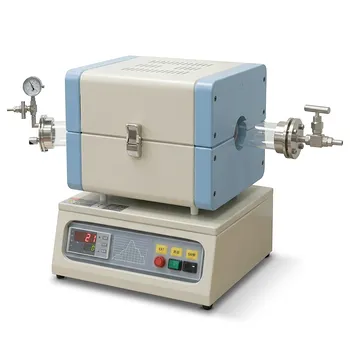
1200C Tube Furnace with Internal Magnetic Sample Sliding for Direct Vaporizing Deposition and Rapid Thermal Processing
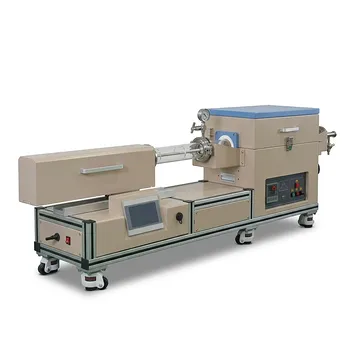
1200C Sliding Internal Crucible Tube Furnace for Controlled Atmosphere Thin Film Deposition and Material Sublimation Research
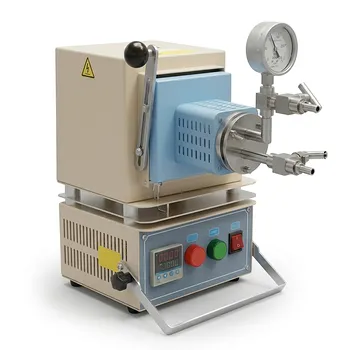
Compact Hybrid Muffle and Tube Furnace for 1000C Controlled Atmosphere Laboratory Material Sintering
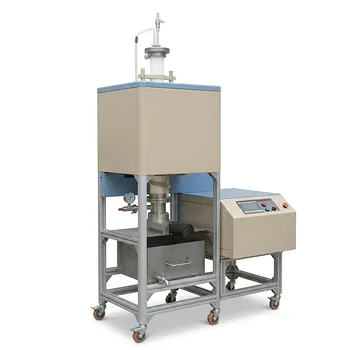
1700C High Temperature Quenching Tube Furnace with 60mm Alumina Tube and Automatic Electromagnet Release System
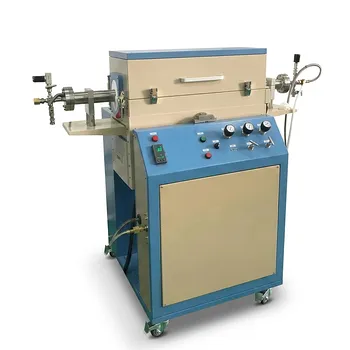
High Temperature Rocking Tube Furnace 1700°C Alumina Processing Tube with Precision Oscillation for Material Synthesis