All Questions
How Does A Programmed Tube Furnace Facilitate Osda Removal In Mgalpo-5? Achieve Precise Catalyst Activation.
Learn how programmed tube furnaces use precise temperature ramping and airflow to remove OSDAs from MgAlPO-5 catalysts while preserving acidity.
What Atmosphere Tube Furnace Requirements Exist For Titania-Carbon Sulfidation? Expert Heat Treatment Performance Guide
Learn critical furnace requirements for titania-carbon sulfidation, including corrosion-resistant seals, H2S gas control, and thermal precision.
What Is The Primary Function Of An Atmosphere Tube Furnace During The Carbonization Process Of Titania-Carbon Aerogels? Expert Guide
Discover how atmosphere tube furnaces facilitate pyrolysis, prevent oxidation, and ensure precise phase control for titania-carbon aerogels.
What Function Does A Tube Atmosphere Furnace Serve In Porous Carbon Activation? Key For High-Surface-Area Synthesis
Learn how tube atmosphere furnaces enable precise pore formation and prevent oxidation during the activation and calcination of porous carbon.
What Is The Role Of A Laboratory Tube Furnace In The Carbonization Process Of Porous Carbon Foam (Pcf)? Master 3D Synthesis
Learn how laboratory tube furnaces enable precise carbonization of porous carbon foam through atmospheric control and thermal precision for R&D.
What Is The Function Of High-Temperature Tube Furnaces In Gh4099 Heat Treatment? Optimize Microstructure & Strength
Master GH4099 superalloy heat treatment with industrial tube furnaces. Optimize microstructure and creep resistance through precise thermal control.
What Is The Function Of A High-Precision Dual-Zone Tube Furnace In Mapbi3 Deposition? Expert Perovskite Synthesis.
Learn how dual-zone tube furnaces control sublimation rates and gas-phase stoichiometry for high-quality MAPbI3 perovskite thin film deposition.
Why Is A Horizontal Tube Furnace Required For The Preparation Of Char In Co-Gasification Research? Achieve Char Precision
Learn how horizontal tube furnaces enable precise char preparation for co-gasification through inert atmospheres and temperature accuracy.
What Critical Process Conditions Does A High-Temperature Tube Furnace Provide? Mastering Catalyst Activation Success
Explore how precise thermal stability at 600°C and controlled H₂/Ar atmospheres in tube furnaces optimize Nickel-Cerium-Aluminum catalyst activation.
What Role Does A Tube Furnace Play In The Heat Treatment Of Aisi M2 High-Speed Steel? Precision Control & Protection
Discover how tube furnaces enable precise 1200°C austenitizing and atmospheric protection to enhance the hardness and toughness of AISI M2 steel.
What Core Physical Conditions Does A High-Temperature Tube Furnace Provide For Micro-Led Sto? Master Thermal Conversion.
Learn how high-temperature tube furnaces enable Selective Thermal Oxidation (STO) for micro-LEDs through precise temperature and atmosphere control.
Why Is A Vacuum Tube Furnace Used For The Heat Treatment Of Modified Coal-Based Graphite? Precision Thermal Control
Discover how vacuum tube furnaces protect coal-based graphite from oxidation while enabling precise structural tuning and impurity removal.
Why Is A High-Precision Atmospheric Tube Furnace Essential For The Secondary Calcination Of Fe-Nc Catalysts? Optimize Results
Discover why precision atmospheric tube furnaces are vital for Fe-NC catalyst synthesis, focusing on Fe-Nx active sites and structural evolution.
What Role Does A 3-Zone Tube Furnace Play In Cco Ceramic Conductivity Testing? Ensure Isothermal Precision.
Explore how high-precision three-zone tube furnaces provide the isothermal environments needed for accurate CCO ceramic conductivity characterization.
What Is The Necessity Of Introducing A High-Purity Argon Atmosphere In A Tube Furnace? Preserve Material Integrity
Learn why high-purity argon is vital in tube furnace annealing to prevent oxidation, protect reactive metals, and ensure material structural stability.
Why Is A Vacuum Or Atmosphere Tube Furnace Required For Tio2 Nanotube Coatings? Optimize Crystallinity And Adhesion.
Discover how vacuum/atmosphere furnaces transform TiO2 nanotubes into crystalline phases, remove impurities, and prevent substrate oxidation for R&D.
Why Is A Tube Furnace Necessary For Ag33/Tio2 Calcination? Control Atmosphere For Superior Catalytic Performance
Discover why atmosphere control is vital for Ag33/TiO2 calcination to prevent silver oxidation and optimize catalytic oxygen vacancies.
Why Is It Necessary To Introduce High-Purity Nitrogen Into The Tube Furnace? Prevent Bnf Oxidation & Ensure Purity
Learn why high-purity nitrogen is vital for BNF heat treatment in tube furnaces to prevent oxidation, maintain purity, and ensure structural stability.
What Role Does A Tube Furnace Play In Bnf Processing? Optimize Purity And Crystallinity In Boron Nitride Synthesis
Learn how high-temperature tube furnaces enable multi-stage synthesis of Hexagonal Boron Nitride Fibers through precise pyrolysis and calcination.
What Is The Function Of The Nitrogen Flow Control System In A Tube Furnace During Carbon Activation? Optimize Your Yield
Discover how nitrogen flow systems prevent oxidation and facilitate pore development in carbon activation within high-temperature tube furnaces.
How Does A Tube Furnace Facilitate The Melt-Diffusion Infusion Of Selenium Into Mo@Cnfs? Precision Thermal Synthesis
Learn how tube furnaces facilitate Se infusion into Mo@CNFs via phase transformation, capillary action, and controlled inert atmospheric conditions.
Why Is High-Temperature Inert Atmosphere Protection In A Tube Furnace Critical For Cnfs? Ensure Structural Integrity
Discover how inert atmospheres in tube furnaces prevent CNF combustion and enable multi-channel hollow structures for high-performance applications.
Why Is An Industrial-Grade Tube Furnace Required For Pre-Oxidation Of Mo@Cnfs? Achieve Precise Pan Cyclization.
Learn why industrial tube furnaces are essential for Mo@CNF pre-oxidation, ensuring precise PAN cyclization and preventing fiber melting.
What Critical Conditions Does An Industrial High-Temperature Tube Furnace Provide For Annealing (Gaal)2O3 Thin Films?
Learn how high-temperature tube furnaces at 1100°C drive crystallization and Al diffusion in (GaAl)2O3 thin films for advanced semiconductors.
What Role Does A High-Temperature Tube Furnace Play In Cucro2 Thin Film Production? Master Delafossite Crystallization.
Discover how tube furnaces enable CuCrO2 phase transformation, optimizing hole mobility and optical transparency through precise thermal annealing.
Why Is An Industrial Tube Furnace Utilized For The Torrefaction Pretreatment Of Mixed Waste? Key Benefits & Insights
Learn how industrial tube furnaces optimize torrefaction by converting mixed waste into high-energy fuel through precise anaerobic thermal control.
Why Is A Constant Flow Of Nitrogen Gas Necessary Within A Tube Furnace? Protect Carbon Quality & Pore Development
Learn how nitrogen flow prevents oxidation, removes volatiles, and optimizes pore development during activated carbon synthesis in tube furnaces.
What Is The Function Of An Atmosphere Tube Furnace In Biomass Carbonization? Optimize Material Purity And Yield
Learn how atmosphere tube furnaces prevent oxidative loss and control pore structure during biomass carbonization for high-purity carbon materials.
What Is The Role Of A Horizontal Quartz Tube Furnace In 2D Mos2-Mose2 Synthesis? Master Cvd For Precise Superlattices
Learn how industrial quartz tube furnaces enable high-quality 2D MoS2-MoSe2 lateral superlattices through precise CVD thermal and gas flow control.
What Is The Function Of A Dual-Zone Tube Furnace In Cvt? Master Precision Crystal Growth & Purity For Ruo2 Synthesis
Learn how dual-zone tube furnaces drive CVT synthesis for high-purity RuO2 crystals through precise temperature gradients and controlled diffusion.
Why Is An Atmosphere Tube Furnace With Argon Flow Necessary For Co-C3N5 Catalysts? Prevent Oxidation & Maximize Activity
Learn how argon-flow atmosphere tube furnaces protect Co-N active sites and prevent oxidative degradation during Co-C3N5 catalyst synthesis.
What Is The Primary Application Of A Vacuum Tube Furnace In The Post-Processing Of Nd-Fe-B Magnets? Psa & Gbd Explained
Discover how vacuum tube furnaces optimize Nd-Fe-B magnets via Post-Sintering Annealing (PSA), Grain Boundary Diffusion, and microstructural control.
How Does A High-Temperature Tube Furnace Facilitate The Material Transformation For Ni/Gdc Sensor Preparation? Precision
Learn how tube furnaces enable Ni/GDC sensor synthesis through controlled crystallization and decomposition at 950°C for stable nanocomposites.
What Is The Core Function Of A Tube Furnace In Tio2 Modification? Control Phase, Purity & Photocatalytic Performance
Discover how tube and atmosphere furnaces optimize TiO2 through phase transformation, crystallinity control, and precise atmosphere management.
How Does A Laboratory Tube Furnace Ensure The Surface Quality Of Stainless Steel? Master Sintering And Densification
Learn how laboratory tube furnaces optimize stainless steel powder sintering through precise atmospheric control and high-temp thermal management.
Why Must A Tube Furnace With High-Precision Control Be Used For Mof Vitrification? Master The Narrow Thermal Window
Discover why high-precision tube furnaces are critical for MOF vitrification to prevent decomposition and ensure successful glass transitions.
Why Is A High-Temperature Vertical Tube Furnace Used For Laterite Nickel Smelting? Achieve Precise Metallurgical Control.
Learn why vertical tube furnaces are essential for laterite nickel research, offering 1550°C+ heat and precise redox atmospheric control for R&D.
What Is The Primary Function Of A High Vacuum Tube Furnace In The In-Situ Grain Growth Experiments Of Silicon Steel?
Discover how high vacuum tube furnaces prevent oxidation and ensure precise grain growth results in silicon steel in-situ research and R&D.
How Does A Vacuum Tube Furnace Achieve Simultaneous Sintering And Pore Formation? Expert Guide To Advanced Alloys
Discover how vacuum tube furnaces use volatilization and sintering to create high-purity porous alloys with exceptional mechanical stability.
What Is The Specific Value Of A High-Precision Tube Furnace? Achieve Precision In Fe-Pd Alloy Phase Identification
Learn why high-precision tube furnaces are vital for Fe-Pd alloy research, offering thermal stability to map narrow phase boundaries accurately.
Why Are High-Purity Quartz Tubes Required For The Long-Term Isothermal Aging Of Fe-Pd Alloy? Ensure Phase Stability
Discover why high-purity quartz tubes are vital for Fe-Pd alloy aging, providing vacuum isolation to prevent oxidation and ensure phase equilibrium.
What Is The Role Of A High-Temperature Tube Furnace In The Heat Treatment Of Feconi@Cnts Powder? Advanced Synthesis Guide
Learn how high-temperature tube furnaces enable precise FeCoNi@CNTs synthesis through controlled pyrolysis, metal alloying, and CNT growth.
Why Is A Tube Furnace With Atmosphere Control Functions Required For The Preparation Of Bulk Mo2C? Ensure High Purity
Learn why atmosphere-controlled tube furnaces are vital for Bulk Mo2C synthesis to prevent oxidation and ensure high catalytic activity and purity.
What Role Does A Horizontal Tube Furnace Play In The Activation Process Of Pt-Re Catalysts? Expert Guide
Learn how horizontal tube furnaces enable Pt-Re catalyst activation through precise temperature control, gas diffusion, and sintering prevention.
How Does The Placement Of Sulfur Powder Within A Tube Furnace Affect The Synthesis Of Nis2/Nis/Mn2O3 Nanofibers? Key Tips
Learn how upstream sulfur placement in tube furnaces ensures uniform NiS2/NiS/Mn2O3 nanofiber synthesis and prevents incomplete reaction.
How Does A Tube Furnace Facilitate The Conversion Of Mnni2O4 Into Nis2/Nis/Mn2O3? Precision Gas-Solid Synthesis
Explore how tube furnaces drive MnNi2O4 sulfurization via controlled vapor transport and inert environments for advanced material synthesis.
What Is The Role Of An Industrial Tube Furnace In The Thermal Oxidation Of Ti6Al4V? Enhance Surface Hardness & Durability
Learn how tube furnaces optimize Ti6Al4V thermal oxidation to enhance surface hardness, wear resistance, and oxide layer stability.
Why Is Programmable Temperature Control Essential For A High-Temperature Tube Furnace When Preparing Co3O4-X Materials?
Learn how programmable temperature control preserves MOF structures, prevents grain coarsening, and ensures precise Co3O4-X synthesis in tube furnaces.
How Does A High-Temperature Tube Furnace Facilitate Mof-Derived Co3O4 Synthesis? Precision Control For Advanced Materials
Learn how tube furnaces enable precise atmospheric control and thermal ramp rates for high-performance MOF-derived Co3O4 material synthesis.
What Are The Primary Functions Of A Laboratory Tube Furnace In The Magnetization Roasting Of Oolitic Hematite? Expert Guide
Learn how laboratory tube furnaces provide the thermal precision and atmospheric control needed for effective gas-based magnetization roasting.
What Is The Core Function Of A Laboratory Split-Tube Furnace In Carbon Dioxide Capture Testing? - Key Thermal Precision
Learn how laboratory split-tube furnaces enable CO2 capture by maintaining ionic conductivity and precise thermal control for carbonate membranes.
What Role Do Tube Furnaces & Atmospheres Play In Uranium Oxide Nanorod Prep? Precise Phase Control & Stability
Discover how high-temperature tube furnaces and H2/Ar atmospheres ensure precise phase control and morphology in uranium oxide nanorod synthesis.
How A Vacuum Tube Furnace Treats Fto(P)/Zns(P) Heterojunctions: Optimize Purity & Ohmic Contact
Learn how vacuum tube furnaces optimize FTO(p)/ZnS(p) heterojunctions through 0.001 mbar vacuum and 150°C thermal refinement for superior interfaces.
How Is A Horizontal Tube Atmosphere Furnace Configured For Cobalt Precursor Doping? Expert Setup For Co-N4 Synthesis
Optimize your horizontal tube furnace for cobalt precursor nitrogen-doping. Master spatial placement and atmosphere control for superior carbonization.
What Role Does A High-Temperature Tube Furnace Play In The Stage Ii Carbonization Of C/C Composites? Enhance Integrity.
Discover how high-temperature tube furnaces optimize molecular transformation and structural integrity in Stage II carbonization of C/C composites.
Why Are High-Strength Reaction Tubes Required For Acidic Thermal Treatment In Biomass Carbonization? Key Safety Insights
Learn why high-strength tubes are vital for biomass carbonization, managing acid corrosion, high pressure, and 180°C temperatures in R&D labs.
Why Is A Nitrogen-Equipped Tube Furnace Essential For Nitrogen-Doped Carbon? Maximize Yield And Doping Precision.
Discover why nitrogen-equipped tube furnaces are vital for carbon calcination: prevent oxidation, boost yield, and ensure precise nitrogen doping.
Conditions For Fe-N-C Catalyst Pyrolysis In Tube Furnaces? Optimize Heat & Atmosphere For Superior R&D
Learn how industrial tube furnaces provide precise heat (up to 1100°C) and controlled atmospheres for high-performance Fe-N-C catalyst synthesis.
Why Must Mixed Al-Tic Powders Undergo A 400 Celsius Pretreatment In A Tube Furnace? Key For Purity And Compaction.
Learn why 400°C pretreatment in an argon tube furnace is vital for Al-TiC powders to ensure purity, dewaxing, and prevent oxidation before pressing.
Why Are Hot-Wall Tube Furnaces Widely Utilized For The Synthesis Of Large-Area, High-Quality Graphene? Key Benefits
Learn why hot-wall tube furnaces are the industry standard for graphene synthesis, offering thermal uniformity and precise gas flow control.
How Does A High-Temperature Tube Furnace Optimize Palladium Thin Film Pre-Annealing? Improve Grain Growth & Stress Relief
Learn how high-temperature tube furnaces optimize palladium thin films via stress relief and grain growth at 600°C in a helium atmosphere.
What Is The Role Of Vacuum Tube Furnaces In Ti1-Xalxn Research? Master Age Hardening & Stability
Learn how high vacuum tube furnaces drive spinodal decomposition and age hardening in Ti1-xAlxN thin films while preventing surface oxidation.
What Role Does A High-Temperature Tube Furnace Play In Iron Ore Simulated Sintering Research? Precision Lab Simulation
Learn how high-temperature tube furnaces simulate industrial iron ore sintering with precise thermal control and atmospheric management for R&D.
What Is The Function Of Staggered Condensation Disks In A Tube Furnace? Optimize Arsenic Purification & Material Purity
Discover how staggered condensation disks in tube furnaces enhance arsenic purification by trapping impurities via S-shaped vapor path manipulation.
What Role Does A High-Temperature Tube Furnace Play During The Carbonization Stage Of Isotropic Carbon Blocks? Process Insights.
Learn how tube furnaces enable the critical transition from green blocks to high-strength isotropic carbon via controlled pyrolysis and inert atmospheres.
Why Is A High-Stability Tube Furnace Essential For Synthesizing Lsmo? Ensure Phase Purity And Structural Stability
Learn why high-stability tube furnaces are crucial for LSMO synthesis, ensuring precise rhombohedral phase purity and stable ionic substitution.
What Is The Function Of A Rocking Tube Furnace? Achieve Chemical Homogeneity In Chalcogenide Glass Synthesis
Learn how a rocking tube furnace ensures chemical homogeneity and prevents segregation in chalcogenide glass synthesis like the As-Se system.
Why Is A Precision Atmosphere Tube Furnace Necessary For Cu–Cuo–Cu2O/Glc Catalysts? Optimize S-Scheme Heterojunctions
Learn how precision atmosphere tube furnaces enable Cu–CuO–Cu2O/GLC catalyst synthesis through controlled redox environments and oxygen exclusion.
How Does Tube Furnace Temperature Precision Affect Axial Coordination In Secondary Pyrolysis? Mastering Atomic Synthesis
Learn how precise temperature control in tube furnaces regulates ligand decomposition and prevents atomic aggregation during secondary pyrolysis.
Why Is A High-Precision Tube Furnace Required For The Synthesis Of Single-Atom Fe–N–C Catalysts? Master Atomic Dispersion
Learn why high-precision tube furnaces are essential for Fe–N–C catalyst synthesis, ensuring atomic dispersion and preventing metal aggregation.
What Specific Role Does A High-Temperature Tube Furnace Play In Casi2 Research? Unlocking Precision Polytype Control
Learn how high-temperature tube furnaces drive CaSi2 6R to 3R polytype transformations with precise thermal control and inert atmosphere protection.
What Are The Material Requirements For Reaction Tubes? A Guide To Choosing Quartz, Alumina, Or Alloy For Extreme Heat
Learn how to select the right material for high-temperature reaction tubes based on thermal resistance, chemical stability, and process needs.
How Does High-Temperature Shock (Hts) Synthesis Perform Vs Tube Furnaces? Achieve Rapid, Energy-Efficient Production
Compare HTS synthesis and tube furnace calcination. Learn how HTS reduces energy consumption and enhances material efficiency in mere seconds.
What Is The Function Of An Industrial-Grade Tube Furnace In The Synthesis Of Ni-Sac? Optimize Your Atomic Dispersion
Discover how industrial tube furnaces enable Ni-SAC synthesis through precise pyrolysis, carbonization, and atomic anchoring in inert atmospheres.
What Core Process Conditions Does A Laboratory Vacuum Tube Furnace Provide For Fe3Al Powder? Optimize D03 Phase Purity
Learn how 10⁻³ Pa vacuum and 500°C thermal fields enable D03 superlattice formation and oxidation prevention for Fe3Al metallic powders.
What Is The Technical Significance Of Setting The Tube Furnace Temperature To 500°C? Mastering Catalyst Segregation
Learn why 500°C is the critical window for core-shell catalyst synthesis, balancing atomic segregation with structural stability in tube furnaces.
What Is The Role Of A High-Temperature Tube Furnace In The Phase Transformation Of Emd To Hausmannite? Master Precision
Learn how high-temperature tube furnaces drive EMD to Hausmannite transformation with 1000°C precision for high-performance electrocatalysis.
How Does A High-Precision Tube Furnace Ensure The Quality Of Fe2N When Preparing Precursors For Fe/Li3N? Expert Guide.
Learn how high-precision tube furnaces maintain 800°C stability and NH3 flow to produce high-purity Fe2N for Fe/Li3N electrode precursors.
Why Is A High Vacuum Or Atmosphere Tube Furnace Required For Pre-Carbonization? Critical For Graphene & Cnt Integrity
Learn why atmosphere tube furnaces are essential for GO and CNT film pre-carbonization to prevent oxidation and restore material conductivity.
How Does A Tube Furnace Facilitate The Conversion Of Precursors Into Metal Phosphides? Optimize Gas-Solid Reactions.
Learn how tube furnaces enable precise metal phosphide synthesis through controlled gas-solid phase reactions, thermal stability, and inert atmospheres.
What Is The Primary Role Of A Tube Furnace In P3N5 Preparation? Master High-Purity Phosphorus Nitrogen Synthesis.
Learn how tube furnaces enable precise ammonolysis for P3N5 synthesis through thermal stability, atmospheric control, and phase purity optimization.
Why Is It Necessary To Use A Tube Furnace For Nmc811 Sintering? Precision Oxygen Control For High-Nickel Stability
Learn how tube furnaces stabilize high-nickel NMC811 cathodes by controlling oxygen pressure and temperature to prevent structural collapse.
Technical Value Of Tube Furnaces For Pomegranate Peel Hard Carbon: Precision Carbonization & Battery Material Synthesis
Discover how tube furnaces enable precise atmosphere and temperature control to transform pomegranate peel into high-performance hard carbon anodes.
What Is The Function Of An Atmosphere Tube Furnace In Carbon Activation? Precision 900°C Control For Carbon Spheres
Discover how atmosphere tube furnaces enable the reverse Boudouard reaction to create high-surface-area carbon spheres for gas separation.
Why Use A Rotary Tube Furnace For Facs Carbonization? Ensure Uniform Morphology And Prevent Sphere Agglomeration.
Learn why rotary tube furnaces are vital for FACS carbonization, ensuring uniform heating, morphology preservation, and preventing agglomeration.
What Conditions Does A Tube Furnace Provide For H2Ptcl6 Reduction? Optimize Your Platinum Catalyst Synthesis
Learn how controlled atmosphere tube furnaces provide the precise thermal fields and gas environments needed for high-purity platinum reduction.
What Core Functions Does A High-Temperature Tube Furnace Perform During The Preparation Of Lignin-Derived Carbon?
Learn how high-temp tube furnaces enable carbonization and pore-forming in lignin-derived materials through precise thermal and atmosphere control.
What Is The Role Of A Gradient Tube Furnace In The Preparation Of Rgo-Nio-Zno Sorbents? Optimize Sorbent Performance
Learn how gradient tube furnaces enable crystalline phase development and GO reduction for high-performance rGO-NiO-ZnO desulfurization sorbents.
What Are The Advantages Of Using A Dual-Zone Tube Furnace For Mos2 Cvd? Optimize Precursor Control And Material Quality
Learn how dual-zone tube furnaces improve MoS2 synthesis by decoupling precursor evaporation rates for high-quality, large-area monolayer growth.
What Role Does An Atmosphere Tube Furnace Play In Zif-8 Derived Carbon Pyrolysis? Stabilizing Atomic-Level Metal Sites
Learn how atmosphere tube furnaces stabilize metal sites and preserve porous structures during ZIF-8 secondary pyrolysis for advanced catalysts.
How Does A High-Precision Tube Furnace Facilitate The Carbonization Of Zif-8? Master Pyrolysis & Porosity.
Learn how high-precision tube furnaces enable ZIF-8 carbonization via controlled pyrolysis, zinc evaporation, and nitrogen doping for porous carbon.
What Is The Primary Function Of A High-Vacuum Tube Furnace In The Synthesis Of In1.75Sb0.25Se3? Expert Guide
Discover how high-vacuum tube furnaces prevent oxidation and ensure precise stoichiometry in In1.75Sb0.25Se3 ternary alloy crystal synthesis.
What Role Does A Reducing Atmosphere Tube Furnace Play In Generating V-Cote2? Expert Guide To Defect Engineering
Explore how reducing atmosphere tube furnaces use 350°C annealing and Ar/H2 to create tellurium vacancies (v-CoTe2) for superior catalysis.
Why Is An Atmosphere-Controlled Tube Furnace Required For Synthesizing Cote2? Prevent Oxidation & Ensure Phase Purity
Learn why atmosphere-controlled tube furnaces are essential for CoTe2 synthesis, preventing oxidation of ZIF-67 and ensuring high phase purity.
Why Must Deposited Limn2O4 Thin Films Undergo Annealing In A Digital Tube Furnace? Unlock High-Performance Cathodes
Discover why 500°C annealing in a tube furnace is critical to transform amorphous LiMn2O4 films into high-performance cubic spinel cathodes.
What Is The Purpose Of Using A Tube Furnace For Scsz Thin Film Post-Treatment? Boost Crystallinity & Sofc Stability.
Learn why high-temperature tube furnaces are essential for annealing ScSZ thin films, improving crystallinity, and ensuring SOFC phase stability.
What Role Does A High Vacuum Or Atmosphere Tube Furnace Play In Carbonizing Mesoporous Carbon Nanoreactors? Expert Guide
Explore how atmosphere tube furnaces enable precise carbonization of nanoreactors via oxygen-free pyrolysis and expert thermal management.
How Does A Tube Atmosphere Furnace Maintain The Structural Integrity Of Carbon Block Samples? Expert Carbonization Guide
Learn how tube atmosphere furnaces prevent oxidation and internal cracking in carbon blocks through precise gas control and thermal regulation.
Why Is An Atmosphere Tube Furnace Essential For Lignin Carbonization? Unlock High-Purity Graphene & Carbon Structures
Learn why atmosphere tube furnaces are vital for lignin carbonization. Ensure oxygen-free environments and precise thermal control for R&D.
Why Must Samples Be Immediately Removed From The Tube Furnace? Prevent Cn Decomposition & Optimize Film Performance
Learn why immediate quenching in tube furnaces is vital to prevent carbon nitride decomposition and expose high-performing photoelectric films.
Featured Products
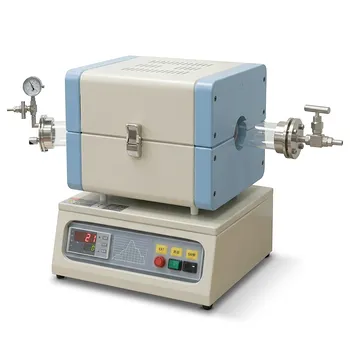
1200C Tube Furnace with Internal Magnetic Sample Sliding for Direct Vaporizing Deposition and Rapid Thermal Processing
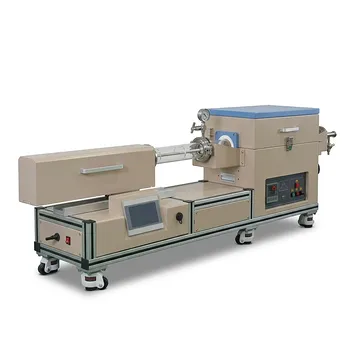
1200C Sliding Internal Crucible Tube Furnace for Controlled Atmosphere Thin Film Deposition and Material Sublimation Research
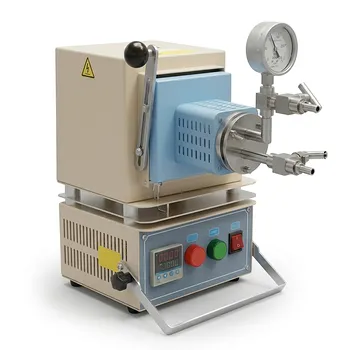
Compact Hybrid Muffle and Tube Furnace for 1000C Controlled Atmosphere Laboratory Material Sintering
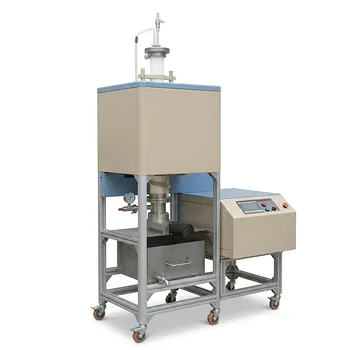
1700C High Temperature Quenching Tube Furnace with 60mm Alumina Tube and Automatic Electromagnet Release System
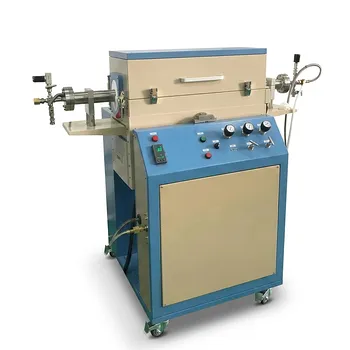
High Temperature Rocking Tube Furnace 1700°C Alumina Processing Tube with Precision Oscillation for Material Synthesis